The Epson EcoTank printer converts easily to sublimation because its EcoTank ink-tank system allows manual filling with sublimation ink (CMYK) instead of OEM formulations. Piezo printheads in EcoTank models safely eject disperse dyes without heat damage—our hub guide on printer conversion explains why EcoTank printers rank among the best conversion candidates.
Key Takeaways
- OEM pigment/dye ink must be completely removed before adding sublimation ink to prevent cross-contamination and color issues.
- Ink flushing or purging clears residual OEM ink from tanks, lines, and nozzles before conversion begins.
- Brand-new, never-powered printers achieve highest success rates—used printers require extensive flushing with mixed results.
Which Epson EcoTank Printers Can Be Converted to Sublimation?
Any Epson EcoTank printer featuring a MicroPiezo printhead can convert to sublimation because piezoelectric actuator technology ejects ink through crystal vibration without generating heat. This non-thermal mechanism safely handles disperse dye chemistry—our guide on best Epson Sublimation Printers to convert explains why piezo heads enable conversion while thermal models cannot. Epson EcoTank printers use refillable ink reservoir systems instead of cartridges, which allows users to load sublimation ink directly during initial setup. [1]
Is the Epson EcoTank 2800 a Sublimation Printer?
The ET-2800 ships as a standard inkjet printer with OEM pigment/dye ink—not a sublimation printer. Conversion requires filling tanks with sublimation ink (CMYK) instead of the included bottles. Best practice starts with a brand-new unit that has never been powered on, avoiding contamination from factory test ink.
Is the Epson EcoTank ET-2800 a Sublimation Printer?
No Epson EcoTank printer functions as a sublimation printer without conversion. The ET-2800 uses ink bottles to load its reservoir tanks—simply substitute sublimation ink for the OEM bottles during initial setup. Converting voids the manufacturer warranty but costs $150–$250 less than dedicated sublimation printers.
Can You Use an Epson EcoTank ET-2803 for Sublimation?

The Epson EcoTank printer ET-2803 converts identically to the ET-2800—they share the same tank and printhead architecture with only retailer-specific model numbers differing. Ink flushing is required for used units before sublimation ink loading—see our Epson EcoTank ET-2800 review for detailed specifications and conversion compatibility.
Can the Epson EcoTank 2850 Be Used for Sublimation?
The ET-2850 converts to sublimation using the same process as other EcoTank models because it features a MicroPiezo printhead compatible with disperse dye sublimation ink (CMYK). Replace OEM ink with sublimation formulations during initial setup for cleanest results and optimal color accuracy.
Can Epson ET-2400 Be Used for Sublimation?
The ET-2400 offers the most budget-friendly EcoTank ink-tank system for sublimation conversion, typically costing under $200. Fill tanks using ink bottles containing sublimation ink instead of included OEM bottles. Maximum print size reaches 8.5×14 inches—adequate for most small-format sublimation projects like mugs and small apparel.
Is the Epson EcoTank ET-15000 a Sublimation Printer?
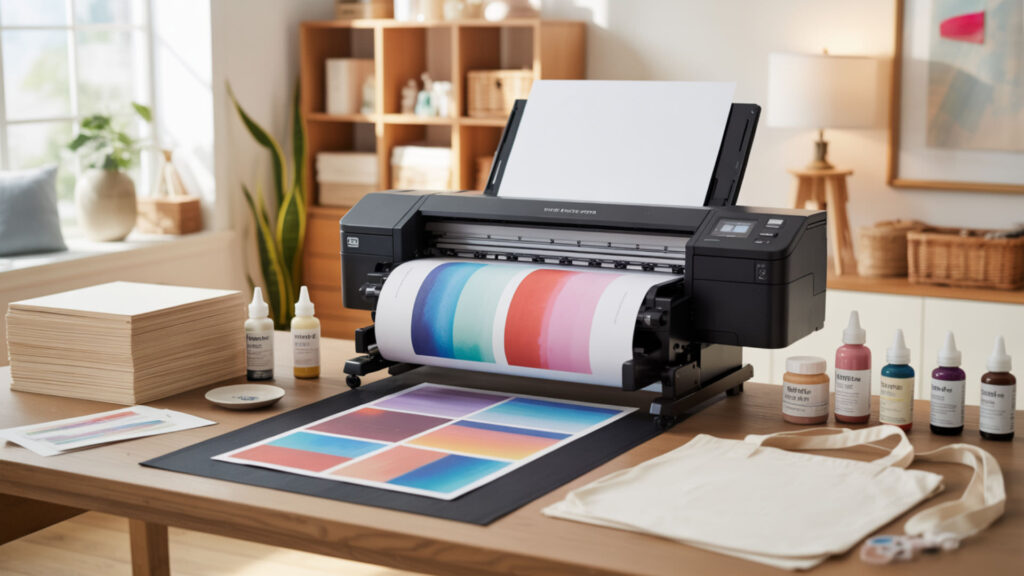
The ET-15000 ships as a standard inkjet but converts to sublimation with wide-format media handling supporting sheets up to 13×19 inches. This large-format capability makes it ideal for oversized transfers on apparel and home décor.
What Epson EcoTank Printers Can Be Converted to DTF?
DTF conversion differs chemically from sublimation—DTF requires white ink layers that OEM pigment/dye ink systems cannot accommodate without modification. Models with six ink tanks like the ET-8550 support DTF because extra channels hold white ink. Sublimation ink workflows remain simpler, requiring only standard CMYK channels without white ink.
Can You Turn an Epson EcoTank into a DTF Printer?
EcoTank printers can convert to DTF, but print head compatibility varies significantly. DTF white ink contains larger pigment particles that clog nozzles more frequently than sublimation ink. Six-tank models accommodate CMYK plus dual white channels, while four-tank models lack capacity for DTF’s required white ink underbase layers.
How Do You Convert an Epson EcoTank Step-by-Step?
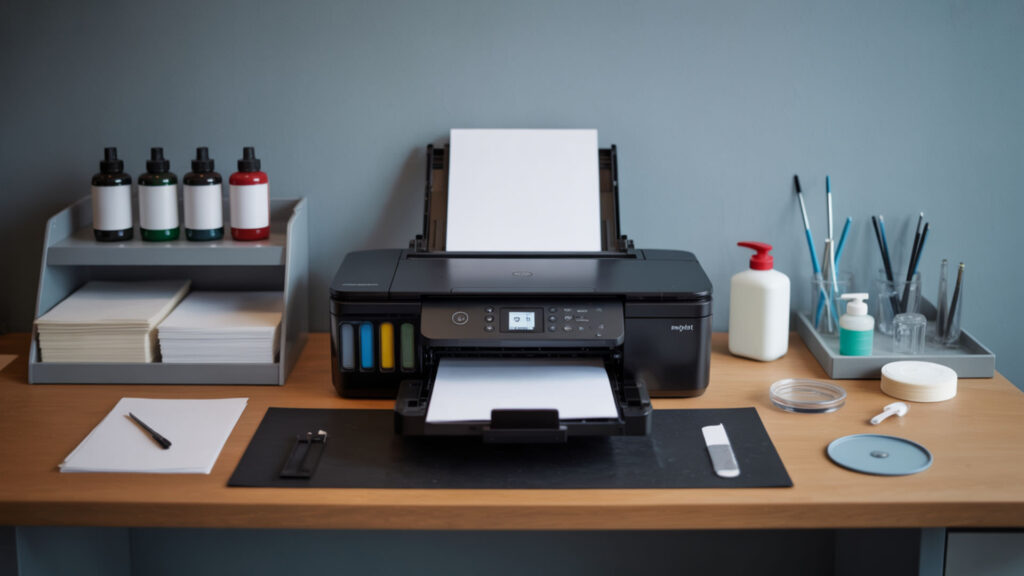
- Unbox a brand-new EcoTank and set aside OEM ink bottles—never open them. Ink flushing is unnecessary on unused printers. Ink flushing and printhead cleaning cycles are required to remove residual OEM ink from tanks and nozzles before introducing sublimation ink. [2]
- Fill each reservoir tank with corresponding sublimation ink colors using EcoFill bottles or syringes for initial ink charge.
- Power on the printer and complete the standard setup process. The printer will run automatic priming cycles.
- Run 2–3 head cleaning cycles to fully prime ink lines. Perform a nozzle check to confirm all channels fire correctly.
- Print a test pattern on sublimation paper and heat transfer at 385°F for 45–60 seconds to verify color output.
How Do You Know If Your Printer Is a Sublimation Printer?

Check for MicroPiezo printhead specifications in product documentation—piezoelectric technology enables sublimation compatibility. Dedicated sublimation printers like Sawgrass or Epson SureColor F-series ship factory-ready with sublimation ink. Standard EcoTank models require conversion but use identical piezo heads. Thermal printhead models from HP and Canon cannot convert regardless of ink changes.
Can You Make a Regular Printer a Sublimation Printer?
Only printers with piezoelectric actuator heads convert to sublimation—thermal inkjet models cannot. Check specifications for MicroPiezo or piezoelectric technology before purchasing. OEM pigment/dye ink must be completely purged before adding sublimation ink to prevent contamination. Epson EcoTank and select Brother models qualify; HP and Canon do not.
What Format Do You Need for Sublimation?
PNG format works best for sublimation designs because it supports transparent backgrounds essential for irregularly shaped graphics. RGB to CMYK conversion occurs during printing—install the correct ICC profile matching your specific ink, paper, and printer combination for accurate color reproduction. Mirror all designs before printing for correct transfer orientation.
What Ink and Paper Do You Need for Sublimation Conversion?
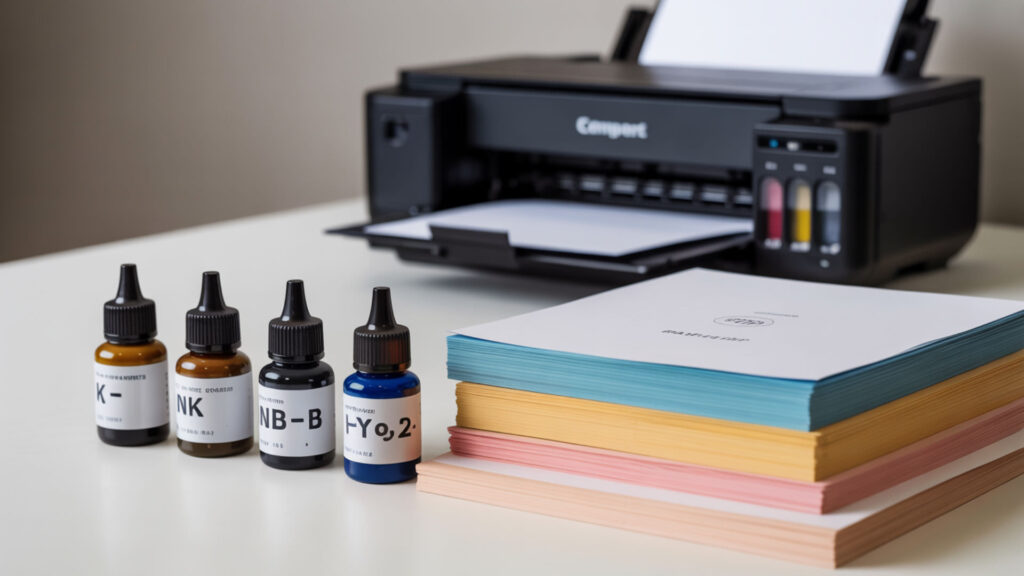
Sublimation ink (CMYK) contains disperse dye that vaporizes at 350–420°F and bonds permanently with polyester fibers and polymer-coated substrates. Pair with sublimation transfer paper designed for high ink release.
What Is the Difference Between DTF Printer Ink and Sublimation Ink?
Sublimation ink uses disperse dye that vaporizes and bonds with polyester at molecular level, creating soft, breathable prints. DTF ink sits atop fabric with adhesive backing, producing slightly raised texture on any material including cotton. Sublimation requires polymer-coated substrates while DTF works on virtually any fabric regardless of fiber content.
What Is the Best DTF Ink for Epson Printers?
DTF ink selection depends on print head compatibility and white ink performance. STS Inks and DTG Pro offer professional-grade formulations with reduced nozzle clogging. White DTF ink contains larger pigment particles than sublimation ink, increasing maintenance requirements. Clean nozzles weekly when running DTF to prevent permanent blockages.
What Is the Best Budget Printer for Sublimation?
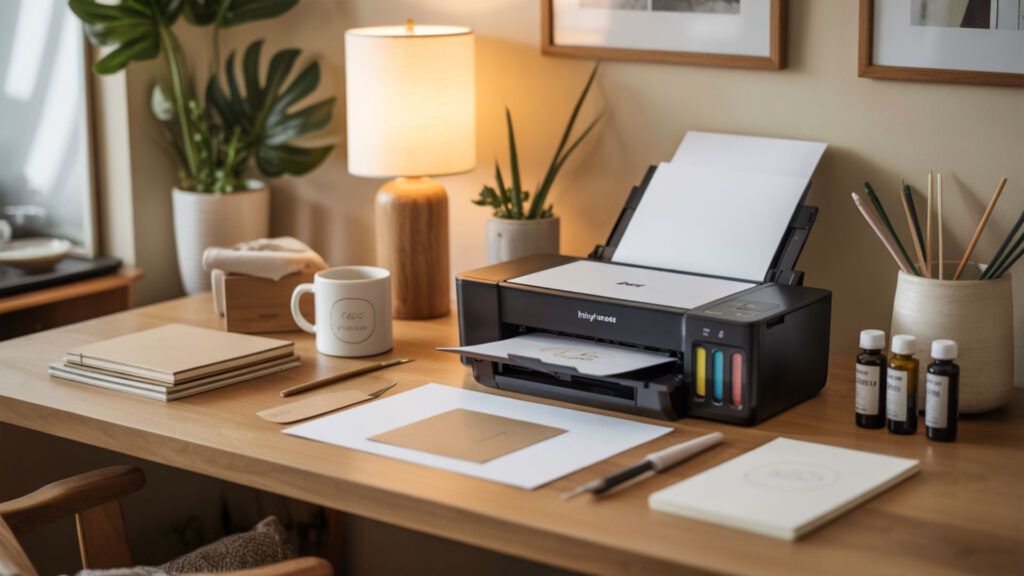
The Epson ET-2800 offers the best running cost (ink per ml) for budget sublimation conversion at $179–$229 retail. Beginner friendliness ranks high because EcoTank systems require no cartridge modifications or chip resets—see our Epson EcoTank ET-2400 review for the most affordable entry-level option under $180.
What Is the Max Paper Weight for Epson EcoTank ET-8550?
The ET-8550 handles media handling up to 800gsm through its rear straight-path feed, accommodating thick sublimation papers and cardstock. Print resolution reaches 5760×1440 dots per inch for photographic-quality sublimation output. Six-color ink configuration produces wider color gamut than four-color entry models.
Does the Epson ET-2800 Have Bluetooth?
The ET-2800 lacks Bluetooth but connects via Wi-Fi, Wi-Fi Direct, and USB. Driver and print settings access occurs through the Epson Smart Panel app or computer software over wireless connection. These connectivity options adequately support sublimation workflows without requiring Bluetooth functionality.
Ready to Convert Your Epson EcoTank?
Gather sublimation ink (CMYK) in ink bottles matching your EcoTank model’s color configuration before starting conversion. Use brand-new printers for cleanest results—used units require thorough flushing that may not fully remove OEM residue. Complete setup takes under 30 minutes with proper preparation.
Frequently Asked Questions
How can a printer recognize compatible ink or cartridges?
EcoTank printers use tankless reservoir systems without cartridge chips, accepting any compatible ink without recognition issues. Simply fill tanks with sublimation ink during setup. Workforce cartridge models require chip resets or refillable cartridges with auto-reset chips. Clean the cartridge chip contacts with lint-free cloth if errors occur.
Can a converted printer be used for UV-style transfer methods?
UV DTF printing requires different ink chemistry and curing equipment than sublimation. Converted sublimation printers cannot switch to UV methods without complete ink system replacement and additional UV lamp installation. Each transfer method—sublimation, DTF, and UV DTF—requires dedicated equipment for optimal results.
Which printer types support DTF-style conversions?
DTF conversion requires print head models with six or more ink channels to accommodate CMYK colors plus white ink layers. The ET-8550 and ET-15000 support DTF conversion, while four-channel models like ET-2800 lack capacity for white ink required in DTF workflows.
Can small home printers be converted for sublimation use?
Entry-level EcoTank models like ET-2400 and ET-2800 convert successfully for home sublimation use. Maximum print size reaches 8.5×14 inches—adequate for mugs, coasters, small apparel, and accessories. Ink flushing is unnecessary on brand-new units, making home conversion straightforward and beginner-friendly.
Can previously used refillable printers be converted to sublimation?
Used printers can attempt conversion, but ink flushing requires 3–5 purge cycles to remove OEM residue from the print head and lines. Results vary significantly—some units never achieve clean color output. Brand-new printers achieve 90%+ success rates versus 60–70% for previously used models.
References
- EcoTank printers | Epson Europe. (n.d.). https://www.epson.eu/en_EU/for-home/ecotank-printers
- Epson ET-2750. (n.d.). Epson Global Portal. https://epson.com/Support/Printers/All-In-Ones/ET-Series/Epson-ET-2750/s/SPT_C11CG22201