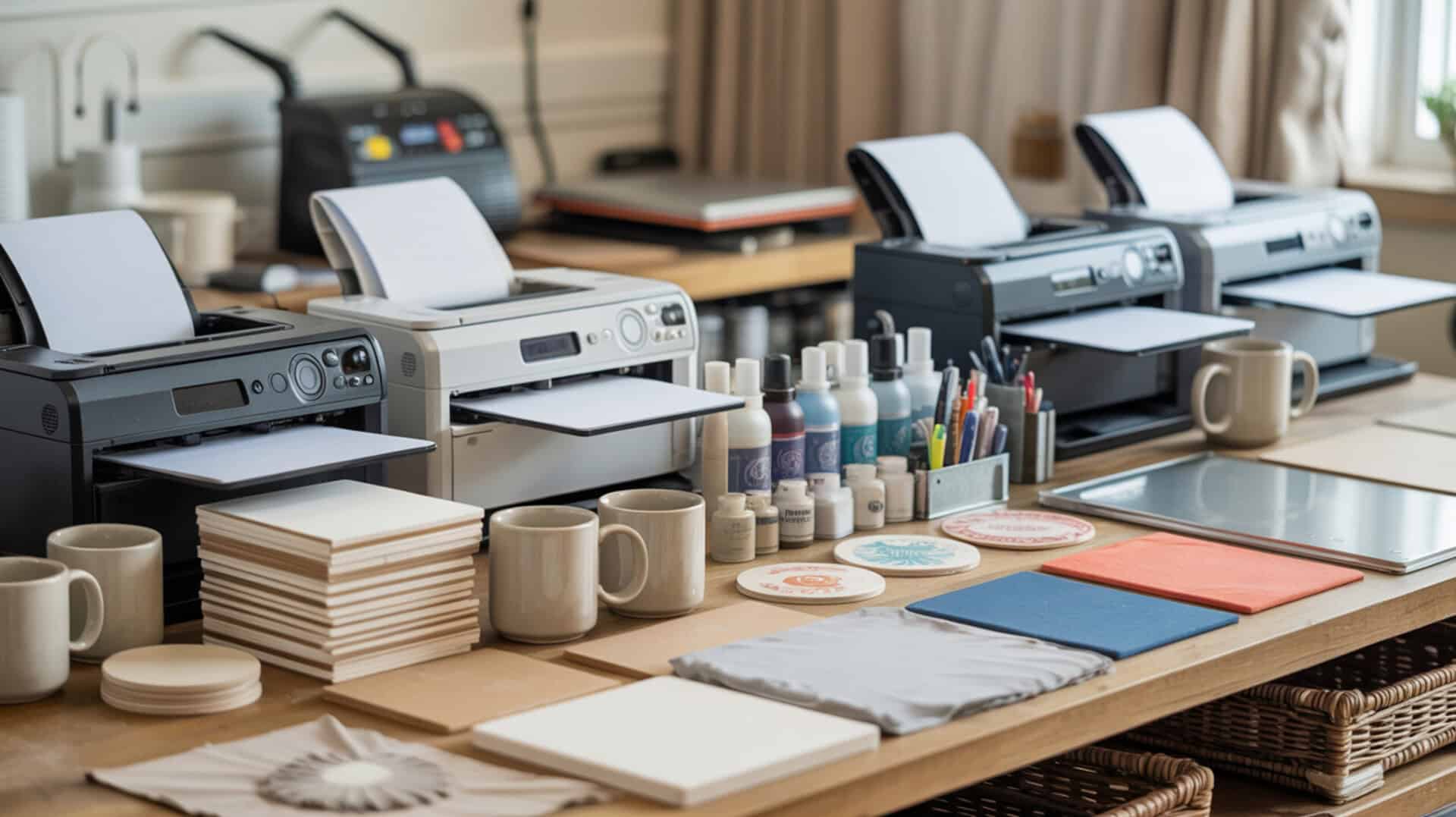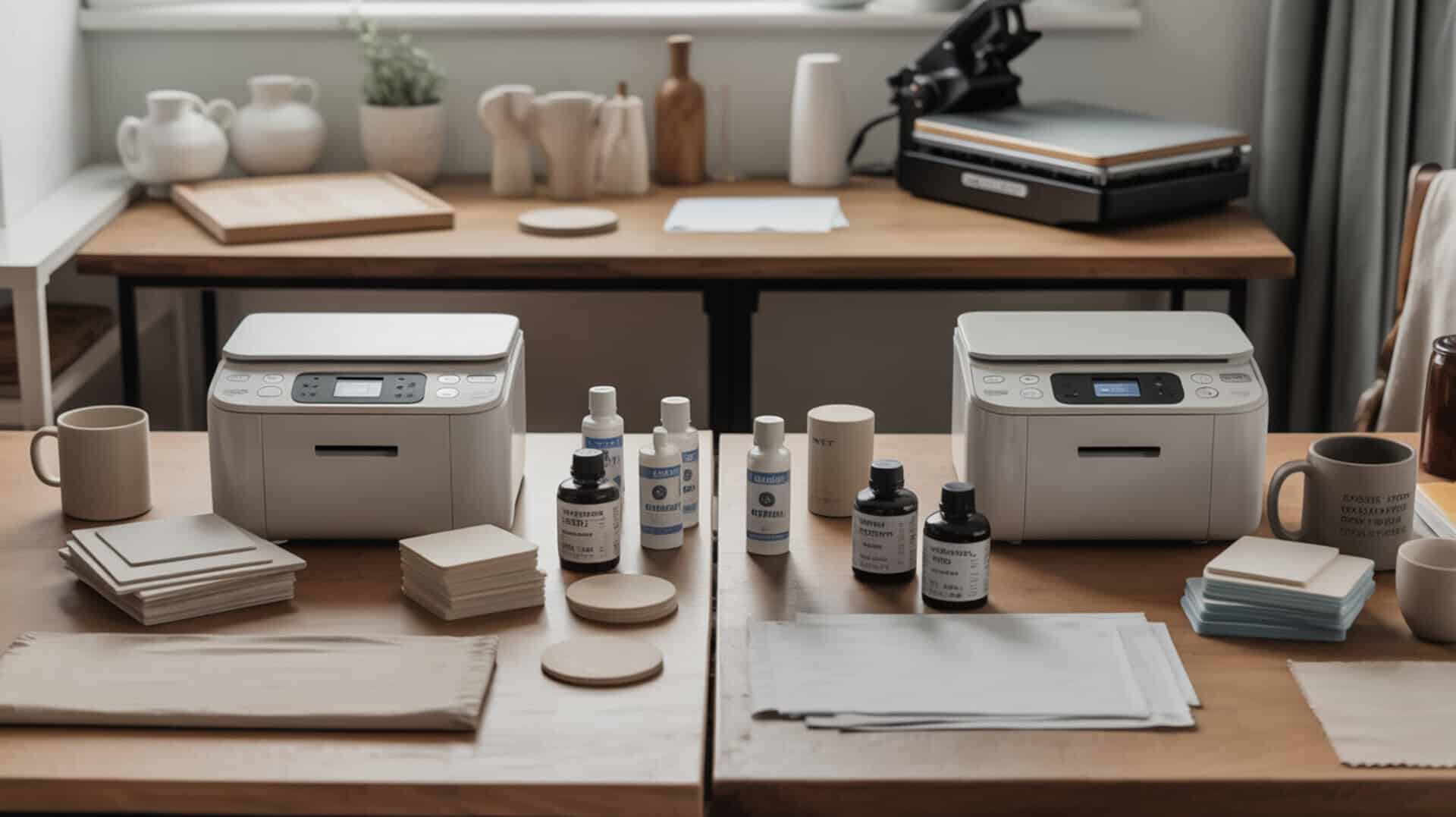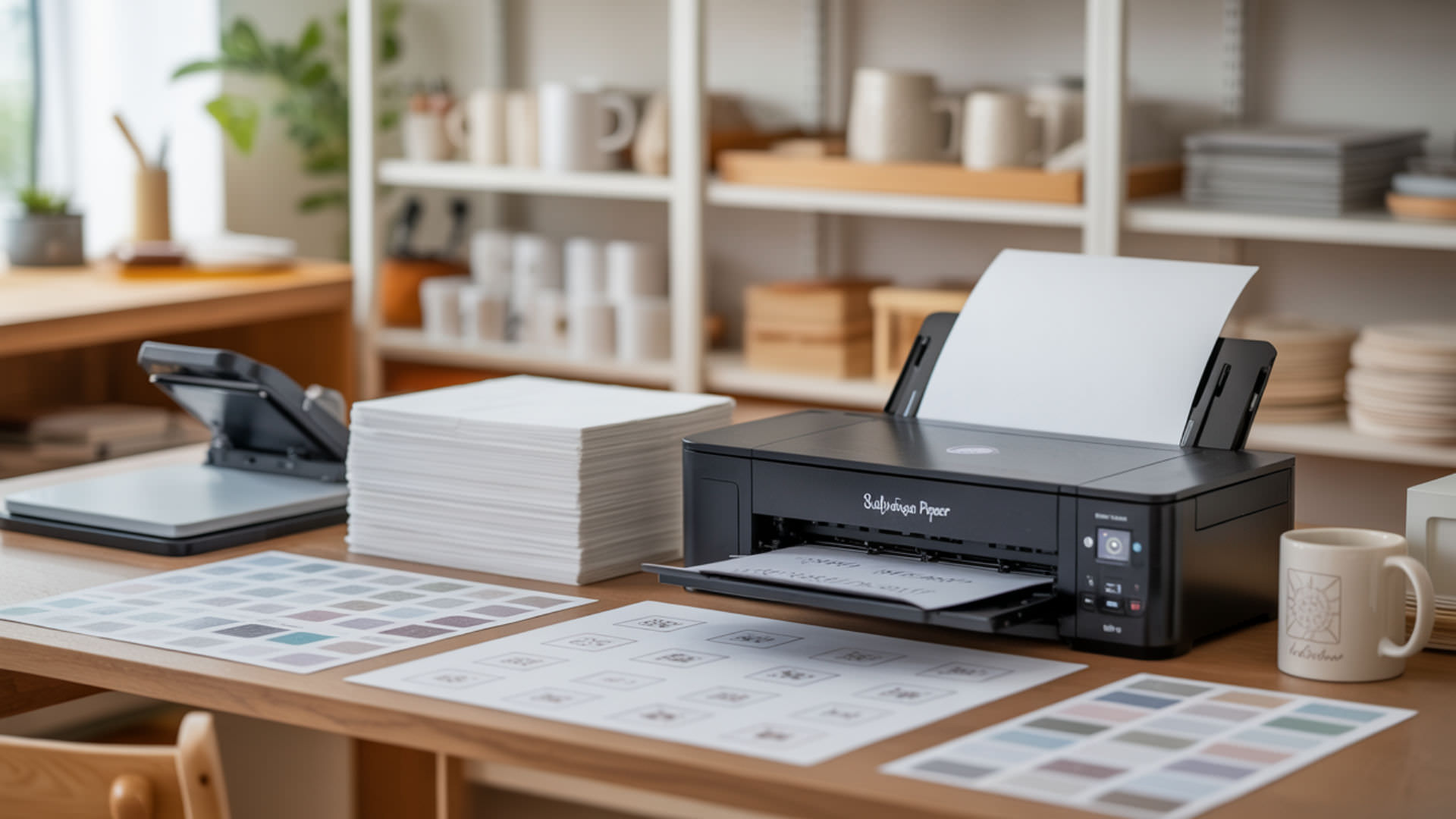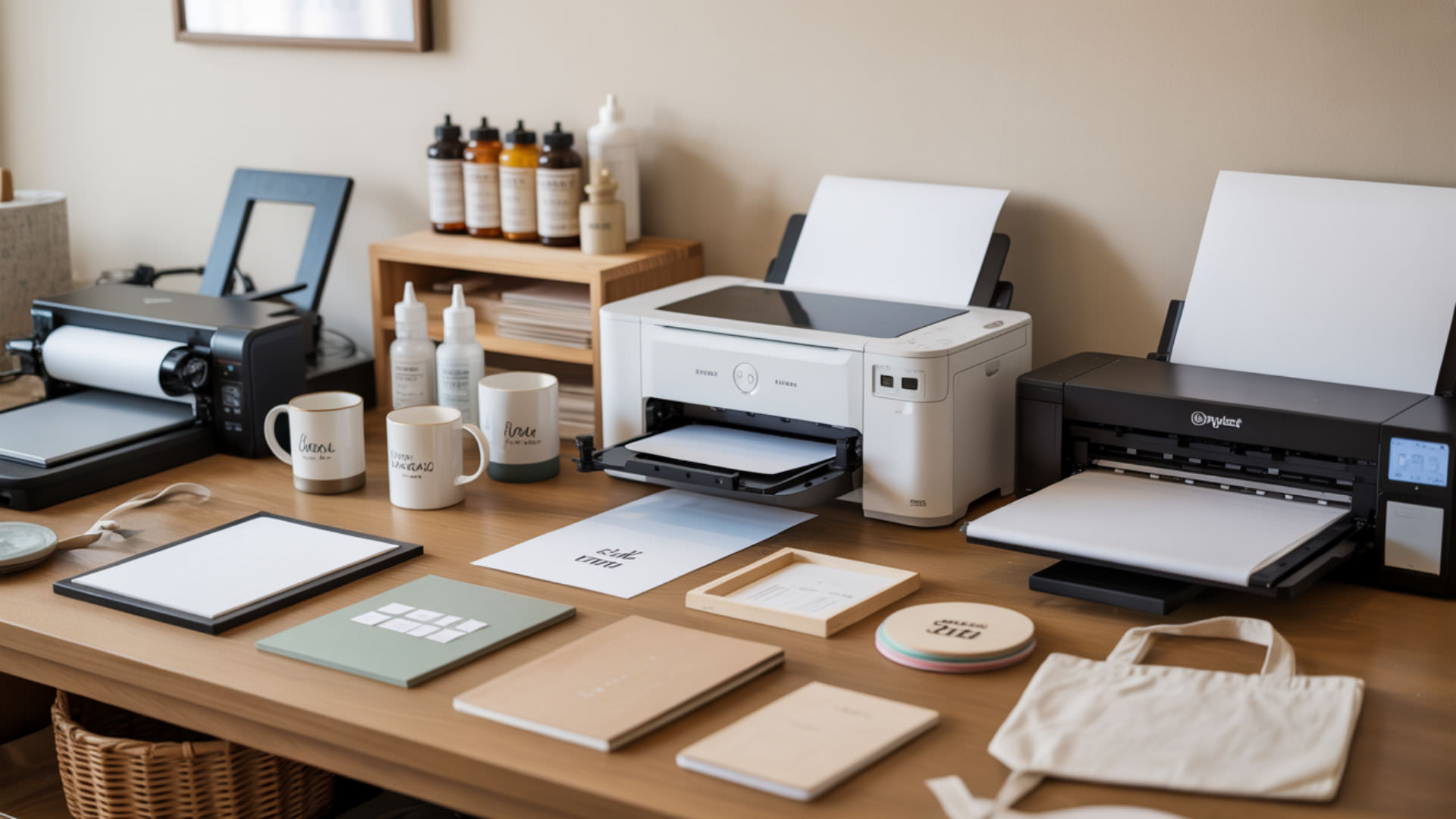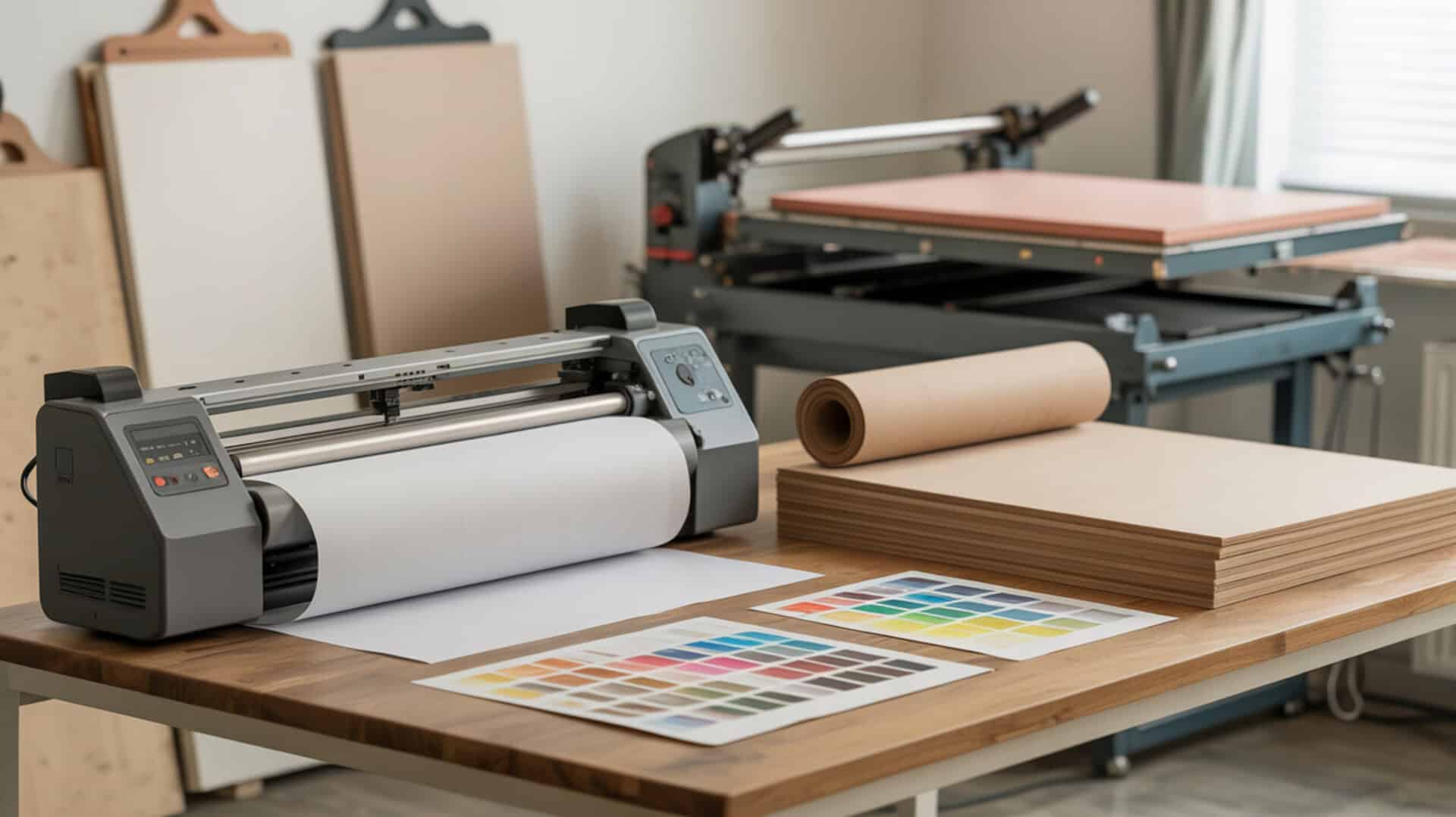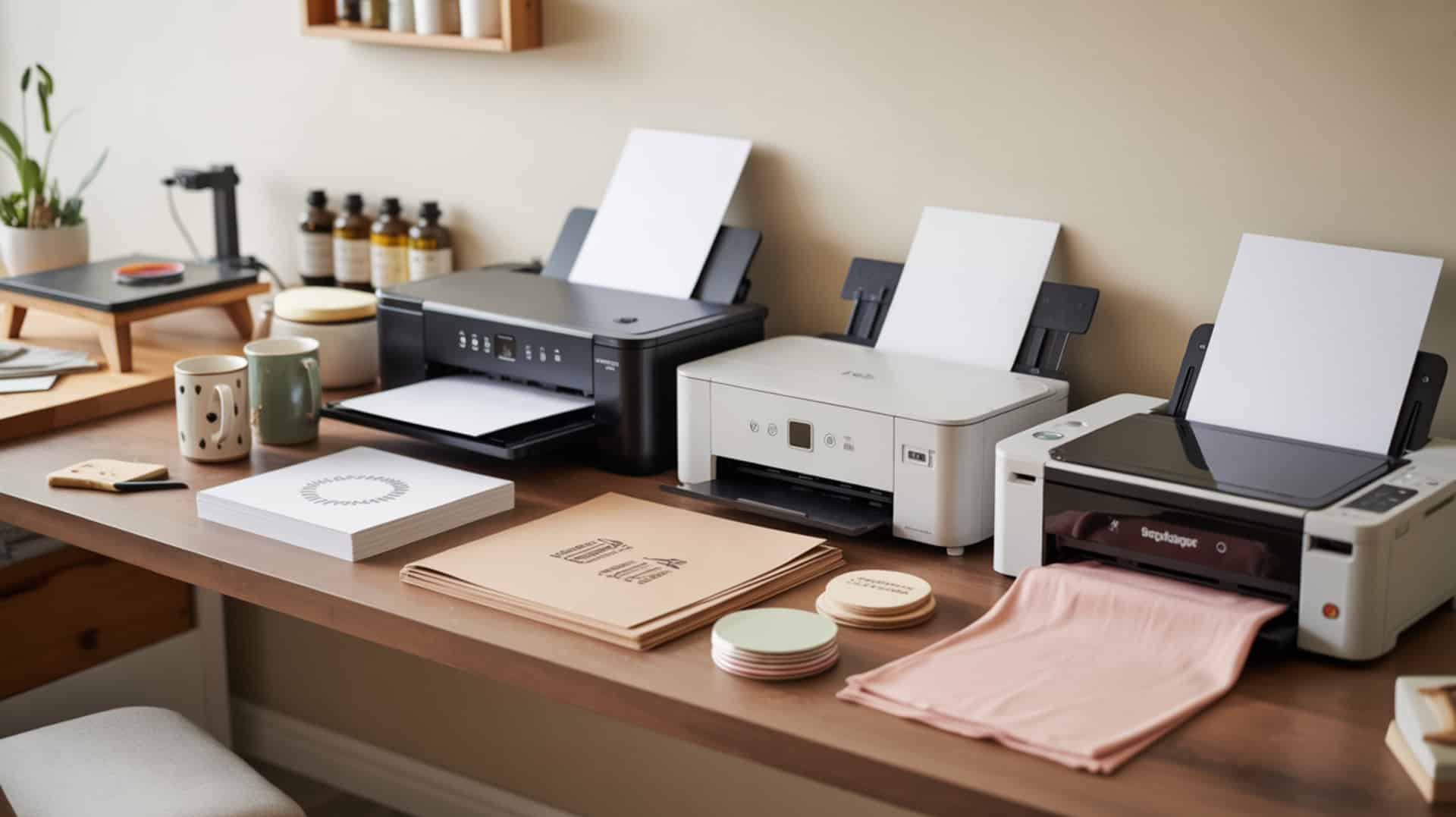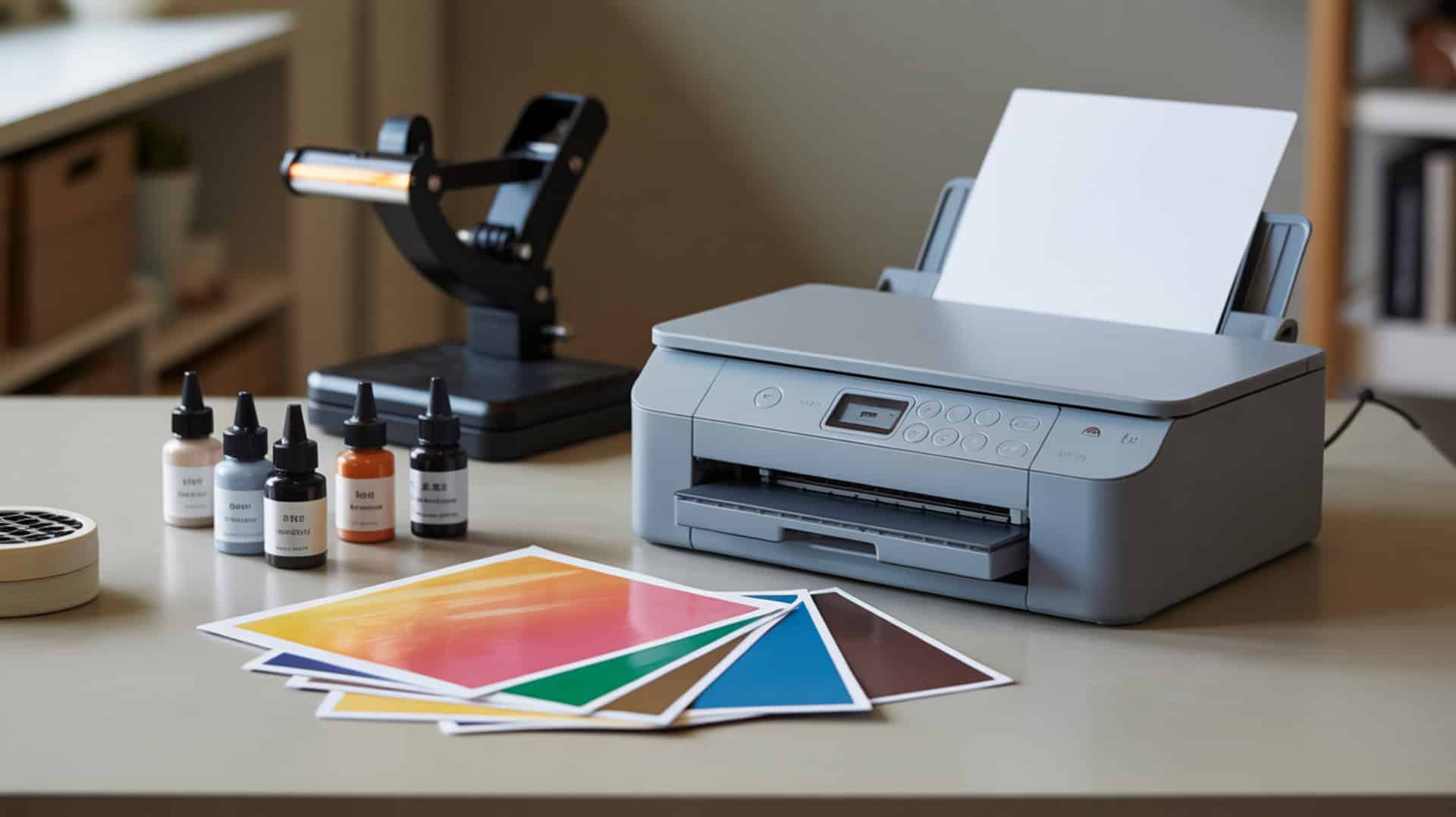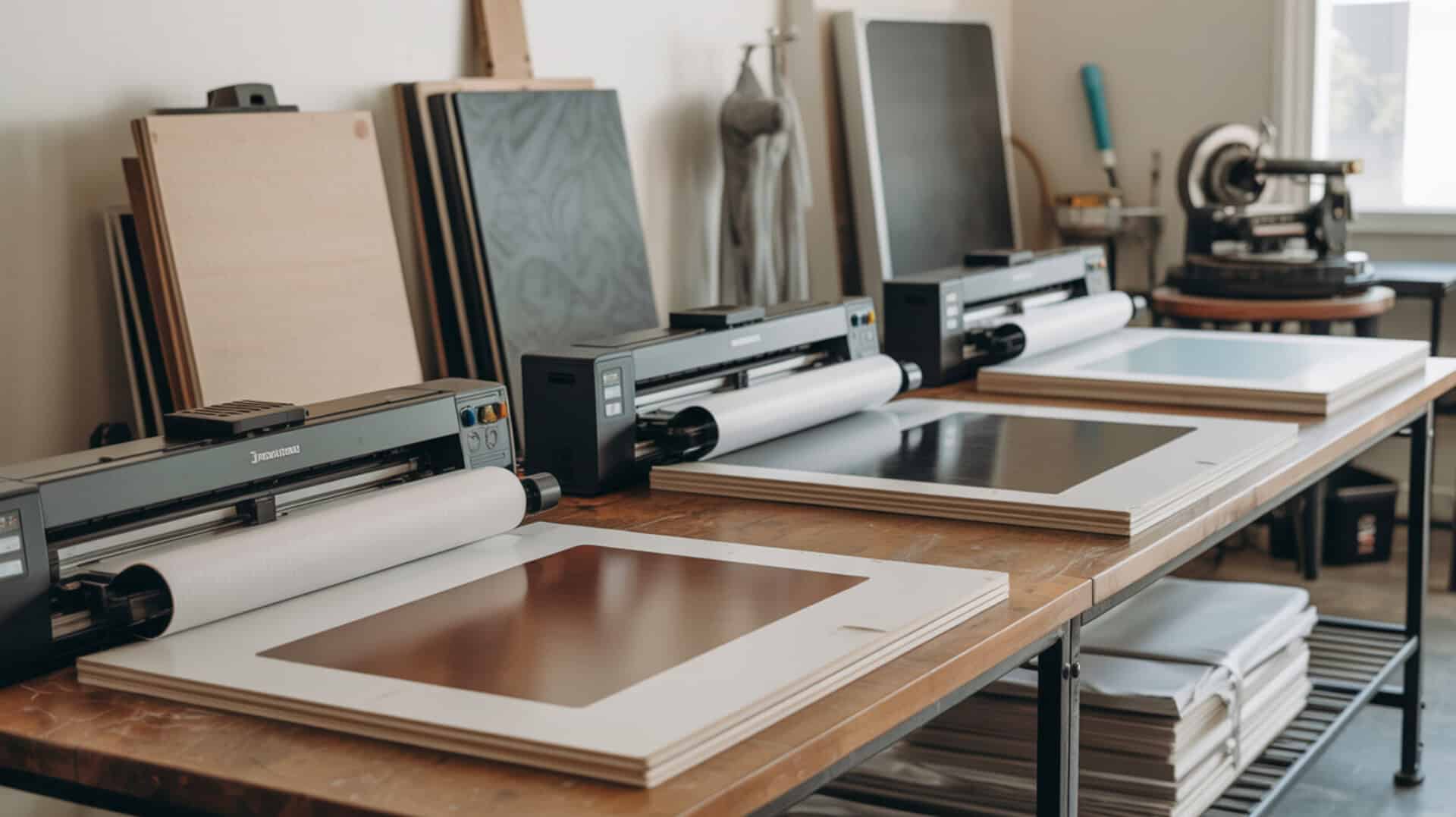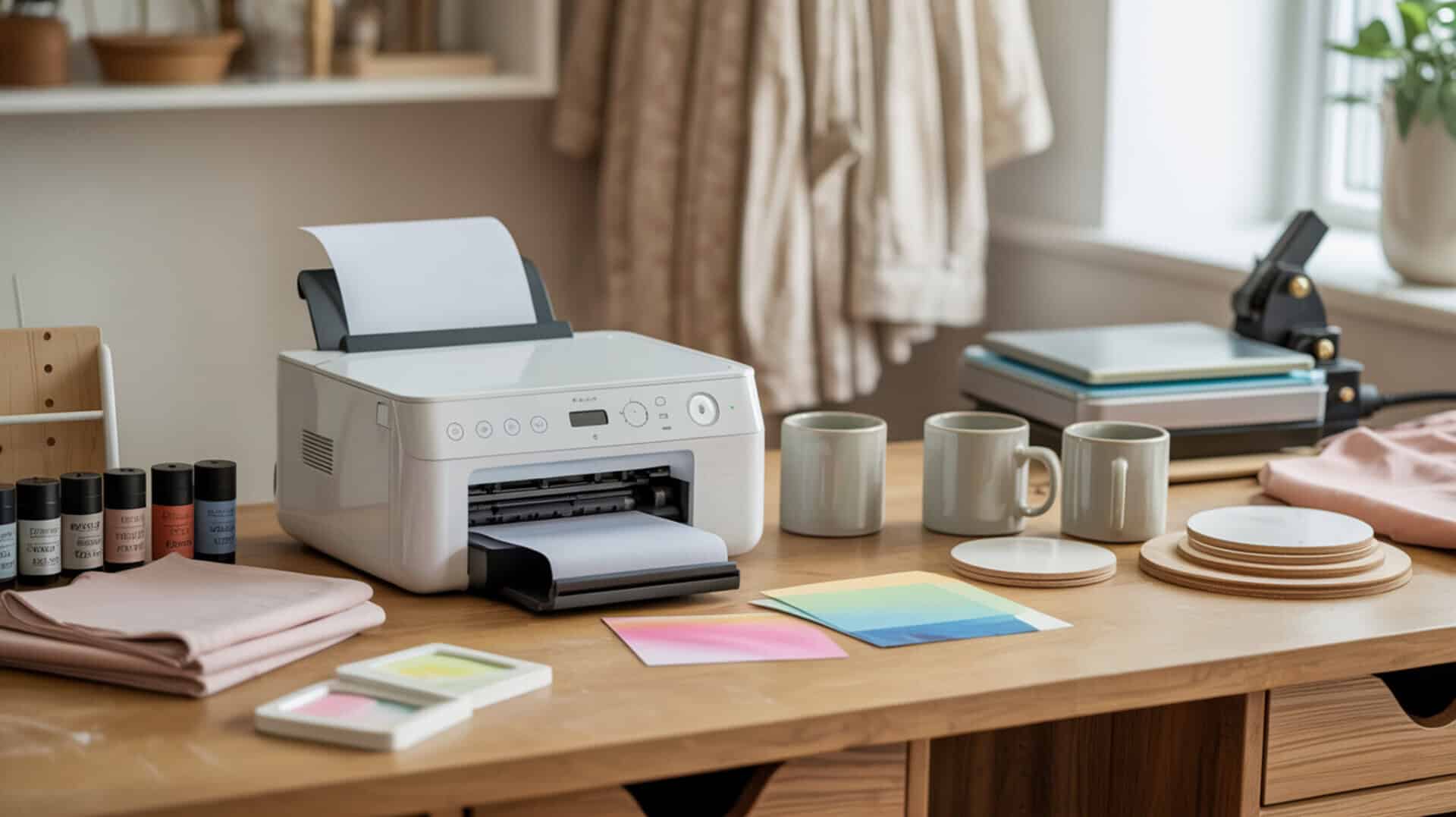
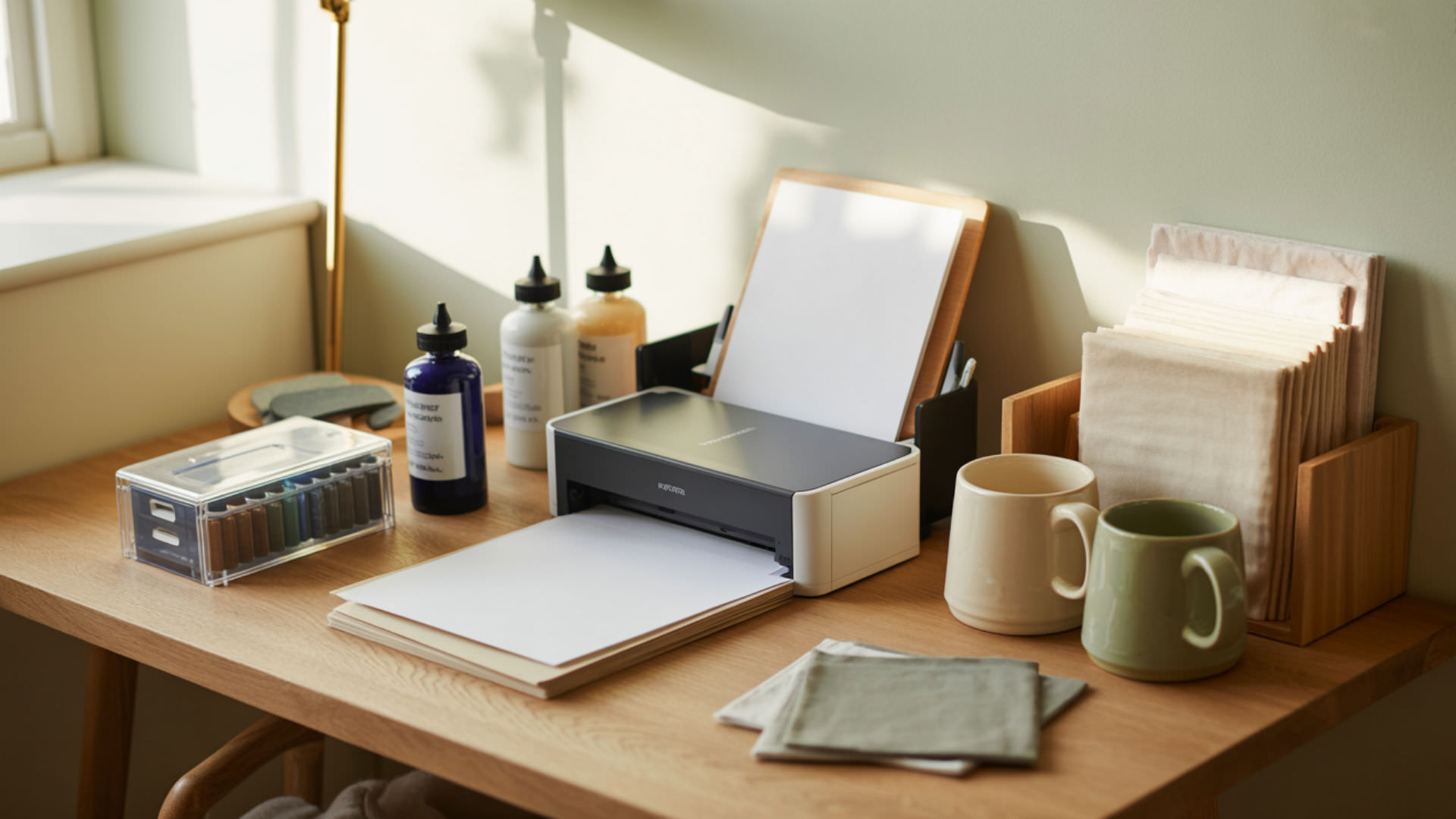
Sublimation ink transforms digital designs into permanent, vibrant prints through dye-sublimation printing technology. Unlike conventional inks that deposit color onto surfaces, sublimation relies on disperse dyes that convert directly from solid to gas when heated, bypassing the liquid phase entirely. This sublimation phase-change process allows the gaseous dye molecules to penetrate polyester fibers and polymer-coated substrates at the molecular level, creating prints that cannot crack, peel, or fade under normal use conditions. In scientific terms, sublimation describes a direct transition from solid to gas without passing through a liquid phase. [1]
Key Takeaways
- Disperse dyes in sublimation ink bond exclusively with polyester and synthetic fibers, making fabric composition the primary factor in print quality and durability.
- Water-based sublimation formulas require piezoelectric printheads found in Epson and compatible printers, while thermal printheads damage heat-sensitive dyes.
- Proper storage, viscosity maintenance, and equipment compatibility determine both shelf life and print consistency across different printer platforms.
Is Sublimation Ink Safe to Use in Your Home?
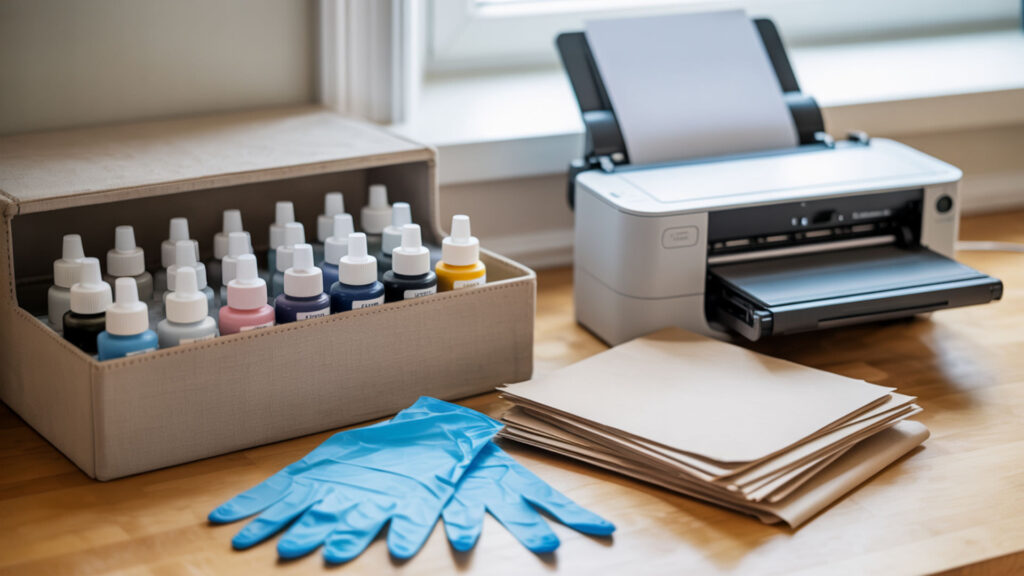
Home sublimation setups require understanding both the chemical properties of the inks and appropriate safety measures. Safety depends on dose rather than mere presence of chemicals—properly ventilated workspaces keep exposure well below concerning thresholds for most users. The toxicology of sublimation inks depends primarily on exposure routes such as inhalation during heating or dermal contact during handling.
Understanding Chemical Composition and Fumes
Sublimation inks contain water, disperse dyes, and chemical additives that maintain viscosity and prevent clogging. During the heat press phase at 380-400°F, some volatile components release as fumes. Acute toxicity concerns arise only if these chemicals reach harmful concentrations during heating, which standard home ventilation typically prevents. The water-based carrier evaporates as steam while dye particles bond with the substrate rather than dispersing into the air.
Ventilation Requirements and Safety Precautions
Proper ventilation reduces inhalation exposure risks to negligible levels for home sublimation operations. Opening windows, using exhaust fans, or positioning heat presses near ventilation sources prevents fume accumulation. Air purifiers with activated carbon filters capture residual vapors effectively. The risk profile remains low for occasional hobbyist use, though commercial-volume operations benefit from dedicated ventilation systems that exchange room air multiple times per hour.
Handling and Storage Best Practices
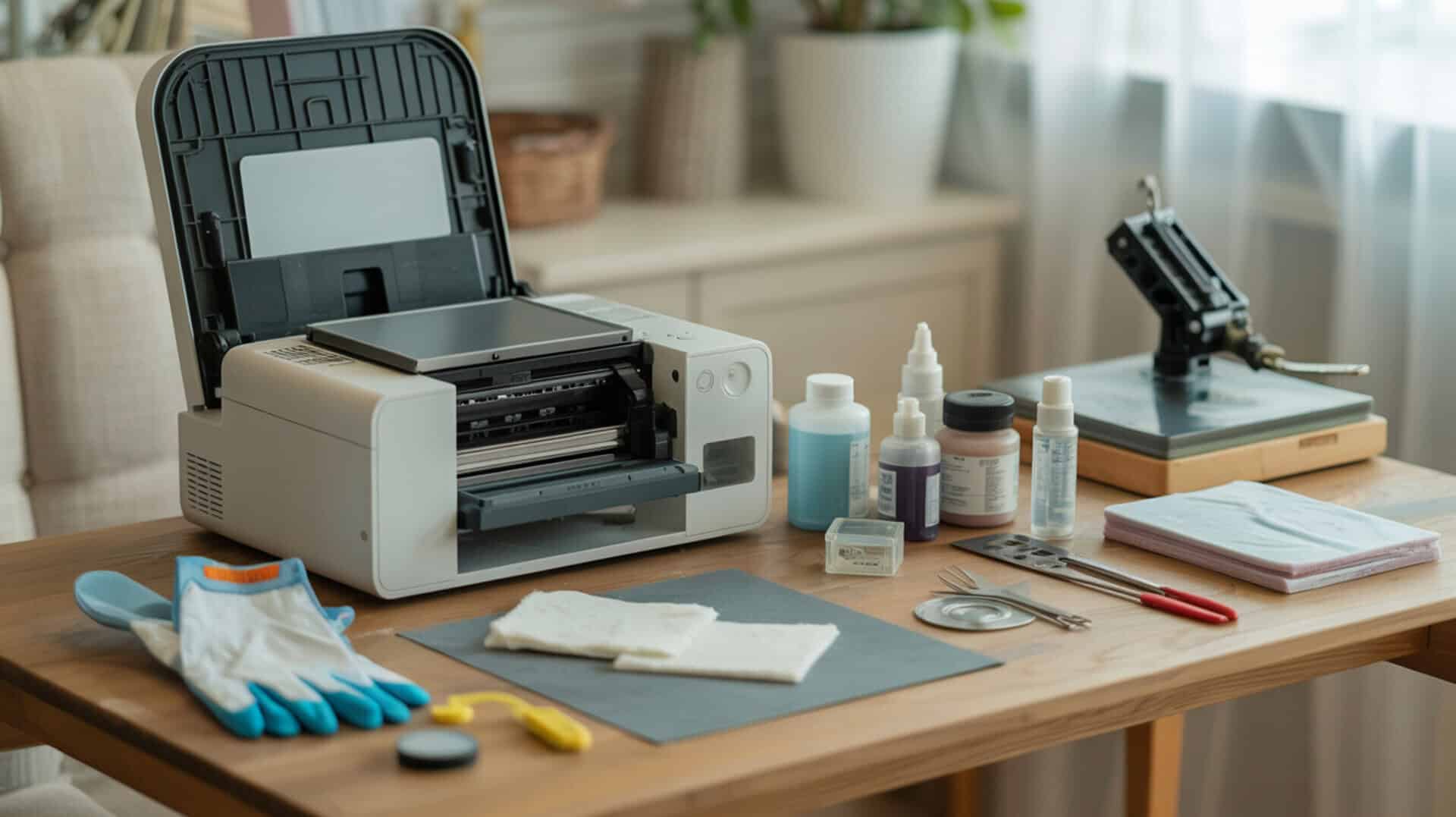
Handling precautions reduce surface contact hazards when working with sublimation inks. Nitrile gloves prevent dermal exposure during cartridge changes or spill cleanup, while proper storage away from heat sources maintains ink stability. Sealed containers in cool, dark locations extend shelf life and prevent premature degradation. Keeping inks away from children and pets eliminates accidental ingestion concerns, though most formulations carry low oral toxicity ratings.
How Does Eco-Solvent Compare to Sublimation Ink?
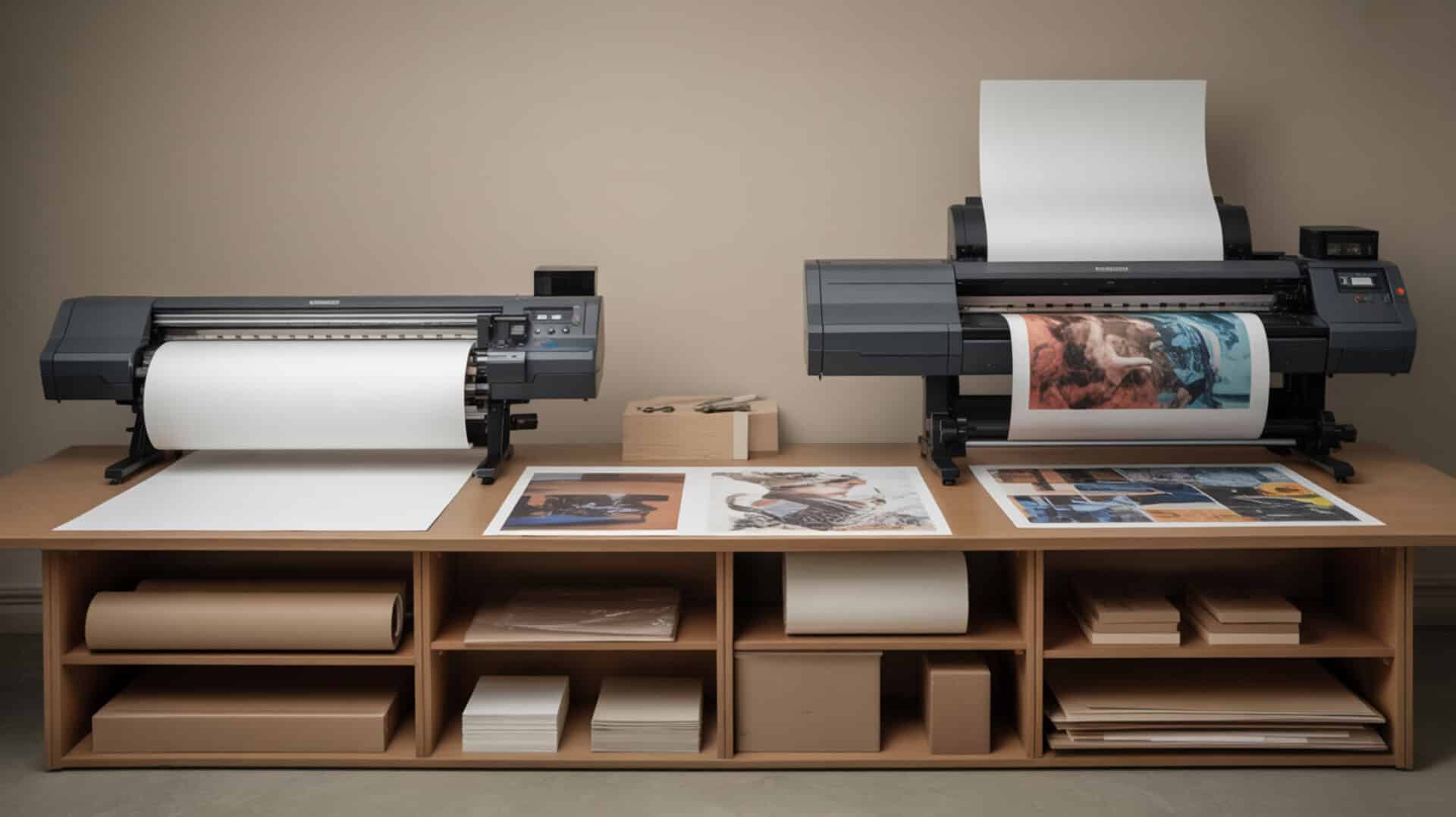
These two ink technologies serve fundamentally different purposes despite both being used in wide-format printing applications. This fundamental difference determines substrate compatibility, equipment requirements, and environmental considerations for each technology.The solvent chemistry differs completely—sublimation inks use water as a polar solvent carrier, while eco-solvent inks rely on organic non-polar solvents.
Application Differences and Use Cases
Sublimation uses water-based dye inks for transfer onto polyester fabrics and polymer-coated hard goods through inkjet printing systems. Eco-solvent inks print directly onto vinyl, banners, and vehicle wraps without requiring heat transfer. The CMYK color model applies to both technologies, but sublimation produces vibrant results only on white or light-colored polyester substrates, while eco-solvent prints adhere to a broader range of materials including dark and textured surfaces.
Environmental Impact Considerations
Solvent volatility affects environmental exposure profiles significantly between these technologies. Eco-solvent inks release volatile organic compounds during printing and drying, though at lower levels than traditional solvent inks. Sublimation inks produce minimal VOC emissions since the water-based carrier evaporates as harmless steam. Environmental toxicology assessments favor sublimation for indoor applications where air quality matters, while eco-solvent remains acceptable for well-ventilated commercial print shops.
Equipment Compatibility Requirements
Piezoelectric printheads work with water-based sublimation inks because they fire droplets mechanically without heating the ink. Thermal bubble jet printheads found in some consumer printers heat ink to create vapor bubbles—this process damages heat-sensitive sublimation dyes before they reach the paper. Eco-solvent inks require specialized printheads designed to resist solvent degradation, making equipment incompatible between these technologies despite similar printer form factors.
What’s the Difference Between Sublimation and Cricut Infusible Ink?

Both technologies create permanent, wash-resistant transfers through heat-activated dye diffusion into polyester substrates. The disperse dye chemistry works similarly in both methods, but the delivery systems differ significantly. Sublimation inks use liquid dyes printed on demand, while Infusible Ink provides pre-printed transfer sheets with the dyes already applied.
Transfer Process and Technology Comparison
Sublimation printers generate ink droplets through drop-on-demand piezoelectric technology, creating custom designs on coated transfer paper. Infusible Ink uses solid sheets with pre-applied designs that users cut to shape before pressing. Both require heat presses reaching 380-400°F for proper dye activation. The ink droplet precision in sublimation allows photographic reproduction and unlimited custom designs, while Infusible Ink limits users to available sheet patterns or Cricut-compatible design cutting.
Project Limitations and Capabilities
Both methods require polyester-rich substrates for proper dye bonding—synthetic fibers accept disperse dyes while natural fibers reject them. Sublimation enables full-color photographic prints, all-over garment coverage, and production of any custom design. Infusible Ink provides consistent results for crafters without printer investment but limits creativity to available patterns and solid colors. Large-format projects favor sublimation’s scalability, while small craft projects may find Infusible Ink’s simplicity advantageous.
Cost Analysis for Different Applications
Sublimation requires upfront investment in printers, inks, and transfer paper, but per-print costs decrease substantially at volume. Additives in professional sublimation formulations influence cost—premium inks with enhanced colorants and stability additives command higher prices but deliver better durability. Infusible Ink sheets cost more per square foot but eliminate equipment purchases for occasional crafters. Break-even analysis typically favors sublimation after 50-100 projects depending on design size and complexity.
Can You Use Sublimation Ink on Waterslide Paper?
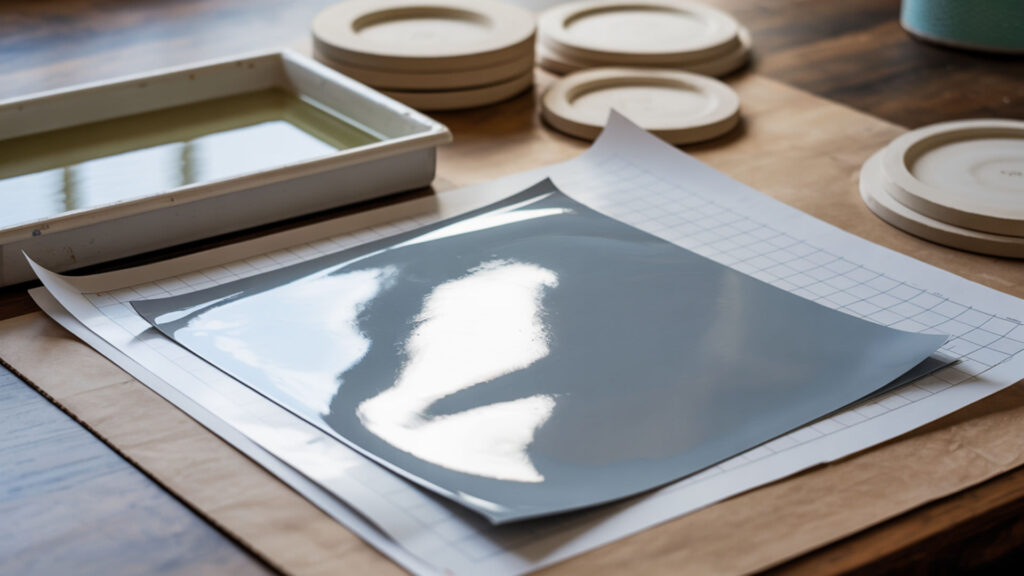
This common question reflects confusion about how sublimation chemistry actually works. Waterslide paper lacks the polymer chains that disperse dyes require for permanent attachment, making these materials unsuitable for sublimation regardless of the ink used. A waterslide decal transfers a printed image through water activation, but this process is fundamentally incompatible with sublimation dye bonding.
Understanding Paper Coating Requirements
Sublimation transfer paper features a specialized polymer coating that temporarily holds water-insoluble disperse dyes until heat releases them. This coating allows dyes to sit on the surface without absorbing into paper fibers, maximizing transfer efficiency during pressing. Waterslide paper uses a different coating designed to dissolve in water and release a thin film carrying the printed image. The polymer surface required for dye embedding simply does not exist on waterslide substrates.
Why These Materials Are Incompatible
Sublimation dyes bond only to polyester surfaces through heat-activated molecular penetration—the dye becomes part of the polymer structure itself. Waterslide decals transfer to ceramic mugs, plastic models, and other surfaces through mechanical adhesion of a thin film rather than dye bonding. Attempting sublimation onto waterslide paper wastes ink that absorbs into the paper substrate rather than remaining available for transfer. The resulting image appears dull and washes away because no permanent dye bond forms.
Alternative Solutions for Similar Effects
Waterslide decals printed with pigment or dye-based inkjet inks provide decorative transfers for non-polyester surfaces where sublimation cannot work. For ceramic and glass applications, specialized decal printing followed by kiln firing creates permanent decoration. Sublimation works directly on polymer-coated ceramics without intermediate decal steps, producing more durable results than waterslide transfers. Matching the correct technology to your substrate ensures optimal durability and appearance.
How Long Can You Expect Sublimation Ink to Last?
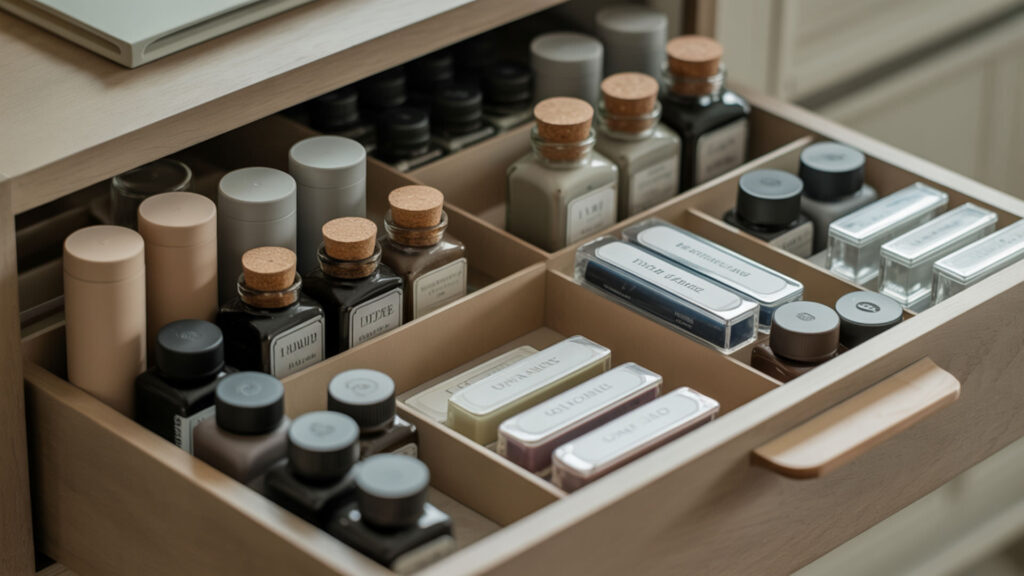
Sublimation ink longevity depends on both storage conditions and the properties of printed output. Dye fastness ratings indicate how well printed colors resist fading from washing, light exposure, and abrasion over time. Additives in quality formulations reduce premature breakdown while maintaining proper viscosity for consistent printing performance.
Shelf Life in Bottles vs Cartridges
Sealed sublimation ink bottles typically maintain full effectiveness for 12-24 months when stored properly, with some premium formulations lasting longer. Cartridges installed in printers have shorter usable lifespans because exposure to air begins degradation. Continuous ink systems using external ink reservoirs expose ink to air more consistently than sealed cartridges, potentially reducing effective life to 6-12 months depending on usage frequency and environmental conditions.
Storage Conditions That Extend Lifespan
Cool temperatures between 59-77°F preserve ink viscosity and prevent premature dye degradation. Direct sunlight accelerates breakdown of light-sensitive dye compounds, making dark storage essential. Sealed containers prevent evaporation that increases viscosity and causes flow stability problems. Shaking bottles periodically before use resuspends any settled components, maintaining consistent color density across prints. Refrigeration extends life further but requires warming to room temperature before use.
Signs That Ink Has Expired
Expired sublimation ink manifests through print quality problems before complete failure. Clogging occurs as degraded components solidify in printheads, causing banding—visible horizontal lines across printed images. Color shifts indicate dye breakdown, with certain hues fading faster than others. Viscosity changes make ink either too thick to flow properly or too thin to form consistent droplets. Discarding ink showing these symptoms prevents wasted transfers and potential printhead damage.
What Makes Sublimation Ink Different from Regular Printer Ink?

The fundamental chemistry separating sublimation from conventional inks determines their vastly different applications and results. Pigments remain insoluble particles that sit on surfaces, while sublimation dyes dissolve in carriers and penetrate substrates when heat-activated. Understanding the dye versus pigment distinction explains why these inks cannot be interchanged. Dye molecules absorb and reflect specific wavelengths of light due to their chemical constitution, a principle that also underlies the way sublimation inks interact with heat and fabric. [2]
Molecular Structure and Heat Activation
Sublimation dyes contain chromophore structures that absorb specific light wavelengths to produce visible color. Auxochrome groups modify these base structures, enhancing color vibrancy or shifting hues toward specific tones. Heat activation at sublimation temperatures causes these molecular structures to transition directly from solid to gas, allowing penetration into open polymer chains. Regular inks lack this phase-change capability—their colorants remain in place regardless of heat application.
Dye vs Pigment Properties
Pigment-based inks suspend insoluble colorant particles that adhere to paper surfaces through binder compounds. These pigments cannot diffuse into polyester because their particle size prevents molecular penetration—they physically sit on top of substrates rather than bonding within them. Dye-based sublimation inks use soluble colorants that penetrate compatible materials at the molecular level when heat-activated. This penetration creates permanent coloration that washing and abrasion cannot remove from properly sublimated polyester.
Why You Can’t Interchange Them
Pigment inks rely on binder compounds for adhesion to paper surfaces—sublimation ink contains no binders because dye bonding provides permanence through molecular integration instead. Running regular ink through a sublimation printer produces transfers that fail during pressing, with color remaining on the paper rather than transferring to substrates. Conversely, sublimation ink in standard printers wastes expensive dyes on paper that absorbs rather than holds them for transfer. Each solvent system requires its matched technology.
Which Sublimation Ink Works Best for Brother Printers?
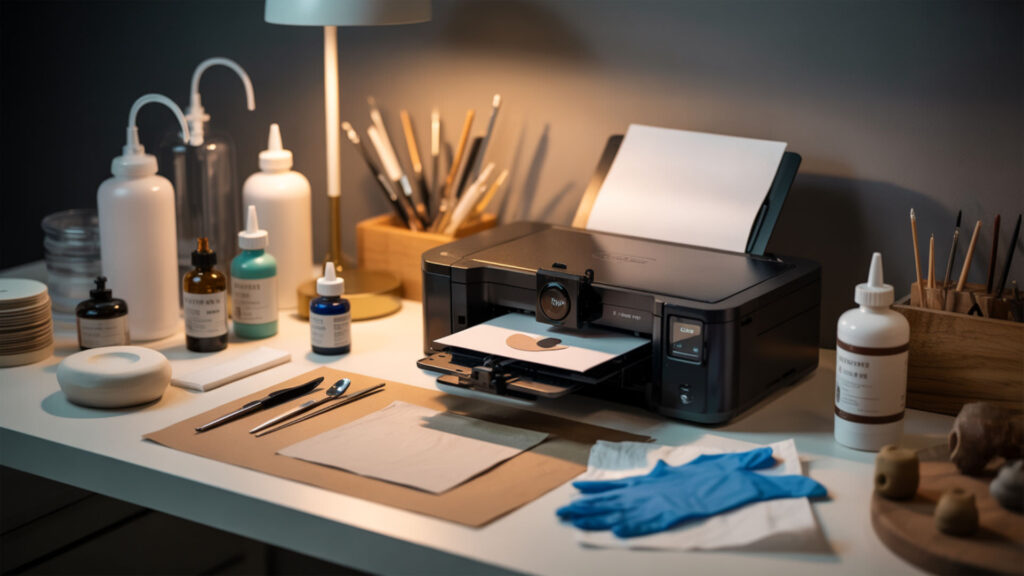
Brother printers require careful ink selection because their printhead designs differ from the Epson systems that dominate sublimation. Viscosity must check Brother printhead tolerances precisely—too thick causes clogs while too thin produces inconsistent droplet formation. Nozzle specifications vary between Brother models, requiring formulation matching for optimal results.
Compatible Ink Formulations
Brother-compatible sublimation inks use CMYK color formulations optimized for the specific droplet sizes these printers produce. Additives maintain proper flow characteristics through Brother’s printhead architecture, which differs from Epson’s piezoelectric designs. Quality formulations include surfactants that ensure consistent droplet formation and prevent nozzle buildup. Generic inks formulated primarily for Epson systems may cause compatibility issues in Brother printers despite similar color specifications.
Third-Party vs OEM Options
Brother does not manufacture dedicated sublimation ink, making all options third-party by definition. Continuous ink systems allow economical third-party ink usage through refillable reservoirs that bypass expensive cartridge replacement. Quality third-party formulations from established sublimation brands match or exceed generic alternatives in color accuracy and printhead compatibility. Price differences between brands reflect formulation quality, testing rigor, and color matching precision rather than arbitrary markup.
Installation and Conversion Tips
Converting Brother printers to sublimation requires flushing existing ink completely before introducing sublimation formulas. Drop-on-demand systems produce consistent ink droplets only when properly primed with the correct fluid. Running cleaning cycles with the new ink ensures complete transition throughout the ink delivery system. Maintaining consistent printing schedules prevents ink from drying in nozzles—weekly printing keeps systems flowing even during low-production periods.
What Are the Best Sublimation Inks for Epson Printers?
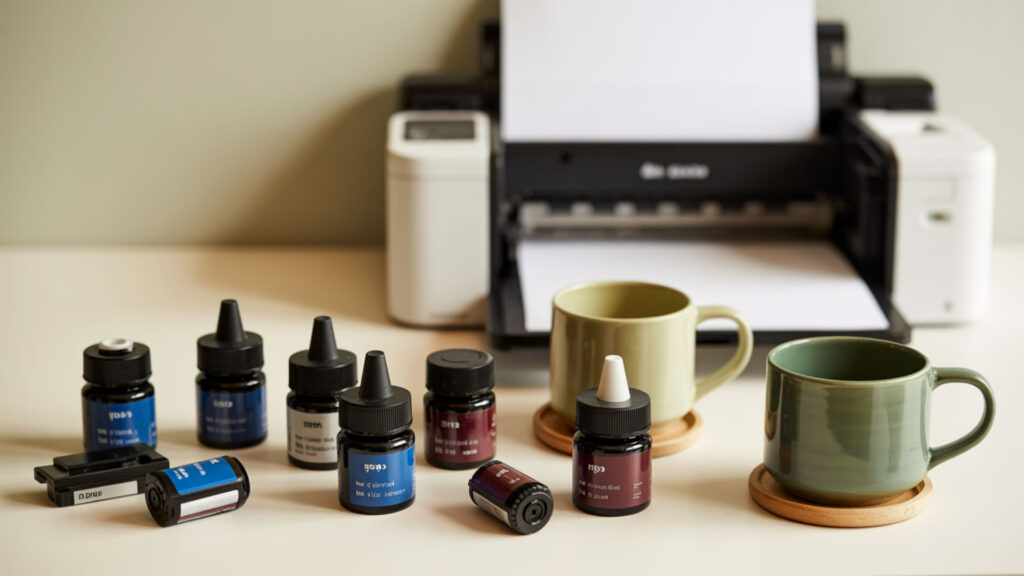
Epson dominates sublimation printing because their piezoelectric printhead technology fires ink droplets mechanically without heating—essential for temperature-sensitive sublimation dyes. Viscosity and surface tension characteristics must match specific Epson model requirements for proper droplet formation and consistent print quality across all color channels.
Brand Comparisons and Quality Differences
Premium sublimation ink brands invest in colorant research and fastness testing that budget alternatives skip. Higher fastness ratings translate to better durability under washing and light exposure—critical for commercial products. Color accuracy varies between brands, with premium options providing closer matches to digital designs and more consistent batch-to-batch results. Testing multiple brands on your specific substrates reveals which formulations produce the results your applications require.
Matching Ink to Specific Epson Models
Different Epson models require specific ink formulations because nozzle sizes and printhead architectures vary across product lines. Desktop models like the EcoTank series use smaller nozzles than wide-format professional printers. Ink matching ensures droplet behavior produces sharp images without banding or color inconsistency. Manufacturer recommendations specify which ink formulations work with each model—following these guidelines prevents printhead damage and warranty issues.
Bulk Systems vs Individual Cartridges
Bulk ink systems connect external ink reservoirs to printer ink delivery mechanisms, dramatically reducing per-print costs for high-volume operations. Individual cartridges offer convenience and sealed storage that extends ink shelf life for occasional users. Continuous ink supply systems stabilize ink flow and reduce air exposure compared to frequently changed cartridges. The ink reservoir size should match your production volume—oversized systems waste ink that expires before use, while undersized systems require constant refilling.
Final Thoughts
Sublimation ink success depends on understanding the disperse dye chemistry that makes this technology unique. These specialized dyes bond permanently with polyester substrates through heat-activated molecular penetration, creating prints that become part of the material rather than sitting on its surface. Matching ink formulations to your specific printer, maintaining proper storage conditions, and selecting appropriate substrates ensures consistent, professional-quality results whether you’re producing single custom items or commercial-scale orders.
Frequently Asked Questions
Can I mix different brands of sublimation ink in my printer?
Mixing different sublimation ink brands risks chemical incompatibility that can cause clogging, color shifts, or print quality problems. Dye formulations vary between manufacturers, and combining them may alter viscosity or create reactions that degrade printhead components. For best results, flush your system completely when switching brands and use single-brand ink throughout your printer’s ink delivery system.
Why does sublimation ink seem more expensive than regular ink?
Sublimation ink requires specialized disperse dye compounds engineered to sublimate at specific temperatures while maintaining color accuracy and fastness. These dyes undergo more complex manufacturing than standard inkjet colorants, and smaller production volumes compared to office printing inks increase per-unit costs. However, per-print costs often favor sublimation when factoring in transfer durability and elimination of separate coating steps.
What happens if sublimation ink gets on my skin or clothes?
Sublimation ink on skin washes off easily with soap and water when addressed promptly—the water-based carrier has not yet dried. On polyester clothing, ink may transfer permanently if heat is applied before cleaning. Cotton and natural fiber garments resist permanent staining since the dyes cannot bond without polymer content. Immediate cold water rinsing prevents most staining on all fabric types.
How can I tell if my sublimation ink has gone bad?
Degraded sublimation ink produces visible print quality symptoms before complete failure. Watch for banding (horizontal lines), color shifts from expected values, increased clogging requiring frequent cleaning cycles, or changes in ink viscosity visible in bottles. Expired ink typically shows sediment at container bottoms that does not remix with shaking. Discarding questionable ink prevents wasted substrates and potential printhead damage.
Do I need special sublimation ink for different materials?
Standard sublimation ink works across all polyester fabrics and polymer-coated hard substrates without formulation changes. The dye chemistry remains consistent—substrate compatibility depends on polymer content rather than ink variation. Some specialty applications may benefit from inks optimized for specific color ranges or fastness requirements, but most users achieve excellent results with general-purpose sublimation formulations across diverse project types.
References
- Sublimation and the water cycle. (2019, June 8). USGS. https://www.usgs.gov/water-science-school/science/sublimation-and-water-cycle
- 28.5: Color and constitution. (2021, July 31). Chemistry LibreTexts. https://chem.libretexts.org/Bookshelves/Organic_Chemistry/Basic_Principles_of_Organic_Chemistry_(Roberts_and_Caserio)/28%3A_Photochemistry/28.05%3A_Color_and_Constitution