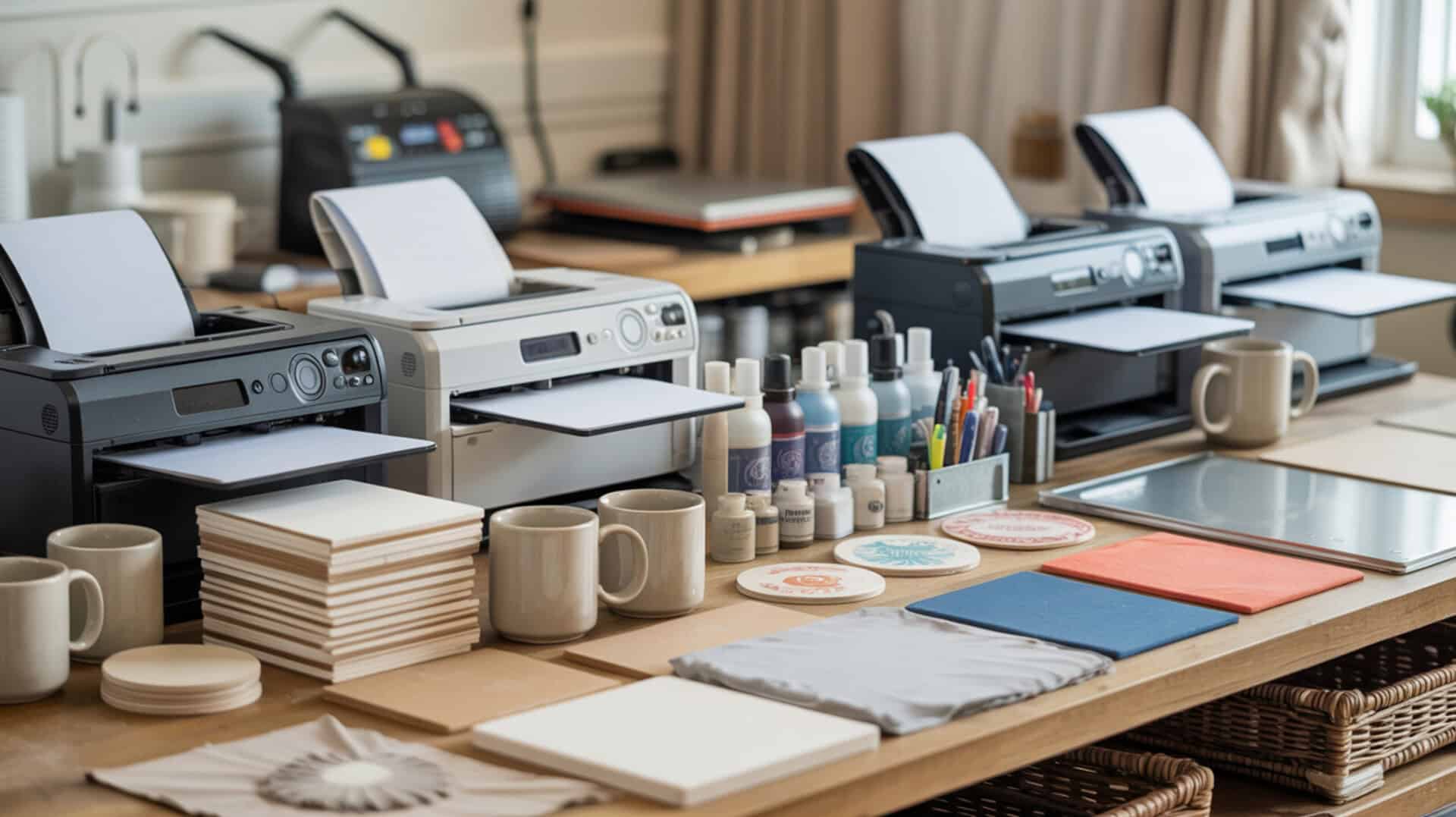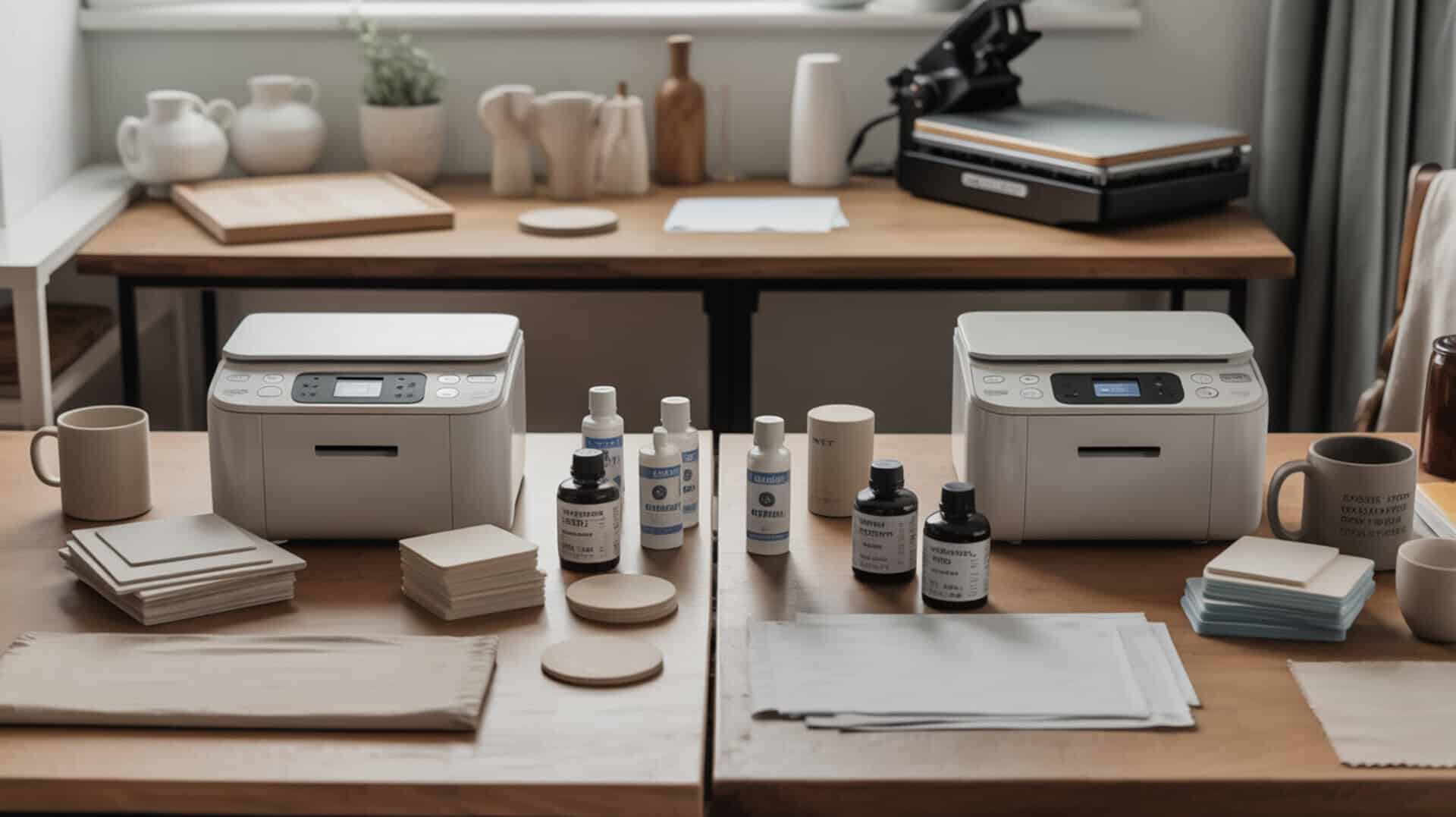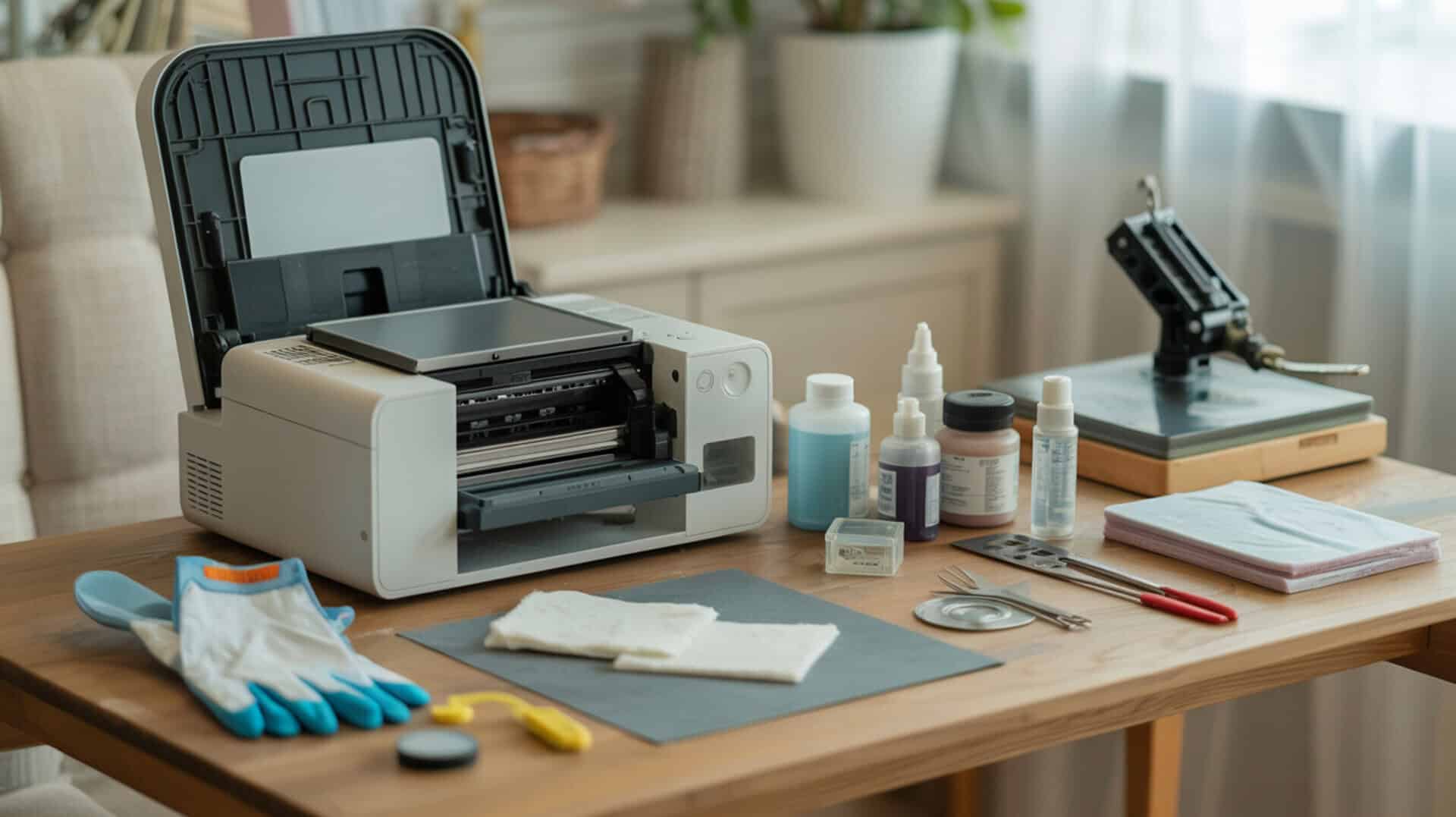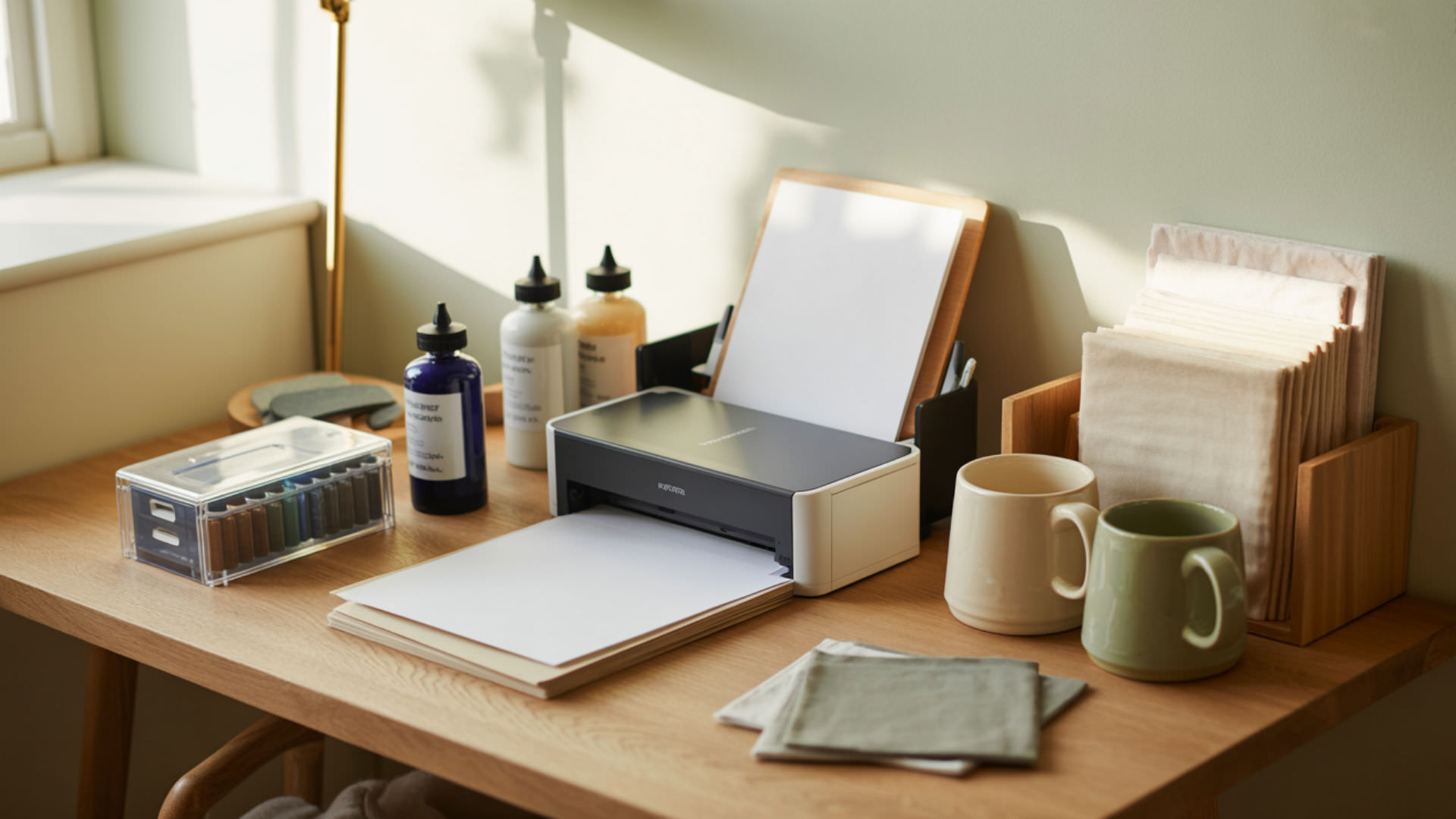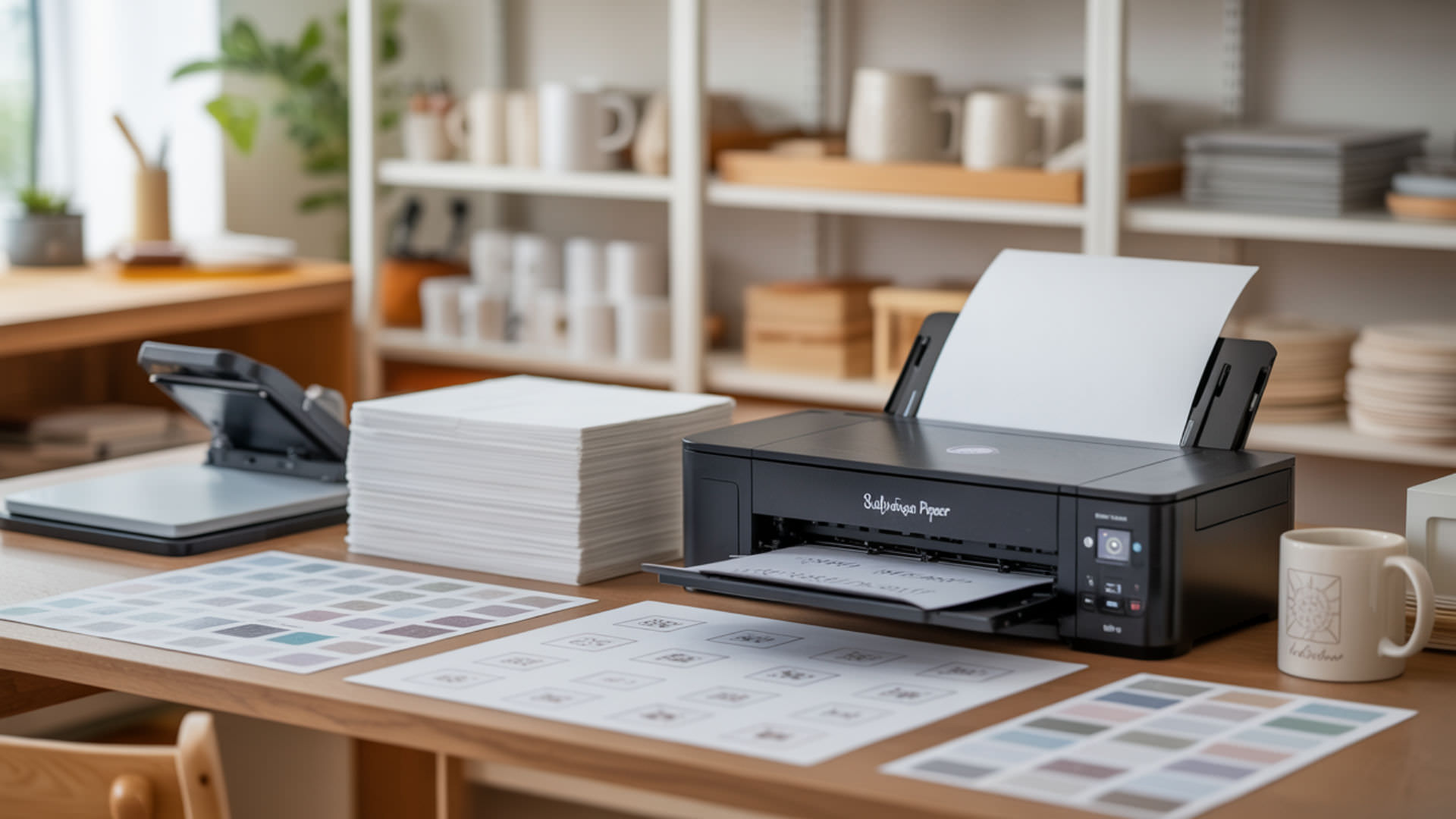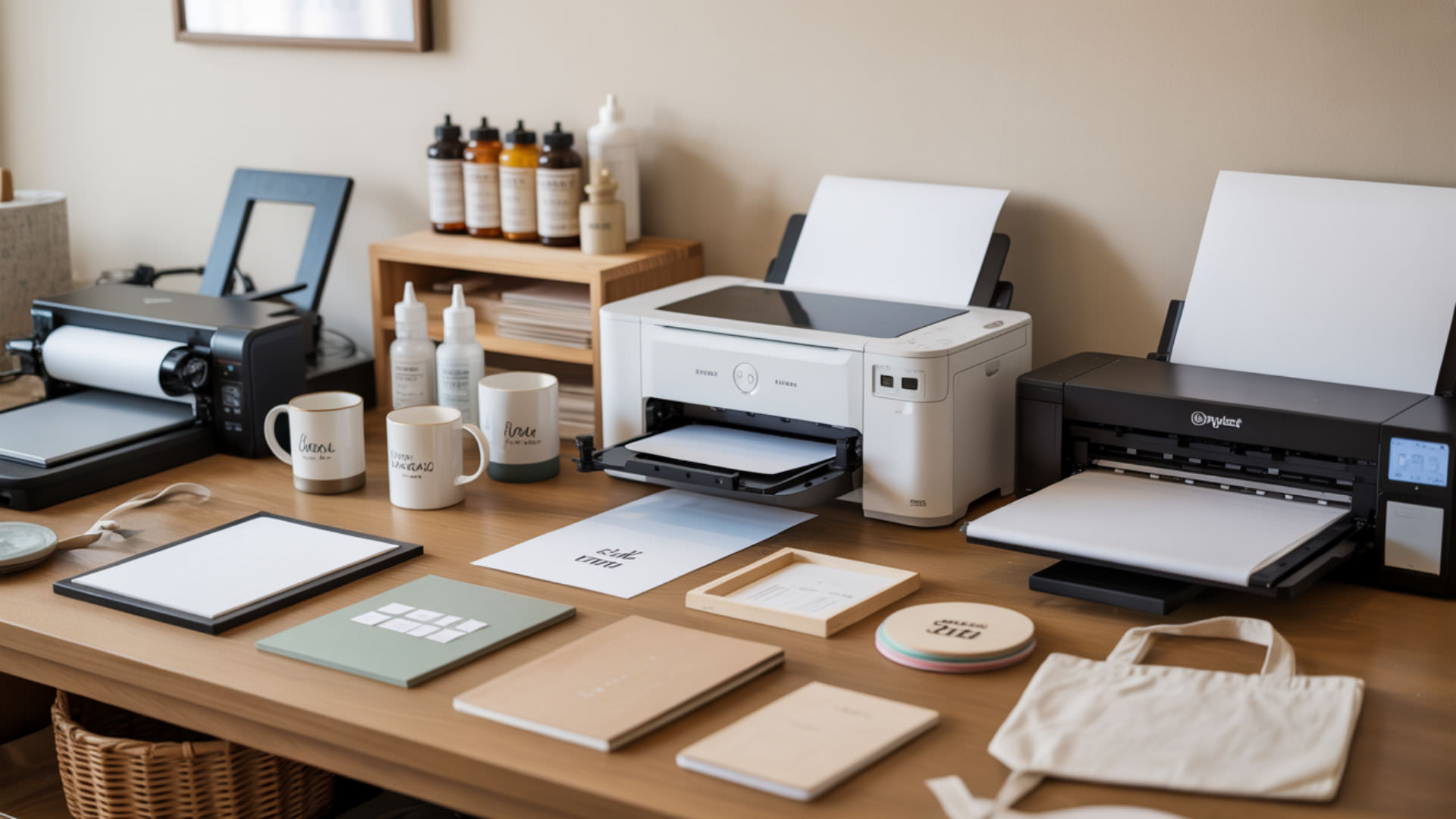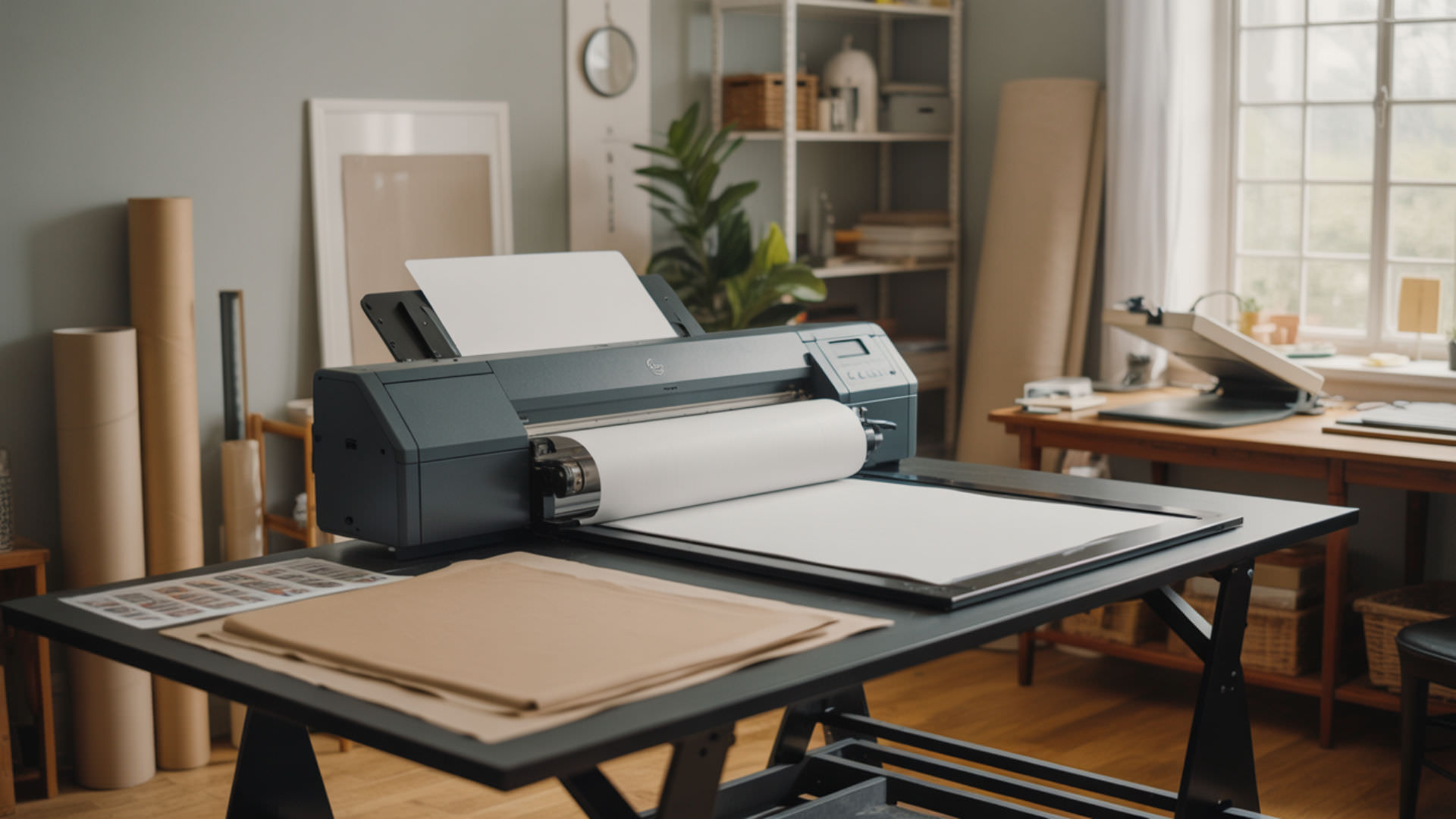
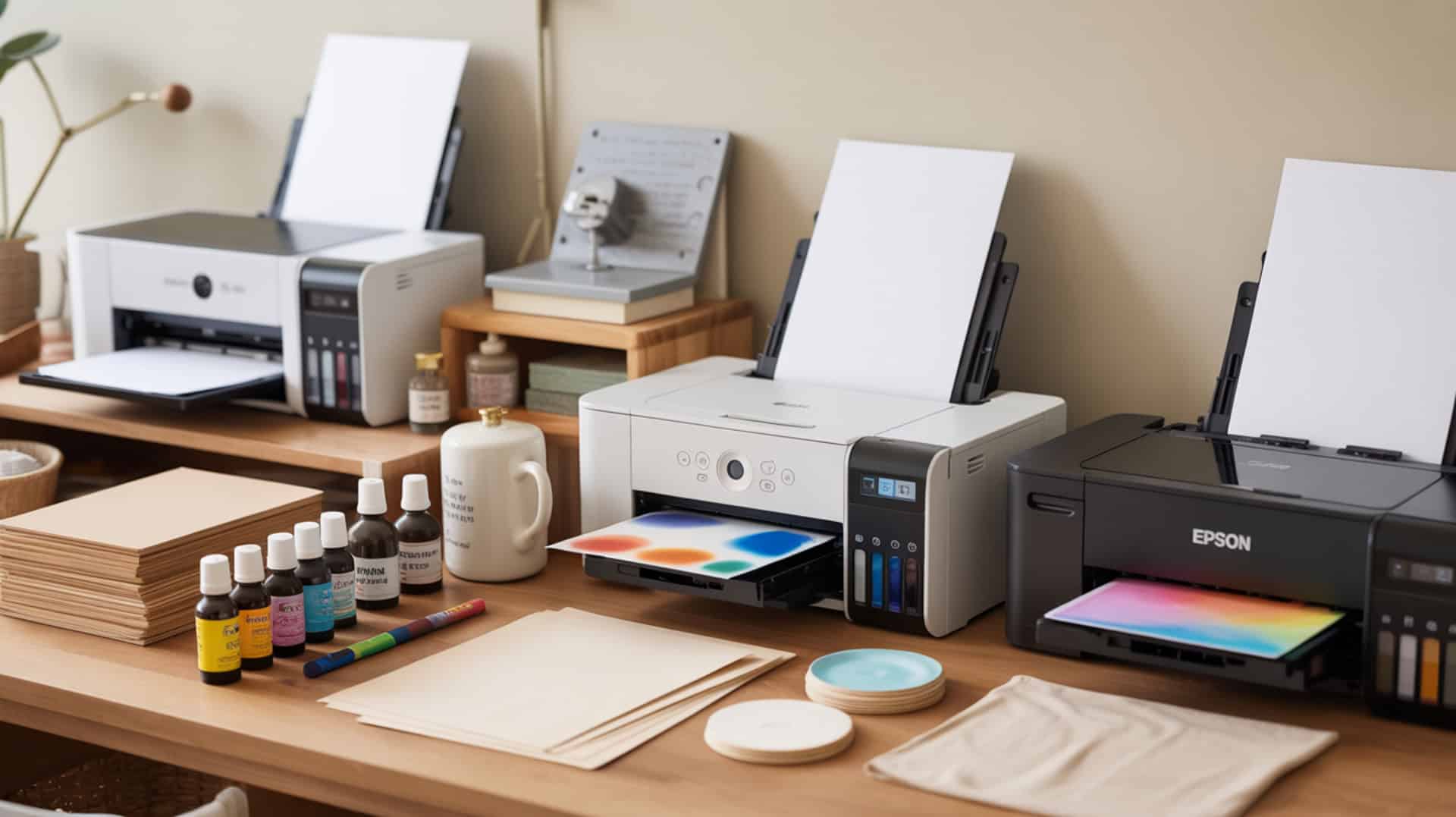
Epson supertank printers use piezoelectric actuator technology to eject ink droplets mechanically without heat, making them safe for sublimation ink conversion. Unlike thermal inkjet printers from Canon, HP, Lexmark, and Dell that use heater resistors to fire droplets, piezo heads avoid burning or altering sublimation dye chemistry during ejection. This mechanical firing mechanism enables EcoTank models to run disperse dye inks reliably for sublimation transfer printing. Because piezoelectric actuator technology determines conversion feasibility by enabling safe ink ejection without thermal damage, understanding the ejection mechanism difference helps you select the right printer for sublimation.
Key Takeaways
- Drop-on-demand (DOD) ejection provides stable droplet control that improves consistency when running disperse dye sublimation inks through converted EcoTank printers.
- Cartridge contamination from residual inks can mix with sublimation dye and shift color output—always use brand-new printers for conversion.
- The ET-15000 handles wide-format 13×19 printing, while the ET-2800 and ET-2400 offer budget-friendly letter-size conversion at similar quality levels.
Is the Epson EcoTank ET-2800 a Good Budget Choice for Sublimation Beginners?
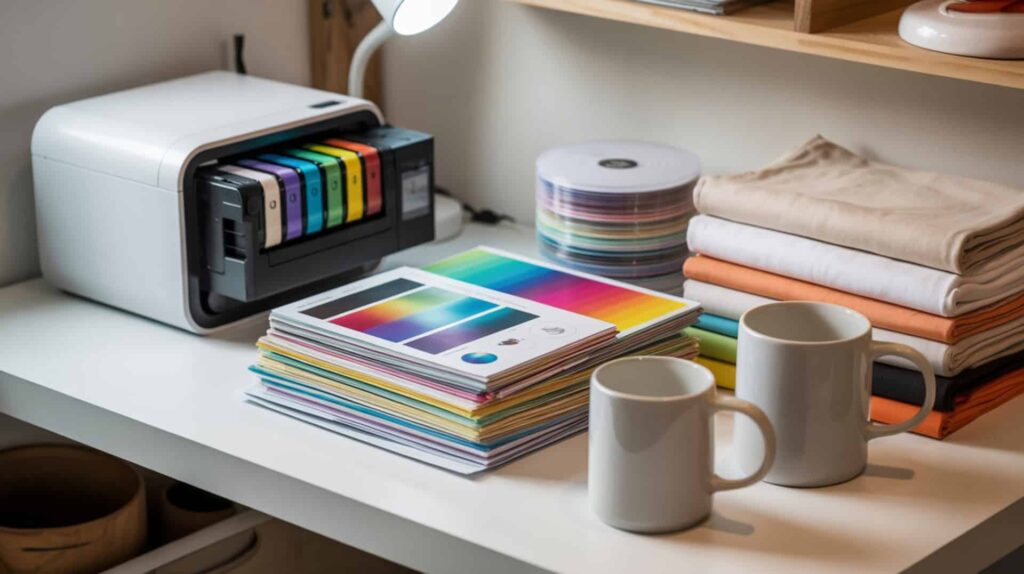
The Epson EcoTank ET-2800 is a supertank printer with refillable ink bottles and piezoelectric actuator technology that enables safe sublimation ink conversion. According to test evaluations, the conversion process requires simply filling the EcoTank reservoirs directly with sublimation ink—no syringes needed. The supertank design simplifies switching to sublimation ink, while piezo ejection ensures safe droplet formation for disperse dye inks without thermal damage. Because thermal inkjet printers cannot safely convert to sublimation, buyers need to understand the compatibility rule—piezo can convert while thermal inkjet is high-risk—explained in our guide on Epson EcoTank ET-2800 Sublimation Review
What kind of sublimation print quality can you expect from the Epson ET-2800?
The ET-2800 delivers vivid, vibrant color output once nozzle channels are properly cleared according to test documentation. Nozzle stability ensures color uniformity through consistent droplet ejection that supports even dye laydown before transfer. Dye diffusion during heat pressing determines final saturation, with test results at 370°F for 70 seconds producing colors described as “very vivid” on car coasters and “perfect” on photo coasters. Results on polyester shirts at 380°F for 45 seconds showed nice, vibrant output with no bleed-through. Polymer-based materials interact differently with heat and dyes, which explains why sublimation ink permanently bonds to polymer-coated substrates during the transfer process.[1]
What are the main pros and cons of the Epson EcoTank ET-2800 for sublimation?
The ET-2800 offers easy conversion without syringes, leak-proof ink bottles creating a cleaner workflow, and budget-friendly entry to sublimation according to test feedback. The fixed printhead design creates maintenance considerations: clogs require cleaning routines rather than simple head replacement, and multiple nozzle checks may be needed before color channels (especially cyan) become perfect. Cartridge contamination from residual inks can create dull or inaccurate transfers with color shifts, so only brand-new printers should be converted. One tester needed until the next day to fully resolve broken nozzle lines.
How does the Epson ET-2800 compare to other EcoTank sublimation options?
The ET-2800 positions between the budget ET-2400 and wide-format ET-15000 as a supertank printer option according to PDI analysis. Tank capacity affects cost-per-page (CPP), with higher ink volume reducing long-term cost per transfer. Test feedback contrasted EcoTank convenience against Workforce printers requiring needle and syringe for ink handling. Creators who previously used Printers Jack ink were surprised to prefer Hippo sublimation ink and considered switching, demonstrating the ET-2800 performs comparably to established conversion setups. You can find the Epson EcoTank ET-2800 Sublimation Printer here. [3][4]
Is the Epson EcoTank ET-15000 Worth It for Wide-Format Sublimation Printing?
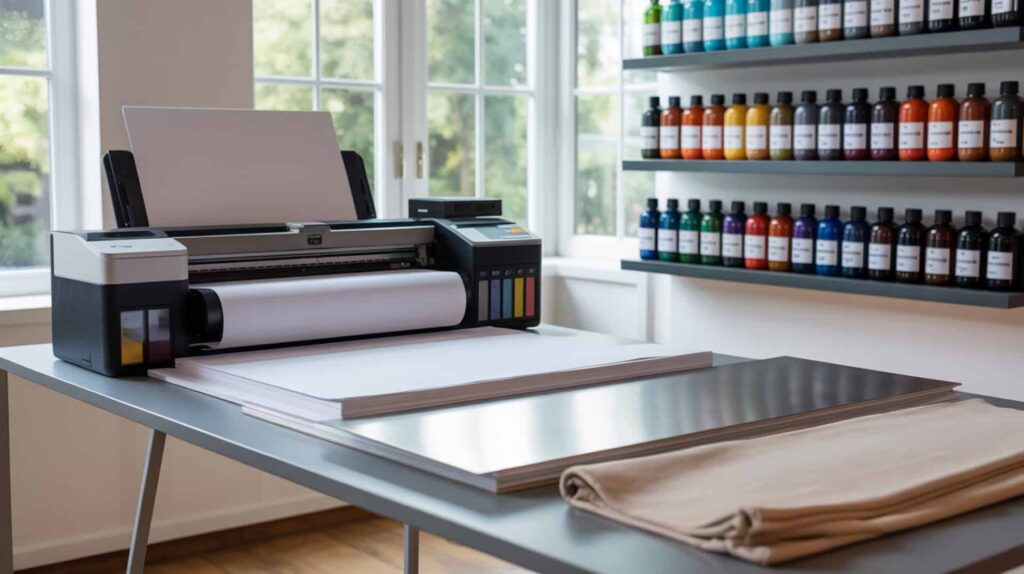
The Epson EcoTank ET-15000 is a wide-format ink tank printer with drop-on-demand (DOD) piezoelectric ejection and tubing-connected tanks supporting prints up to 13×19 inches. According to test evaluations, the tubing-fed delivery system provides continuous printing capability that supports larger-format workflows, while DOD ejection ensures controlled droplets that reduce banding in large designs before pressing. Because buyers often choose between converted supertank models and dedicated sublimation printers, comparing options helps determine the right investment—see our guide on How To Convert HP Printer To Sublimation Printer.
What sublimation print quality and performance does the Epson ET-15000 deliver?
The ET-15000 delivers results described as “vibrant,” “true,” and “gorgeous/amazing” on 13×19 shirt transfers according to test documentation. Nozzle performance ensures edge sharpness through stable droplet formation that preserves line detail at larger sizes. Continuous-tone output improves photo-style prints with smoother gradients after transfer. Testing at 400°F for 45-60 seconds on polyester fabric and 360°F for 113 seconds on shimmer totes produced clear transfers, though large prints may show slight variations if multi-pressing with undersized heat presses.
What are the biggest pros and cons of the Epson EcoTank ET-15000?
The ET-15000 offers large-format capability up to 13×19 with lower ink cost compared to Sawgrass according to test feedback—creators cite Sawgrass refills costing “hundreds” versus far less for EcoTank refills. Setup is described as “simple” and “beginner-friendly.” The fixed printhead as an inkjet printer creates cleaning dependency, with reliability depending on regular maintenance cycles. Clog risk exists—one creator replaced an ET-15000 due to persistent magenta clogging described as “a headache.” Converting with sublimation ink voids warranty, and large prints may require multi-pressing workarounds with smaller presses.
How does the Epson ET-15000 compare to other sublimation printer options?
The ET-15000 commands a retail premium price as a supertank model but avoids the cartridge-based business model pricing pressure that drives conversion interest. According to PDI comparisons, creators chose the ET-15000 over Sawgrass because Sawgrass ink refills cost “hundreds and hundreds of dollars” while EcoTank refills are substantially cheaper. Tank printers offer lower ongoing cost by avoiding cartridge pricing, making the higher upfront investment worthwhile for users with significant print volume. You can find the Epson EcoTank ET-15000 here.[5][6]
Can the Epson EcoTank ET-2400 Handle Your Sublimation Projects on a Budget?
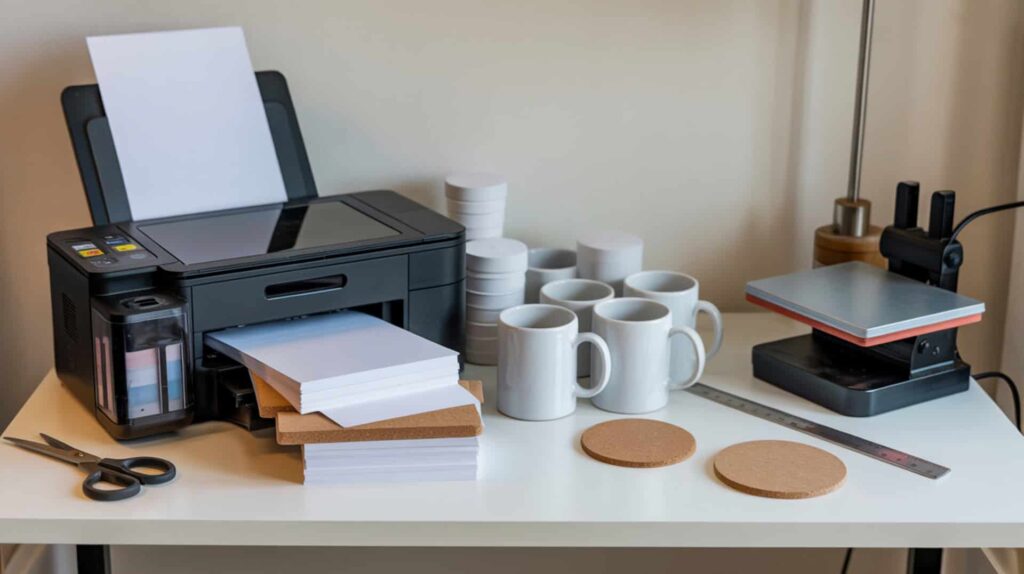
The Epson EcoTank ET-2400 is the most cost-effective supertank printer available for sublimation conversion, using the same ink bottles and piezoelectric technology as higher-tier EcoTank models. The bottle refill system supports low-cost conversion to sublimation inks without syringes. However, cartridge contamination from residual inks degrades sublimation color accuracy, requiring brand-new printers for conversion. Because mixing dye and pigment inks creates problems after conversion, understanding ink behavior helps maintain print quality—see our guide on Epson EcoTank ET-2400 Sublimation Review.
What sublimation results can you realistically get from the Epson ET-2400?
The ET-2400 produces successful sublimation transfers on polyester/polymer-coated substrates according to test documentation using both StarCraft and Hiipoo sublimation inks. Polyester substrate provides required bonding because disperse dyes only lock into hydrophobic fibers and polymer coatings. Proper dye diffusion yields strong wash-fast results with clear, transferred color after heat application. Testing confirmed the printer is fully functional for sublimation after conversion, with final pressed results showing correct color only after heat activation.
What are the pros and cons of using the Epson EcoTank ET-2400 for sublimation?
The ET-2400 offers the lowest-cost EcoTank entry point with identical conversion simplicity to other models according to test feedback. No cartridges or syringes are required, ink bottles are mostly mess-free, and the printer works with multiple sublimation ink brands including StarCraft and Hiipoo. Inkjet printer maintenance requirements apply: nozzle clogging requires routine cleaning and frequent printing with disperse dye inks. Initial setup takes approximately 45 minutes, warranty is voided, prints appear dull before pressing (confusing beginners), and output is limited to letter-size/A4.
How does the Epson ET-2400 compare to the ET-2800 and other budget options?
The ET-2400 and ET-2800 share identical drop-on-demand (DOD) piezoelectric technology with the same conversion process yielding similar sublimation results according to PDI analysis. Tank size affects cost-per-page (CPP) differences, with larger reservoirs reducing ink cost per transfer over time. The ET-2400 represents the cheapest entry point, while pre-printed sublimation sheets like Infusible Ink are mentioned as more restrictive in design flexibility and turnaround time compared to owning a converted printer. You can find the Epson ET-2400 here. [7][8]
Which Epson EcoTank Printer Is the Best Fit for Your Sublimation Needs?
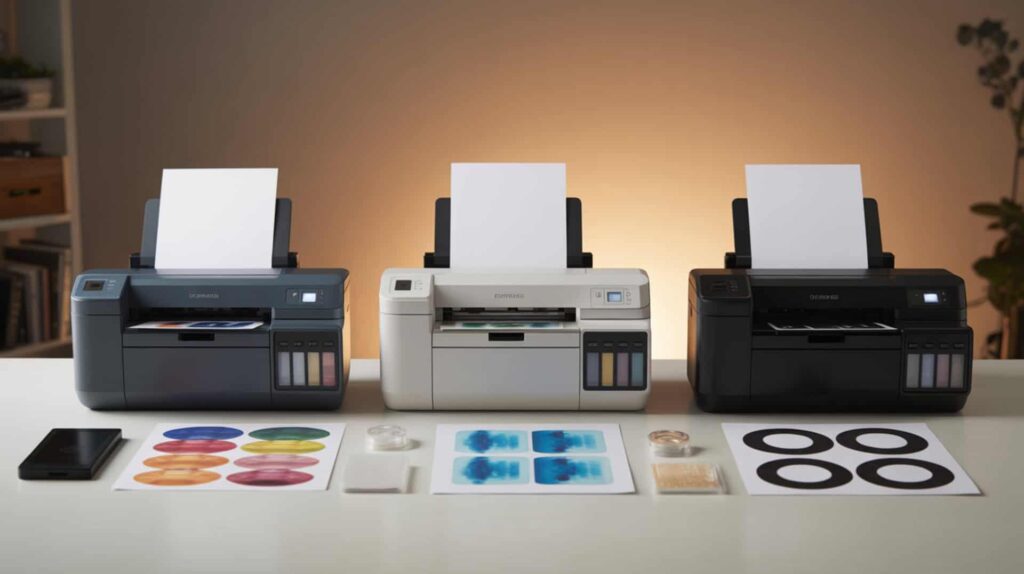
Selecting the right EcoTank for sublimation depends on matching cost-per-page (CPP) requirements to inkjet printer maintenance tolerance while considering sublimation transfer printing volume. Workflow demand determines model choice: output volume dictates whether CPP savings or maintenance burden matters most. The ET-15000 suits users needing wide-format 13×19 capability despite the premium price. The ET-2800 and ET-2400 deliver similar letter-size sublimation quality at budget-friendly price points, with conversion process identical across all three models.
Ready to Convert Your Epson EcoTank for Sublimation?
The Epson EcoTank ET-15000 commands the highest price but delivers wide-format 13×19 capability suited for large sublimation projects and users with significant print volume seeking lower ongoing ink costs versus Sawgrass alternatives. The ET-2800 and ET-2400 produce similar sublimation results for letter-size projects, with the ET-2400 offering the absolute lowest entry cost and the ET-2800 providing a slight step up in general features. Both budget models work well for beginners starting with small-format sublimation. For more advanced users seeking better results and simplified workflow, I recommend considering a dedicated sublimation printer instead of conversion to avoid warranty voiding, clogging risks, and maintenance requirements inherent to converted EcoTank systems.[2]
Frequently Asked Questions
Can all Epson EcoTank printers be used for sublimation printing?
Epson EcoTank printers with piezoelectricity-based printheads can convert to sublimation printing because the piezo mechanism supports disperse dye inks safely. The ET-2400, ET-2800, and ET-15000 all use piezoelectric actuators that eject droplets mechanically without heat. Thermal inkjet printers from Canon, HP, Lexmark, and Dell cannot convert because heater resistors degrade sublimation dye chemistry. Always verify your specific model uses piezo technology before purchasing for conversion.
What is the difference between the Epson EcoTank ET-2800 and ET-2803?
The ET-2800 and ET-2803 share identical piezoelectricity-based printhead technology and EcoTank supertank design suitable for sublimation conversion. Both models support the same disperse dye sublimation inks and produce comparable print quality. Minor differences exist in included accessories or regional packaging rather than core printing specifications. For sublimation purposes, either model converts identically using the same process of filling tanks directly with sublimation ink before first use.
Does the Epson ET-2800 use pigment ink or dye-based ink?
The stock Epson ET-2800 ships with Epson’s standard EcoTank ink, but for sublimation conversion you replace this with disperse dye sublimation ink before first use. The piezoelectricity printhead mechanism supports both ink types mechanically. However, you cannot mix ink types—the included Epson ink must never be installed if converting to sublimation, as residual ink causes contamination and color shifts. Always use brand-new printers filled only with sublimation ink.
How big can the Epson EcoTank ET-2800 print for sublimation projects?
The Epson ET-2800 prints up to letter size (8.5×11 inches) and A4 for sublimation projects. For larger sublimation needs, the ET-15000 supports wide-format printing up to 13×19 inches (Super B/A3 size). Both models use piezoelectricity for safe disperse dye handling during sublimation transfer printing. Print size selection depends on typical project requirements—the ET-2800 suits standard apparel graphics and small items, while the ET-15000 handles all-over prints and larger substrates.
Can you convert an Epson EcoTank printer into a DTF printer instead?
Epson EcoTank printers with piezoelectricity printheads can technically run DTF (direct-to-film) inks, though DTF requires additional specialized components including white ink capability, film media, and powder shaking/curing equipment. Standard EcoTank models like the ET-2800 and ET-2400 lack white ink channels required for DTF workflows. For sublimation conversion using disperse dye inks, EcoTank printers work effectively. DTF conversion requires different printer models specifically designed for that process.
References
- Modeling polymers for next-generation manufacturing and sustainability. (n.d.). Energy.gov. https://www.energy.gov/science/bes/articles/modeling-polymers-next-generation-manufacturing-and-sustainability
- Dye-sublimation printing. (2026, January 28). Wikipedia, the free encyclopedia. Retrieved February 4, 2026, from https://en.wikipedia.org/wiki/Dye-sublimation_printing