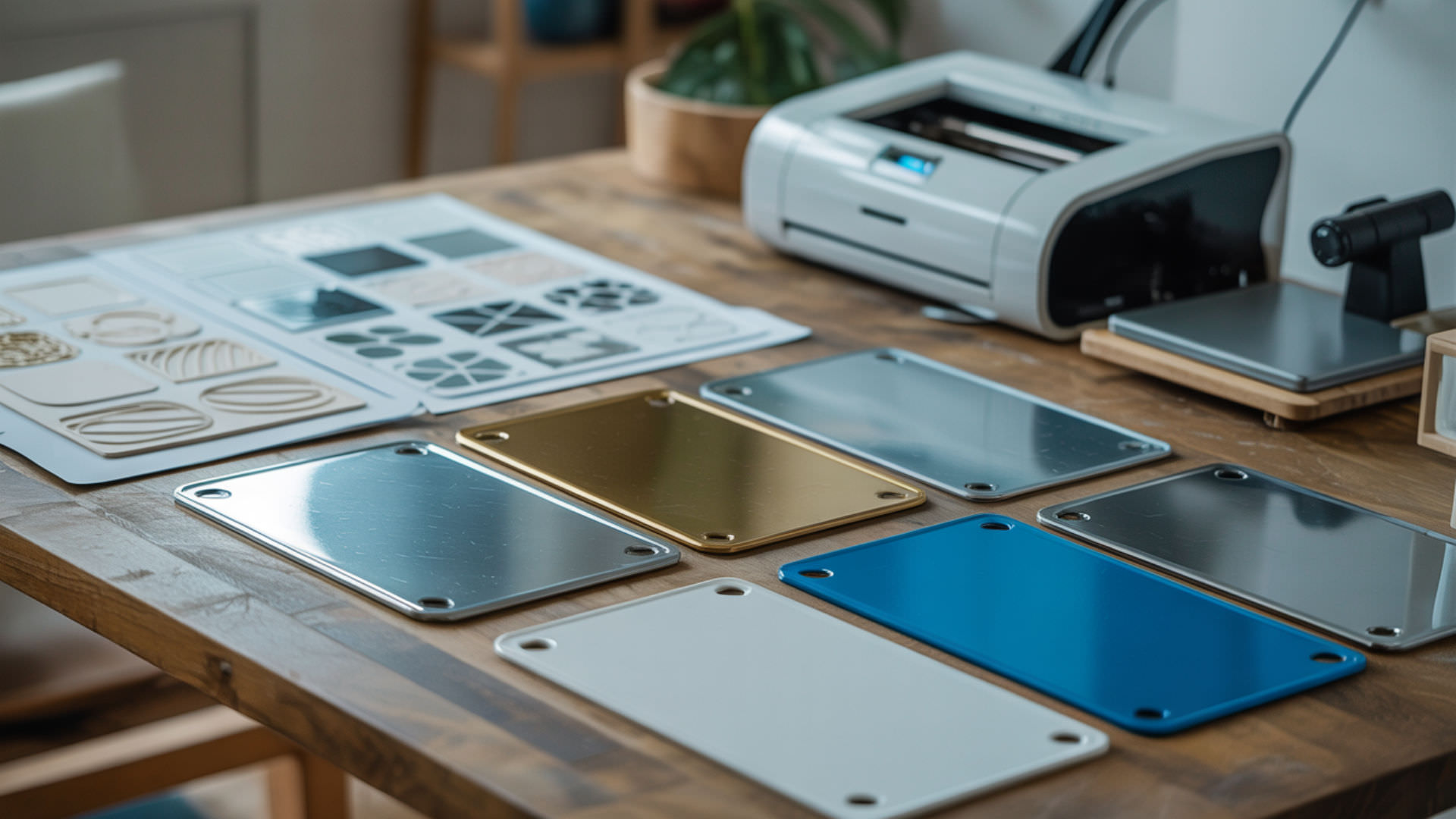
Sublimation license plates transform aluminum blanks into personalized vehicle accessories, decorative displays, and memorable gifts with permanent, weather-resistant designs. Aluminum forms a natural oxide layer that prevents dye bonding, requiring a polymer coating to enable sublimation gas diffusion into the surface. The coating creates a receptive layer where sublimation ink can deposit and solidify during heat pressing. Understanding sublimation fundamentals helps you achieve consistent results across all gift categories—our sublimation gift ideas hub covers the core process.
Key Takeaways
- Aluminum license plates require sublimation-specific polymer coating—uncoated or bare metal will not bond with dye regardless of heat.
- Standard settings of 400°F for 60–80 seconds with medium pressure produce consistent results across most coated aluminum blanks.
- High-quality sublimation plates withstand outdoor conditions, though prolonged UV exposure eventually causes gradual color fading.
Can License Plates Take Sublimation Transfers on Their Surface?
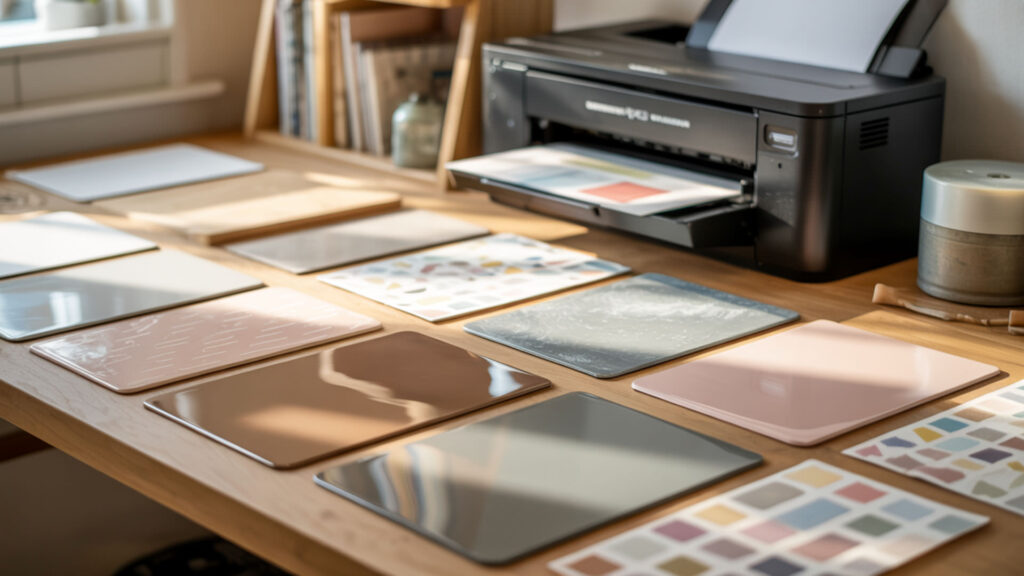
License plates can accept sublimation transfers only when manufactured with a polymer coating specifically designed for dye bonding. Aluminum naturally develops an oxide layer that blocks dye penetration—sublimation ink applied to bare metal would simply wipe away without permanent adhesion. A thin-film polymer coating creates the dye-receiving surface where gas-phase ink can penetrate and solidify during heat pressing. Quality sublimation blanks feature UV-resistant coatings designed for outdoor durability. Polymer-based materials provide the molecular structure required for dyes to bond permanently under heat and pressure.[1]
Can Any Metal Plate Be Sublimated Successfully?
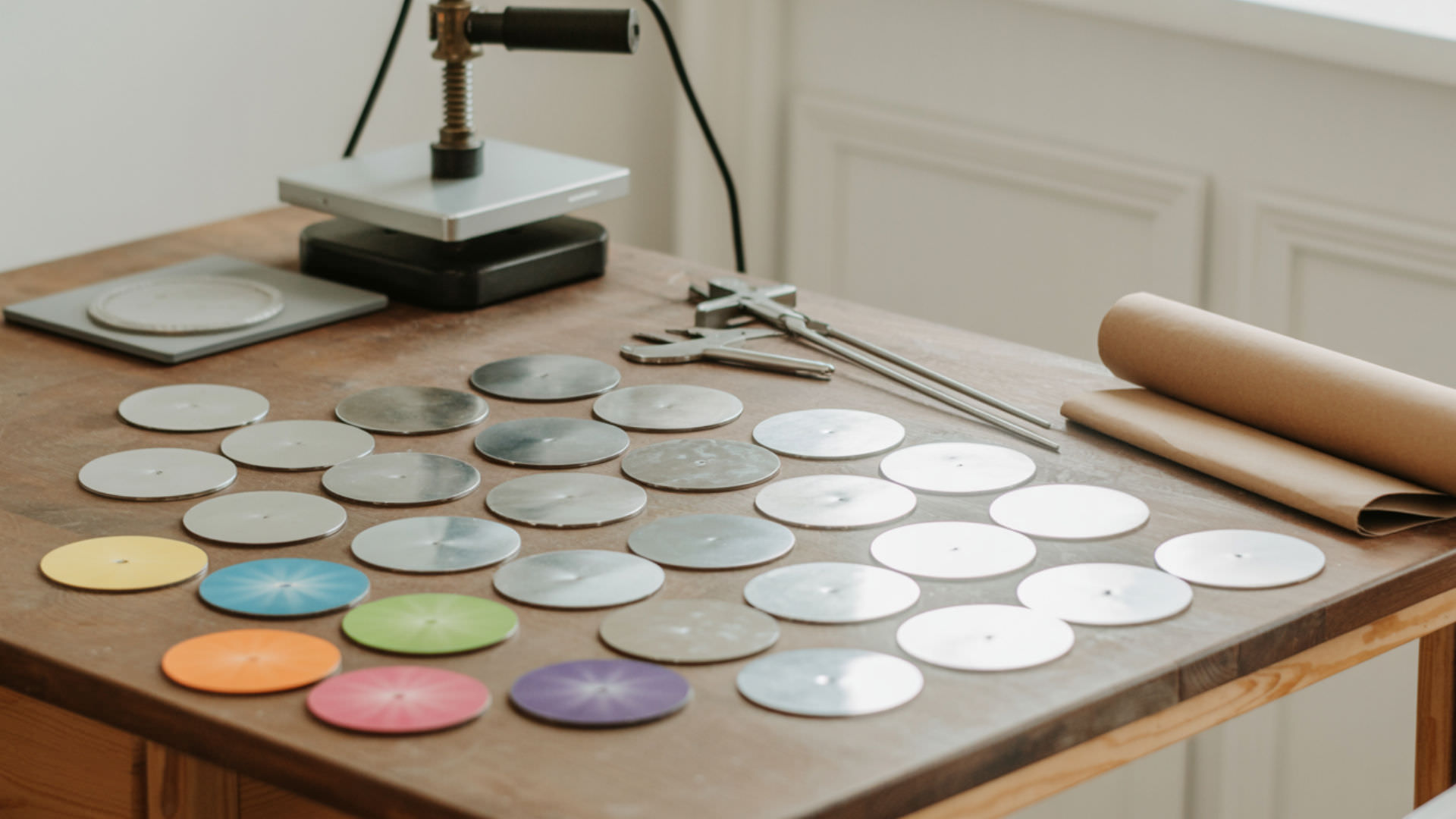
Metal surfaces cannot be sublimated without specialized preparation—the oxide barrier on aluminum, steel, and other metals prevents dye penetration. The surface must be pre-coated using powder coating or spray coating that provides a polymer layer where dye can diffuse during pressing. Both license plates and car decals depend on surface adhesion performance for durable results—our sublimation car decals guide covers adhesion requirements for vehicle applications.
What Heat Levels Matter Most When Sublimating a License Plate?
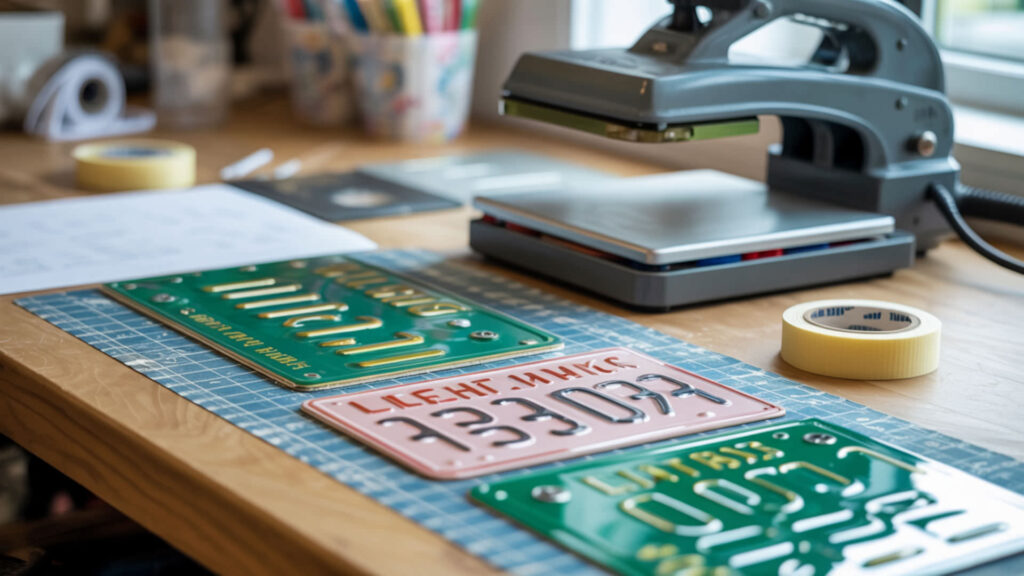
Temperature control determines both color vibrancy and transfer quality on aluminum license plates. High thermal conductivity allows aluminum plates to heat uniformly across the entire surface, promoting even dye distribution. Vapor pressure activates when temperatures reach 380–400°F, converting solid sublimation ink to gas that penetrates the polymer coating. Accurate temperature control through quality equipment directly impacts sublimation color quality—our best sublimation gifts guide covers essential tools for consistent results.
What Temperature Should Be Used and How Long Does Sublimation Take on License Plates?
License plates sublimate best at 400°F (204°C) for 60–80 seconds with medium pressure—these settings produce vibrant, fully saturated colors on most coated aluminum blanks. Thermal expansion increases at high temperatures, and overheating risks warping the thin aluminum sheet. Balanced temperature and time prevent distortion while ensuring complete dye transfer into the polymer coating. Start with manufacturer recommendations and adjust based on your specific equipment’s performance.
What Pressure Is Typically Used When Sublimating on Coated Metal Plates?
Medium to heavy pressure ensures full ink transfer without distorting the aluminum plate surface during pressing. Adhesion between the sublimation paper and coating determines how evenly dye deposits into the thin film—insufficient pressure creates light spots or incomplete coverage. The thin film coating accepts dye most effectively when transfer paper maintains consistent contact across the entire plate surface throughout the pressing cycle.
How Does Pressure Affect Sublimation on License Plates?
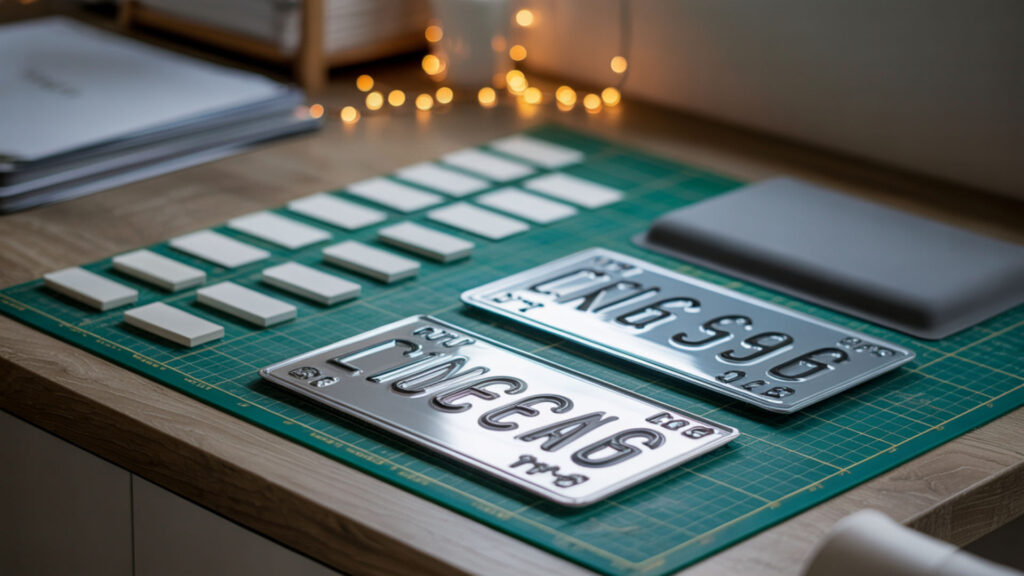
Pressure ensures transfer paper maintains contact with the coated surface, allowing even deposition of gas-phase dye into the thin film polymer layer. When pressure is too light, gaps between paper and coating cause faded areas where dye cannot penetrate properly. Adhesion quality between paper and surface directly affects sharpness—consistent medium pressure produces cleaner edges and more uniform color saturation than light or excessive force.
How Do You Sublimate on a License Plate Step-by-Step?
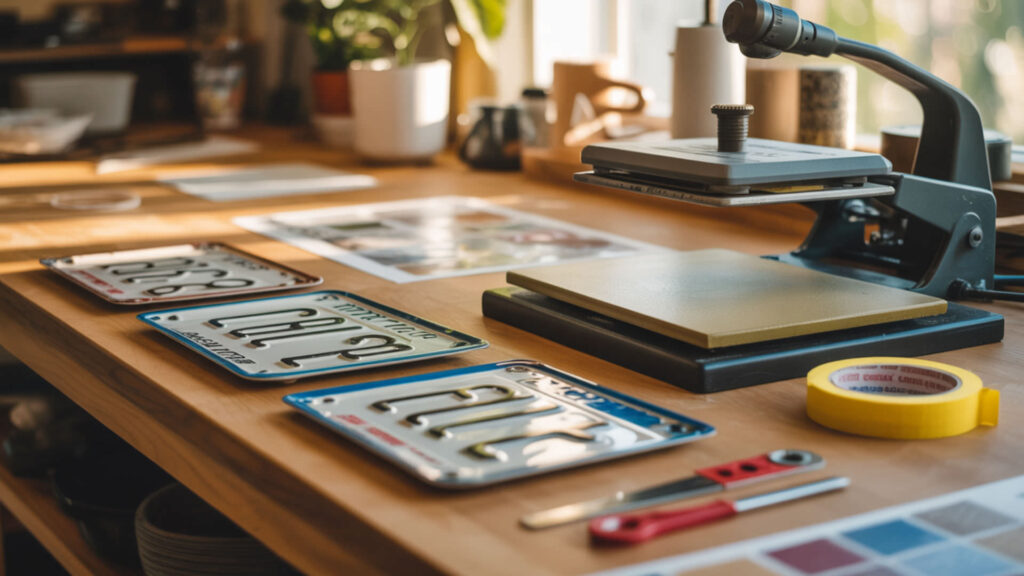
Successful license plate sublimation requires proper heat application to convert dye to gas phase for deposition into the polymer coating, creating a stable bonded design. Both license plates and bookmarks rely on thin-film polymer coating for even dye uptake—our sublimation on bookmarks guide covers similar pressing techniques.
- Remove the protective film from the coated side of the aluminum license plate blank. This film protects the coating during shipping but prevents dye bonding if left in place.
- Lint roll the entire coated surface to remove dust, debris, and fingerprint oils. Any contamination on the coating creates visible defects in the finished design.
- Print your mirrored design onto sublimation paper sized to cover the 6″ × 12″ plate surface. Use high-quality sublimation ink for best color saturation on metal substrates.
- Place the sublimation print face-down on the coated side and secure with heat-resistant tape. Tape all edges and corners to prevent any shifting during the pressing cycle.
- Place a Nomex pad or sublimation felt on the heat press base followed by protective paper. This padding prevents heat marks on the aluminum backing.
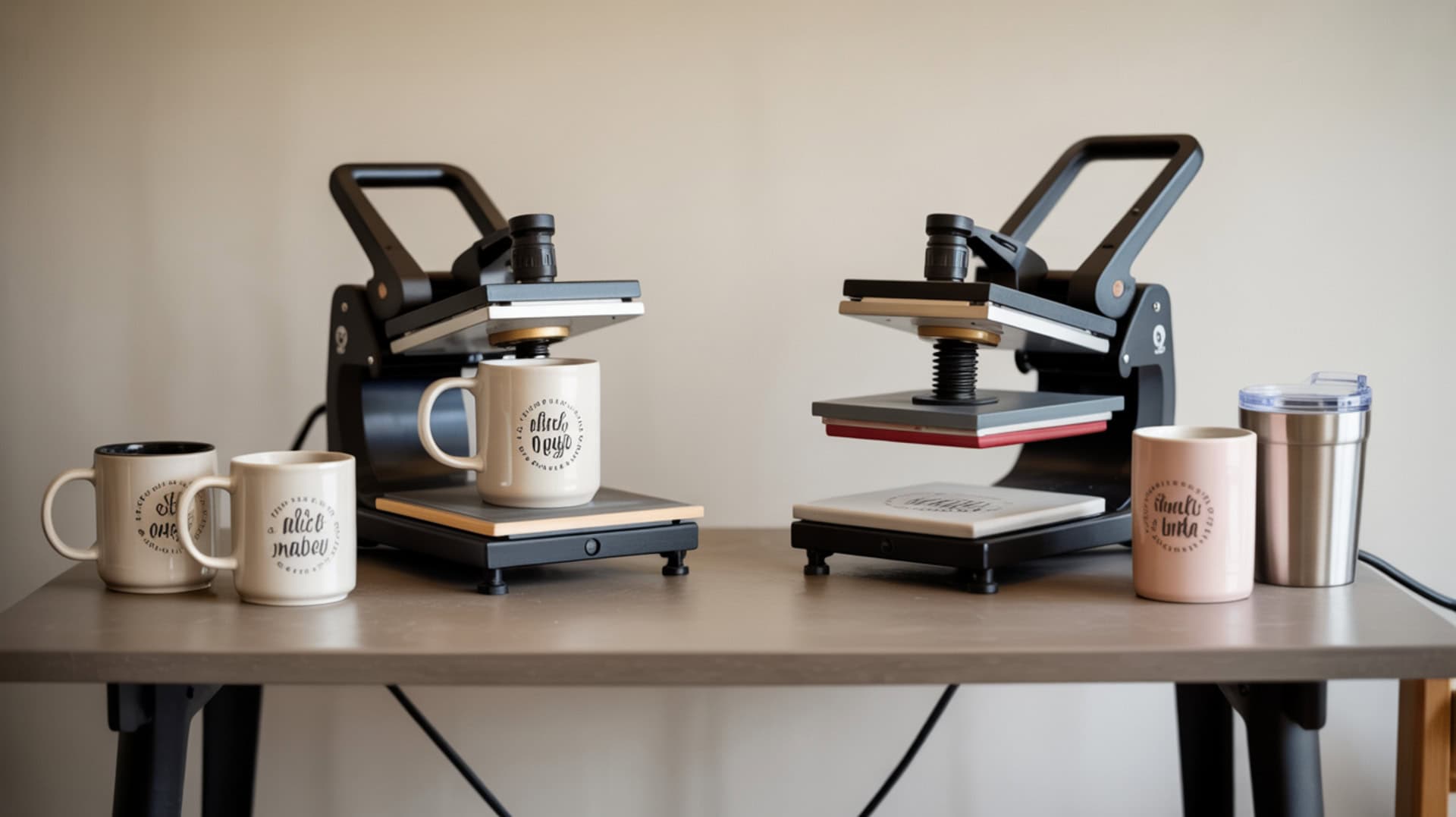
- Position the plate with sublimation print facing up, add protective paper on top, and press at 400°F for 60–80 seconds. Use medium pressure throughout the pressing cycle without opening mid-press.
- Using heat-resistant gloves, immediately remove the plate and peel the transfer paper while still hot. Allow the plate to cool completely before handling the printed surface to avoid smudging.
What Are the Standard Dimensions of Sublimation License Plates?
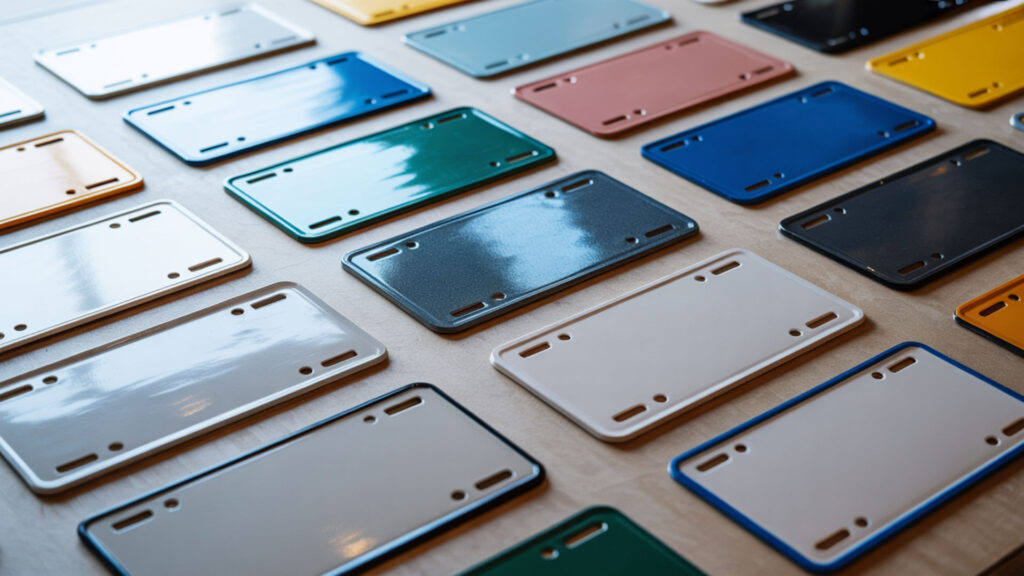
Sublimation license plate blanks follow standard US vehicle plate dimensions to ensure compatibility with license plate frames and mounting hardware. Sheet metal manufacturing processes define consistent sizing across suppliers, allowing standard design templates to work universally. Most blanks measure approximately 6″ × 12″ with pre-drilled mounting holes that align with standard vehicle plate brackets.
How Big Is a Standard Size Coated Metal License Plate?
Standard sublimation aluminum license plates measure approximately 5.875″ × 11.875″ to 6″ × 12″, with thickness around 0.025–0.045 inches. These aluminum sheet dimensions dictate template setup for design files—create artwork at 6″ × 12″ with safe margins inside the mounting holes. Motorcycle and specialty plates measure smaller at 4″ × 7″, requiring separate design templates scaled appropriately.
How Should Sublimated License Plates Be Handled After Pressing?
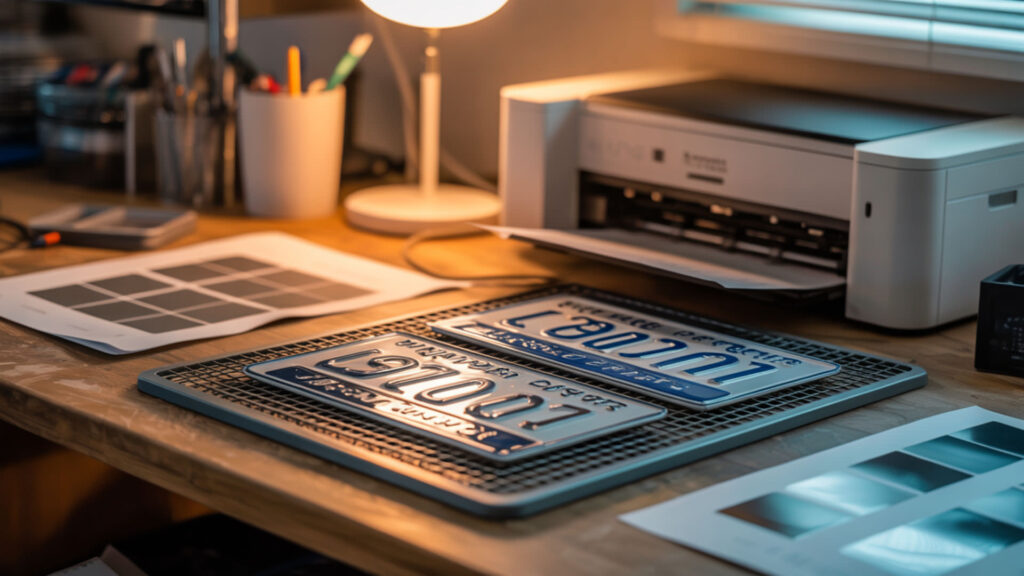
Aluminum’s high thermal conductivity means license plates retain heat longer than fabric or paper substrates, requiring careful handling to protect both operator safety and print quality. The plates remain extremely hot immediately after pressing—always use heat-resistant gloves when removing from the press. Allow complete cooling before touching the printed coating surface, as handling hot plates can smudge the design or leave fingerprints that affect coating integrity and final appearance.
Do Sublimation Transfers Fade Over Time on License Plates?
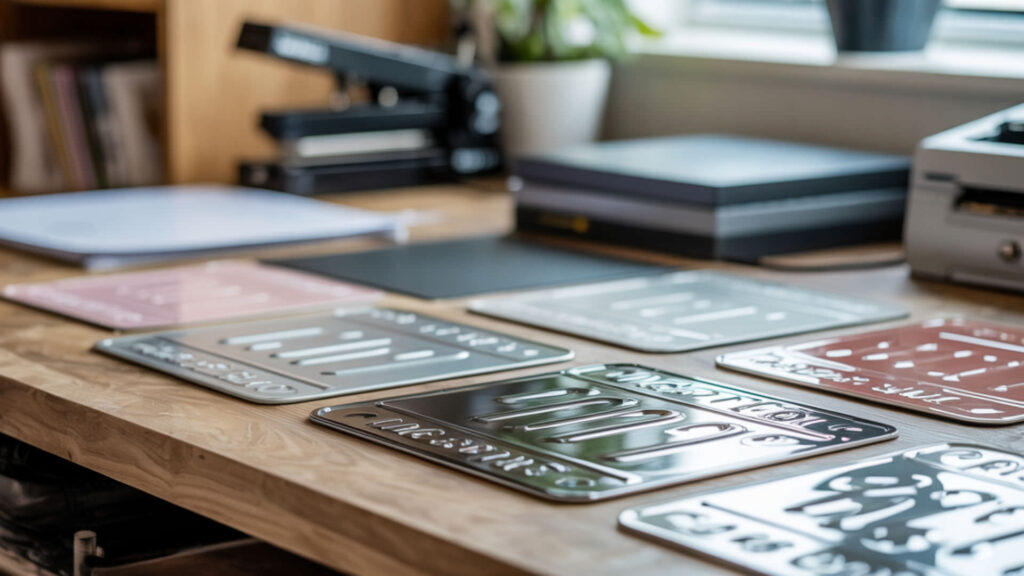
High-quality sublimation license plates offer excellent durability, waterproof performance, and resistance to fading under normal conditions. However, UV degradation from prolonged sun exposure gradually breaks down polymer molecules in the coating, reducing wear resistance over years of outdoor display. Quality blanks with UV-resistant coatings maintain vibrant colors longer than economy alternatives. Front-of-vehicle mounting exposes plates to maximum sunlight, accelerating gradual fading compared to shaded display locations.Ultraviolet radiation gradually degrades exposed materials over time, contributing to color fading during long-term outdoor exposure.[2]
Ready to Create Sublimated License Plate Designs?
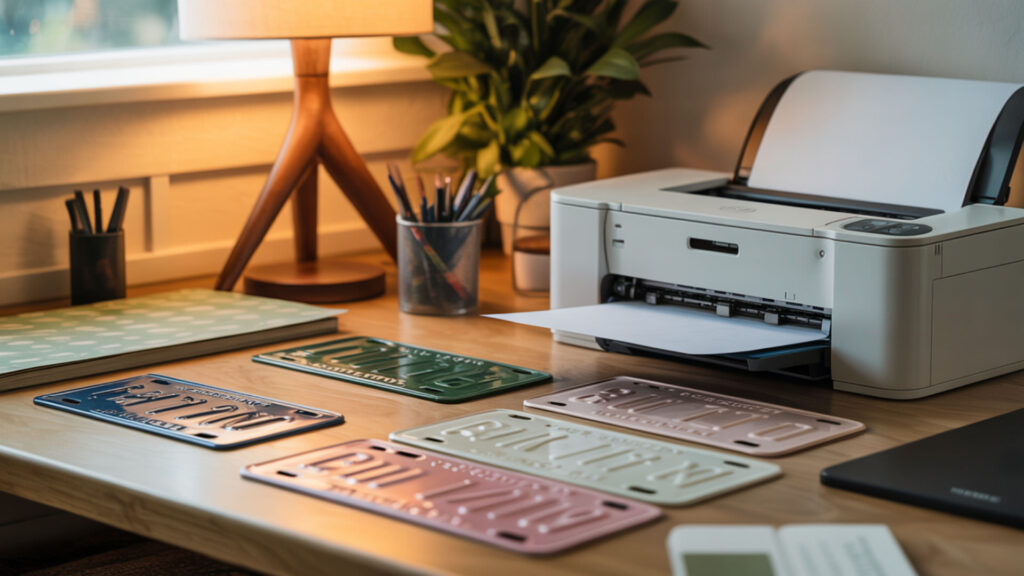
Coating quality directly impacts final appearance and longevity of sublimated license plates—invest in blanks with UV-resistant polymer layers for outdoor applications. Start with manufacturer-recommended settings and test on a sample plate before committing to production runs. Popular design themes include sports teams, car clubs, family names, memorial tributes, and business branding that transforms vehicle fronts into mobile advertising.
Frequently Asked Questions
Can sublimation transfers look light even if the original file was high contrast?
Light results despite high-contrast source files typically indicate insufficient heat, short pressing time, or coating quality issues. Dye diffusion into the polymer layer requires adequate temperature and duration—increase temperature by 5–10°F or extend pressing time by 10–15 seconds if colors appear washed out. Coating thickness also affects saturation, with thinner coatings producing lighter results than premium alternatives.
Is ghosting on coated metal different from ghosting on fabric?
Ghosting on metal typically results from transfer paper movement during pressing rather than the dye migration that causes fabric ghosting. The rigid aluminum surface and non-absorbent coating make metal less forgiving of paper shifts than flexible fabric. Secure transfers firmly with heat-resistant tape on all edges and avoid opening the press mid-cycle to prevent shadow images from paper movement.
Can humidity influence sublimation clarity on coated metal?
Moisture affects metal sublimation differently than fabric because the non-porous coating cannot absorb humidity like polyester fibers. However, condensation on cool metal surfaces or humidity in the sublimation paper itself can cause steam during pressing, creating bubbling or clarity issues. Store blanks and paper in dry conditions, and pre-heat plates briefly to drive off any surface moisture before applying transfers.
Is fading on license plates gradual over time instead of immediate after transfer?
Fading on quality sublimation plates occurs gradually over months or years of UV exposure rather than appearing immediately after pressing. Properly transferred designs maintain full saturation for extended periods under normal conditions—if colors appear light immediately, the issue relates to transfer settings rather than fading. UV-resistant coatings significantly extend vibrancy, with quality blanks maintaining color for 3–5+ years of outdoor display.
Can intricate details show soft edges more than bold solid graphics?
Fine details and thin lines may appear softer than bold graphics due to the deposition process where gas-phase dye diffuses into the coating. Intricate designs benefit from slightly higher pressure to ensure complete paper-to-coating contact across all design elements. Bold, solid graphics produce the sharpest results on metal substrates, while very fine text or detailed line work may lose some crispness during the sublimation process
References
- Sustainable management of plastics. (2026, January 12). US EPA. https://www.epa.gov/plastics
- Ultraviolet (UV) radiation and sun exposure. (2025, March 20). US EPA. https://www.epa.gov/radtown/ultraviolet-uv-radiation-and-sun-exposure