
Sublimation printing on hats requires understanding the relationship between fabric composition and disperse dyes. Polyester fibers accept disperse dyes through a heat-activated bonding process that creates permanent, vibrant graphics on baseball caps, trucker hats, and bucket hats. For a complete guide to fabric compatibility, see our article on polyester and other sublimation-friendly materials. Cotton twill panels found on many hats cannot bond with disperse dyes unless specially coated, making material selection critical before starting any hat sublimation project.
Key Takeaways
- Polyester hats with at least 65% polyester content produce the most vibrant and durable sublimation results.
- Pressure adjustment is essential for curved hat surfaces to ensure complete dye transfer without ghosting or uneven prints.
- Temperature settings between 380-400°F for 35-60 seconds work for most polyester hats, while foam panels require lower heat at 340°F to prevent warping.
Can sublimation transfers bond to hats without coatings?
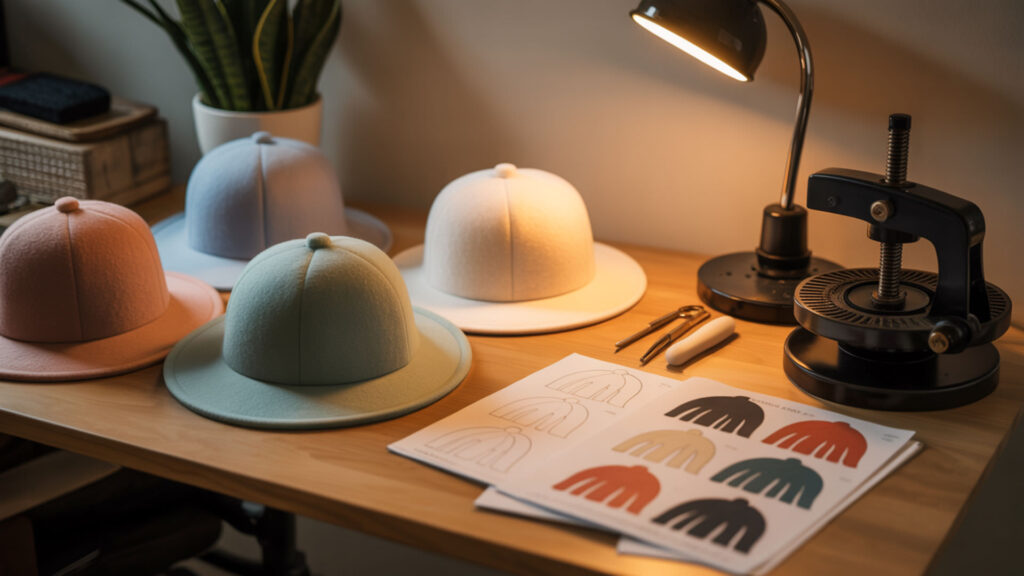
Polyester hats bond with disperse dyes without requiring any polyester coating or pre-treatment because the synthetic fibers naturally accept dye molecules during the heat transfer process. Cotton twill panels, however, lack the polymer structure needed to absorb disperse dyes and will produce faded, washed-out results without a specialized sublimation coating applied first. The key distinction is fiber composition—synthetic polyester opens its molecular structure under heat to trap dye permanently, while natural cotton twill fibers resist dye penetration entirely. Synthetic polyester fibers soften under heat and allow dye molecules to diffuse into the fiber structure, which explains why polyester hats bond with sublimation ink without coatings. [1]
Can foam trucker hats hold sublimation when pressed correctly?
Foam front panels can hold sublimation prints when pressed at lower temperatures, typically around 340°F for 45 seconds with firm pressure. The main risk with foam is warping—excessive heat causes the foam structure to compress, shrink, or distort permanently. Using a dedicated cap press helps control heat exposure to only the decorated area while protecting the rest of the hat structure from thermal damage.
Do polyester hats perform better than foam for sublimation clarity?
Polyester panels deliver sharper, more durable sublimation prints than foam because the synthetic fibers create a tighter bond with disperse dyes at the molecular level. This fiber advantage explains why polyester performs so differently than natural fibers in sublimation applications. Mesh panels made from polyester mesh also sublimate well, allowing full coverage designs that extend across the hat’s back sections. Foam produces acceptable results but tends to show slightly softer edges and may fade faster over time compared to pure polyester fabric panels.
What temperature works best when sublimating on hats?

Press temperature for polyester hats ranges from 380-400°F with press time between 35-60 seconds depending on the material thickness and press type. Starting at 380°F for 60 seconds provides a safe baseline, while 400°F for 45 seconds works well for thinner polyester panels. Exceeding these parameters risks warping on foam sections and can dull colors on polyester by over-activating the disperse dyes beyond their optimal transfer point.
What temperature range prevents fading when pressing a hat?
Press temperature below 380°F often causes incomplete dye activation, resulting in faded or pastel-looking prints instead of the vibrant colors seen on properly pressed hats. The 380-400°F range ensures disperse dyes fully convert from solid to gas state and penetrate the polyester fibers completely. Under-pressing can be corrected by re-pressing at proper temperature, but results are typically better when correct settings are used on the first attempt.
⫸ Click Here For Best Selling Sublimation Printers And Products ⫷Can foam trucker hats withstand sublimation heat without damage?
Foam front panels withstand sublimation heat at reduced temperatures around 340°F for 45 seconds with hard pressure. The foam material is heat-sensitive and begins warping at temperatures exceeding 360°F or with extended dwell times. Using a cap heat press helps because only the platen area receives direct heat, protecting the mesh back and foam structure from unnecessary thermal exposure that causes permanent distortion. Polymer foams soften and lose structural integrity when exposed to elevated temperatures, which can lead to permanent compression or deformation under heat and pressure. [2]
How do you prepare hats for sublimation printing?
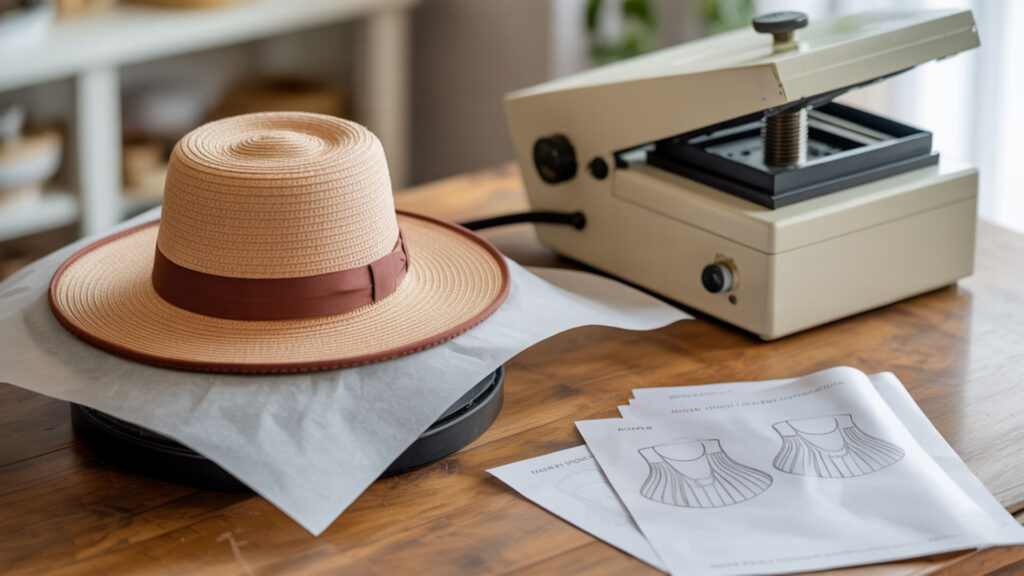
Moisture removal is the most critical preparation step before sublimating hats. Pre-pressing the empty hat for 5-10 seconds drives out moisture that would otherwise cause ghosting or blurred edges during the main transfer. Position butcher paper or parchment paper inside the hat to prevent dye migration to the opposite side, and secure the transfer design with heat-resistant tape to prevent shifting on curved surfaces during pressing.
Can polyester hats be pressed safely before sublimation?
Polyester hats handle pre-pressing safely at the same press temperature used for the main transfer, typically 380-400°F for just 5-10 seconds. This brief heat exposure removes moisture and smooths any wrinkles without damaging the polyester fibers. Allow the hat to cool slightly before positioning the transfer to prevent premature dye activation, which can cause ghosting if the transfer contacts a still-hot surface.
How do you sublimate hats step-by-step?

Following a consistent process ensures disperse dyes transfer evenly across curved hat surfaces. A dedicated hat press provides the curved platen shape needed for proper pressure adjustment on caps.
- Set your hat press to 380-400°F for polyester hats or 340°F for foam panels and allow it to reach full temperature.
- Remove any cardboard inserts from inside the hat and fold the sweatband out of the way.
- Pre-press the empty hat for 5-10 seconds to remove moisture and flatten any wrinkles.
- Allow the hat to cool slightly, then position your printed transfer face-down on the hat panel.
- Secure the transfer with heat-resistant tape on the edges to prevent movement during pressing.
- Place butcher paper inside the hat behind the decorated area to block dye bleed-through.
- Cover the transfer with parchment paper or a Teflon sheet to protect the press platen.
- Press for 35-60 seconds at medium-to-hard pressure, ensuring full contact across the curved surface.
- Remove the hat carefully and peel the transfer paper while still warm for polyester, or wait until cool if using foam.
- Allow complete cooling before handling to prevent ghosting from residual dye migration.
What pressure level works for hat sublimation?
Pressure adjustment on hats requires medium-to-hard pressure to maintain full contact between the transfer and curved surfaces. The curved brim and crown areas create gaps that lighter pressure cannot overcome, resulting in uneven or missing portions of the design. Cap presses solve this by providing a curved platen that matches the hat’s shape, but even with proper equipment, checking pressure distribution with a test sheet helps identify any low-contact zones before committing to a full print.Techniques for handling curved surfaces with controlled pressure appear in our Sublimation On Sweatshirts guide.
How can you avoid press marks when adding sublimation to hats?
Structured crown hats with built-in buckram backing are more prone to press marks because the stiff material shows indentations from the platen edge. Unstructured crown hats conform to the press shape more naturally and rarely show marking. For structured styles, positioning the hat so platen edges fall on seams rather than flat panels minimizes visible marks, and using a silicone pad between the hat and platen can soften the pressure transition at edges.
Ready to sublimate custom hats like a pro?
Success with hat sublimation depends on matching polyester-rich blanks with proper heat press equipment and technique. Starting with 65%+ polyester hats eliminates coating requirements and delivers professional-quality prints that withstand regular wear and washing. A dedicated hat press makes the process easier by providing the curved contact surface and targeted heat application that flat presses struggle to achieve on dimensional headwear.
Frequently Asked Questions
Can foam hats be re-pressed to darken sublimation prints later?
Re-pressing foam hats to darken prints carries significant warping risk because the foam has already experienced thermal stress. Each additional heat cycle compounds distortion potential, and the existing dye may migrate further rather than intensifying. If the initial print appears too light, the better approach is starting fresh with a new blank at correct press temperature settings rather than attempting correction on the same hat.
Does overheating demagnetize or distort hat hardware during pressing?
Metal hardware like eyelets, buttons, and closure mechanisms can become damaged at sublimation press temperatures. Positioning hardware away from the heated platen area prevents most issues, and using a cap press that only heats the front panel keeps back closures safe. Magnetic closures are uncommon on sublimation-friendly hats, but any magnetized components should be protected from temperatures above 300°F to prevent demagnetization.
Does seam positioning affect sublimation alignment on curved hats?
Seam positioning affects both alignment and print quality on curved hats. Placing designs so they span across panel seams can create registration challenges as the fabric layers differ in thickness. Centering designs within single panels produces cleaner results, and pre-curving transfer paper to match the hat’s contour helps maintain alignment across the curved surface during pressing.
Can sublimation fade faster on foam than on polyester fibers later?
Sublimation on foam panels typically shows faster fading than pure polyester because foam lacks the tight fiber structure that locks disperse dyes permanently in place. Polyester sublimation bonds dye within the fiber itself, while foam surface bonding remains more susceptible to UV degradation and abrasion. Expect foam-printed hats to show noticeable fading after 6-12 months of regular outdoor wear compared to years of durability on polyester panels.
Does washing or sweat exposure reduce hat sublimation vibrancy over time?
Properly sublimated polyester hats resist ghosting and color loss through repeated washing because the disperse dyes become part of the fiber structure rather than sitting on the surface. Sweat exposure has minimal effect since the dye bond is chemical rather than mechanical. Hand washing in cold water extends print life, but machine washing on gentle cycles does not significantly accelerate fading on correctly pressed polyester panels.
References
- Hawkins, G. L. (2026, January 5). Choosing a landscape irrigation contractor. CAES Field Report. https://fieldreport.caes.uga.edu/publications/C1056/choosing-a-landscape-irrigation-contractor/
- 10.2: Polymers and plastics. (2023, January 21). Engineering LibreTexts. https://eng.libretexts.org/Workbench/Materials_Science_for_Electrical_Engineering/10