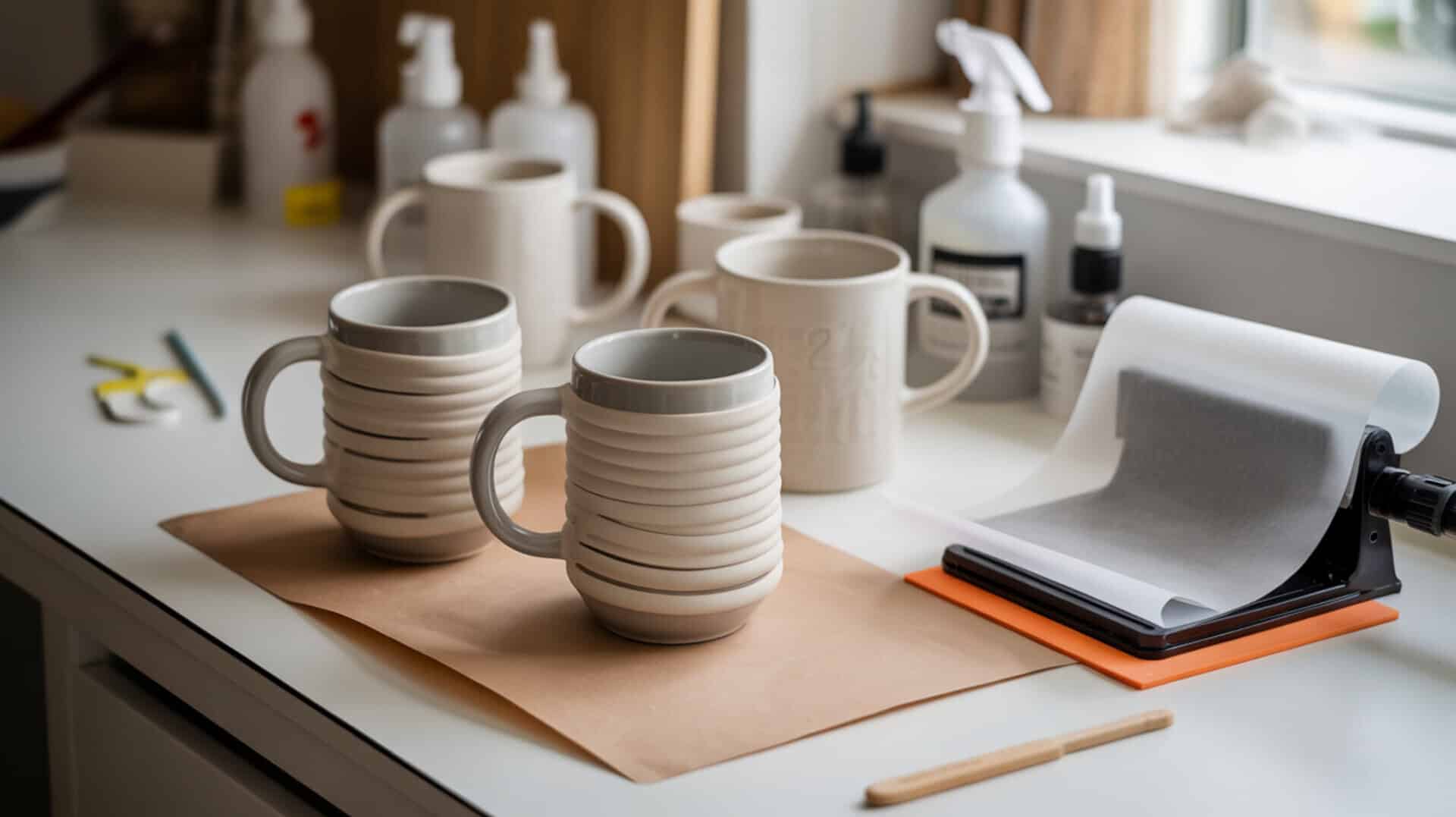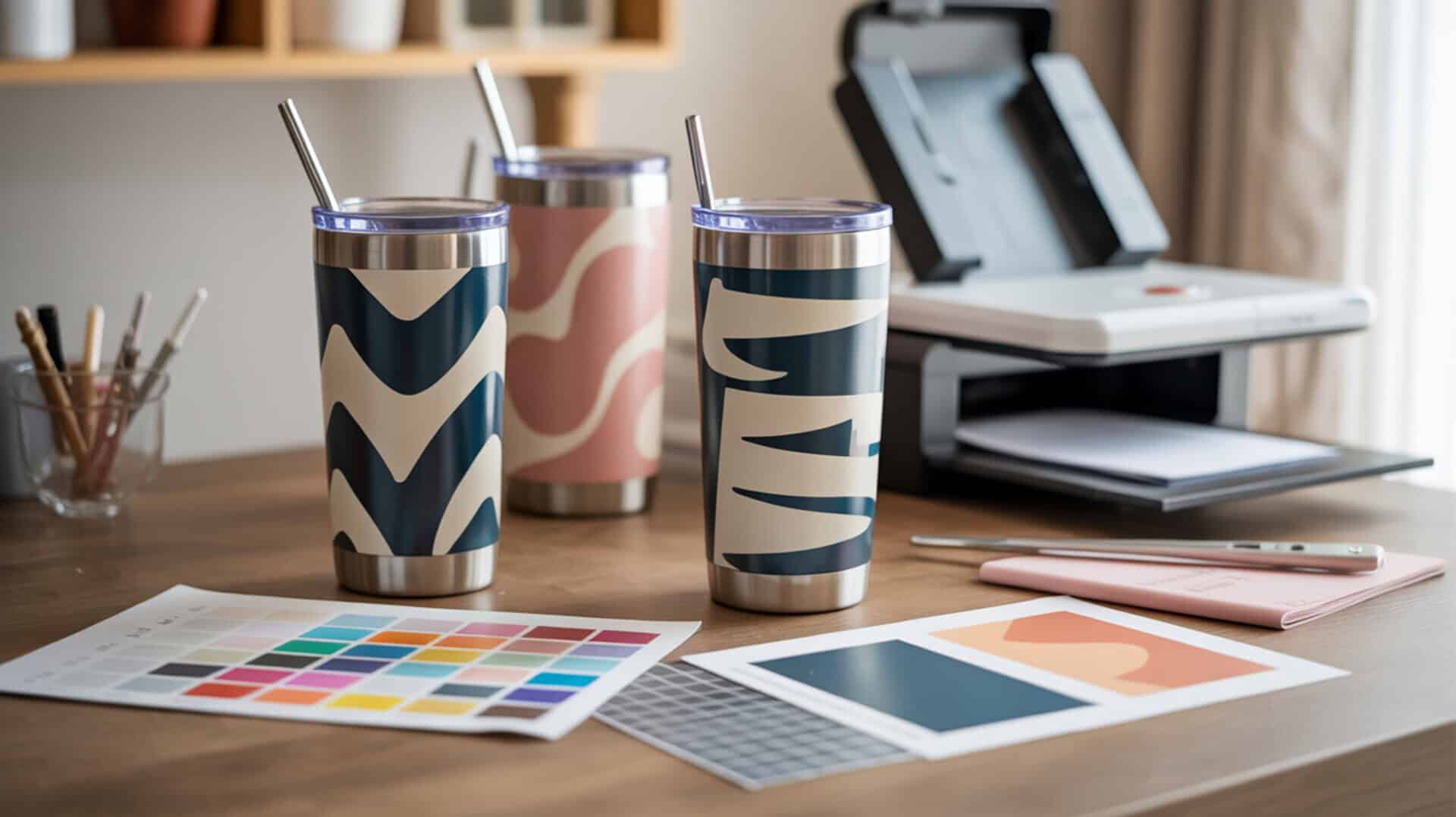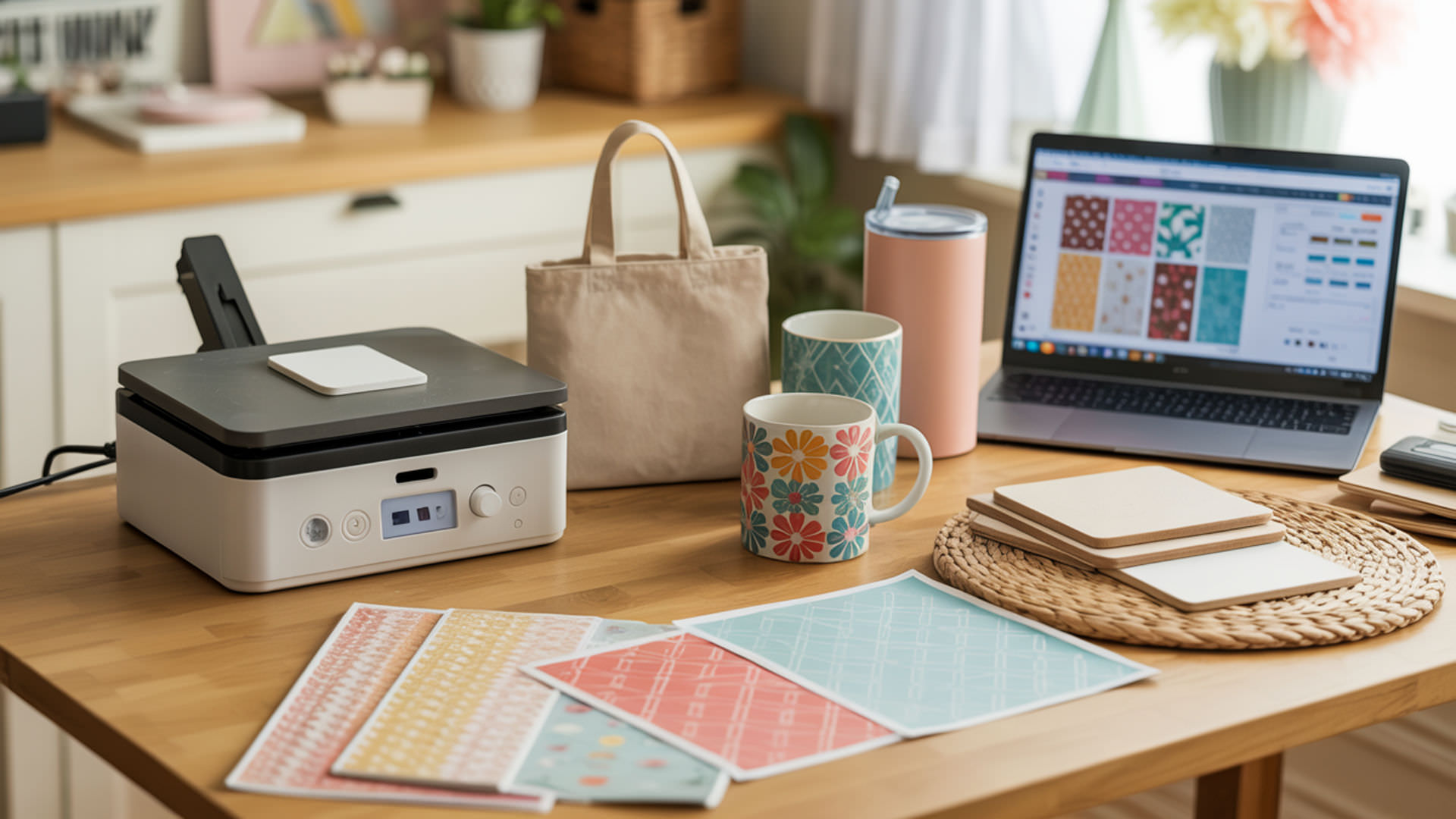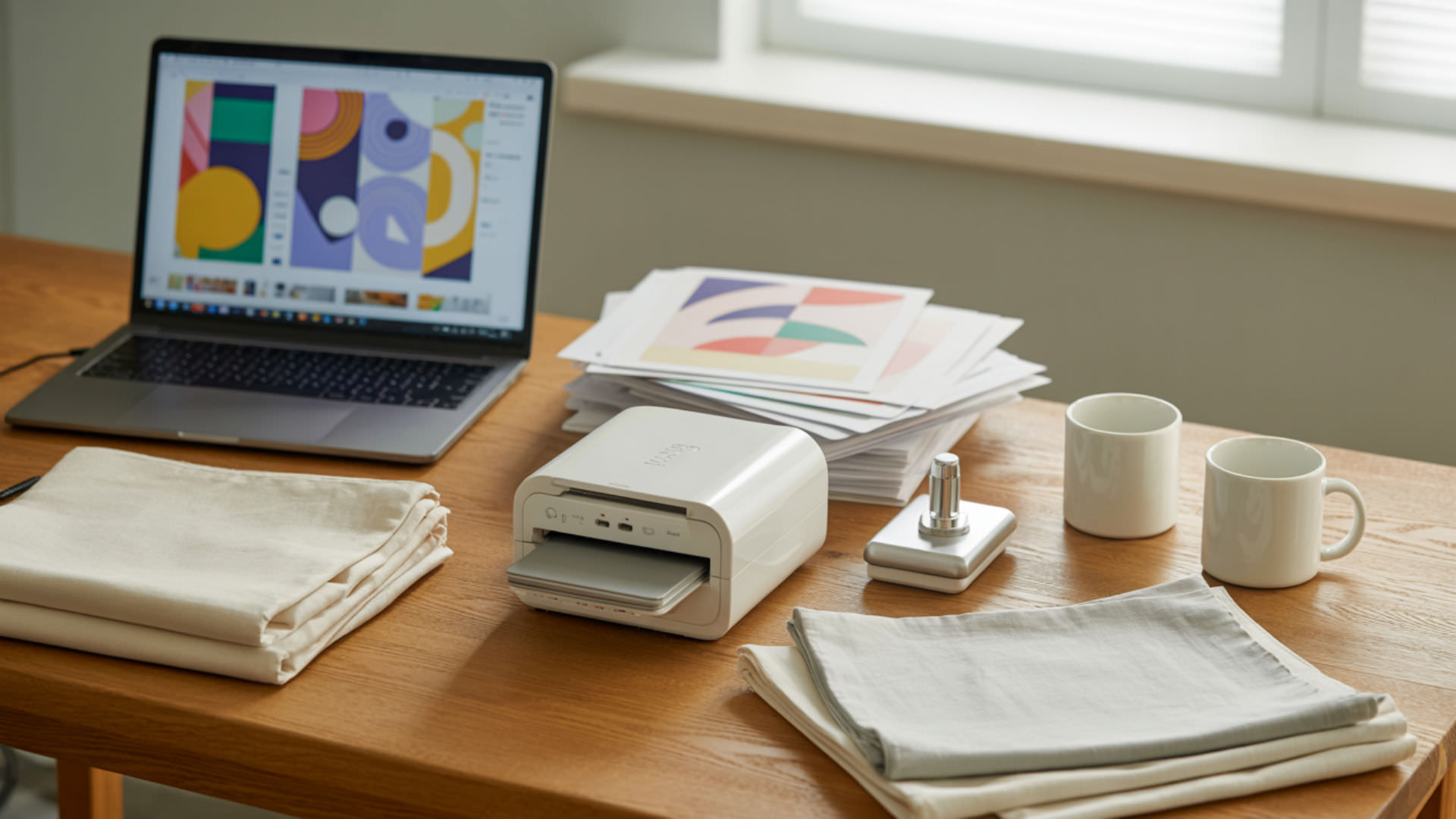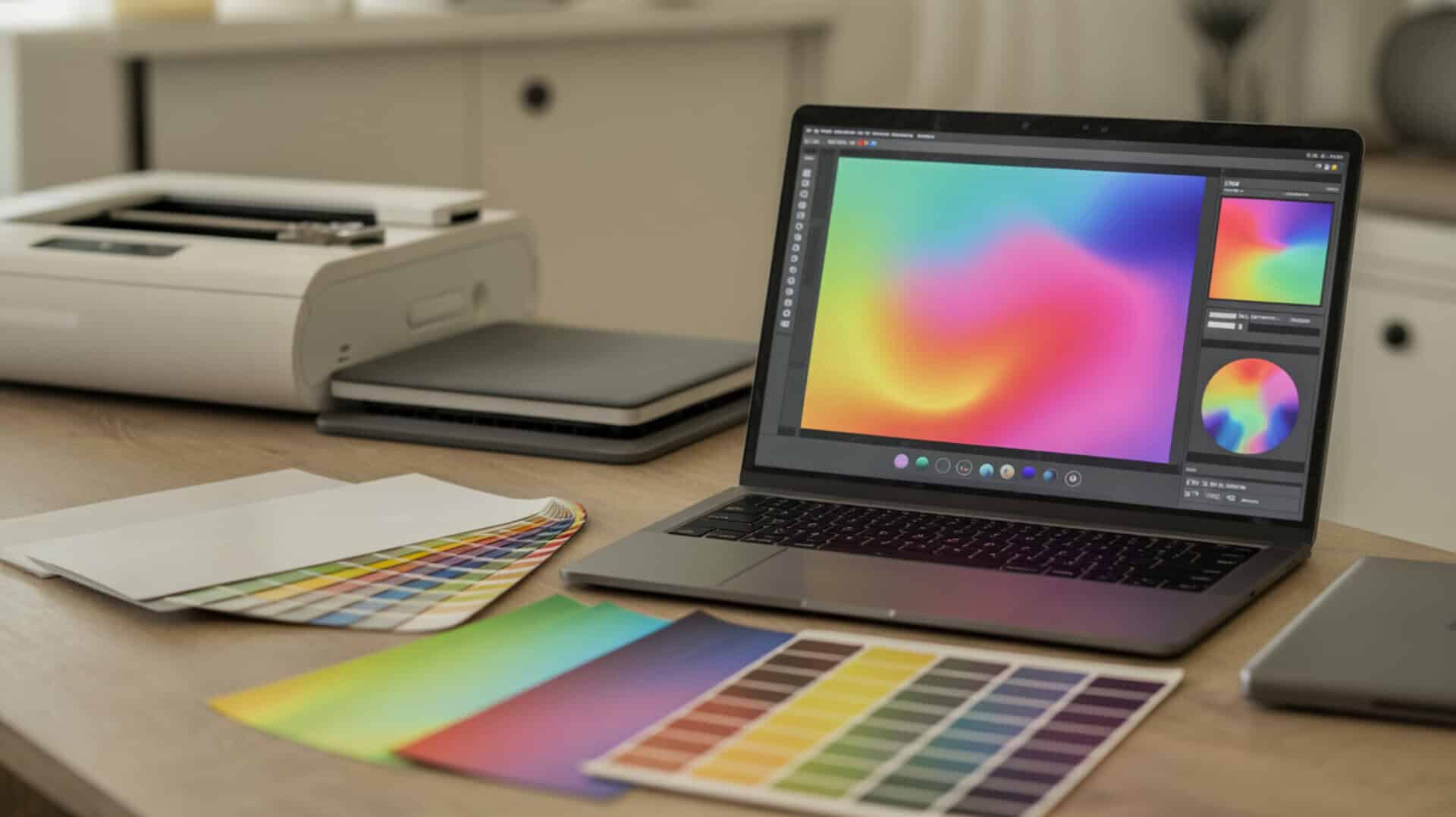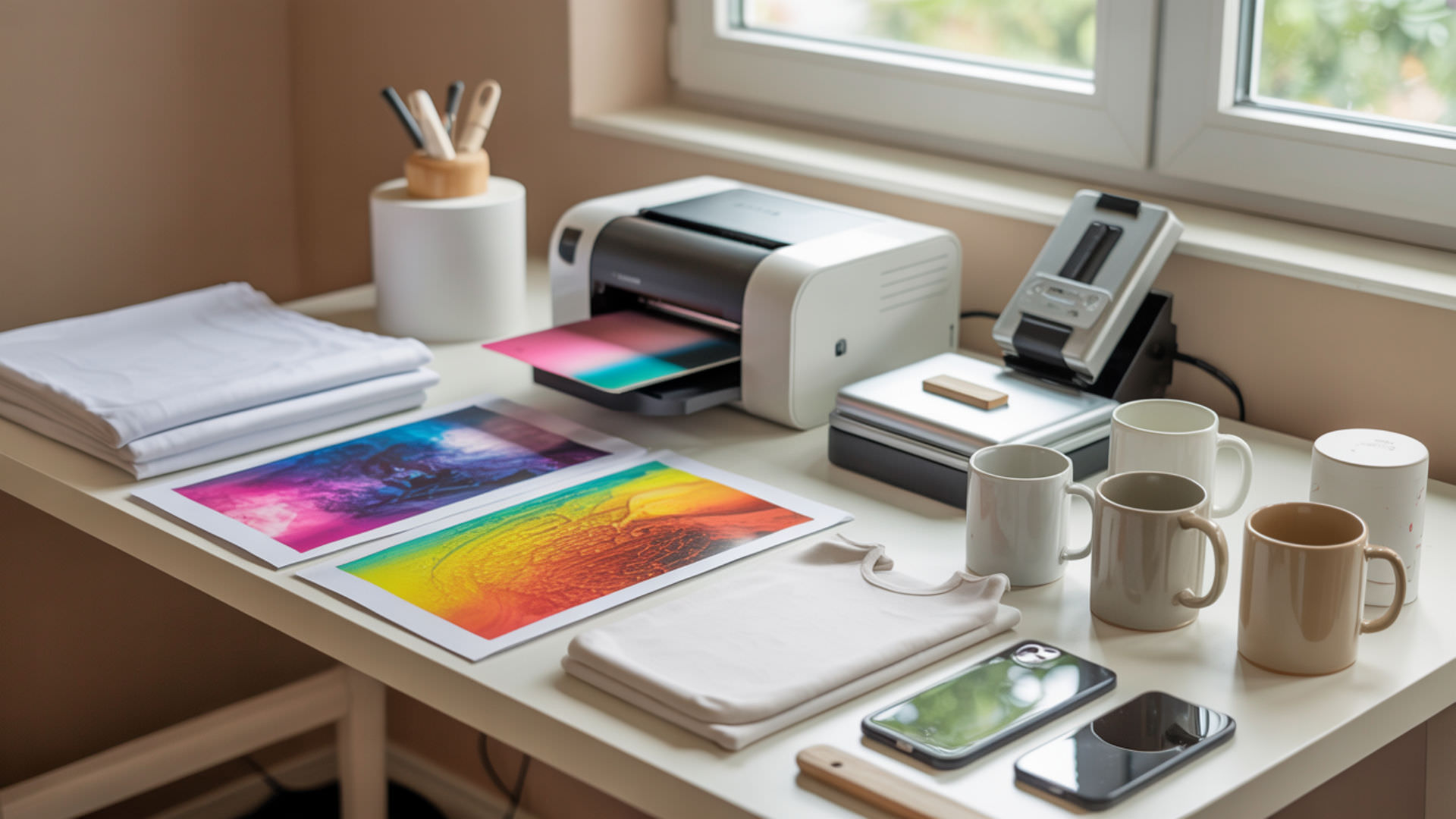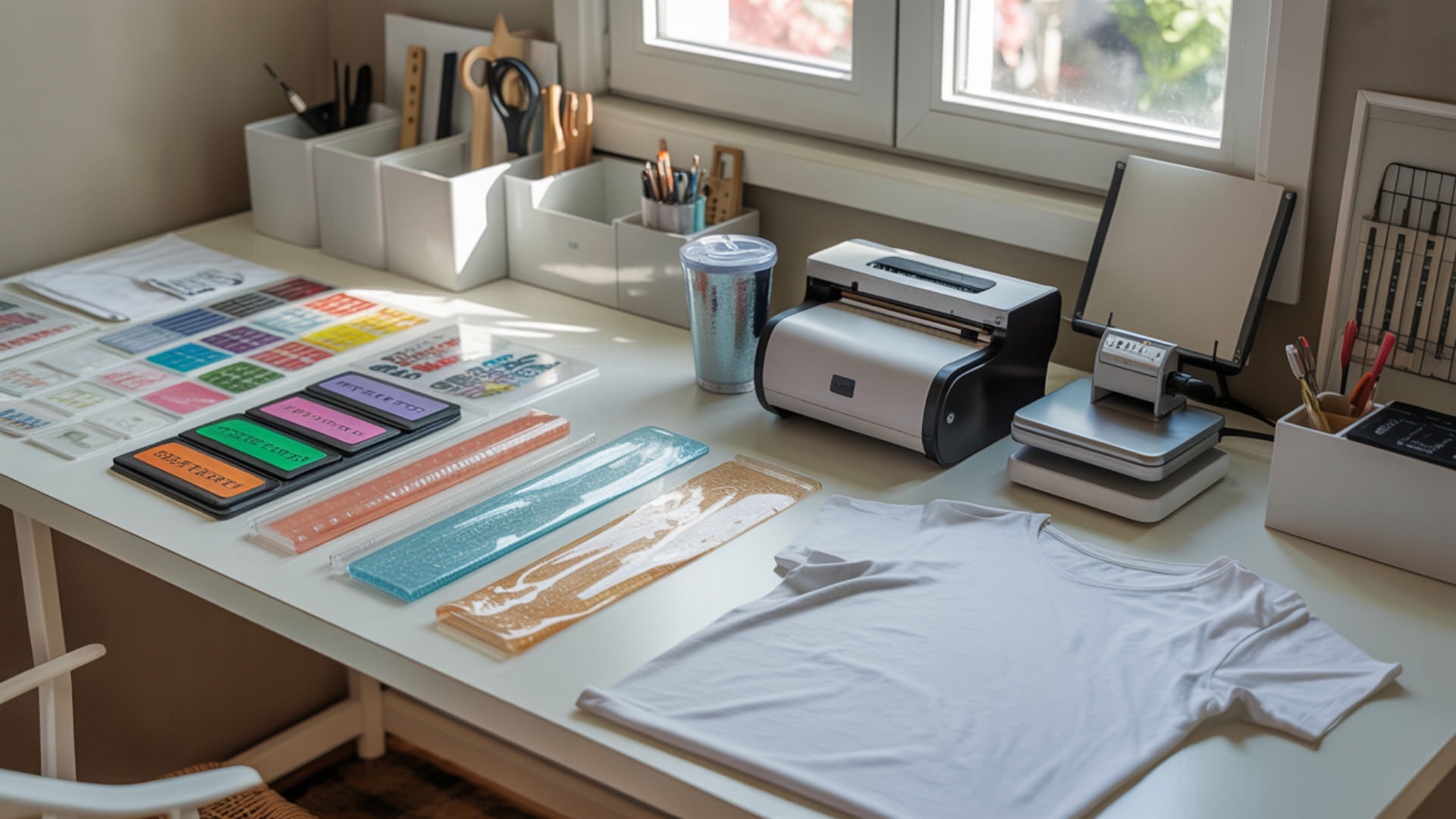
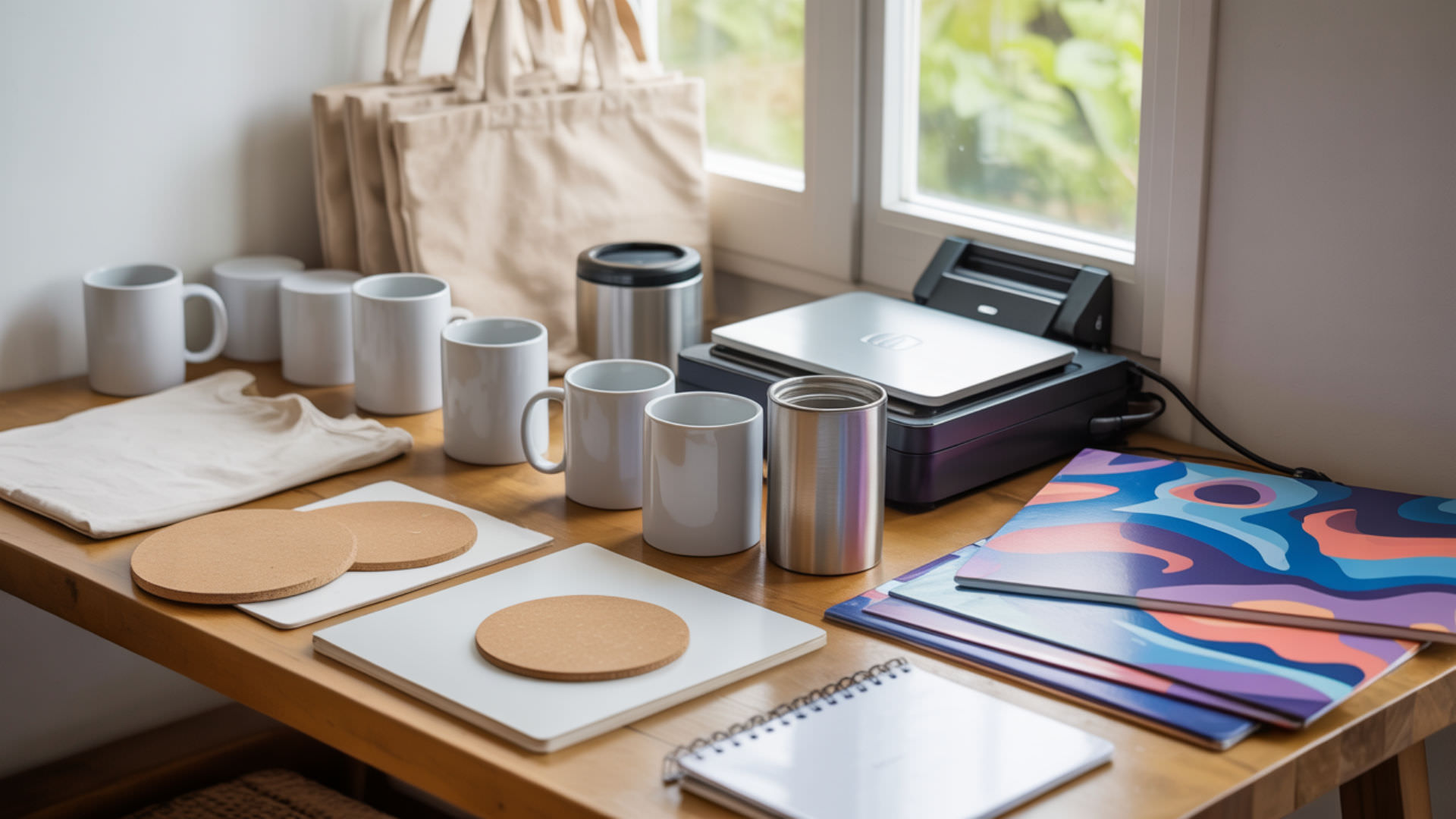
Sublimation printing design ideas transform blank products into personalized, vibrant creations that customers love. Graphic design principles form the foundation of every successful sublimation project, establishing the visual structure that makes products appealing. Composition determines how design elements fit together on your substrate—whether arranging photos on a mug wrap or positioning text on a tumbler template. Our guide on how to make sublimation designs covers how graphic design principles translate into sublimation artwork.
Key Takeaways
- Best-selling sublimation items include tumblers, mugs, t-shirts, and personalized gifts with strong color theory application.
- Color interactions influence how balanced or compelling a composition appears on the final pressed product.
- Design at 300 DPI in RGB color mode and always mirror images before printing for proper transfer orientation.
What are some creative sublimation printing ideas?
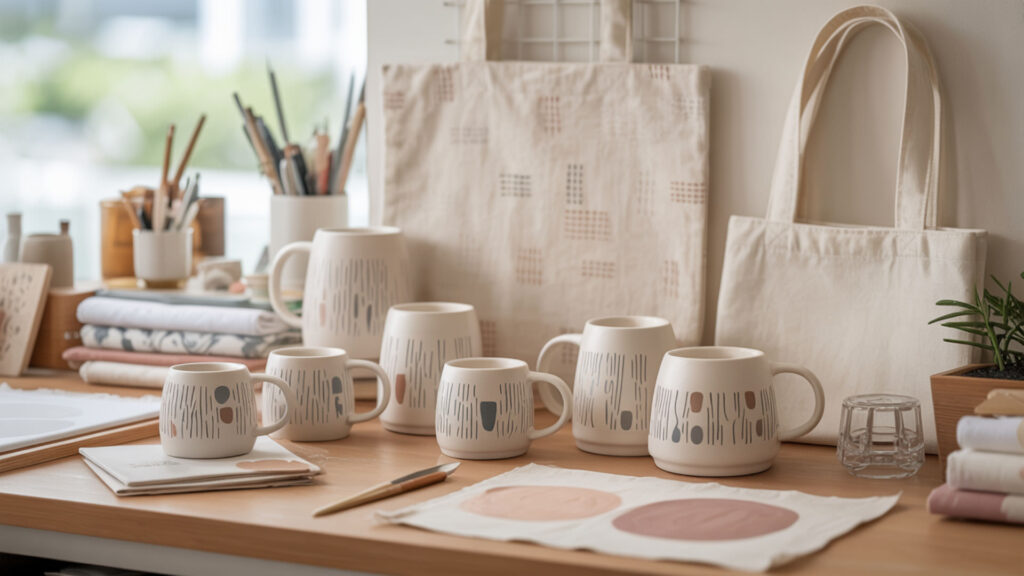
Creative sublimation printing ideas include custom t-shirts, mugs, tumblers, coasters, keychains, ornaments, mousepads, and personalized photo panels. Pattern-based designs with repeating motifs help define recognizable design styles that customers associate with quality brands. Typography choices help match emotional tone—script fonts convey elegance while bold sans-serif fonts suggest modern energy. Our collection of best sublimation designs showcases how pattern-based designs create market-ready products.
What are unique sublimation gift ideas?
Unique sublimation gift ideas include personalized puzzles, baby blankets, family photo slates, memorial items, and inspirational quote designs. Graphic design principles guide how to customize gifts effectively—balancing photos with text, choosing complementary colors, and positioning elements for visual impact. Pet portraits on mugs, custom photo collages on blankets, and name-personalized ornaments consistently rank among top-selling gift items.
What are some beginner-friendly sublimation projects?
Beginner-friendly projects include sublimated mugs, coasters, mousepads, and t-shirts because these require minimal equipment and offer forgiving surfaces for learning. Simple composition with clean layouts makes sublimation easier for beginners who are still mastering color control and heat settings. Start with flat items before progressing to curved surfaces like tumblers, which require more precise template alignment and wrapping technique.
What sublimation items sell the best?

Best-selling sublimation products include drinkware like tumblers and mugs, home goods such as towels, blankets, and coasters, and apparel like t-shirts. Strong color theory application increases customer interest through vibrant combinations that catch attention in crowded marketplaces. Trending patterns often determine best-selling products—ombre gradients, floral prints, and geometric designs cycle through popularity seasonally. Our guide on 3D sublimation designs explains how color theory enhances depth and realism in curved product renders. Color choices matter because human color perception depends on how the visual system interprets hue, brightness, and contrast across a design. [1]
What are popular sublimation designs for mugs and tumblers?
Popular mug and tumbler designs include name monograms, funny sayings, pet portraits, floral prints, and motivational quotes. Certain patterns wrap better around cylindrical objects—seamless horizontal designs that connect at the seam work best for full-wrap tumblers. Ombre gradients and wrap-around patterns are trending because they create visual interest around the entire circumference rather than just the front-facing area.
What are some sublimation ideas for small businesses?
Small businesses can use sublimation for custom branding, including company merchandise, employee uniforms, and promotional giveaways like mugs and pens. Typography-focused designs help businesses create branded products where consistent font choices reinforce company identity across all items. Profitable niches for Etsy sellers include family name signs, photo gifts, bridal party shirts, baby milestone blankets, and seasonal tumbler wraps.
Can you make money with sublimation printing ideas?

Yes, you can make money with sublimation by selling custom-made products online or locally through platforms like Etsy, Amazon, and local craft fairs. Graphic design skill directly influences the profitability of sublimation products—unique, well-executed designs command higher prices than generic templates. The custom t-shirt market alone is projected to grow at an 11.5% compound annual growth rate through 2030, indicating strong demand for personalized apparel. If you’re selling original artwork on products, it helps to understand how copyright applies to visual designs and what counts as a protected creative work. [2]
How to price sublimation prints?
Calculate total costs by adding material costs (ink, paper, blank item), labor costs (design, printing, pressing), and overhead costs (equipment, electricity, maintenance), then add a markup for profit. Complex compositions with multiple elements, photos, or full-coverage designs may justify higher pricing because they require more production effort and design skill. A common strategy prices finished products at three times your total production cost—if your cost is $5.56 per item, price between $15.95 and $16.95.
How much to charge for sublimation printing?
Pricing depends on factors including design complexity, ink coverage, quantity ordered, market competition, and turnaround time. Color theory application impacts perceived value—vibrant, well-coordinated color schemes justify visual premium pricing because customers associate color quality with product quality. Online t-shirt businesses typically achieve profit margins of 30–50% by marking up production costs by 50–70% while remaining competitive in their niche.
What are trending sublimation projects in 2025?
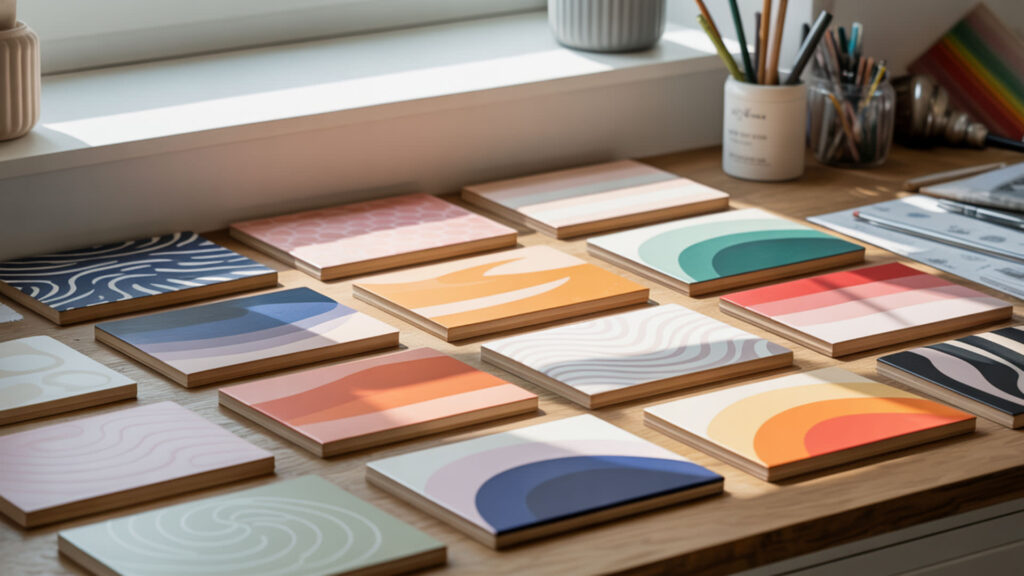
Trending sublimation projects in 2025 include gradient color tumblers, layered photo collages, 3D sublimation phone cases, and custom apparel with minimalist or vintage prints. Pattern trends often define yearly design cycles—this year features ombre effects, botanical prints, and retro-inspired geometric shapes. Typography trends lean toward clean sans-serif fonts for modern aesthetics and hand-lettered scripts for personalized gift items.
How to prep an image for sublimation?
Resize the design to ensure the image fits perfectly where you want to print it, then mirror the image horizontally because the transfer paper will be placed face-down on the substrate. Set resolution to 300 DPI for sharp, professional results that will not pixelate when printed. Balanced composition ensures even transfer across the entire design—proper element placement prevents misalignment during the pressing process.
Do you mirror a sublimation print?
Yes, you must mirror sublimation prints because the image flips during the heat transfer process—a mirrored print will appear correctly on the final product. Typography elements make mirroring decisions obvious because backward text is easily noticeable and immediately signals an error. The exception is transparent items like glass cutting boards where you sublimate on the back and view through the front. Our guide on how to print sublimation designs explains how typography and text elements require careful orientation.
Which materials and shirts work best for sublimation?
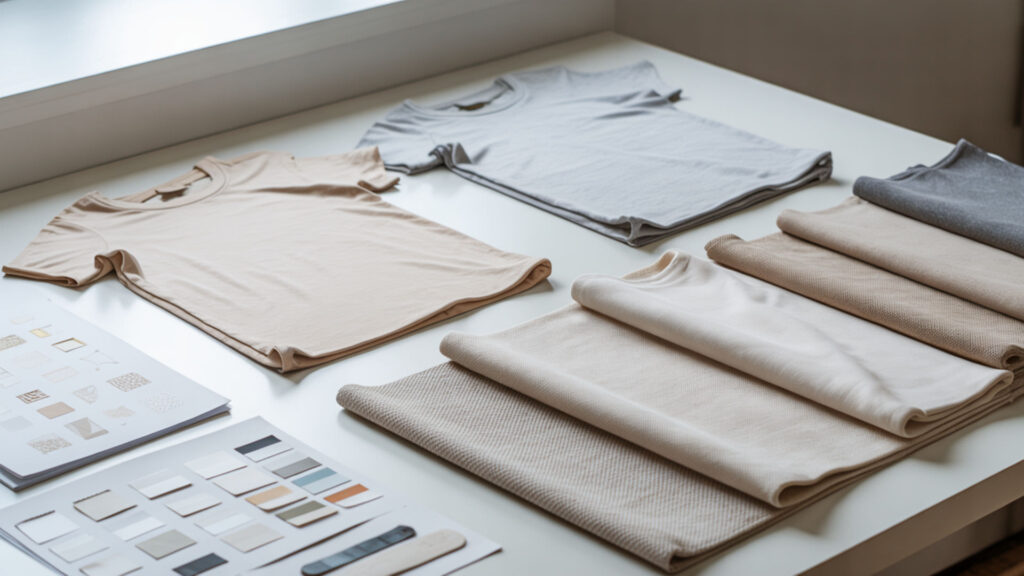
The best shirts for sublimation are 100% polyester or high-polyester blends (at least 65%), especially in white or light colors, to achieve the most vibrant and durable results. Color theory explains substrate visibility—color contrast affects how designs appear on different shirt materials because sublimation ink is transparent and the shirt color shows through. Popular brand choices include Gildan G420, Bella+Canvas EcoMax Tees, and Cricut sublimation-ready shirts.
What color shirt works best for sublimation?
White and light-colored shirts are best for sublimation because the ink is transparent and shows up most vibrantly on these backgrounds. Color theory explains dye visibility—sublimation ink cannot print white, so the shirt color becomes your lightest tone. For dark shirts, you must first create a white area using sublimation-compatible vinyl or by bleaching the shirt, as the transparent dye will not show on dark backgrounds.
Will sublimation stick to 100% cotton?
No, you cannot sublimate directly on 100% cotton because sublimation ink only bonds to polyester fibers—the composition of cotton fibers does not accept sublimation dye. Without treatment, the design will wash out quickly because the ink sits on the surface rather than bonding with the material. Options for cotton include sublimation coating spray, which creates a polymer layer, or applying heat transfer vinyl (HTV) first as a sublimatable surface.
What do I need to start a sublimation printing business?
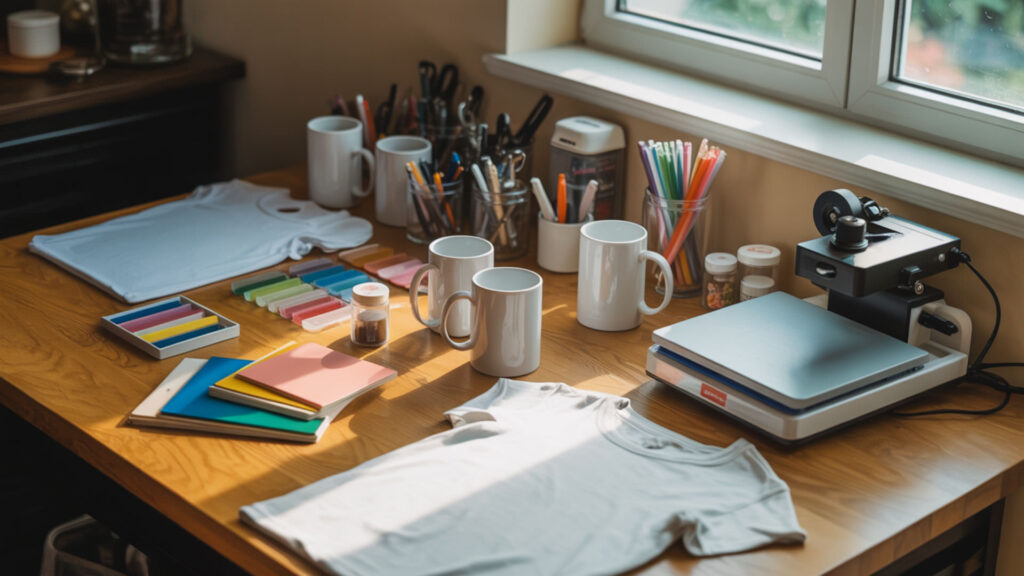
To start sublimation printing, you need a sublimation printer with sublimation ink, sublimation paper, a heat press, and sublimation blanks like polyester shirts or polymer-coated mugs. Graphic design ability is an essential skill because you must create or edit designs to sell products—software like Canva, Photoshop, or Silhouette Studio enables design work. Additional supplies include heat-resistant tape to prevent ghosting, protective paper or butcher paper, and a lint roller for preparing blanks.
Can a sublimation printer be used as a regular printer?
No, a sublimation printer cannot effectively serve as a regular printer because sublimation ink is chemically different—it is designed to turn into gas under heat, not to sit on paper surfaces like normal ink. Printing regular documents produces dull, muted results because the ink has not been heat-activated, wasting expensive specialized ink. Sublimation-optimized compositions differ from regular print files in color mode, resolution, and mirroring requirements, so maintain separate printers for each purpose.
What’s better, vinyl or sublimation?
Neither is definitively better—the choice depends on your project needs. Sublimation excels for vibrant, photographic designs on light-colored polyester with a soft feel, while vinyl works for bold, solid-color designs on various materials including cotton and dark fabrics. Color theory helps explain vibrancy differences—sublimation produces a vast spectrum of colors that become part of the fabric, while vinyl sits on top and creates a slightly raised texture.
How do you prepare items for sublimation step-by-step?

Follow this workflow to prepare items properly for sublimation transfer:
- Heat press at the recommended temperature and time for your specific substrate material.
- Create or finalize your design at 300 DPI in RGB color mode with proper composition and layout.
- Mirror the image horizontally before printing—essential for text and directional graphics.
- Print onto sublimation paper using high-quality mode in your printer settings.
- Lint-roll and pre-press your blank to remove moisture and debris that cause imperfections.
- Position the printed transfer face-down on the substrate and secure with heat-resistant tape.
- Heat press at the recommended temperature and time for your specific substrate material.
Ready to Start Your Sublimation Design Journey?
Sublimation printing offers endless creative possibilities for personalized products that customers value and purchase repeatedly. Graphic design skills drive quality outcomes—the better you understand color, composition, and typography, the more professional and marketable your products become. Start with beginner-friendly items like mugs and coasters, master the basics, then expand into more complex products and techniques as your confidence grows.
Frequently Asked Questions
Does Dollar Tree have sublimation blanks?
Yes, Dollar Tree carries various items that can work as sublimation blanks, including ceramic tiles, certain mugs, and craft materials. However, not all Dollar Tree items are sublimation-ready—look for polyester-coated or polymer-coated products. Test unfamiliar items with sample prints before committing to large production runs, as coating quality varies between products.
Do sublimation sprays work?
Yes, sublimation spray works to transfer designs onto surfaces like 100% cotton by creating a polymer coating for ink adhesion. However, quality is generally not as good as high-polyester fabrics—results can look faded or vintage after washing, and treated areas may feel stiff. Use spray specifically designed for sublimation, not generic wood finishes, and expect a different appearance than pure polyester transfers.
What is the powder used in sublimation?
Transfer adhesive powder is applied to sublimation prints after printing to help the design adhere to certain substrates. Medium adhesive powder offers a good balance between fine and coarse textures for most applications. Heat the powder at 210°F for 2–3 minutes until melted, creating a bonding layer between the transfer and substrate for improved adhesion and durability.
What are the color limitations of sublimation?
Sublimation requires white or light-colored print areas because the ink is transparent—black or dark surfaces cannot be sublimated without first creating a white layer. Color theory explains these limits: sublimation cannot print white ink, so your lightest color is the substrate itself. Items may lose color vibrancy over months if permanently exposed to direct sunlight due to UV ray effects on the sublimated dye.
Is sublimation or DTF cheaper?
Sublimation typically has lower startup costs ($300–$1,000 using converted printers) compared to DTF ($3,000–$5,000+ for specialized equipment). However, DTF offers greater versatility for printing on cotton and dark materials. Pattern clarity and design requirements should guide your choice—sublimation excels on light polyester while DTF handles diverse fabric types but may have higher per-item consumable costs.
References
- Physiology, color perception – StatPearls – NCBI bookshelf. (2022, September 12). National Center for Biotechnology Information. https://www.ncbi.nlm.nih.gov/books/NBK544355/?utm_source=chatgpt.com
- U.S. Copyright Office. (n.d.). What visual and graphic artists should know about copyright. U.S. Copyright Office | U.S. Copyright Office. https://www.copyright.gov/engage/visual-artists/?utm_source=chatgpt.com