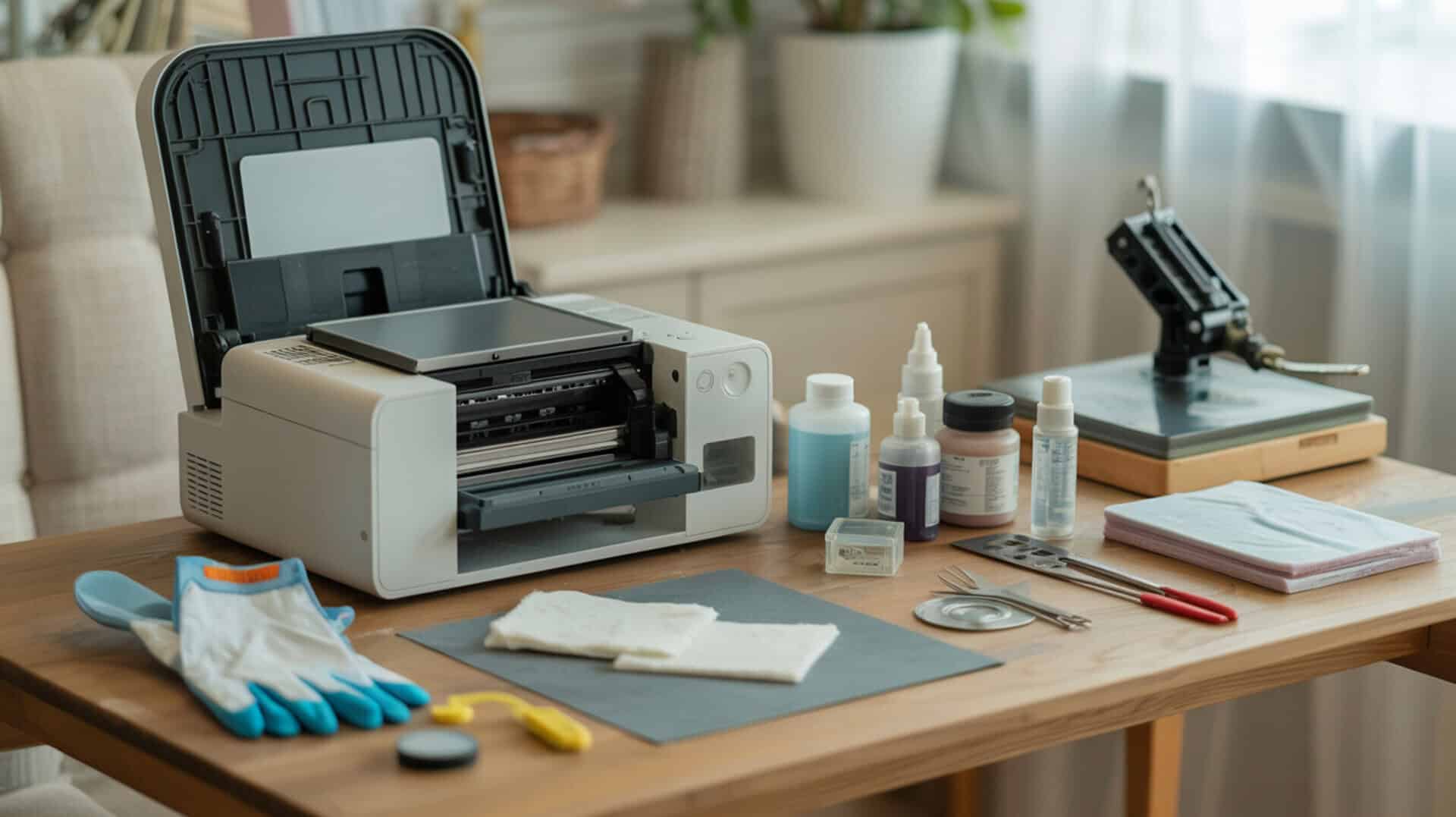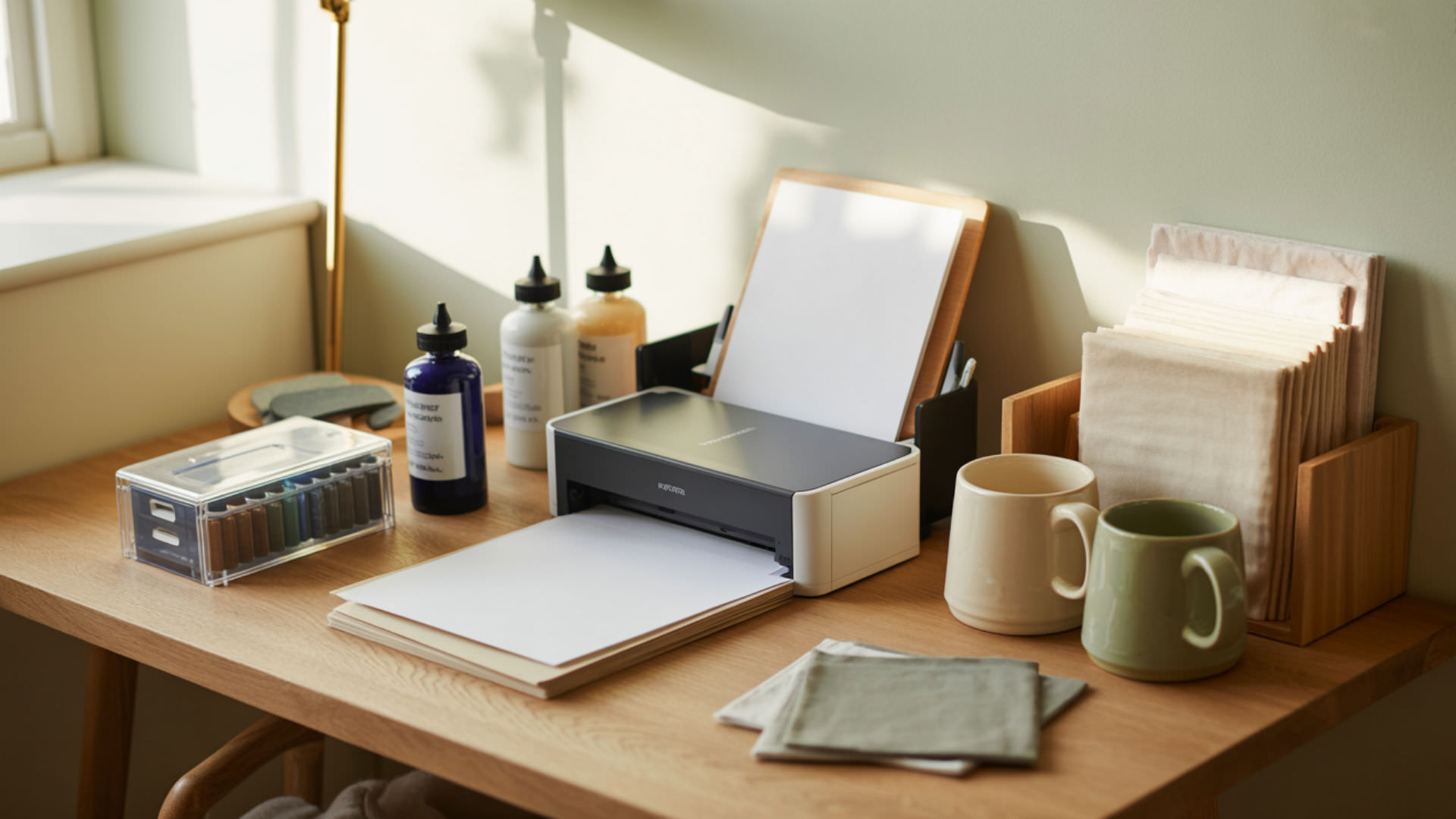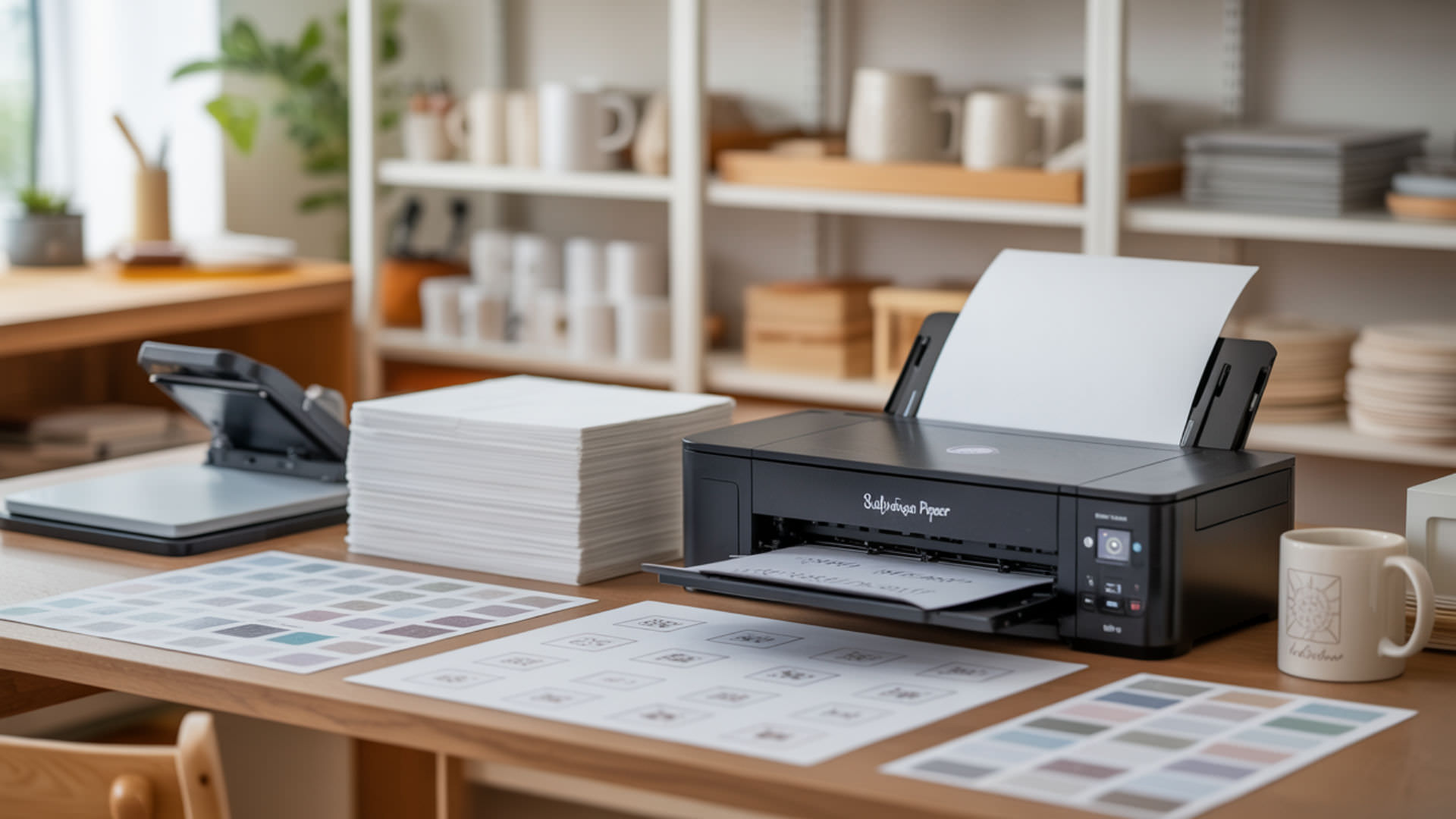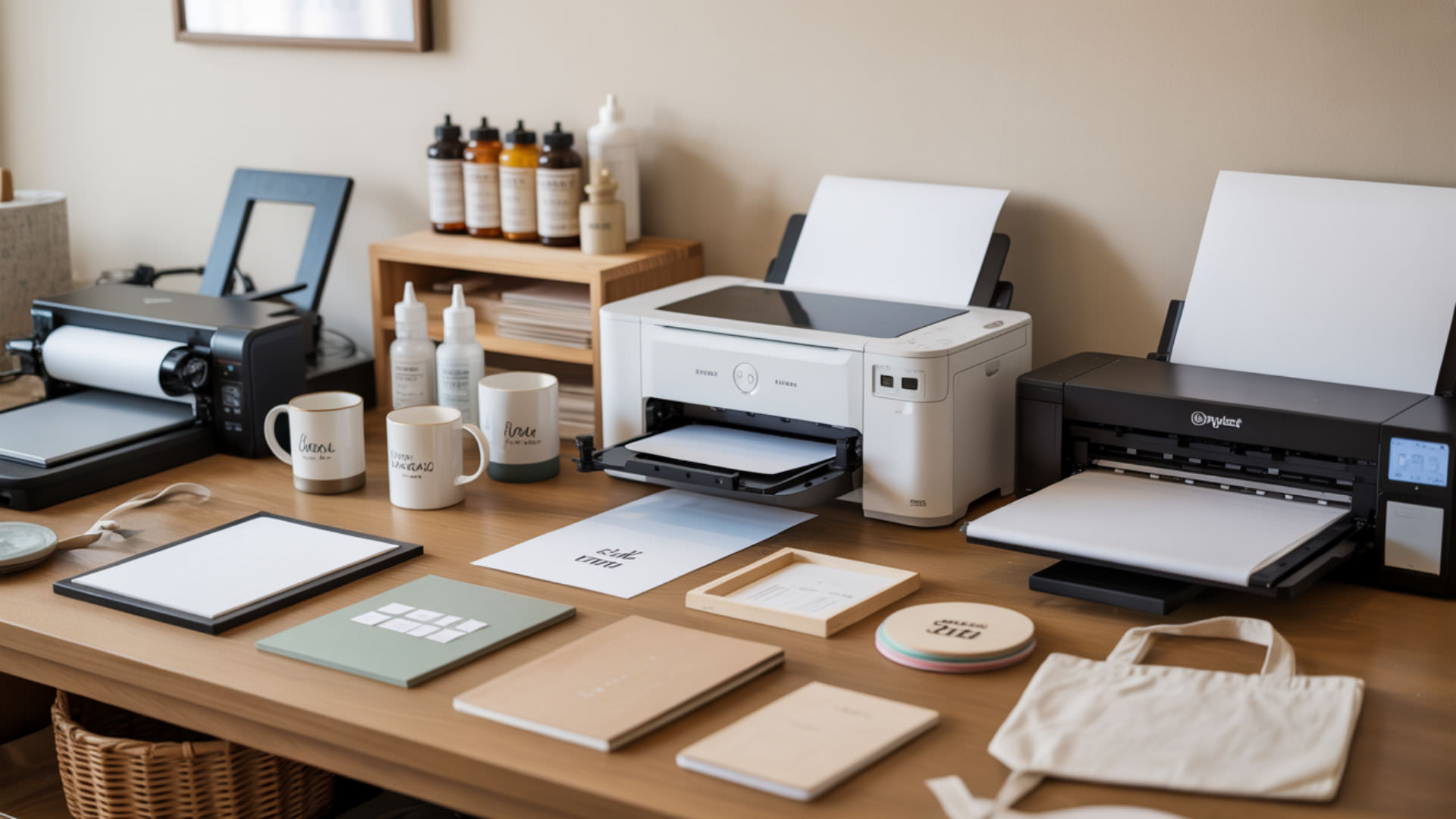
The Sawgrass SG500 is a purpose-built dye-sublimation printer that uses piezoelectric inkjet technology and proprietary disperse dye ink formulations designed specifically for sublimation output. Because piezoelectric actuators eject dye without heat, they avoid the thermal degradation that would damage sublimation ink chemistry. Disperse dye vaporizes under heat press temperatures and bonds inside polyester fibers or polymer coatings, creating permanent, wash-resistant color through polymer diffusion. Since dye-sublimation printing technology and home-use system architecture determine printer suitability, you may also want to read our hub article on dedicated sublimation printer for home use.
Key Takeaways
- Cost per print (CPP) on the SG500 is higher than converted Epson systems due to cartridge-based ink delivery, but the closed system ensures consistent output without user calibration.
- Continuous-tone printing produces smooth color gradients through precise disperse dye droplet placement, resulting in photographic-quality sublimation output.
- Fastness (wash durability) results from disperse dye bonding at the polymer level inside polyester fibers—this creates permanent color that withstands repeated washing without fading.
Is the Sawgrass SG500 the Right Sublimation Printer for Your Projects?
The Sawgrass SG500 is a dedicated dye-sublimation printer with a piezoelectric printhead and tuned ink formulation that delivers vibrant, high-quality prints without the conversion process required for Epson EcoTank systems. According to demonstrated setup and printing tests, the SG500 produces “gorgeous high quality” output with strong color and clarity, and prints faster than other sublimation printers the reviewer owns. The piezoelectric actuator provides stable droplet ejection through mechanical deformation that controls dye delivery without boiling. Ink formulation with precise viscosity control ensures reliable flow through nozzles without clogging. Piezoelectric inkjet printheads use electrically driven piezo elements to mechanically eject precise droplets of ink without heat, which allows consistent high-resolution printing across many ink types. [1] Since the comparison article explains piezoelectric inkjet head behavior in Epson vs Sawgrass systems, you may also want to read our guide on Epson vs Sawgrass sublimation printer.
What kind of print quality and results can you expect from the Sawgrass SG500?
Based on demonstrated initial printing tests, the Sawgrass SG500 produces high-quality sublimation output described as “gorgeous” with strong color saturation and clarity. Chromophore absorption in the disperse dye molecules determines color vibrancy—the SG500’s tuned ink chemistry delivers smooth gradients characteristic of continuous-tone printing. The printer completed two small prints almost immediately after setup, with print speed described as faster than any other sublimation printer the creator owns. Color mode options include Photographic and Vivid settings, with adjustment sliders for saturation, brightness, contrast, and tint. The automatic ink charging process takes approximately 7 minutes during initial setup and consumes part of the cartridge volume. Advances in inkjet printing technology improve image quality and color accuracy by optimizing printhead design, ink formulations, and substrate interactions for sharper graphics and finer detail.[2]
What are the main pros and cons of the Sawgrass SG500?
The SG500’s ink cartridge system eliminates syringe filling and tank conversion required for Epson systems—setup involves simply pushing cartridges into place when prompted. Page yield and cartridge cost determine cost per print and refill frequency, which runs higher than converted Epson EcoTank systems using bulk sublimation ink. Main advantages include extremely easy setup (plug in, insert cartridges, guided software), one-on-one remote setup call with a Sawgrass technician, fast print speed, and high output quality. The software ecosystem includes Creative Studio, Print Manager, and Smart Folder with automatic mirroring and substrate presets. Main drawbacks include noticeable printing noise during operation (quiet when idle), ink expiration dates limiting shelf life, and initial ink charging that consumes part of cartridge volume. No heat press transfer testing or long-term colorfastness data was provided in the reviewed material.
How does the Sawgrass SG500 compare to Epson and other sublimation printers?
The reviewer owns a converted Epson EcoTank, Epson SureColor F170, and Sawgrass SG500, though detailed side-by-side comparison was not provided in this material (promised for a future video). The SG500’s Micro Piezo inkjet technology is similar to Epson’s piezoelectric system, but ink viscosity tuning in Sawgrass’s closed cartridge system provides lower clog risk and more stable nozzle performance than converted systems using third-party sublimation inks. The SG500 is positioned as a purpose-built sublimation printer versus converted Epson models that require color profile setup and ICC calibration. Maintenance features include ink level monitoring, waste container tracking, nozzle checks, and head cleaning options accessible through Print Manager. Since both brands differ mainly in ink formulation control and delivery systems, you may also want to read our detailed comparison on Epson vs Sawgrass sublimation printer. You can find the Sawgrass SG500 here.[3][4][5]
Final Verdict on Whether the Sawgrass SG500 Is Worth Your Investment
Cost per print (CPP), inkjet printer maintenance requirements, and page yield determine whether the SG500 fits your production volume and budget. The SG500 is not the best option for beginners on a tight budget—converting an Epson EcoTank series printer offers lower startup and operating costs. Users with slightly higher budgets might consider the Brother SP-1 dedicated sublimation printer as an alternative. For large format prints exceeding the SG500’s 8.5 × 14 inch maximum, the Sawgrass SG1000 offers 11 × 17 inch standard tray size with optional 13 × 51 inch bypass tray. However, if you have the budget and need vibrant, high-quality prints from a dedicated, high-speed sublimation printer—especially for higher volume production—the Sawgrass SG500 is a strong choice. While initial investment and ongoing ink costs run higher than converted systems, the quality, reliability, and avoidance of conversion issues make it ideal for users who prioritize consistency over cost savings.
Frequently Asked Questions
How do you properly clean the print heads on a Sawgrass SG500?
For routine maintenance, use the automatic head clean function through the printer menu: select Printer Maintenance > Clean Printhead. If that does not resolve print quality issues, perform a more intensive head flush (uses more ink). For stubborn clogs, manual capping station cleaning requires powering off the printer, using a screwdriver to move the print head to access the capping station, applying a 50/50 mix of Simple Green and water to the sponges, soaking 10–15 minutes, then wiping clean. Always run a nozzle check after any cleaning cycle to verify results.
Can you use third-party or alternative ink in a Sawgrass SG500?
No, using third-party ink in a Sawgrass SG500 is not recommended and voids the manufacturer warranty. Sawgrass printers use specifically formulated inks designed to work with their piezoelectric actuator and printhead chemistry. Third-party inks with different compositions (water-based instead of gel-based) can damage internal components and produce print quality issues like grid lines or color inconsistency. Sawgrass firmware updates can block third-party cartridges entirely. Disperse dye chemistry must match the printer’s tuned viscosity settings for safe droplet ejection and reliable nozzle performance.
What is the main difference between the Sawgrass SG500 and SG1000?
The main difference is maximum print size: the SG500 prints up to 8.5 × 14 inches, while the SG1000 prints up to 11 × 17 inches (or 13 × 19 inches with optional bypass tray). Both printers share the same core technology including piezoelectric printheads, self-maintenance features, wireless connectivity, and SubliJet-UHD ink compatibility. The SG500 suits smaller items like mugs, coasters, and phone cases; the SG1000 handles larger items like apparel, medium-sized photo panels, and soft goods requiring wider print coverage.
How long is the warranty on Sawgrass sublimation printers?
Sawgrass printers purchased before July 1, 2025 include a two-year warranty against defects in materials and workmanship when delivered in new condition with original packaging. Printers purchased on or after July 1, 2025 include a three-year warranty. The warranty covers manufacturer defects but does not cover damage from using unauthorized third-party inks or improper maintenance. Thermal inkjet cartridge printers (HP, Canon) cannot be warrantied for sublimation use because thermal heating damages disperse dye chemistry.
Is the Sawgrass Print Manager software free to download and use?
Yes, Sawgrass Print Manager and Creative Studio software are free for Sawgrass printer owners. All content in the design tool includes a commercial license for Sawgrass customers, meaning you can use included designs in products you sell. Some premium design content requires a subscription for access, but core functionality—including automatic mirroring, substrate presets, color controls, layout tools, and print management—is included at no additional cost with your printer purchase.
References:
- Squeeze-type piezoelectric inkjet printhead actuating waveform design method based on numerical simulation and experiment. (n.d.). PMC Home. https://pmc.ncbi.nlm.nih.gov/articles/PMC9608898/
- Inkjet printing quality improvement research progress: A review – PMC. (n.d.). PMC Home. https://pmc.ncbi.nlm.nih.gov/articles/PMC11133501/