Sublimation ink toxicology depends primarily on exposure level rather than inherent chemical properties. Normal sublimation use results in low exposure because water-based formulations release minimal volatile compounds during heat transfer at 180–205°C. Risk assessment requires evaluating both concentration and duration—brief contact during standard printing poses negligible health concerns for most users. For a complete understanding of toxicology in context, our guide on what sublimation ink is covers the chemistry that determines safety profiles. In toxicology, the health effects of a substance are determined by how much and how long someone is exposed, not simply whether the substance exists — a principle covered in detail by the NIEHS. [1]
Key Takeaways
- Sublimation ink hazards only translate to actual health risk when exposure reaches meaningful concentrations through poor ventilation.
- Water-based formulations produce fewer volatile emissions than solvent-based inks, reducing inhalation risk during normal use.
- Proper ventilation and brief exposure windows keep risk levels low for home and commercial sublimation operations.
Can Sublimation Ink Pose Health Risks?
Sublimation ink poses minimal health risk at typical exposure levels because dose determines acute toxicity outcomes. Inherent chemical hazards only become actual risks when concentration or duration exceeds safe thresholds—brief fume exposure during 45–60 second press cycles rarely reaches problematic levels. Higher doses from extended pressing in unventilated spaces may cause temporary respiratory irritation. Because solvent chemistry affects toxicity profiles, our eco-solvent vs sublimation ink comparison explains how carrier types influence health considerations.
Can Sublimation Ink Make You Sick?
Sublimation ink rarely causes illness under normal conditions because inhalation of heated dye vapor only triggers acute toxicity at high concentrations. Pressing in confined, unventilated spaces may produce temporary symptoms—headache, mild nausea, or throat irritation—that resolve once exposure ends. Most users experience no adverse effects when working with adequate airflow during standard 45–60 second transfer cycles.
Does Sublimation Ink Include Chemicals Considered Harmful If Misused?
Sublimation ink contains chemicals like disperse dyes, glycol ethers, and surfactants that present hazards only when handled improperly. Quality formulations exclude heavy metals such as lead and cadmium that appear in some industrial inks. Chemical safety depends on following manufacturer guidelines—ingestion or prolonged skin contact creates risk, while normal printing use maintains safe exposure levels.
Is Sublimation Ink Safe for Normal Use Cases?
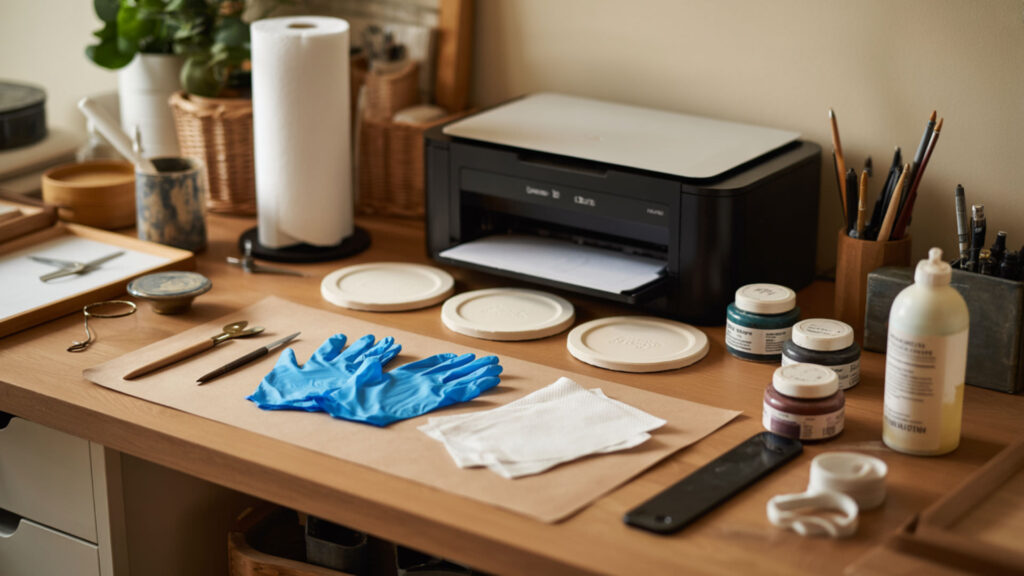
Sublimation ink is safe for normal use because water serves as the primary polar solvent carrier, producing lower emissions than non-polar solvent alternatives. This water-based formulation reduces airborne chemical exposure during printing and pressing. Risk remains minimal when following standard procedures—adequate ventilation, brief press times, and avoiding direct contact. Because piezoelectric printhead technology pairs safely with water-based sublimation inks, our Epson sublimation ink guide covers equipment that supports low-risk operation.
Can Sublimation Ink Cause Skin Irritation?
Typical dermal exposure to sublimation ink poses low hazard because water-based formulations lack harsh solvents that damage skin. Brief contact during cartridge changes or accidental spills causes no lasting effects for most individuals. Sensitive users may experience minor, temporary irritation that resolves with soap and water washing. Wearing nitrile gloves during ink handling eliminates this minimal risk entirely.
Is Infusible Ink Different and Does It Carry Similar Toxicity Concerns?
Cricut Infusible Ink uses the same disperse dye chemistry as sublimation ink, meaning both products share identical heat activation requirements and similar safety profiles. Both release minor fumes during pressing at 180–205°C that may irritate sensitive individuals. Ventilation recommendations apply equally to both systems. Because both rely on disperse dye technology, our sublimation vs Infusible Ink comparison details their shared chemistry.
What Exactly Is Sublimation Ink Made From?
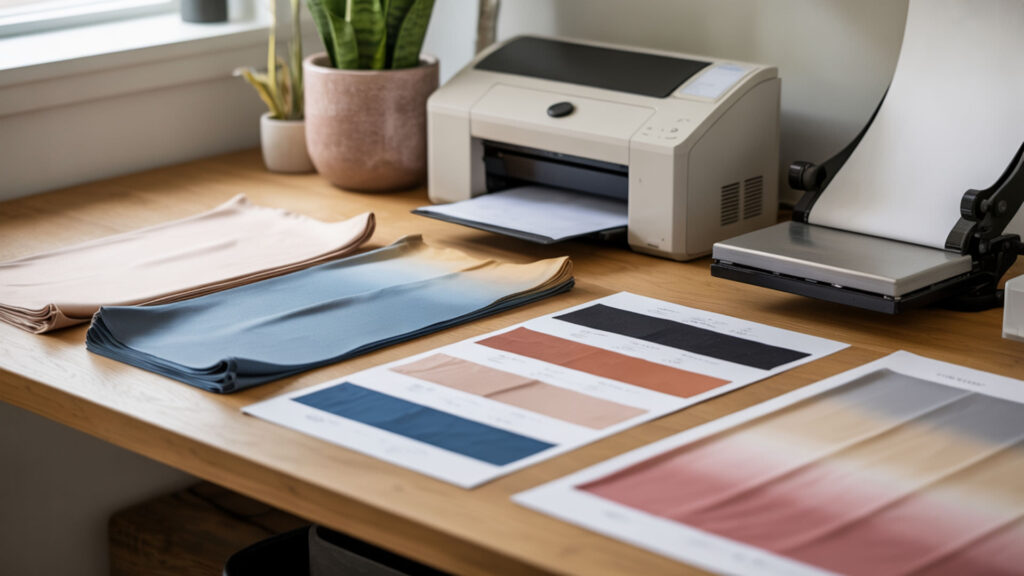
Sublimation ink consists of disperse dyes suspended in water-based carrier solutions containing glycol ethers, surfactants, and stabilizing additives. The dye component typically comprises 10–40% of the formulation by mass, with water constituting 30–60%. These disperse dyes remain inert in liquid form until heat activation triggers their solid-to-gas phase transition for polymer bonding.
What Kind of Ink Is Used in Sublimation Printing?
Sublimation printing uses disperse dye inks specifically formulated for heat-activated transfer onto polyester substrates. These dyes differ from pigment inks because they dissolve completely in carrier solutions and sublimate into gas at 180–205°C. The disperse dye classification indicates molecules small enough to penetrate polymer fiber structures during the brief gaseous phase.
Can Sublimation Ink Raise Concerns About Hazardous Ingredients?
Quality sublimation inks exclude hazardous chemicals like formaldehyde, heavy metals, and carcinogenic compounds found in some industrial printing inks. Chemical hazard potential depends on formulation quality and concentration—reputable manufacturers provide Safety Data Sheets (SDS) confirming ingredient safety. Handling concerns arise only with low-quality inks from unverified sources that may contain undisclosed harmful additives.
Does Sublimation Printing Produce Fumes or Gas?
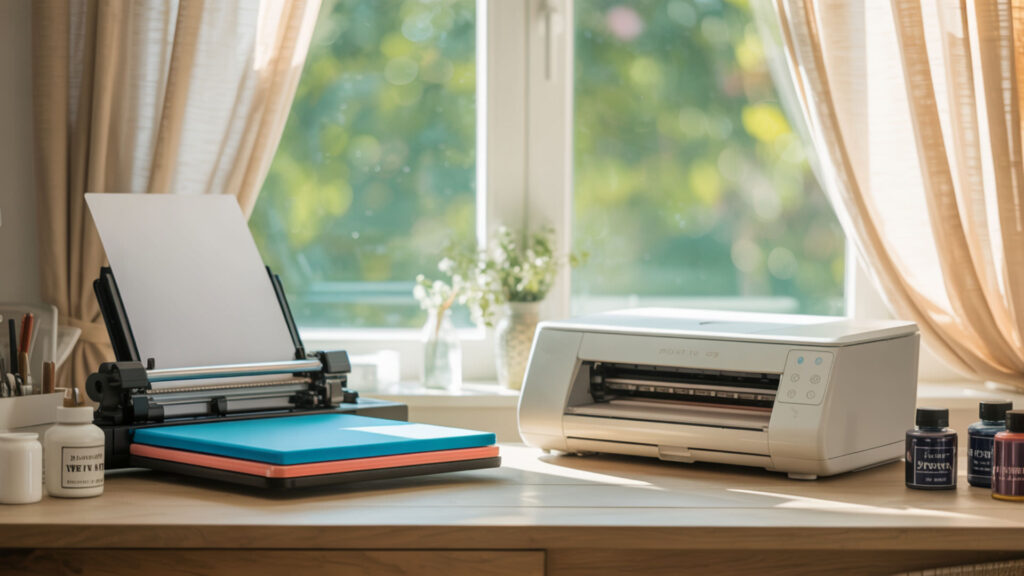
Sublimation printing produces visible vapor when heat press temperatures reach 180–205°C, converting solid dye particles into gas. These volatile emissions have low acute toxicity because disperse dyes are designed for brief airborne existence before bonding with polyester. Inhalation of concentrated fumes may cause temporary respiratory irritation, though standard exposure during normal pressing cycles poses minimal concern.
Can Ink Fumes Form During Sublimation Transfers?
Heated dye particles become briefly airborne during sublimation transfers as the press reaches operating temperature. This visible vapor represents dye molecules transitioning to the gas phase for substrate penetration. Inhalation exposure occurs primarily when opening the press after transfer completion. The fumes dissipate within seconds in ventilated spaces, limiting actual respiratory contact to brief intervals.
At What Point Does Heated Ink Behave Like a Gas Instead of Liquid?
Disperse dyes transition from solid to gas at temperatures between 180–205°C (356–400°F) during heat press operation. This sublimation process bypasses the liquid phase entirely—dried ink on transfer paper converts directly to vapor under sustained heat and pressure. The gaseous state lasts only seconds before dye molecules penetrate and bond with polyester polymer chains.
Should Ventilation Be Used When Working with Sublimation Ink?
Ventilation significantly reduces inhalation risk by dispersing airborne dye particles before they accumulate to irritating concentrations. Open windows, exhaust fans, or fume extractors positioned near the heat press maintain air quality during extended production runs. Home crafters benefit from cross-ventilation; commercial operations should target 4–6 air changes per hour. HEPA air purifiers provide additional protection in enclosed workspaces. Ventilation is a primary method for reducing indoor airborne contaminants by diluting and removing them before they accumulate to irritating levels. [2]
What Happens If Sublimation Ink Expires or Degrades?
Expired sublimation ink loses chemical stability as dye particles separate from carrier solutions over time. Degraded dyes produce reduced fastness—colors fade faster and bond less securely with substrates. Handling expired ink may increase exposure risk because unstable formulations release more volatile compounds during heating. Expired ink also clogs printheads, requiring aggressive cleaning that increases chemical contact during maintenance.
How Do You Safely Use Sublimation Ink Step-by-Step?
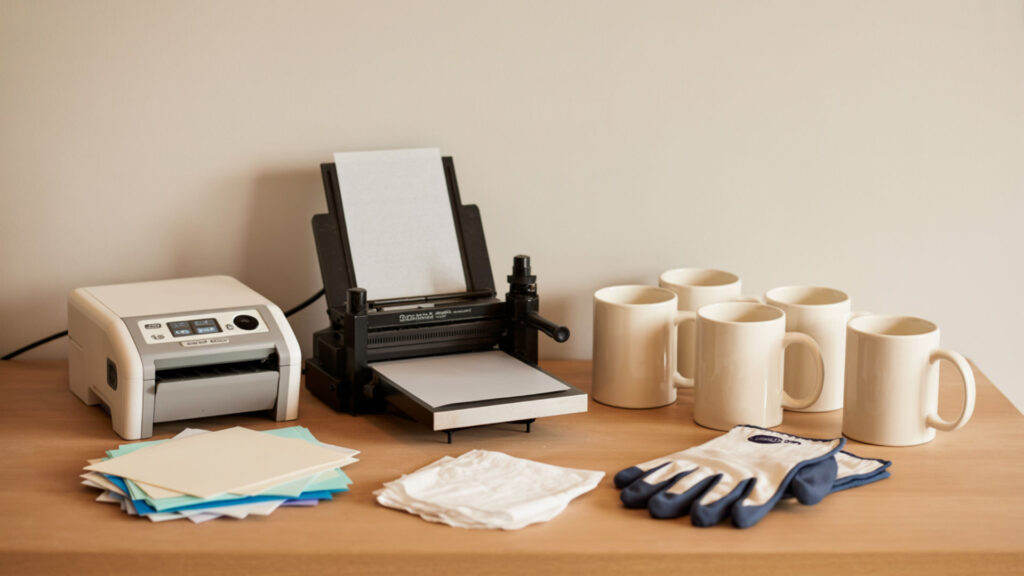
- Set up ventilation before printing. Open windows or activate exhaust fans to ensure airflow disperses fumes during heat press operation, reducing inhalation exposure risk.
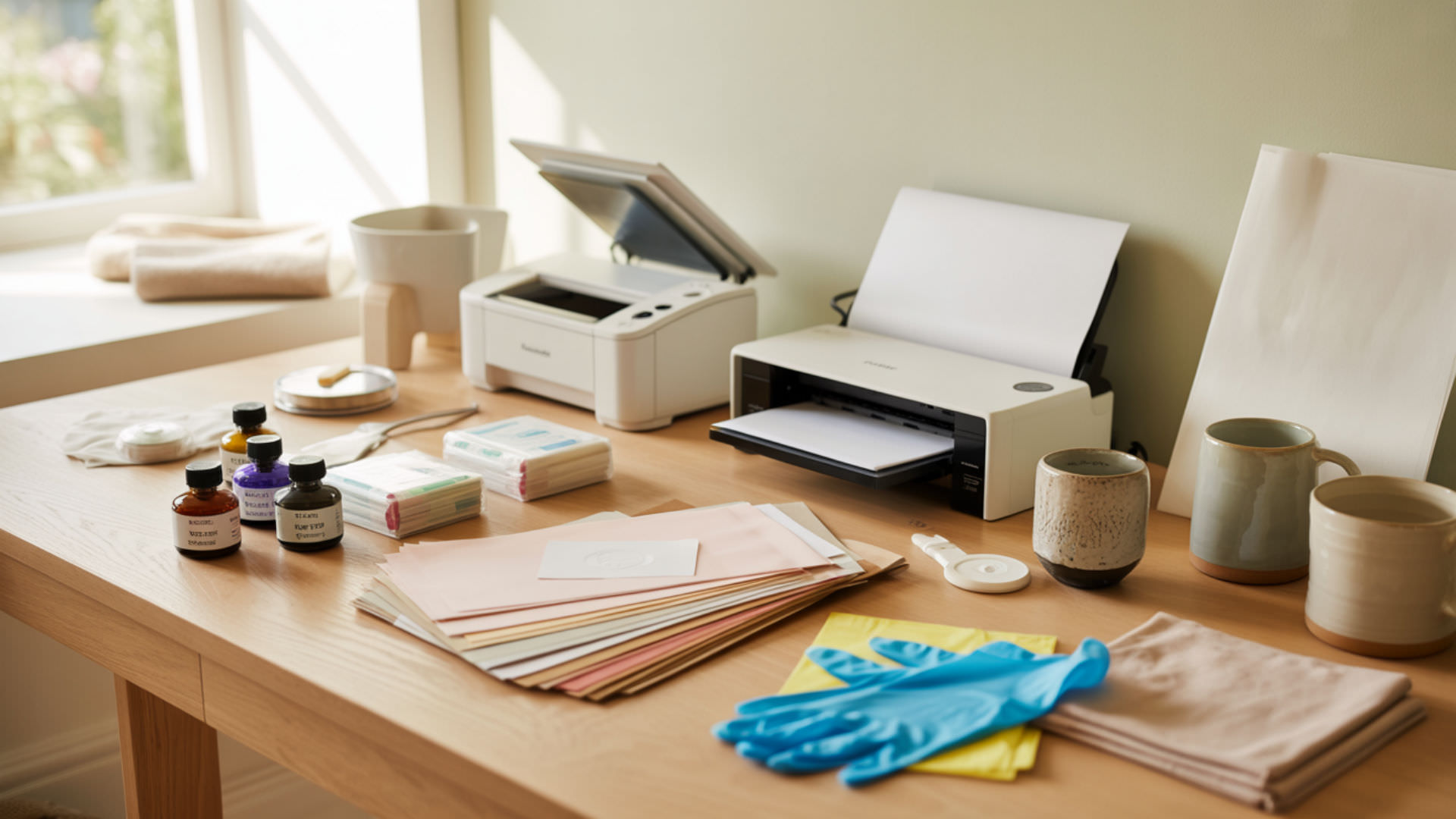
- Wear nitrile gloves when handling ink. Gloves prevent dermal exposure during cartridge installation, tank refilling, or cleanup of accidental spills.
- Load ink into the printer following manufacturer instructions. Proper installation minimizes spillage and ensures correct ink flow without air bubbles that cause waste.
- Print designs onto sublimation transfer paper. Standard printing produces no fumes—exposure risk occurs only during the subsequent heat transfer stage.
- Preheat press to 180–205°C (356–400°F) and position transfer. Correct temperature ensures complete dye sublimation; lower settings produce incomplete transfers requiring repeat pressing.
- Press for 45–60 seconds at medium pressure. Brief press cycles limit fume generation; extended times increase vapor release without improving transfer quality.
- Open press and step back momentarily. Allowing initial vapor to disperse before removing the transfer reduces direct inhalation of concentrated fumes.
- Store ink in cool, dark location between 15–27°C. Proper storage prevents degradation that increases chemical instability and potential exposure during future use.
Ready to Use Sublimation Ink Safely?
Sublimation ink’s water-based formulation supports safe home and commercial use when basic precautions are followed. Adequate ventilation, brief press cycles, and proper handling reduce already-low risk levels to negligible concerns. Quality inks from reputable manufacturers meet safety standards that eliminate hazardous additives, making sublimation one of the safer printing methods available for personalized products.
Frequently Asked Questions
Can printer ink be hazardous on skin with long exposure?
Extended dermal exposure to printer ink may cause mild irritation, redness, or drying for sensitive individuals. Sublimation ink’s water-based formula produces less reaction than solvent-based alternatives. Washing with soap and water removes ink before absorption occurs. Prolonged contact exceeding several hours without cleaning increases irritation risk, though permanent skin damage from sublimation ink remains extremely rare.
Is sublimation ink considered hazardous waste once used?
Used sublimation ink cartridges may qualify as hazardous waste depending on local regulations because they contain residual dyes and chemical additives. Many municipalities require disposal through household hazardous waste programs rather than regular trash. Empty cartridges pose lower risk but should still be recycled through manufacturer take-back programs. Check regional guidelines for specific disposal requirements in your area.
Can heated ink alter indoor air quality temporarily?
Heated sublimation ink temporarily affects indoor air quality by releasing disperse dye vapor during heat press operation. This inhalation exposure lasts seconds to minutes depending on ventilation effectiveness. Air quality returns to baseline within 5–15 minutes after pressing concludes in well-ventilated spaces. Continuous production without adequate airflow may sustain elevated particle concentrations requiring breaks or improved ventilation.
Do expired inks behave differently during sublimation transfers?
Expired sublimation inks produce inconsistent results because degraded dye particles separate from carrier solutions and lose sublimation efficiency. Transfers appear faded, blotchy, or incompletely bonded. Expired formulations may release more volatile compounds during heating as chemical stability deteriorates. Color accuracy suffers as individual dye components break down at different rates, producing unexpected hue shifts.
How can you check if an ink product is labeled non-toxic?
Check manufacturer Safety Data Sheets (SDS) for hazard classifications and ingredient disclosures confirming non-toxic status. Look for certifications like ASTM D-4236, which indicates art materials meet safety labeling requirements. Water-based formulations generally qualify as non-toxic, while solvent-based inks require closer scrutiny. Reputable brands publish SDS documents on their websites; avoid products lacking accessible safety documentation.
References
- Toxicology. (n.d.). National Institute of Environmental Health Sciences. https://www.niehs.nih.gov/health/topics/science/toxicology
- Introduction to indoor air quality. (2025, September 10). US EPA. https://www.epa.gov/indoor-air-quality-iaq/introduction-indoor-air-quality