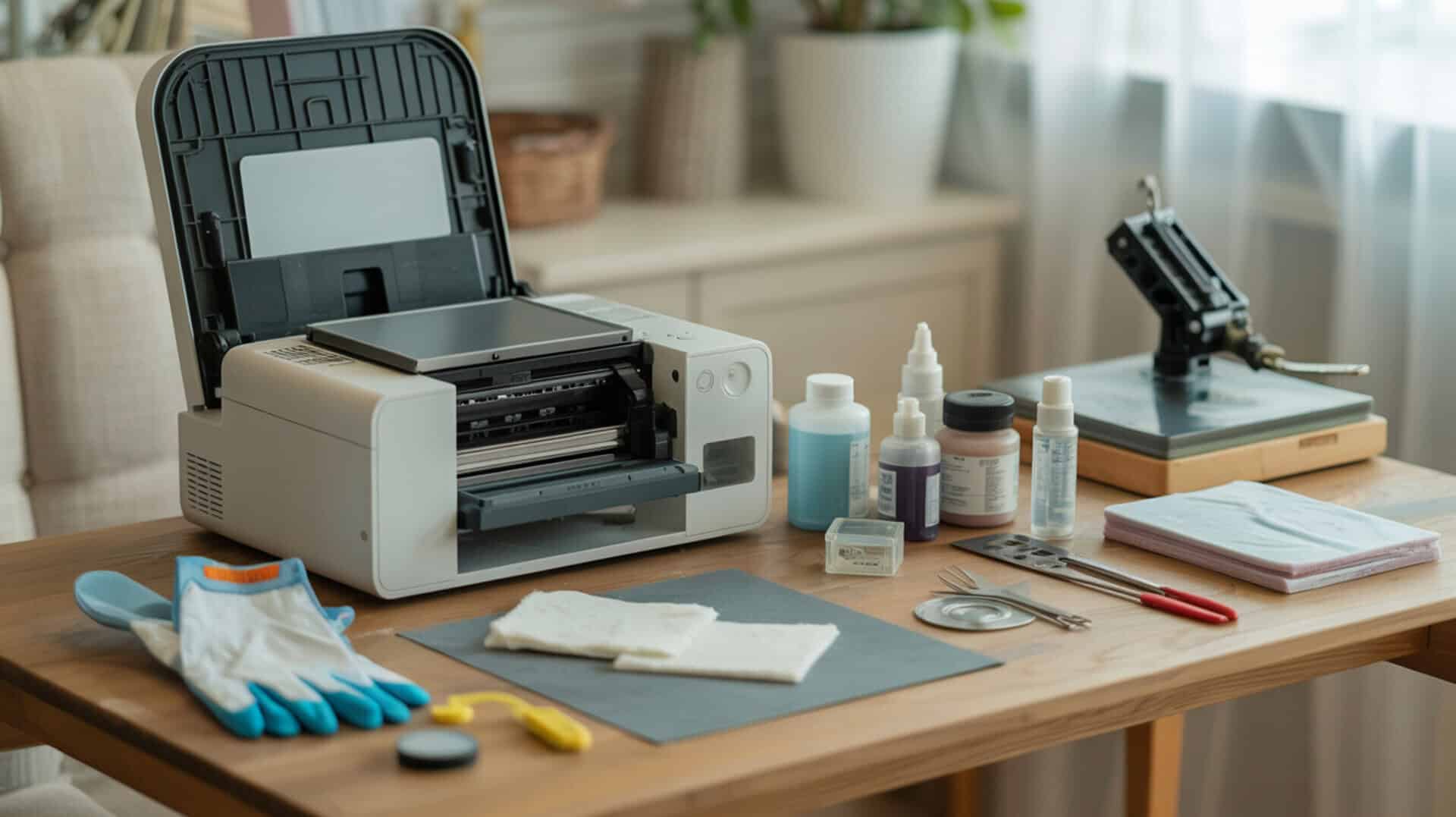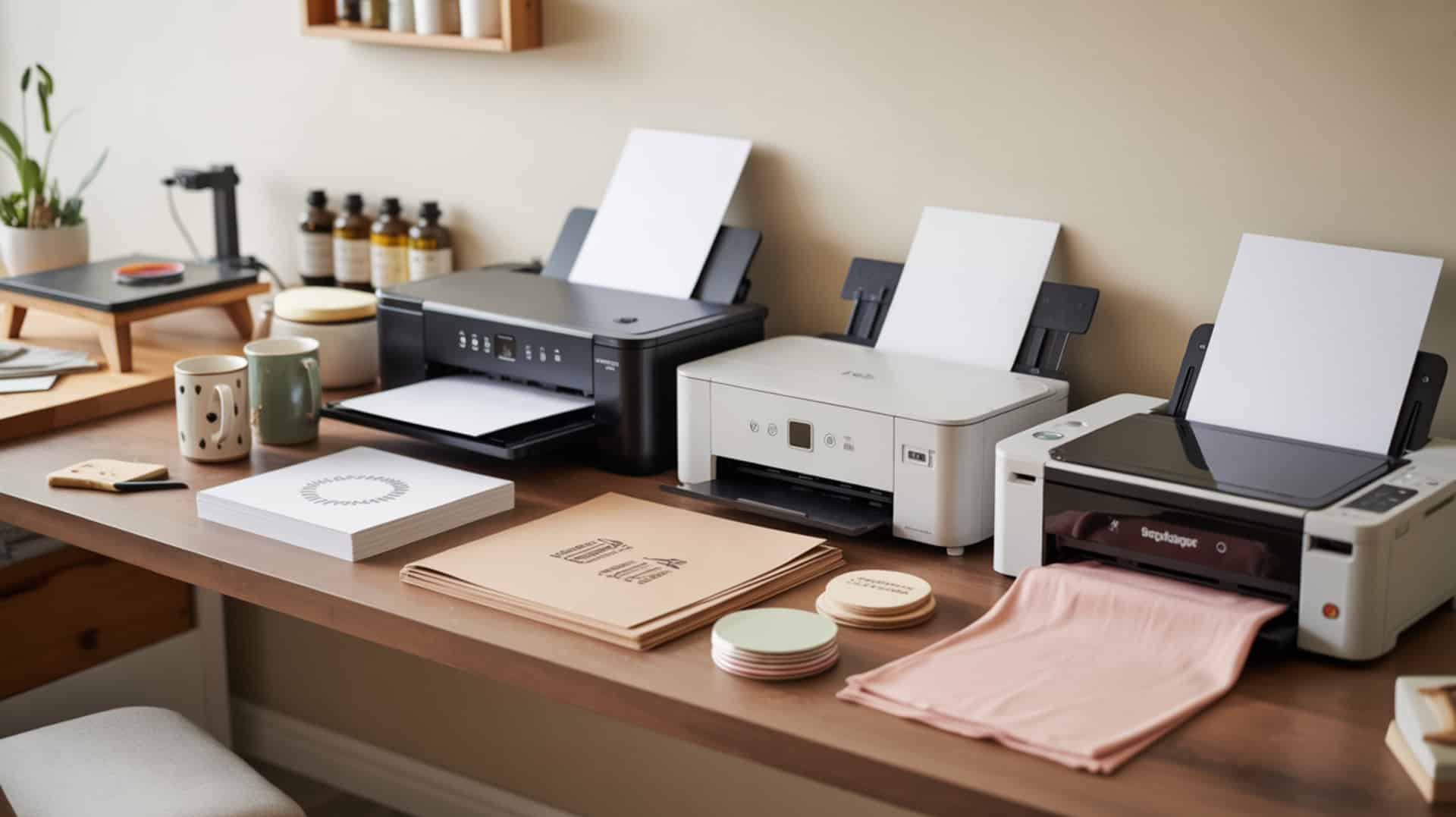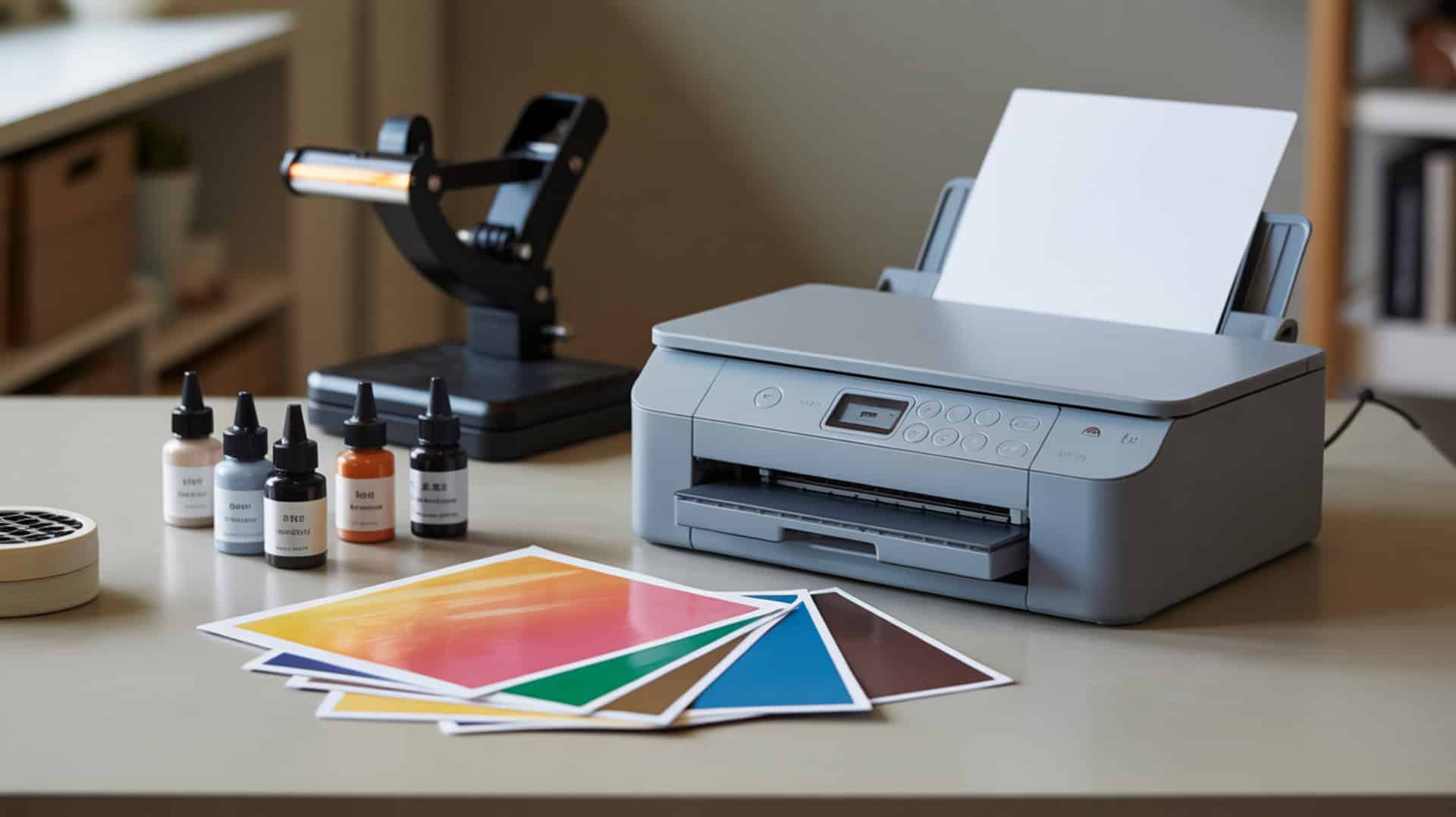

The Epson EcoTank ET-8550 is a six-color supertank printer featuring piezoelectric actuator technology that enables wide-format sublimation printing up to 13×19 inches. Unlike thermal inkjet printers where heater resistors can degrade disperse dye during printing, the ET-8550’s mechanical droplet ejection avoids heat damage to sublimation ink. The six-color system (black, photo black, cyan, magenta, yellow, gray) provides enhanced color accuracy compared to four-color alternatives. Because piezoelectric actuator technology determines sublimation compatibility through safe mechanical ejection physics, understanding printhead mechanisms helps you evaluate whether this wide-format option suits your workflow.
Key Takeaways
- Drop-on-demand (DOD) ejection provides controlled ink delivery that improves consistency when using disperse dye sublimation inks across six color channels.
- The supertank bottle-fed ink system reduces long-term cost-per-page (CPP) compared to cartridge-based wide-format alternatives.
- Wide-format 11×17 and 13×19 capability fills the gap between small-format converted printers and professional production equipment, with ink initialization taking approximately 7 minutes.
Is the Epson EcoTank ET-8550 the Right Sublimation Printer for Your Projects?
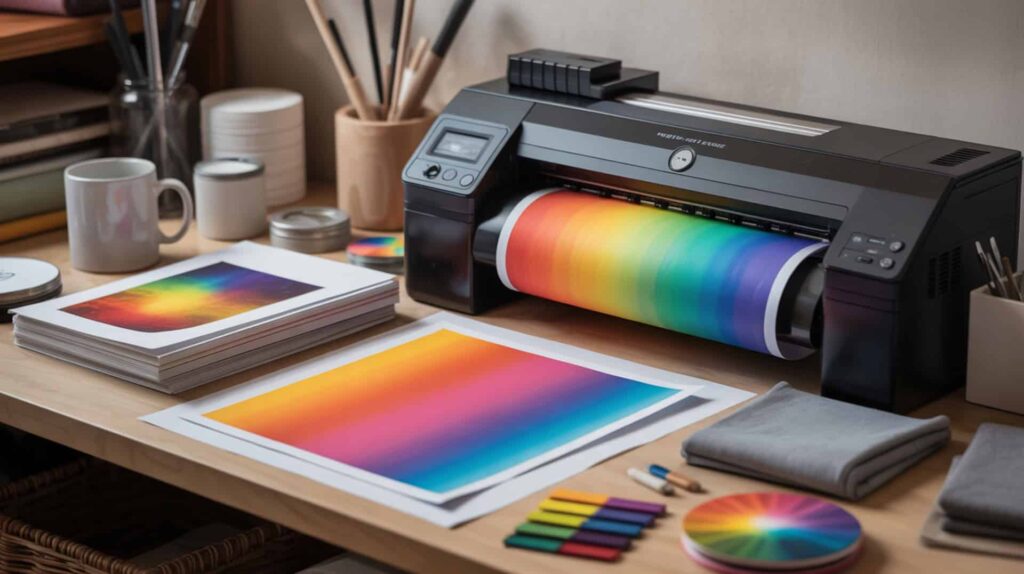
The Epson EcoTank ET-8550 is a wide-format supertank printer with piezoelectric actuator technology and refillable ink bottles supporting six-color sublimation conversion. According to test evaluations, the bottle-fed tank system supports direct filling with sublimation ink without cartridges, while piezo ejection allows disperse dye printing without thermal stress. Testing with both Hiipoo and Cosmos sublimation inks produced successful results on 100% polyester substrates at 400°F for 50 seconds. Because supertank printers with bottle-fed systems simplify sublimation conversion, users evaluating wide-format EcoTank options should also review our guide on best Epson sublimation printers to convert for model comparisons.
What kind of sublimation print quality can you expect from the Epson ET-8550?
The ET-8550 delivers detailed and vibrant sublimation results according to test documentation, with the six-color system providing enhanced color accuracy compared to four-color printers. Nozzle stability ensures edge clarity through consistent droplet formation that improves pre-transfer detail across the wider print area. Dye diffusion during heat pressing determines color depth, with heat-driven diffusion into polymer creating final vibrancy. Testing on polyester shirts at 400°F for 50 seconds produced enthusiastic reactions, with results described as detailed and vibrant at wide-format 11×17 sizes.[1]
What are the main pros and cons of the Epson EcoTank ET-8550 for sublimation?
The ET-8550 offers wide-format capability up to 13×19 inches, six-color output for improved color accuracy, straightforward EcoTank filling that stops automatically, and multiple setup methods via Epson Smart Panel App or manual driver installation according to test feedback. The fixed printhead creates maintenance dependency—clogs require cleaning cycles rather than head replacement, with multiple nozzle checks sometimes needed after ink initialization. Cartridge contamination from residual non-sublimation ink can distort color output, requiring brand-new printers for conversion. Setup requires six ink colors; missing photo black and gray complicates clean initialization. Troubleshooting can require several hours if nozzle patterns remain stubborn.[2]
How does the Epson ET-8550 compare to the ET-15000 and other sublimation printers?
The ET-8550 and ET-8500 share identical conversion processes according to test documentation, but the ET-8550 offers wide-format capability that users upgrading from smaller printers specifically seek. The continuous ink supply system (CISS) design supports continuous-tone output with smooth gradients and photo-quality transfers through high-volume ink delivery. Test feedback described the Epson Workforce 7710 as “the best printer they ever had” for wide format, with the ET-8550 filling that capability gap. For users focused on photo and graphic printing, the ET-8550 excels, though those needing only wide-format without six-color benefits may prefer the ET-15000. Because both the ET-8550 and ET-15000 target higher-volume sublimation users with tank-based ink delivery, comparing specifications helps determine the right fit—see our Epson EcoTank ET-15000 sublimation review for details. You can find the Epson EcoTank ET-8550 Sublimation Printer here. [3][4]
Final Verdict on Whether the Epson EcoTank ET-8550 Is Worth the Investment
The Epson EcoTank ET-8550 represents a solid investment for sublimation transfer printing users focused on photo-quality output and wide-format capability. Higher upfront cost is justified by lower cost-per-page (CPP) in sustained workflows, with print volume determining value assessment. The six-color ink system ensures color accuracy for graphic and photographic work, while 13×19 printing capability offers flexibility for larger projects. Inkjet printer maintenance requirements apply—regular printing prevents clogs, and troubleshooting may consume time initially. I recommend the ET-8550 for those focused on photo and graphic printing who need the six-color advantage. However, if your primary requirement is wide-format sublimation without six-color benefits, the Epson EcoTank ET-15000 offers a more cost-effective alternative for that specific need.
Frequently Asked Questions
- What is the difference between the Epson ET-8500 and ET-8550 models?
- The ET-8500 and ET-8550 share identical sublimation conversion processes according to test documentation, with both using piezoelectricity-based printheads compatible with disperse dye inks. The primary difference involves format capability—the ET-8550 supports wide-format printing up to 13×19 inches while the ET-8500 handles smaller sizes. Test feedback noted one creator regretted purchasing the 8500 specifically because they needed wide-format capability, leading them to upgrade to the ET-8550 for larger sublimation projects.
- What is the largest print size the Epson ET-8550 can handle?
- The Epson ET-8550 prints up to 13×19 inches (Super B/A3 size) using the rear paper feeder according to product specifications and test documentation. Testing confirmed successful 11×17 prints on A-Sub sublimation paper fed through the rear tray. The piezoelectricity-based printhead deposits disperse dye across the full width, enabling all-over prints and larger graphic designs that transfer to polyester/polymer-coated substrates during heat pressing at 400°F for 50 seconds.
- What kind of ink does the Epson EcoTank ET-8550 use?
- The ET-8550 uses six ink colors for sublimation: black (BK), photo black (PB), cyan (C), magenta (M), yellow (Y), and gray (GY). For sublimation conversion, users replace the included Epson ink with disperse dye sublimation inks. Testing documented successful use of Hiipoo and Cosmos sublimation ink brands. The piezoelectricity printhead mechanism enables safe dye handling without thermal degradation. Six-color capability provides enhanced color accuracy compared to four-color systems, particularly for photographic and gradient work.
- When did the Epson EcoTank ET-8550 come out on the market?
- The Epson EcoTank ET-8550 released as part of Epson’s photo-focused EcoTank lineup featuring six-color piezoelectricity-based printing and wide-format capability. The printer supports disperse dye sublimation inks through its supertank design, making it suitable for crafters seeking photo-quality wide-format output. Test documentation shows creators upgrading from older Workforce models specifically to regain wide-format sublimation capability with improved color accuracy from the six-color system.
- How much does the Epson EcoTank ET-8550 printer typically cost?
- The Epson EcoTank ET-8550 commands a premium price point reflecting its wide-format capability and six-color piezoelectricity-based system. For sublimation conversion, additional costs include disperse dye ink (typically purchased as a 4-pack plus separate gray and photo black bottles) since the included Epson ink cannot be used. Test documentation notes the supertank design reduces long-term costs through lower cost-per-page compared to cartridge systems, offsetting higher upfront investment for users with sustained print volume on polyester/polymer-coated substrates.
References:
- Detector-based color scale. (2025, March 26). NIST. https://www.nist.gov/programs-projects/detector-based-color-scale
- (n.d.). U.S. Environmental Protection Agency | US EPA. https://www.epa.gov/sites/default/files/2015-01/documents/printing.pdf