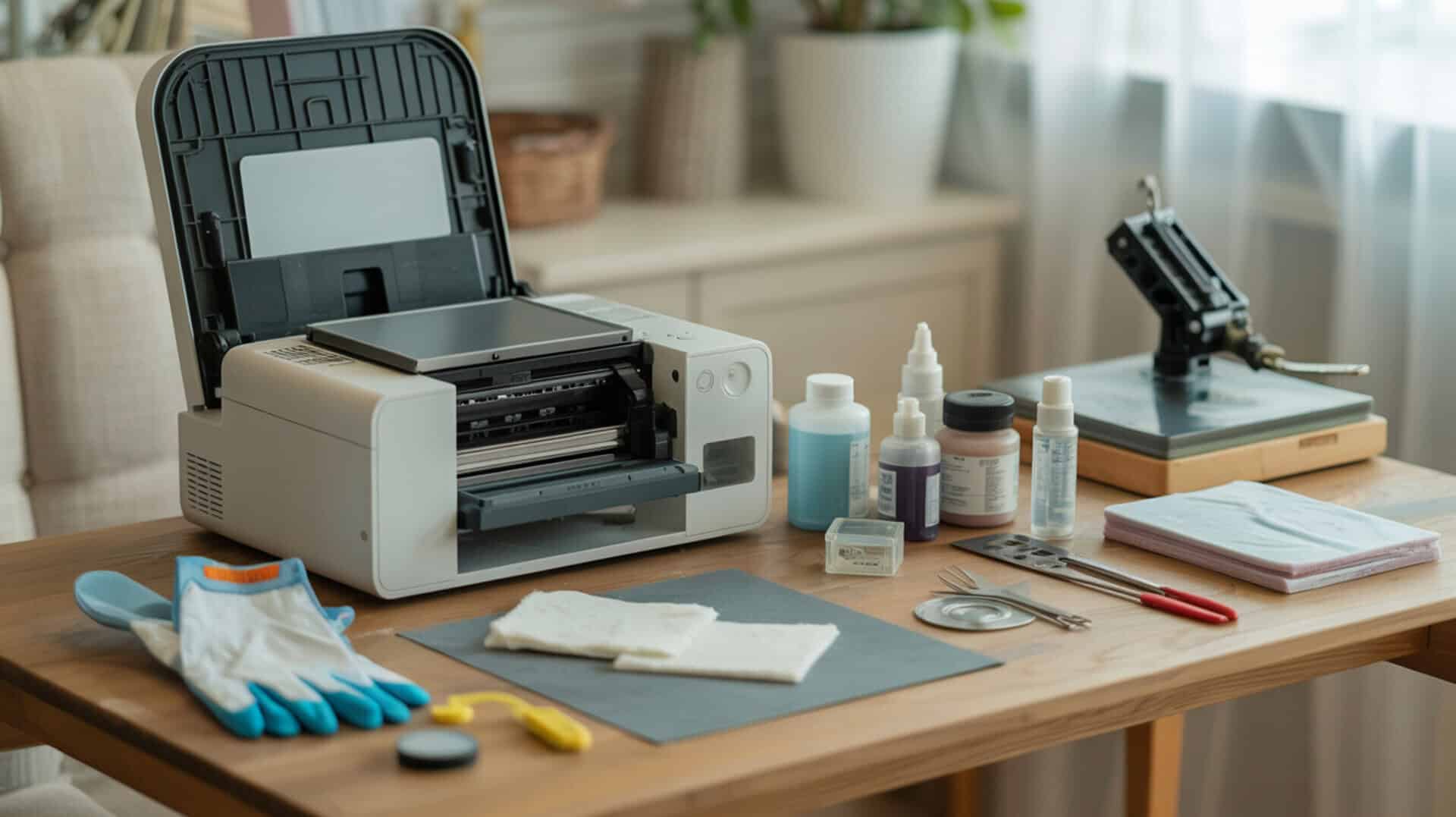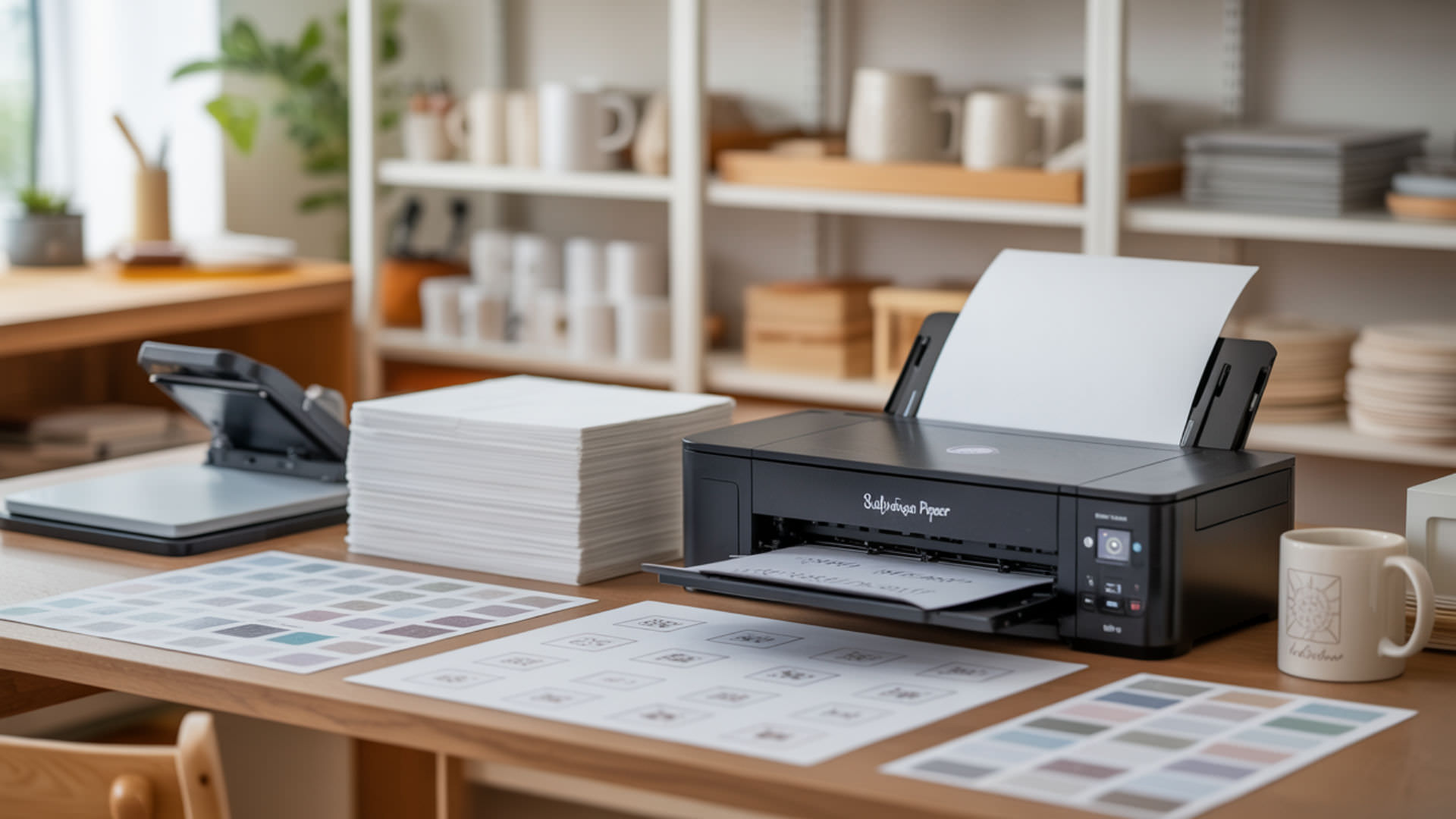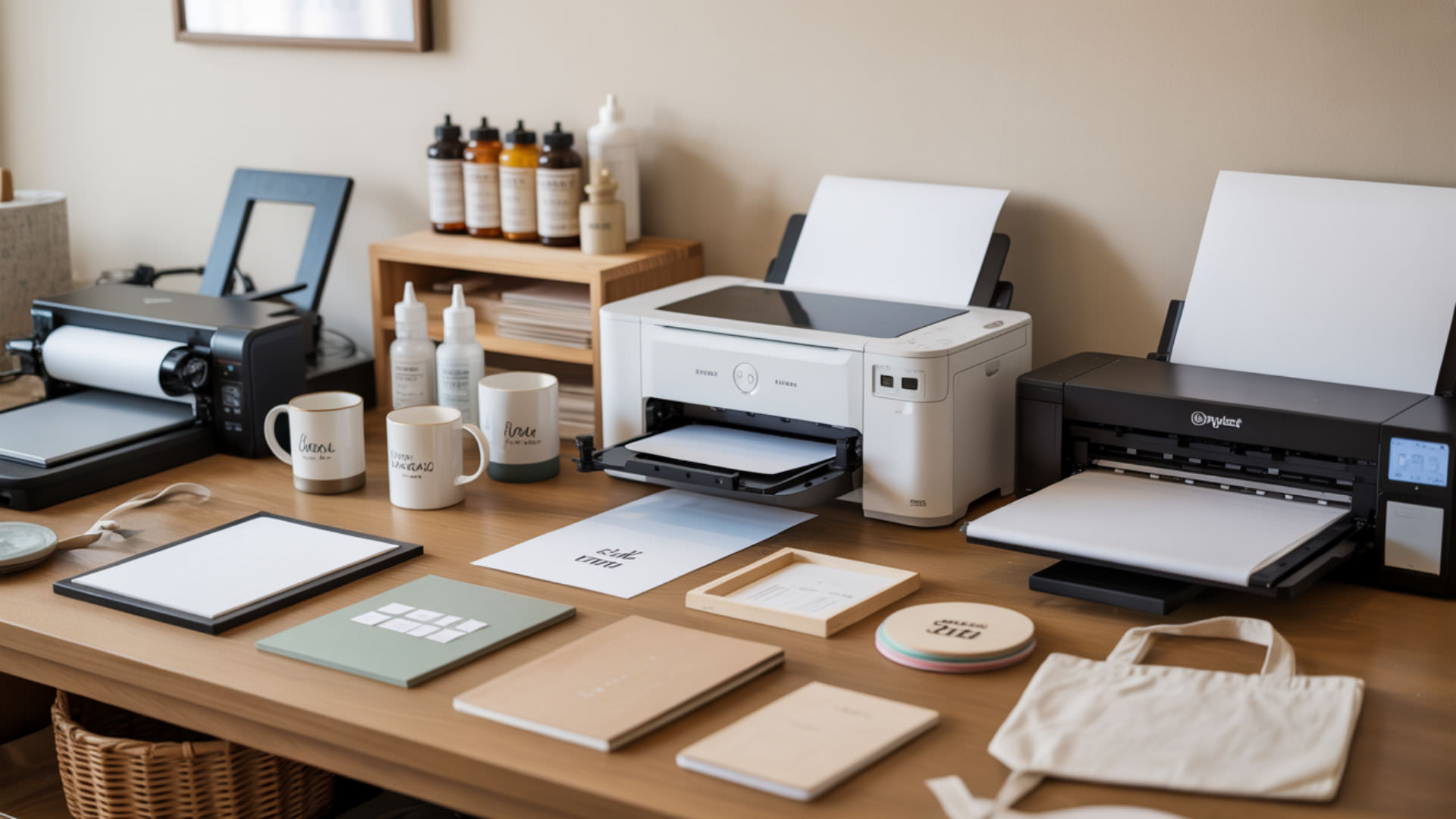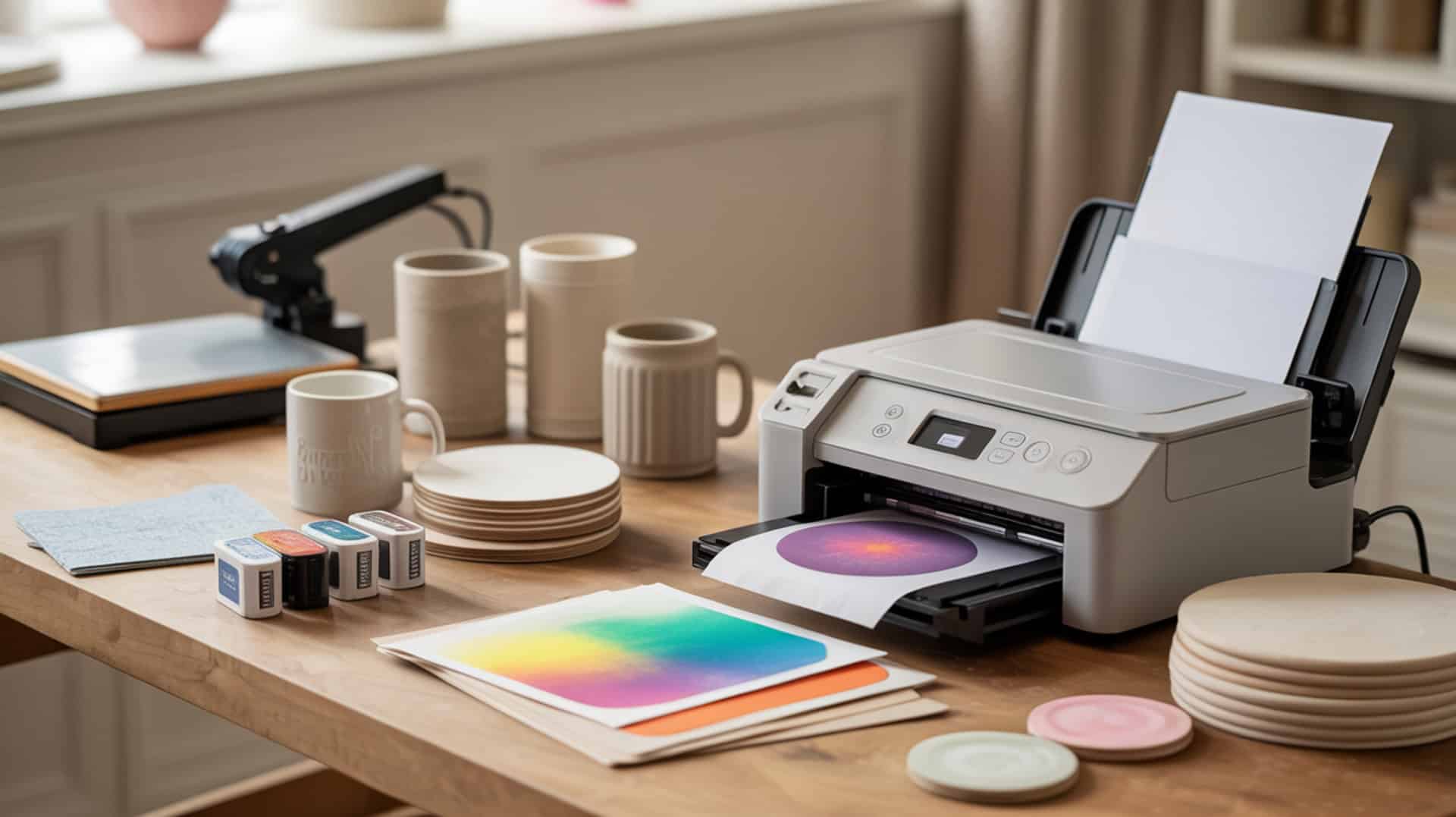
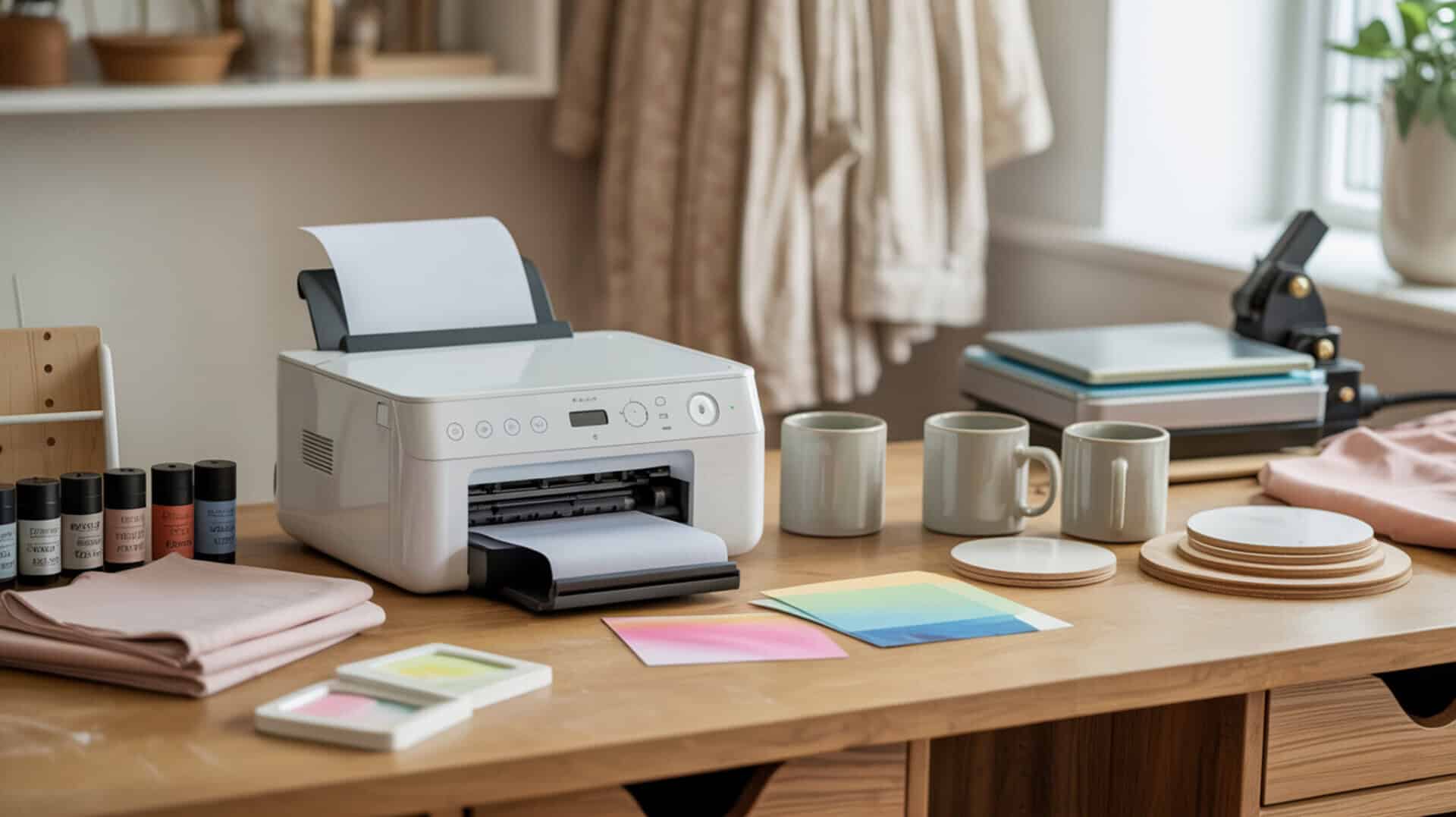
The Brother SP-1 is a dedicated dye-sublimation printer that uses piezoelectric inkjet technology and proprietary ink formulation designed specifically for sublimation output without requiring conversion from a standard inkjet printer. Because piezoelectric heads eject dye without heat, they prevent thermal breakdown of disperse dyes that would occur in thermal inkjet systems. Dye-sublimation printing produces permanent color through polymer diffusion—heated dye gas bonds inside polyester fibers or polymer coatings. Dye-sublimation printing is a digital process in which solid dye particles are converted into gas without becoming liquid and then permanently bonded to polymer-rich surfaces under heat and pressure.[1] Since dye-sublimation printing technology and home-use system requirements determine printer suitability, you may also want to read our hub article on dedicated sublimation printer for home use.
Key Takeaways
- Cost per print (CPP) on the Brother SP-1 is lower than Sawgrass systems—replacement ink costs approximately $39 for a 48ml cartridge compared to approximately $77 for 31ml Sawgrass cartridges.
- Continuous-tone printing produces smooth color gradients through precise disperse dye droplet placement, delivering photographic-quality sublimation output with bright, vibrant colors.
- Fastness (wash durability) results from disperse dye bonding at the polymer level—this creates permanent, wash-resistant color inside polyester fibers that withstands repeated laundering.
Is the Brother SP-1 the Right Sublimation Printer for Beginners and Hobbyists?
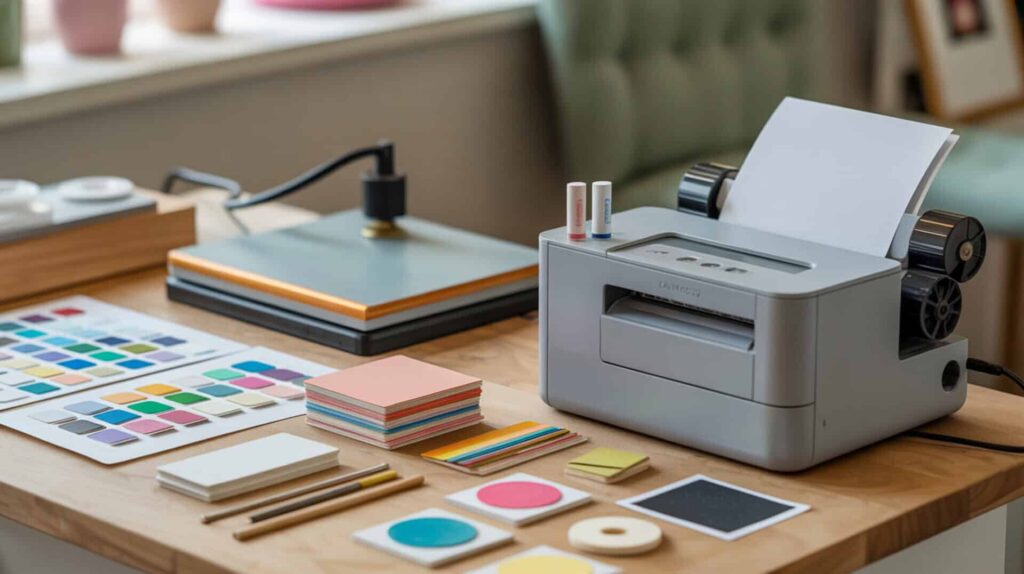
The Brother SP-1 is a dedicated sublimation printer at approximately $400 that uses piezoelectric inkjet technology with a sealed ink cartridge system providing consistent disperse dye delivery without conversion complexity. According to demonstrated setup and printing tests, the printer produces bright, vibrant colors without special color management or extra setup, especially when printing through the Artspira mobile app. The piezoelectric actuator provides stable droplet ejection through mechanical deformation that delivers dye without boiling. The cartridge system ensures ink viscosity control through sealed formulation that maintains consistent nozzle flow. Since all three major brands rely on piezoelectric inkjet head physics but differ in ink delivery and cost models, you may also want to read our comparison on Epson vs Sawgrass sublimation printer.
What kind of print quality and performance can you expect from the Brother SP-1?
Based on demonstrated printing and pressing tests, the Brother SP-1 produces bright, vibrant colors that the reviewer “loves”—prints look much brighter after pressing onto polyester surfaces. Chromophore absorption in the disperse dye molecules determines smooth gradients and color saturation characteristic of continuous-tone printing. In side-by-side comparisons, app prints and computer prints showed very similar colors, and pressed results from both methods “look really great.” Print speed is described as mid-range—faster than Epson EcoTank but slower than Sawgrass. The initial ink charge process takes approximately 8 minutes, during which the printer runs an automatic nozzle check. One issue observed: PDFs printed noticeably lighter than PNGs on computer; after pressing, PDFs looked dull compared to PNG prints. Accurate color reproduction in imaging and printing relies on standardized color measurement systems like the CIE 1931 color space, which define how colors are quantified and matched across devices.[2]
What are the main pros and cons of the Brother SP-1 sublimation printer?
The Brother SP-1’s page yield and cartridge cost deliver favorable cost per print compared to Sawgrass—replacement ink runs approximately $39 for 48ml versus approximately $77 for 31ml Sawgrass cartridges. Main advantages include extremely easy setup (cartridge installation, guided prompts), mobile printing via the free Artspira app (iPad/iPhone/Android), automatic maintenance cycles that move ink through the printer to prevent clogs, and bright vibrant colors without special color management. The reviewer recommends keeping the printer plugged in at all times for automatic maintenance. Main drawbacks include clunky in-app design tools, no dedicated computer software for design sizing (requires third-party programs), PDF printing lighter than PNG until settings are adjusted, and mid-range print speed. The printer’s exterior design was also noted as a personal aesthetic concern.
How does the Brother SP-1 compare to Epson and Sawgrass sublimation printers?
In direct comparison testing described in reviewed source material, the reviewer ranked Brother and Sawgrass as top tier for print quality, with Epson F170 close second and EcoTank conversion last due to color issues. Both Brother and Sawgrass use Micro Piezo inkjet technology with automatic maintenance cycles that move ink through to avoid clogs—Epson printers lack this feature and clog more frequently. Ink formulation chemistry tuning affects clog resistance and droplet stability: Brother’s sealed cartridge system maintains consistent viscosity without user intervention. Setup comparison: Brother and Sawgrass easier (cartridge-based); Epson F170 more difficult; EcoTank conversion most difficult with common color problems. Price positioning: Brother approximately $400, Sawgrass approximately $574, EcoTank conversion cheapest but most problematic. Since comparison centers on ink formulation control and delivery architecture, you may also want to read our detailed guide on Epson vs Sawgrass sublimation printer. You can find the Brother SP-1 here.[3][4][5]
Final Thoughts on Whether the Brother SP-1 Is Worth Buying
Cost per print (CPP), inkjet printer maintenance requirements, and page yield determine whether the Brother SP-1 fits your production needs and budget. The Brother SP-1 is an excellent choice for users with a moderate budget who want a dedicated sublimation printer without conversion complexity—it produces high-quality results at an affordable cost with automatic maintenance that prevents clogging. Test results showed similar output quality between Brother and Sawgrass, with Brother potentially producing better quality than the Epson F170. For beginners on tight budgets willing to troubleshoot conversion issues, Epson EcoTank models cost less but frequently experience clogging and color problems. For faster print speeds with higher budgets, the Sawgrass SG500 is a strong alternative. For large format needs, consider the Epson ET-15000 or Sawgrass SG1000. The Brother SP-1 is the best option for users seeking an affordable dedicated sublimation printer with high-quality results, easy setup, and low-volume to medium-volume production needs.
Frequently Asked Questions
Does the Brother SP-1 sublimation printer clog easily over time?
The Brother SP-1 has automatic maintenance cycles that move ink through the printer to help prevent clogs, unlike Epson printers that require manual printing at least once weekly to avoid clogging. The reviewer described this automatic maintenance as a “huge benefit” compared to Epson systems where the EcoTank is “definitely the worst” for clogging and the F170 also experiences clogs. Keeping the Brother printer plugged in at all times allows the automatic maintenance cycle to run. Piezoelectric actuation provides safe ejection of disperse dye without the thermal stress that can contribute to ink drying in nozzles.
What is the typical lifespan you can expect from a Brother printer?
Brother printers generally last 5 years or more with proper maintenance, with some users reporting 10+ years from well-maintained models. Key factors affecting lifespan include consistent usage (regular printing prevents ink drying and clogging), proper maintenance, and environmental conditions. Signs a printer may need replacing include frequent paper jams, poor print quality, unusual noises during operation, and high repair costs for worn components. The Brother SP-1 is new to the sublimation market, so long-term durability data specific to this model is still developing.
What is the best sublimation paper to use with the Brother SP-1?
Brother Genuine Sublimation Paper (SP01PLS) is the recommended supply for the Brother SP-1, as it has been Brother-tested and approved to work with the printer. The included starter sublimation paper has a cut corner for orientation—the cut corner should go in the lower-right position when loading into the paper tray. The standard tray supports 8.5 × 11 inch paper, while the rear feed supports 8.5 × 14 inch legal size one sheet at a time with the printable side facing up.
How long is the warranty on Brother sublimation printers?
The standard Brother printer warranty is one year from the purchase date for the machine and included accessories, with supply items like ink cartridges having a 90-day or rated-life warranty. Extended warranty plans can add additional years of coverage. Some Brother models, particularly Ink Tank printers, offer extended warranties up to 42 months if registered within 30 days of purchase—check specific terms for the SP-1 model. Thermal inkjet cartridge systems (HP, Canon) cannot support sublimation because thermal heating damages disperse dye chemistry.
Can you use the Brother SP-1 with Cricut Design Space software?
Yes, you can use the Brother SP-1 with Cricut Design Space—sublimation prints from Design Space turned out perfectly in reported testing. If you are familiar with Cricut Design Space, it can be a great option for sublimation beginners who already know the software. The Brother SP-1 also works with the free Artspira mobile app for designing and printing, though the reviewer found the in-app design tools clunky. On computer (Mac/PC), you need third-party design software to size designs before printing through the Brother driver.
References:
- Dye-sublimation printinghttps://en.wikipedia.org/Wiki/dye-sublimation printing. (n.d.). Wikipedia, the free encyclopedia. Retrieved January 31, 2026, from https://en.wikipedia.org/wiki/Dye-sublimation_printinghttps://en.wikipedia.org/wiki/Dye-sublimation_printing
- CIE fundamentals for color measurements. (2024, July 19). NIST. https://www.nist.gov/publications/cie-fundamentals-color-measurements-0