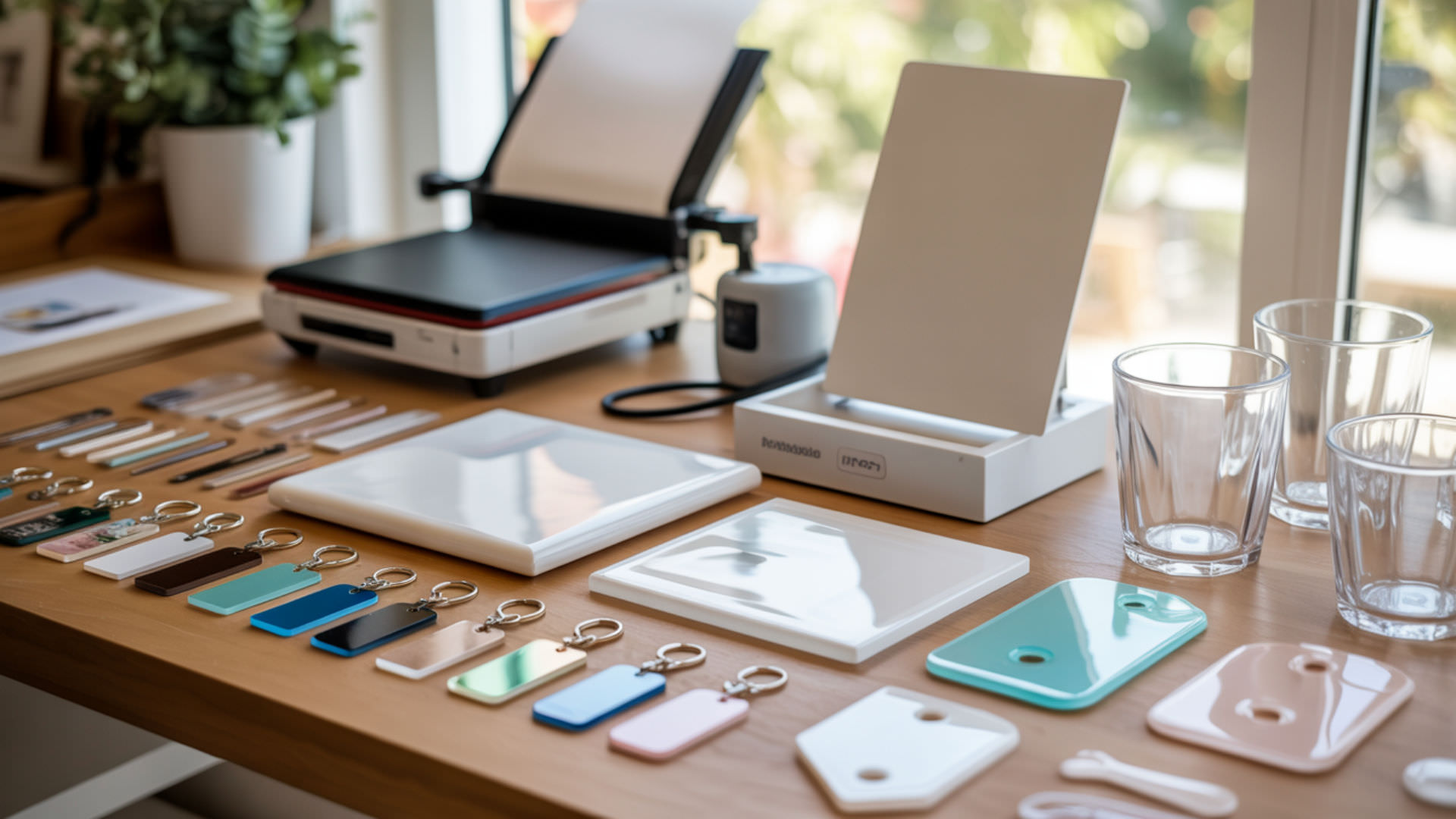
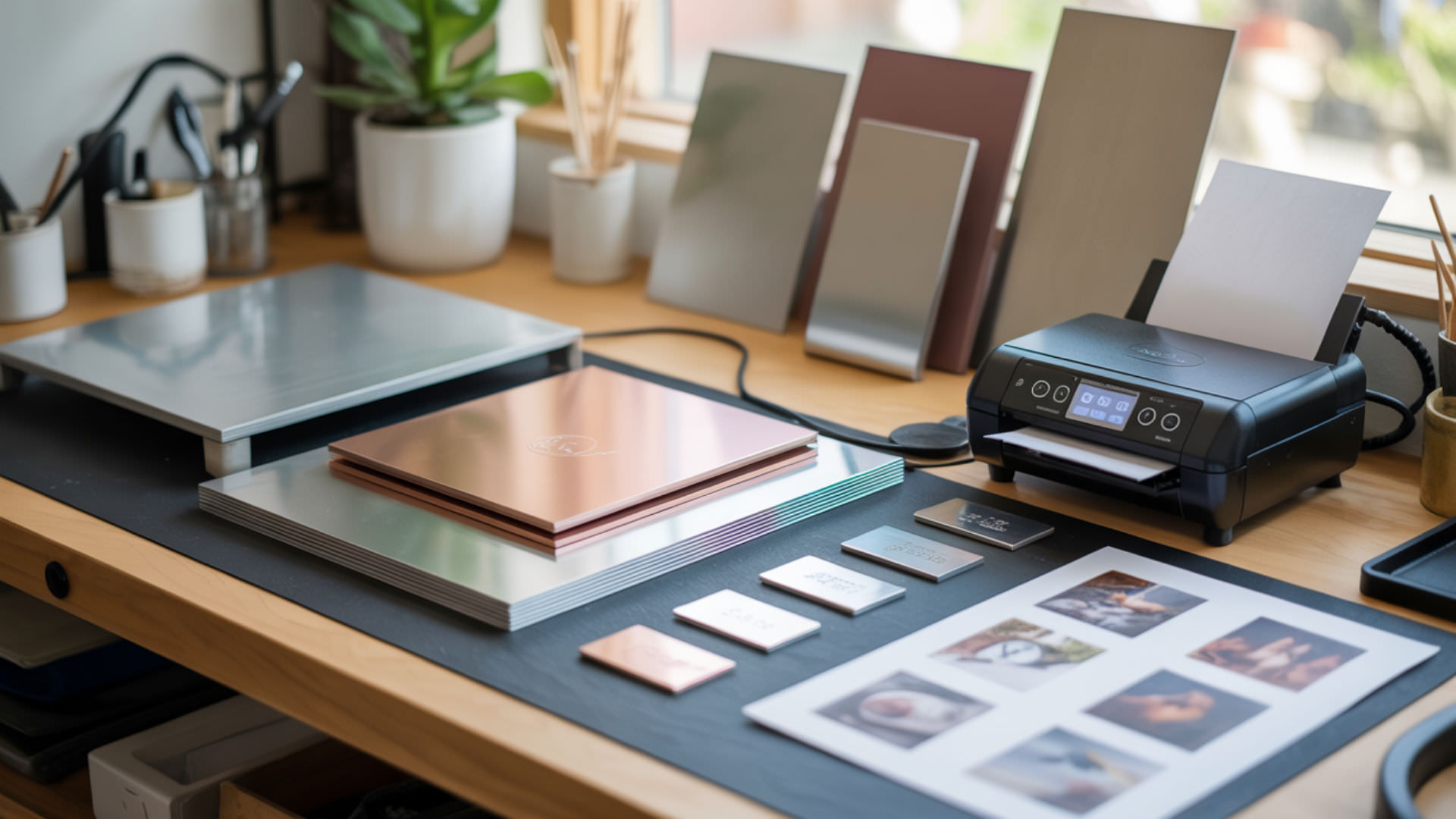
Metal sublimation produces scratch-resistant, fade-resistant prints on aluminum panels, signs, and awards that can last 65+ years with proper care. The polyester coating on metal blanks provides the polymer layer that accepts gaseous dye during heat transfer—raw metal cannot bond sublimation ink. The polymer-bonding requirement that makes coated metals compatible with sublimation is explained in our guide to sublimation on materials.
Key Takeaways
- Metal requires polyester coating for sublimation—bare aluminum or steel cannot bond with sublimation dye without polymer treatment.
- High thermal conductivity enables shorter press times of 45–90 seconds at 375–400°F with medium pressure (40 psi).
- Metal prints last 65+ years indoors, with UV exposure causing gradual fading only on unprotected outdoor displays.
What is sublimation printing on metal?
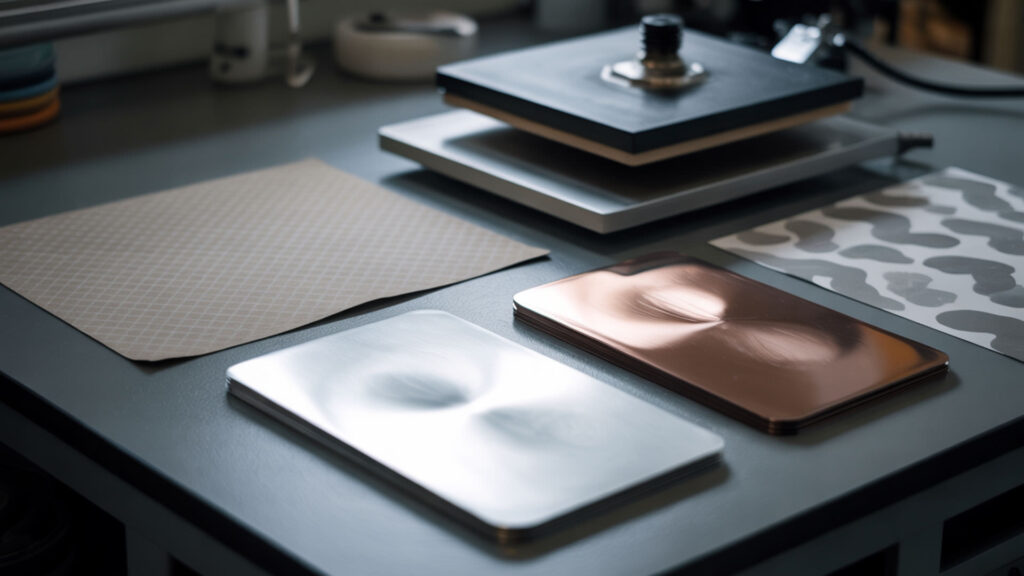
Metal sublimation uses dye diffusion to infuse images into the polyester topcoat applied to aluminum sheets—the dye bonds with polymer chains, not the metal itself. Polyester coating is mandatory because raw metal lacks molecular structure for ink penetration. The resulting prints resist scratching, fading, and moisture damage, making metal ideal for photo panels and commercial signage.
Can you sublimate print directly onto metal surfaces?
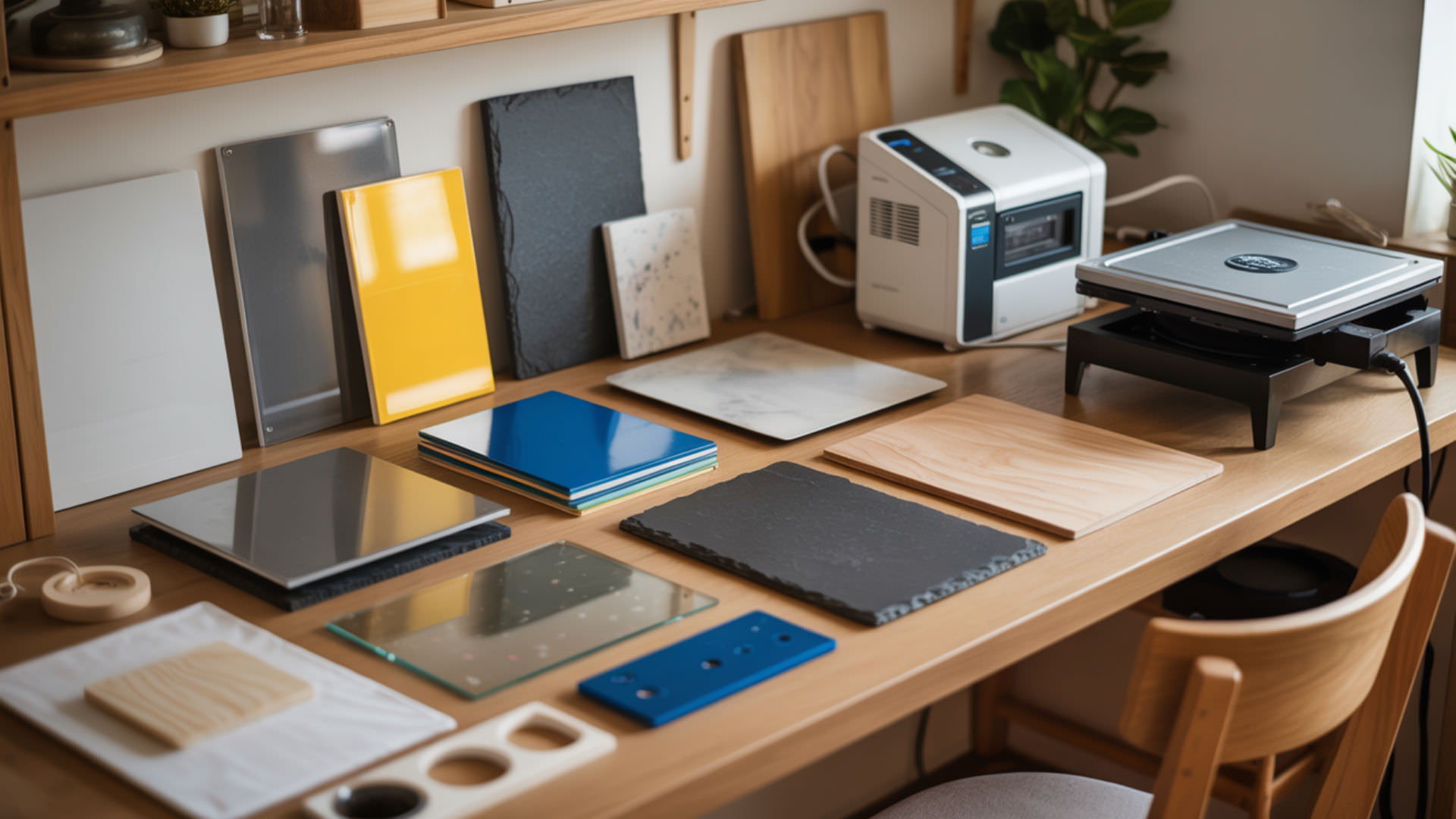
Raw metal cannot accept sublimation printing because the aluminium oxide layer that naturally forms on aluminum prevents dye bonding. Polyester coating covers this oxide barrier and provides the polymer matrix for dye diffusion. Pre-coated sublimation blanks come in white, silver, and clear finishes—always remove any protective plastic film before pressing. Aluminum naturally forms a thin oxide layer on its surface, which blocks direct bonding and explains why raw metal cannot accept sublimation dye without a polymer coating. [1]
How does sublimation ink bond to coated metal blanks?
Heat at 375–400°F activates sublimation dye to convert from solid to gas, which then diffuses into the polymer coating and solidifies as a permanent bond. Insufficient temperature produces pale prints that damage easily. Both plastic and metal substrates rely on polymer layers for dye diffusion rather than the raw material, as detailed in our plastic sublimation guide.
What heat press settings do you use for metal sublimation?
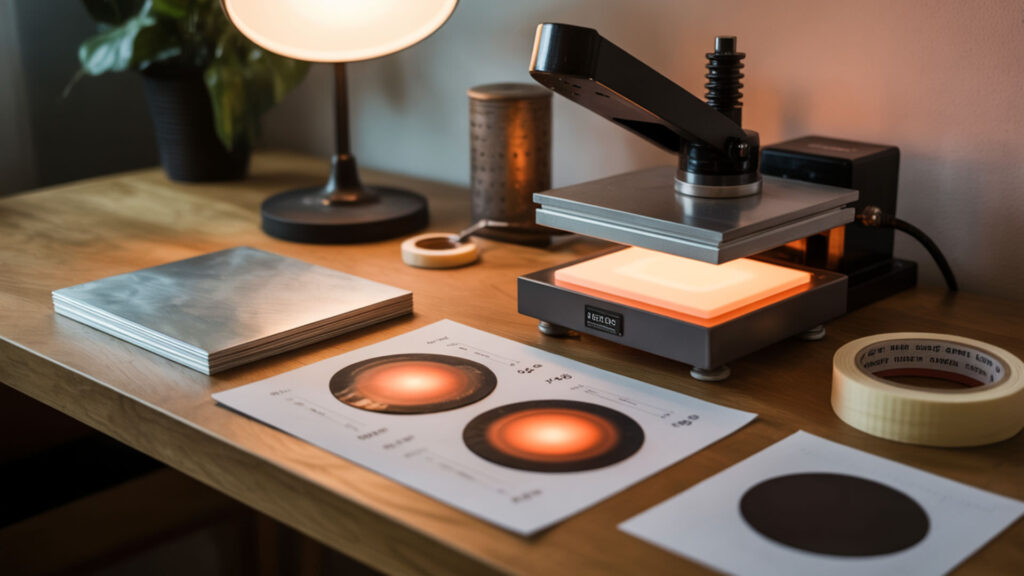
Press temperature of 375–400°F with medium pressure (40 psi) produces optimal results on most coated metal blanks. High thermal conductivity reduces press time compared to glass or ceramic—metal heats rapidly and evenly. Heat capacity differences require timing adjustments from 45 seconds for thin items to 90 seconds for thick panels. Metals conduct heat efficiently due to their high thermal conductivity, which is why coated metal blanks typically require shorter press times than low-conductivity materials. [2]
Can you safely heat press metal for sublimation?
Metal blanks safely withstand sublimation temperatures when handled properly—the primary risk is warping thin sheets from rapid temperature changes. Thermal expansion during heating can bow materials if temperature rises too fast. Controlled cooling rate on heat-resistant surfaces helps maintain flatness after pressing.
How should you press metal blanks for even sublimation results?
Pressure must be firm and even across the entire surface for crisp edges and consistent color density. Heat-resistant tape secures transfer paper to prevent micro-shifting that causes ghosting. Use protective butcher paper or Teflon sheets above and below the blank to prevent ink blowout onto heat press platens.
How do you sublimate on metal step-by-step?
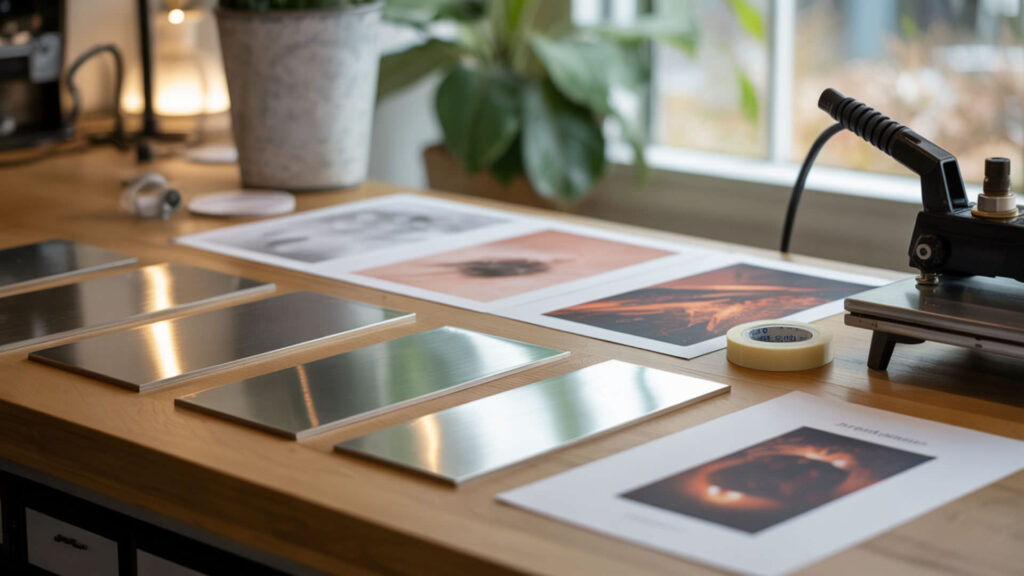
Metal sublimation requires protective sheets to prevent platen contamination and heat-resistant tape to secure the transfer paper during pressing.
- Remove plastic protective film and clean coated surface with isopropyl alcohol to eliminate dust and oils.
- Print mirrored design on sublimation paper—the image transfers face-down onto the white coated side.
- Place metal white-side-down on transfer paper and secure edges with heat-resistant tape to prevent shifting.
- Position protective sheet on bottom platen, place assembly paper-side-up, and add protective layer on top.
- Press at 375–400°F for 45–90 seconds with medium pressure (40 psi) depending on blank thickness.
- Remove with heat-resistant gloves, allow cooling for 20–30 seconds, then peel transfer paper to reveal design.
How do you transfer designs and images onto metal?
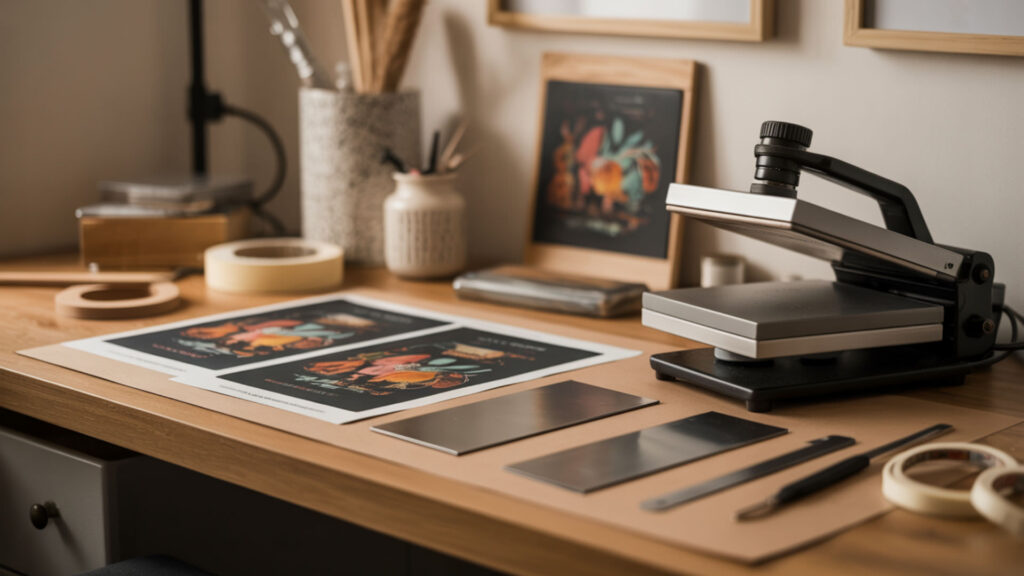
Metal photo panels accept sublimation transfers through combined pressure and heat that forces gaseous dye into the polyester coating. Transfer paper carries sublimation ink from printer to substrate, releasing dye when heat and pressure activate the process. Premium metal photo panel products are evaluated in our guide to best sublimation blanks for different materials.
How do you transfer a printed design onto a metal blank?
Position printed sublimation paper face-down on the white coated surface, ensuring complete design coverage. Heat-resistant tape on all edges prevents micro-shifting that creates ghosting artifacts. Heat press machines provide consistent results because even pressure ensures uniform color density and sharp detail transfer across the entire surface.
How do you print artwork onto metal panels using sublimation?
Print artwork on sublimation transfer paper using a sublimation printer—standard inkjet printers cannot produce sublimation transfers. Press temperature controls color depth and sharpness; too low produces faded results while too high damages the coating. Test prints help dial in exact settings before production runs.
How long does metal sublimation take and how durable is it?
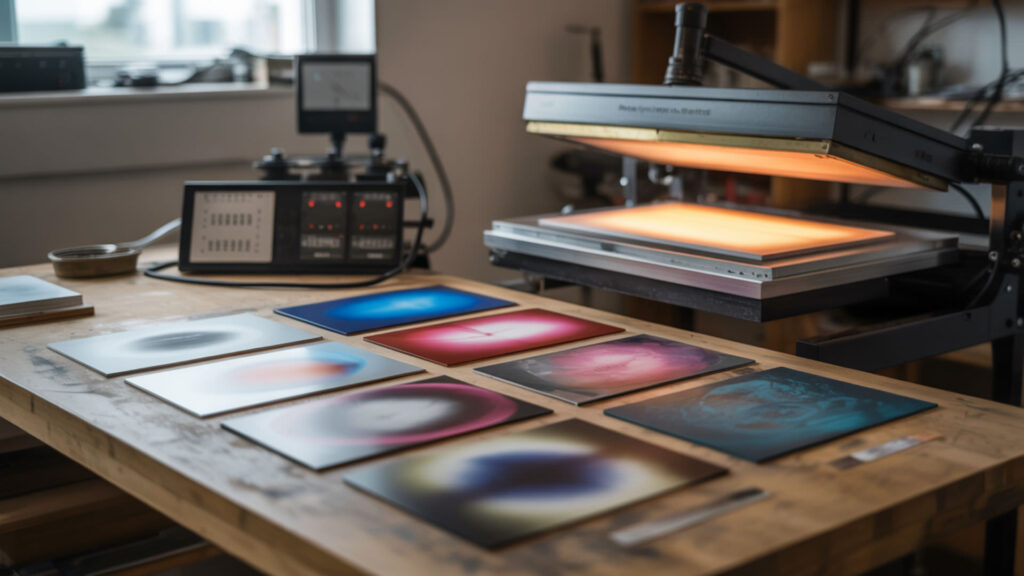
Press time ranges from 45–90 seconds depending on thickness, with high thermal conductivity enabling shorter cycles than glass or ceramic. The polymer coating permanently captures sublimation dye through molecular bonding, creating scratch-resistant, waterproof prints. Metal prints last 65+ years indoors and 5–10 years outdoors under direct sunlight exposure.
How long does it typically take to press metal items?
Metal items press for 45–90 seconds at 375–400°F depending on thickness—thin keyrings need 45–60 seconds while thick panels require 60–90 seconds. Low heat capacity means faster warm-up compared to glass or ceramic, reducing overall press time. Always consult manufacturer guidelines for specific blank recommendations.
How durable are sublimation prints on metal over time?
Sublimation prints on metal resist scratching and water damage because dye bonds molecularly with the coating. White base layer enhances color vibrancy and provides reflective surface for accurate reproduction. UV exposure causes gradual fading on outdoor panels. Glass substrates also rely on white base layer coatings for vibrancy, as covered in our glass sublimation guide.
Can other heat transfer methods be used on metal surfaces?
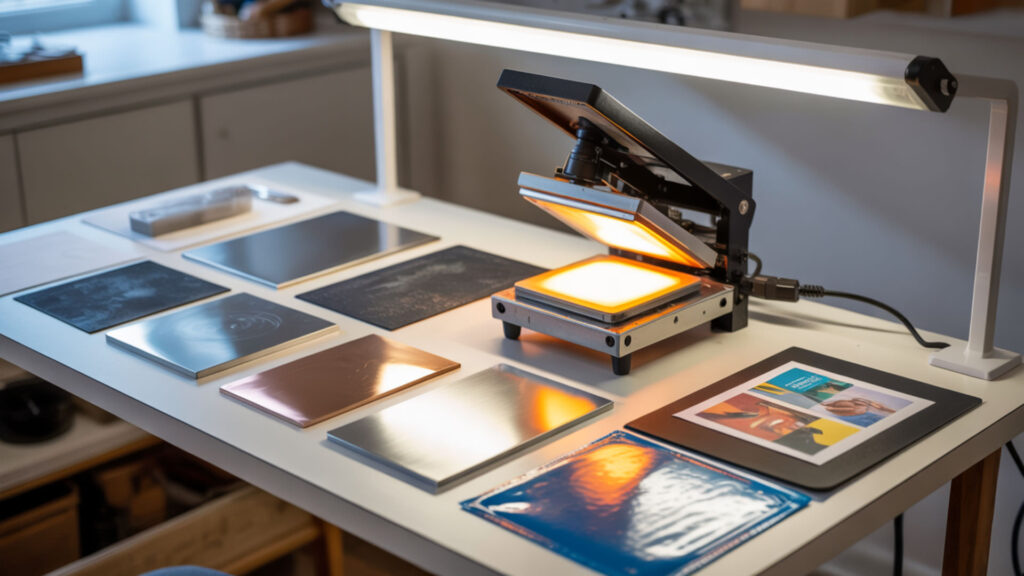
Heat transfer vinyl (HTV) applies designs to metal surfaces at 305–350°F for 10–15 seconds, but these sit on top rather than bonding into a polymer layer. Heat and pressure activate adhesive layers that stick to metal, producing durable results for simple designs without photographic quality of sublimation.
Can heat transfer methods work effectively on metal substrates?
Non-sublimation heat transfers produce acceptable results for text and logos but cannot match sublimation for photographic images. Polymer-based HTV adheres through heat-activated adhesives—the design sits on top rather than bonding into the substrate. Sublimation on coated blanks produces superior durability and scratch resistance.
Does the type of metal affect how heat transfers during pressing?
Aluminium offers high thermal conductivity for rapid, even heating across the blank surface—ideal for sublimation. Stainless steel has lower thermal conductivity, requiring longer press times for complete dye penetration. Most commercial sublimation blanks use aluminum because heat transfer properties, lightweight nature, and cost make it the practical choice.
Ready to Start Sublimating on Metal?
Polyester coating is the essential requirement—without polymer treatment, sublimation dye cannot bond to aluminum or steel surfaces. Pre-coated metal blanks from reputable suppliers provide consistent results at 375–400°F for 45–90 seconds. Start with manufacturer-recommended settings and test on sample blanks to master this durable substrate.
Frequently Asked Questions
Do metal blanks need a special coating for sublimation printing?
Metal blanks require polyester or polymer coating for sublimation—bare aluminum or stainless steel cannot bond with sublimation dye. Pre-coated blanks feature optimized coating formulations in white, silver, or clear finishes. Remove any protective plastic film before pressing to ensure proper heat transfer to the coating surface.
Can sublimation prints on metal fade or change outdoors over time?
Outdoor metal prints experience gradual fading from UV exposure, lasting 5–10 years under direct sunlight versus 65+ years indoors. UV-resistant coatings extend outdoor durability, but indoor display away from direct sunlight preserves vibrancy for decades. Check manufacturer specifications for outdoor-rated blanks.
Can both sides of a metal panel be sublimated?
Most metal blanks feature coating on one side only—the white-coated front accepts sublimation while the back remains uncoated. Double-sided blanks exist for hanging ornaments or two-sided signs, requiring separate pressing cycles totaling 80 seconds at 175–190°C with medium pressure per side.
What common issues cause banding or dull spots on metal sublimation prints?
Banding results from insufficient pressure creating uneven paper contact, while dull spots indicate underheating below 375°F. Overheating above 400°F damages polyester coating, causing discoloration or peeling. Remove plastic protective film before pressing—leaving it on prevents heat transfer and produces failed prints.
Can a lightly sublimated metal item be reheated to deepen the colors?
Re-pressing with fresh transfer paper can deepen colors, but the original faint image may remain visible. Press underpressed items for an additional 10–15 seconds at original temperature. Test pieces help identify correct settings before production runs to avoid color correction attempts on finished products.
References
- Aluminum statistics and information. (n.d.). USGS. https://www.usgs.gov/centers/national-minerals-information-center/aluminum-statistics-and-information
- (n.d.). NIST Technical Series Publications. https://nvlpubs.nist.gov/nistpubs/legacy/nsrds/nbsnsrds8.pdf?utm_