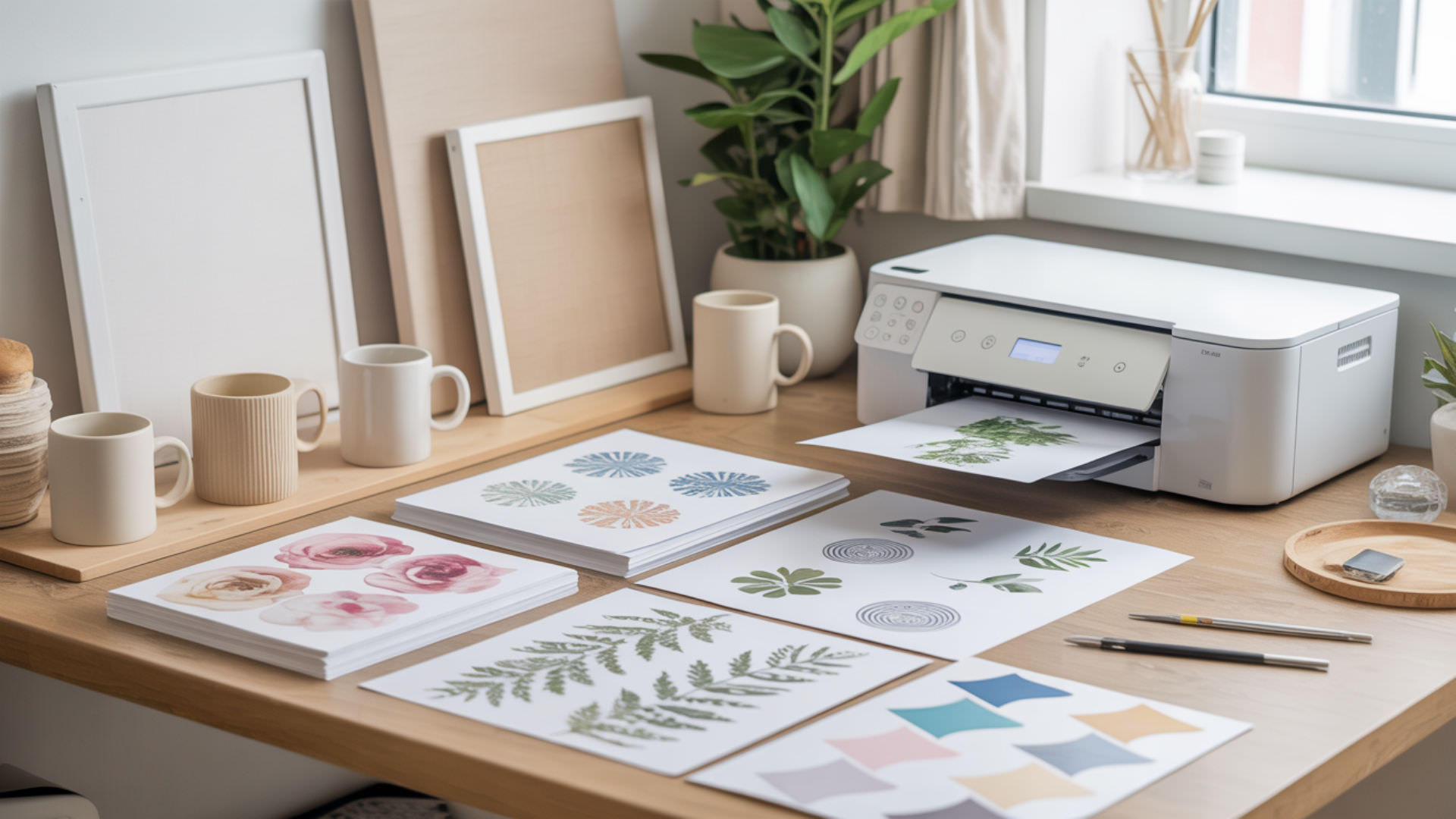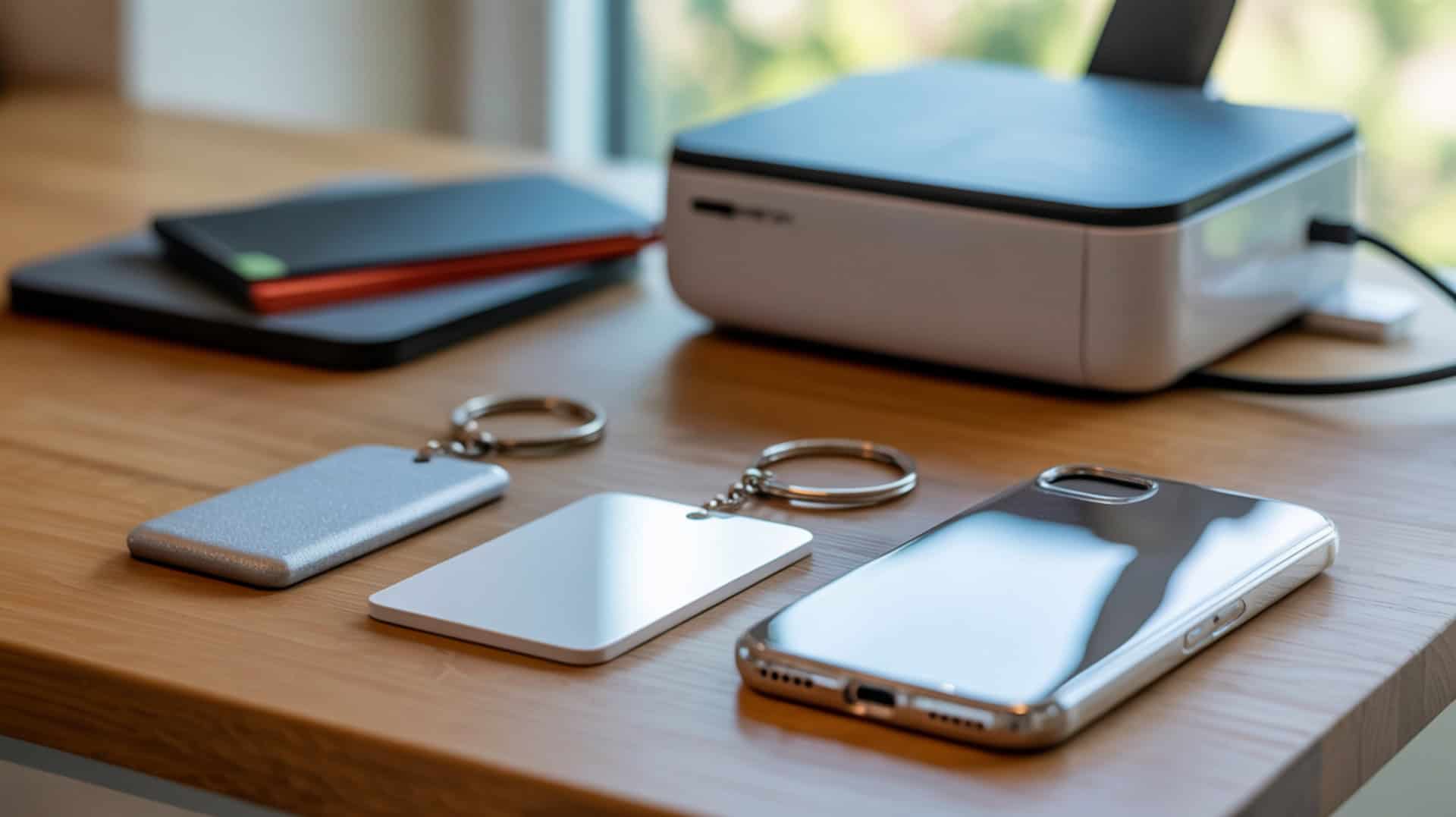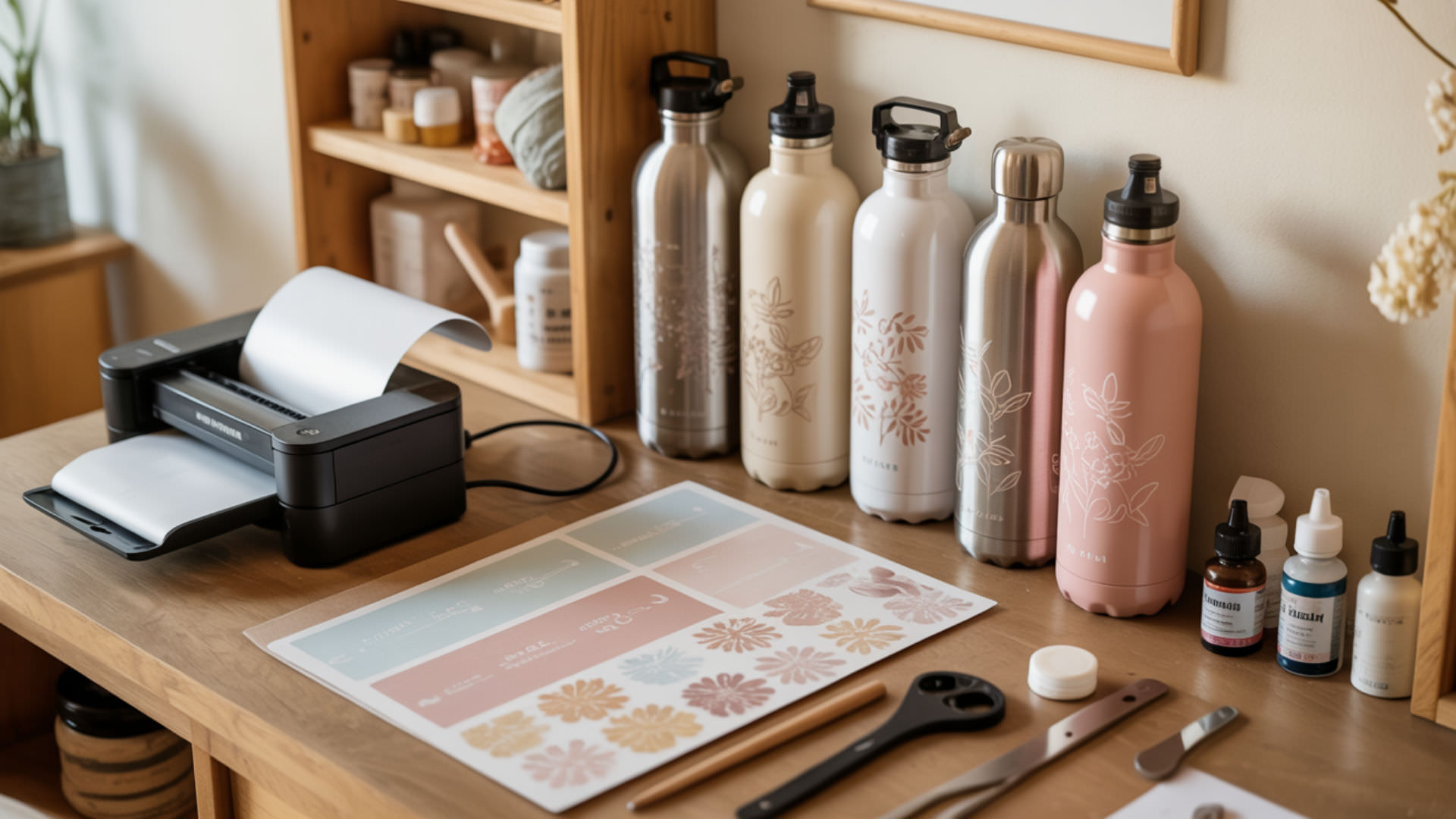
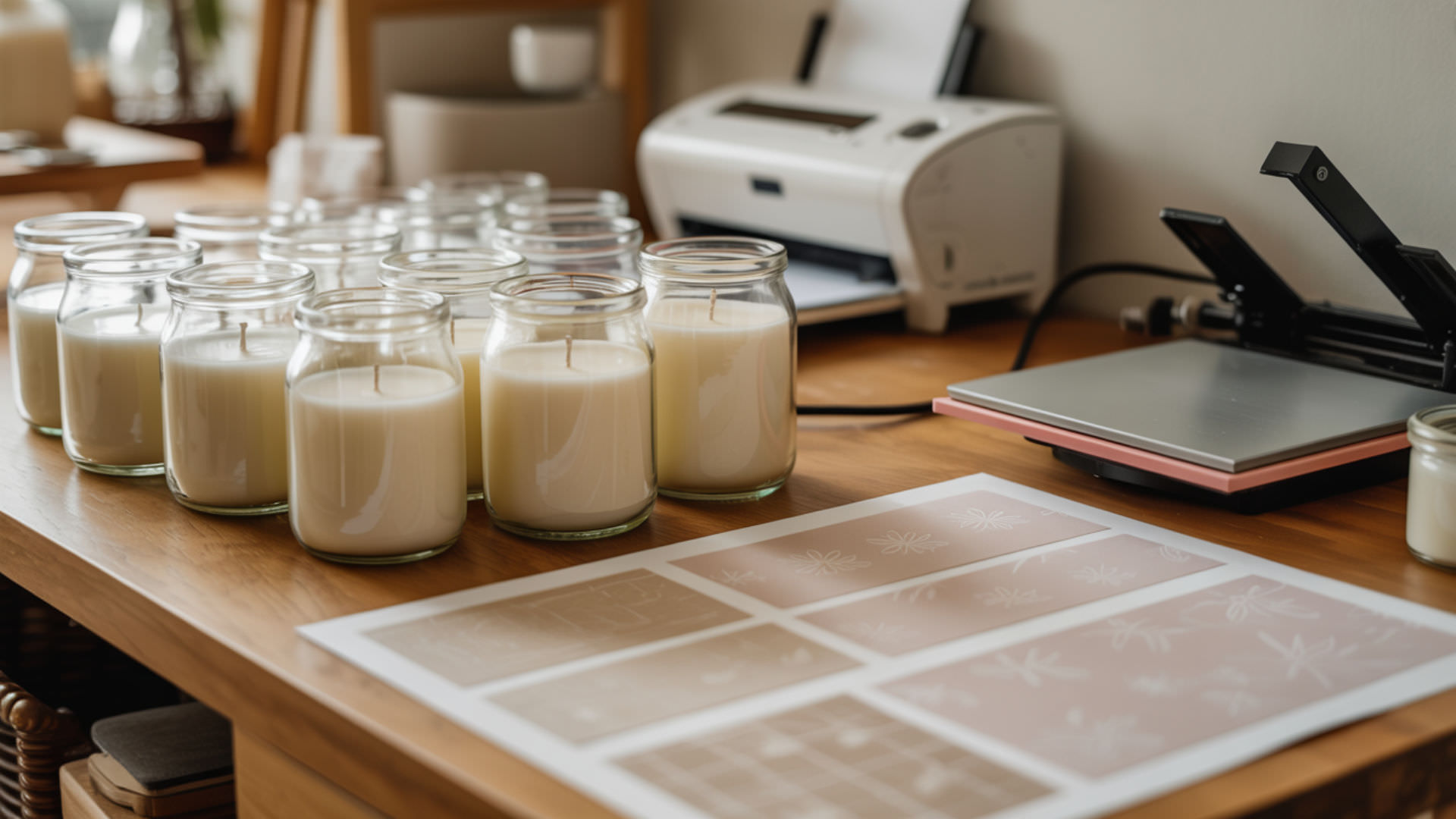
Sublimation candle jars transform ordinary glass or ceramic containers into personalized gift items with permanent, heat-resistant designs. Glass and ceramic materials do not naturally bond with sublimation dye because they lack the polymer structure required for ink adhesion. A coating provides the polyester layer needed for dye gas to embed into the surface during heat pressing. The requirement for polymer coating on non-fabric substrates applies across all sublimation gift categories—our sublimation gift ideas hub explains coating fundamentals.
Key Takeaways
- Glass candle jars require sublimation-specific coating—standard glass will not bond with dye regardless of heat application.
- Polymer coating quality determines color depth and durability—double-layer AAA coatings produce brighter, more fade-resistant results.
- Glass containers reach only 100–140°F during normal candle burning, well below the 350°F+ that would reactivate sublimation dye.
Can Candle Jars Accept Sublimation Transfers?
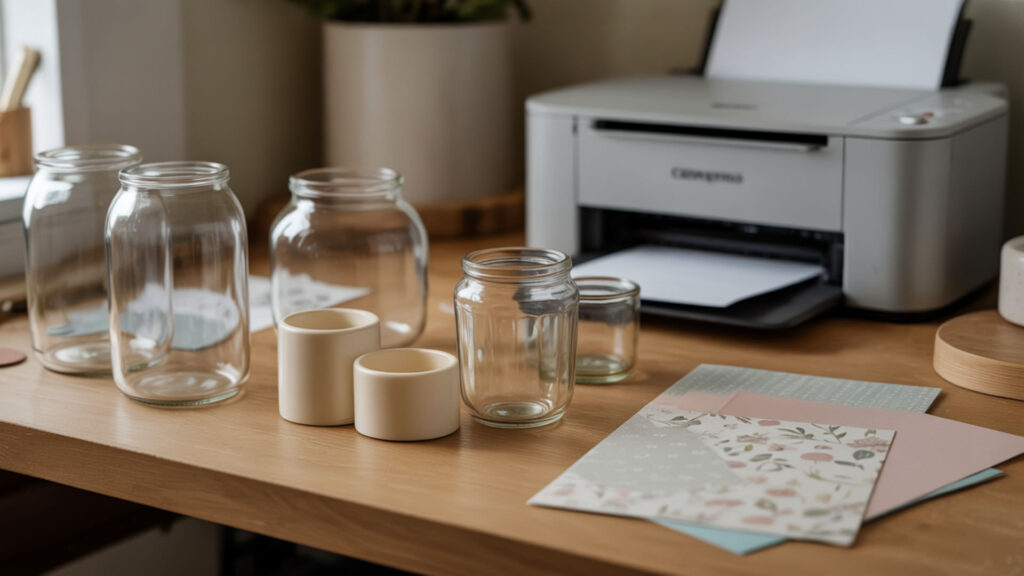
Candle jars can accept sublimation transfers only when properly coated with a polymer layer designed for dye bonding. Glass behaves as an amorphous solid—its molecular structure lacks the polymer chains that sublimation dye needs for permanent adhesion. The coating creates a thin polymer film that enables dye deposition when heated. During sublimation, dye gas embeds only into polymer surfaces, passing through uncoated glass without bonding. Both candle jars and fabric gift bags depend on coating for dye bonding on non-polyester materials—our sublimation on gift bags guide covers similar coating requirements. Material performance under heat depends on surface chemistry and molecular structure, which is why engineered polymer coatings enable durable thermal processes.[1]
Can You Sublimate Candle Jars?
Glass candle jars can be sublimated when they feature a sublimation-ready coating that provides the necessary polymer surface. Without coating, dye applied to glass would simply wipe off because nothing binds the ink to the smooth, non-porous surface. The coating enables permanent adhesion that withstands handling, washing, and the moderate heat from burning candles. Quality sublimation blanks feature double-layer coatings that produce bright, clear colors.
How Hot Do Candle Jars Actually Get When Burning?
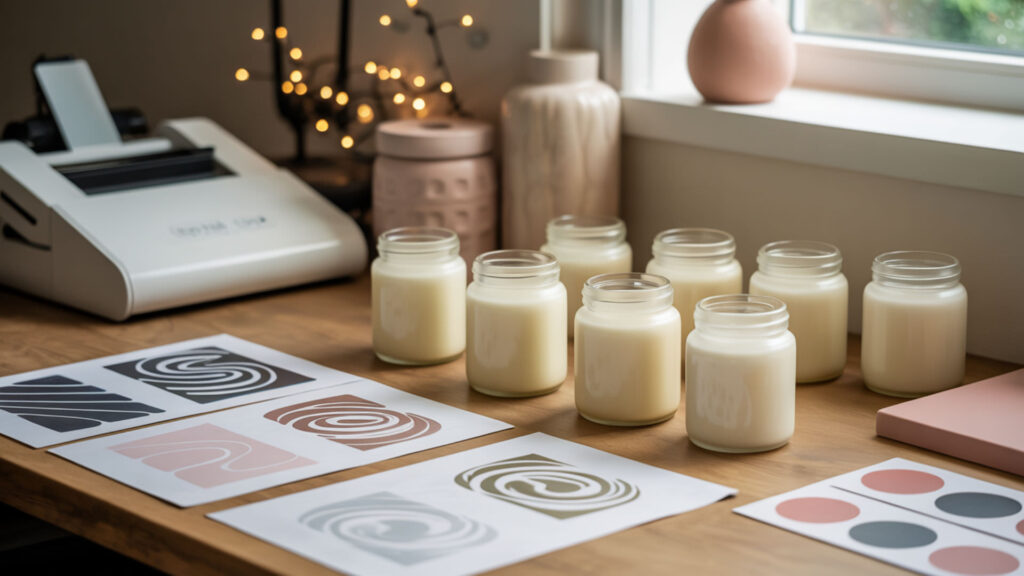
Glass candle containers typically reach 100–140°F during normal burning, far below temperatures that would affect sublimation coatings or reactivate embedded dye. Thermal expansion from burning candles creates stress within the glass structure as heated areas expand while cooler sections remain contracted. Thermal shock—sudden temperature changes like placing a hot jar on a cold surface—can crack jars post-sublimation. Allow jars to cool gradually after both sublimation pressing and candle use. Consumer safety guidance emphasizes that products exposed to moderate heat during normal use must remain structurally stable to prevent cracking or failure.[2]
How Hot Do Candle Jars Get?
During candle burning, glass containers reach 100–140°F under normal conditions, while the flame itself can exceed 1,400°F and molten wax ranges from 120–400°F depending on wax type. Glass heats unevenly around the flame, with areas nearest the wick experiencing higher temperatures than outer surfaces. Excess heat during the sublimation process—rather than candle burning—poses the greater risk to jar structure, potentially weakening glass that later fails when exposed to flame heat.
What Candle Jar Materials Are Considered Safe and Heat Resistant?
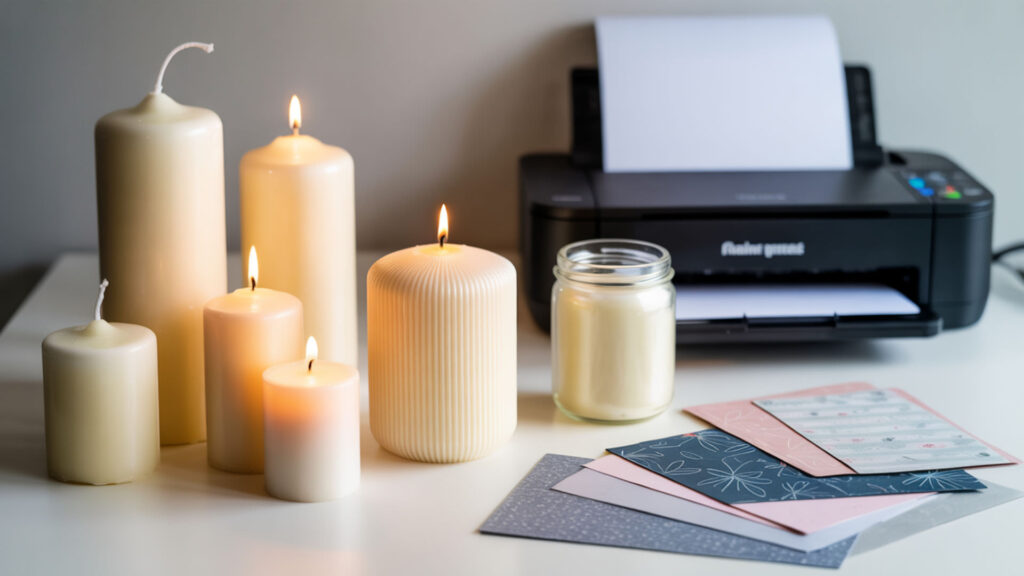
Borosilicate glass offers superior heat resistance and crack prevention compared to standard soda-lime glass, making it ideal for candle jars that undergo both sublimation pressing and repeated burning cycles. Stoneware ceramic handles heat better than standard ceramic but must be coated for sublimation compatibility. The coating requirement applies to both glass and ceramic materials—neither accepts sublimation dye without the polymer layer. Choosing heat-resistant materials improves both safety and sublimation gifts longevity—our best sublimation gifts guide ranks candle jars among top gift categories.
Can Images Be Transferred onto Candles without Printing Equipment?
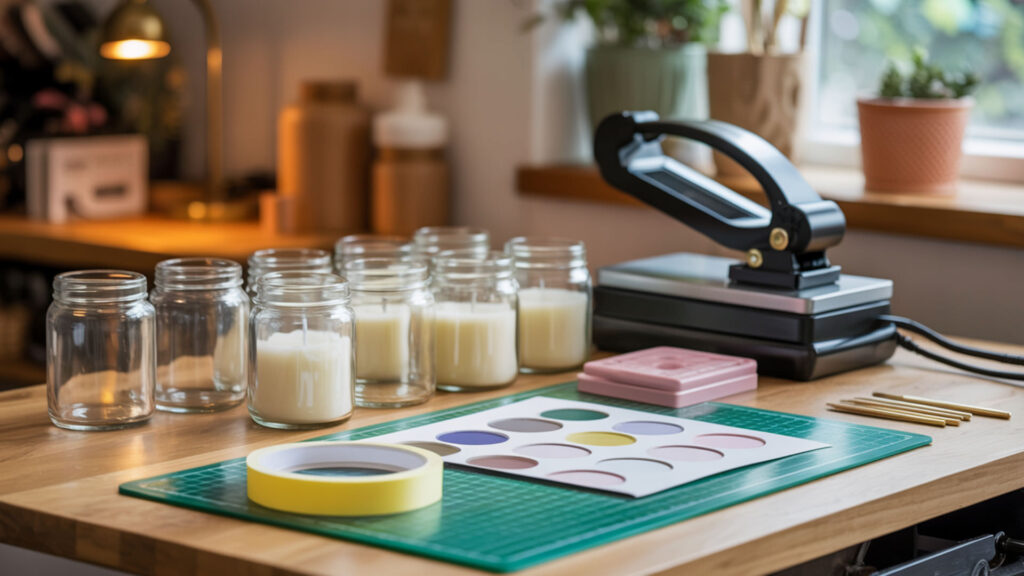
True sublimation transfers require specialized sublimation ink and printing equipment—the process cannot be replicated with standard inkjet or laser printers. Sublimation depends on dye reaching a gas state through carefully controlled heat, which standard inks cannot achieve. Vapor pressure determines when sublimation dyes activate and convert from solid to gas; regular inks simply melt or spread rather than sublimating into polymer surfaces.
Can Candle Designs Be Transferred without Liquid Inks Behaving Like Sublimation?
Alternative methods like tissue paper transfers or vinyl application create surface decorations but do not replicate sublimation’s embedded, permanent results. Deposition of sublimation dye requires polymer surfaces where the gas can settle and solidify within the coating structure. Without proper coating on the candle jar, images applied through any method—including sublimation—will not bond permanently and will eventually peel, fade, or wash away.
How Do You Sublimate on Candle Jars Step-by-Step?
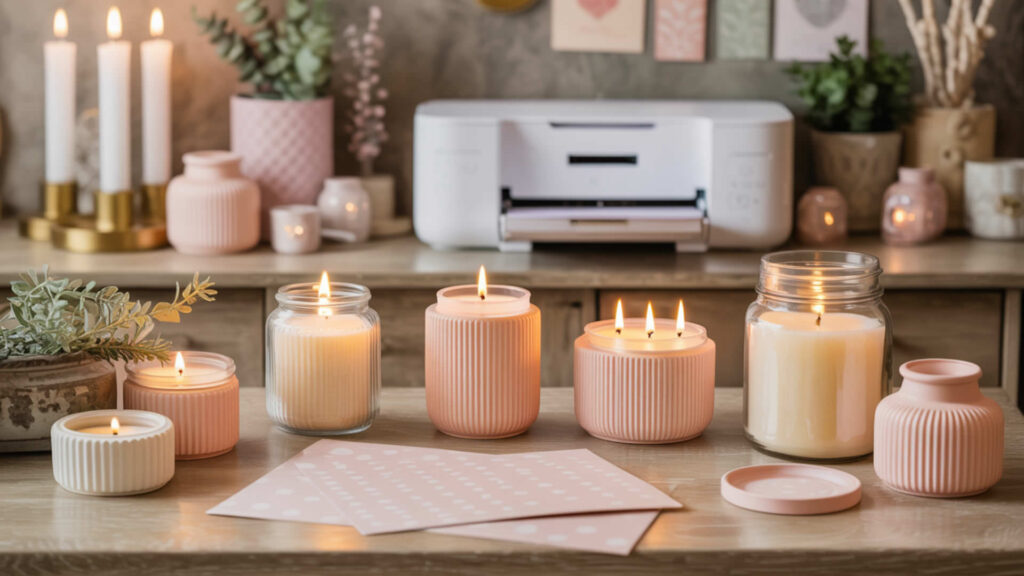
Successful candle jar sublimation requires clean, evenly applied coating, controlled heat that drives dye into the polymer layer, and thin film management that ensures smooth transfers without texture issues. Rigid coated substrates like bookmarks follow similar step-based workflows where coating cleanliness determines transfer quality—our sublimation on bookmarks guide covers parallel techniques.
- Clean the coated glass surface thoroughly with a lint roller to remove dust and debris. Any particles trapped under the transfer will create visible defects in the finished design.
- Print your mirrored design onto sublimation paper sized to wrap completely around the jar. Standard 10 oz candle jars typically require 9–10 inch wide prints for full wraps.
- Wrap the sublimation transfer tightly around the jar with the printed side facing inward. Pull the paper snug to eliminate air gaps that cause faded or missing areas.
- Secure the seam and all edges with heat-resistant tape to prevent shifting during pressing. Tape the entire seam without folding paper at top or bottom edges.
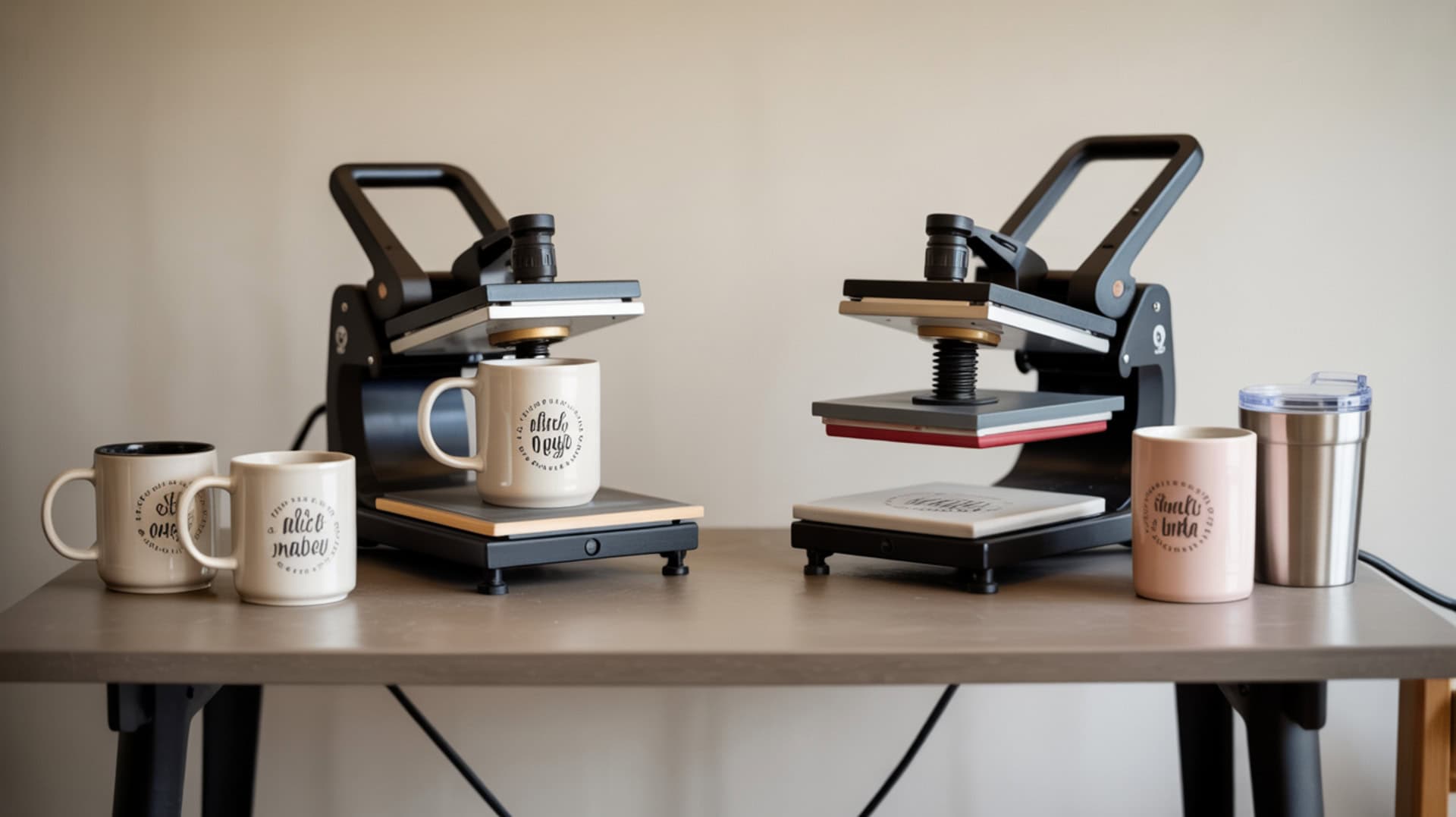
- For mug press method: set temperature to 360–400°F and insert the jar with light to medium pressure. Press for 150 seconds, rotate 180°, and press another 150 seconds for full wrap coverage.
- For convection oven method: apply shrink wrap over the taped transfer and heat to 375–400°F for 5–8 minutes. Rotate the jar halfway through for even heat distribution.
- Remove immediately when complete and peel the transfer while the jar is still hot. Allow the glass to cool gradually on a heat-resistant surface to prevent thermal shock cracking.
Ready to Create Sublimated Candle Jars Safely?
Glass remains sensitive to overheating and requires careful temperature management throughout the sublimation process. Use quality sublimation-coated blanks rated for both heat pressing and candle burning. Control sublimation carefully by starting with manufacturer-recommended temperatures and adjusting based on results—rushing with excessive heat risks cracking jars or producing faded designs that disappoint gift recipients.
Frequently Asked Questions
Can colors look faint on glass even if the print file was dark?
Colors appear lighter on glass than on fabric or solid substrates because light passes through transparent or frosted glass rather than reflecting back. The coating thickness affects color density—thinner coatings produce lighter results even with dark designs. Sublimation on frosted glass typically shows more vibrant colors than clear glass because the frosted surface diffuses light rather than allowing direct transparency.
Can heat spikes during transfer create paper adhesion issues on glass?
Excessive heat above 400°F can cause sublimation paper to stick to the coating by softening the polymer layer beyond its normal operating range. Temperature spikes create thermal shock stress within the glass that may not cause immediate cracking but weakens the structure for later failure. Use consistent, moderate temperatures (360–380°F for mug presses) rather than high heat for shorter times.
Do jar coatings change how ink transfers appear?
Coating quality significantly affects sublimation results—premium double-layer coatings produce bolder colors with better scratch resistance than economy single-layer alternatives. Different coating formulations create subtle variations in color warmth, saturation, and surface finish. The sublimation process remains consistent, but the coating determines how deeply dye penetrates and how vividly colors display against the glass background.
Can humidity affect glass transfers the same way it affects shirt transfers?
Humidity affects glass sublimation differently than fabric because the non-porous coating cannot absorb moisture the way polyester fibers can. However, moisture trapped between the transfer paper and coating surface during pressing can cause steam that creates bubbling, incomplete transfers, or adhesion problems. Store coated blanks in dry conditions and pre-heat jars briefly to drive off surface moisture before applying transfers.
Is shadowing on glass different from true ghosting on fabric?
Shadowing on glass typically results from paper movement during pressing rather than the dye migration that causes fabric ghosting. Thermal shock during pressing can cause subtle coating irregularities that appear as shadows or uneven color density. Secure transfers firmly with heat-resistant tape and maintain consistent pressure throughout the pressing cycle to prevent both paper movement and thermal stress that creates shadow effects.
References
- What are critical minerals and materials? (n.d.). netl.doe.gov. https://www.netl.doe.gov/resource-sustainability/critical-minerals-and-materials/what-are-critical-minerals-materials
- Consumer product safety. (2013, May 31). ISO. https://www.iso.org/news/2013/05/Ref1743.html