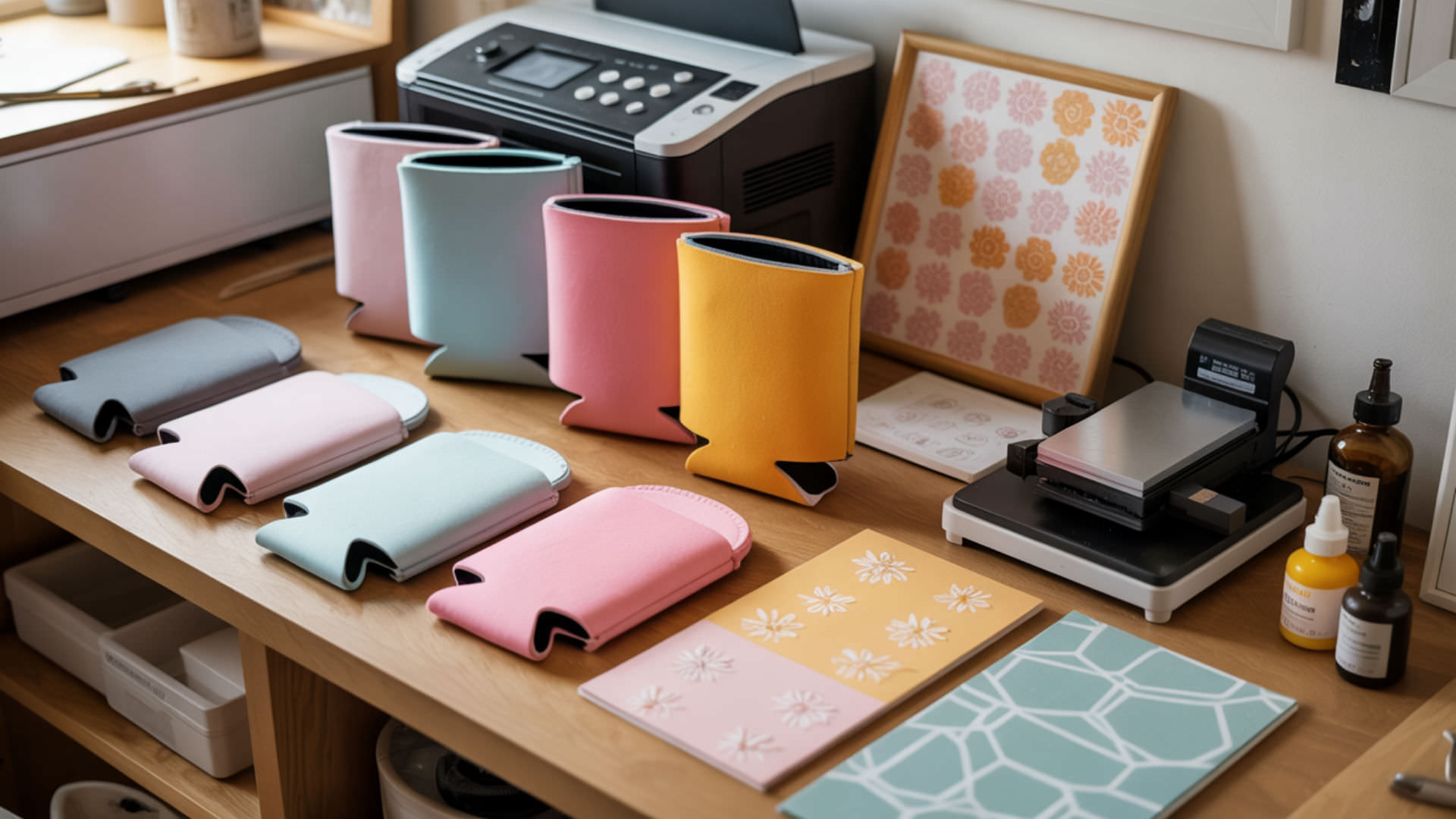
Neoprene koozies accept sublimation printing because the material’s polymer structure enables direct dye bonding during heat transfer processes. The synthetic rubber composition provides thermal stability while polyester surface coatings create receptive layers for sublimation ink penetration. Koozies require specific temperature and pressure combinations to achieve vibrant, permanent designs without damaging the flexible substrate. Koozie sublimation follows the same polymer-driven dye transfer principles that apply across all drinkware categories covered in our complete neoprene drinkware sublimation guide.
Key Takeaways
- Temperature ranges from 385–400°F depending on material composition—neoprene tolerates higher heat than foam alternatives.
- Pressure must remain light to medium to prevent foam compression while ensuring complete dye transfer across the substrate surface.
- Pre-pressing for 10–15 seconds removes moisture and flattens surfaces for cleaner transfers without ghosting.
What time and temperature work best for sublimation koozies?
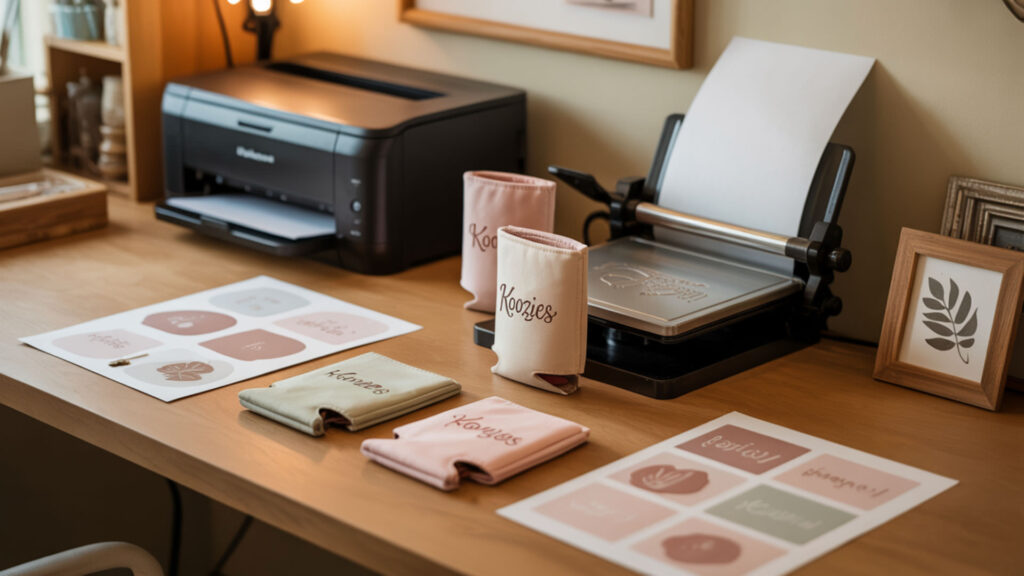
Sublimation koozie settings depend on material composition, thickness, and heat resistance characteristics of the specific blank. Standard neoprene tolerates 385–400°F safely while maintaining structural integrity throughout pressing cycles. Time duration controls color saturation depth—longer presses produce more vibrant results up to the point where overheating risks substrate damage. Test sample blanks before production runs since equipment variations affect optimal parameters.
What temperature do you heat press neoprene koozies for sublimation?
Polychloroprene (neoprene) provides excellent thermal stability, allowing pressing at 385–400°F without material degradation or structural failure. The synthetic rubber composition withstands sustained heat exposure better than foam alternatives while maintaining elasticity after cooling. Most manufacturers recommend starting at 385°F and increasing only if colors appear faded or undersaturated. Higher temperatures accelerate dye activation but increase compression risk on foam-backed neoprene constructions. Neoprene is chemically known as polychloroprene, a synthetic rubber valued for its thermal stability and elasticity under sustained heat exposure. [1]
What temperature and time work for polyester koozies?
Polyester fabric koozies accept sublimation dye at 400°F for 60 seconds using medium pressure for bright, durable transfers. The higher temperature compared to some neoprene works because polyester fibers bond optimally at elevated heat levels without structural concerns. Pure polyester substrates produce the most vibrant results since dye bonds directly with fabric fibers. Polyester-blend koozies show reduced vibrancy proportional to non-polyester fiber content in the construction.
How long should you press koozies for sublimation?
Press duration determines full dye penetration depth into substrate surfaces for complete color saturation and long-term durability. Neoprene koozies typically require 30–60 seconds depending on thickness and specific coating composition. Shorter times (30 seconds) work for thinner materials while thicker foam-backed constructions need extended pressing (45–60 seconds). Insufficient time produces faded prints; excessive time risks foam compression and coating damage.
Which koozie materials work for sublimation printing?
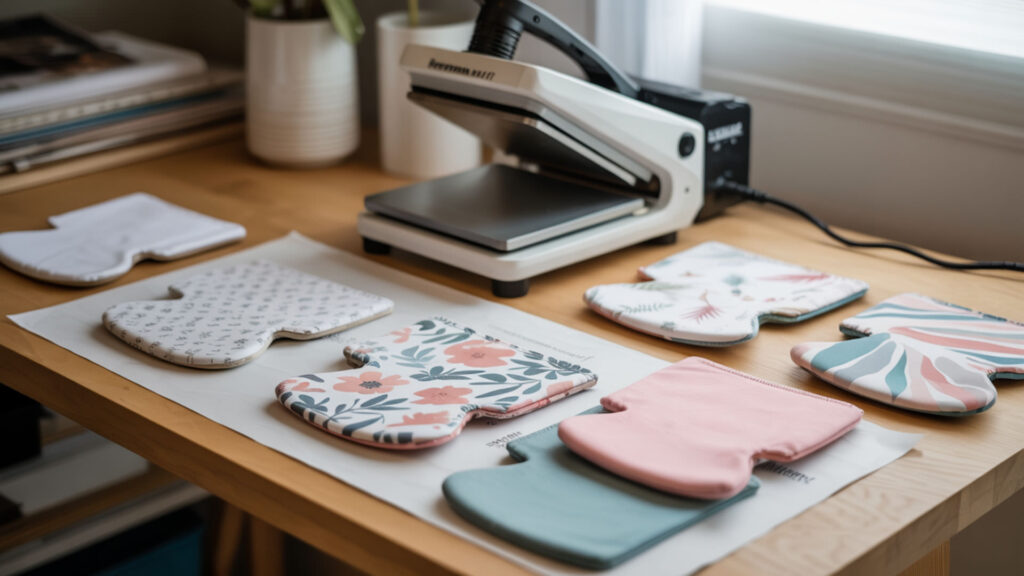
Neoprene, closed-cell foam, and polyester fabric koozies all accept sublimation when properly constructed with polymer-coated surfaces. The elastomer properties of neoprene provide stretch that can distort designs if blanks are over-tensioned during pressing or use. Foam construction affects heat distribution throughout the substrate during pressing cycles. Material flexibility creates shape-related distortion risks similar to those affecting curved mug surfaces described in our elastomer mug sublimation guide.
Can you sublimate on regular neoprene koozies?
Neoprene koozies require polyester surface coatings for sublimation ink bonding—raw neoprene rubber cannot accept dye transfer directly. Sublimation-ready blanks feature white or light-colored polyester laminate layers applied during manufacturing specifically for printing compatibility. Standard neoprene koozies without polyester surfaces produce no visible transfer regardless of pressing parameters used. Always verify sublimation compatibility before purchasing blanks to avoid wasted materials and pressing time.
Can you sublimate on foam koozies?
Closed-cell foam koozies can accept sublimation if constructed with polyester outer layers designed for dye bonding compatibility. Foam substrates have lower heat resistance than neoprene, requiring reduced temperatures (around 385°F) to prevent permanent deformation. Use protective paper between press platens and foam to prevent sticking and substrate damage during heating. Foam koozies compress more readily under pressure, potentially showing permanent thickness reduction after pressing. Closed-cell foam materials compress under heat and pressure because their internal gas-filled structure collapses when thermal limits are exceeded. [2]
What is the difference between neoprene and foam koozies?
Neoprene offers superior tear resistance, water resistance, and insulation compared to standard foam alternatives for beverage cooling applications. Surface smoothness varies between materials—neoprene typically provides smoother printing surfaces for sharper image reproduction. Foam koozies cost less but wear faster and provide inferior insulation performance during extended use. Choose neoprene for premium products requiring durability; select foam for budget-conscious promotional applications.
How do you sublimate koozies step-by-step?
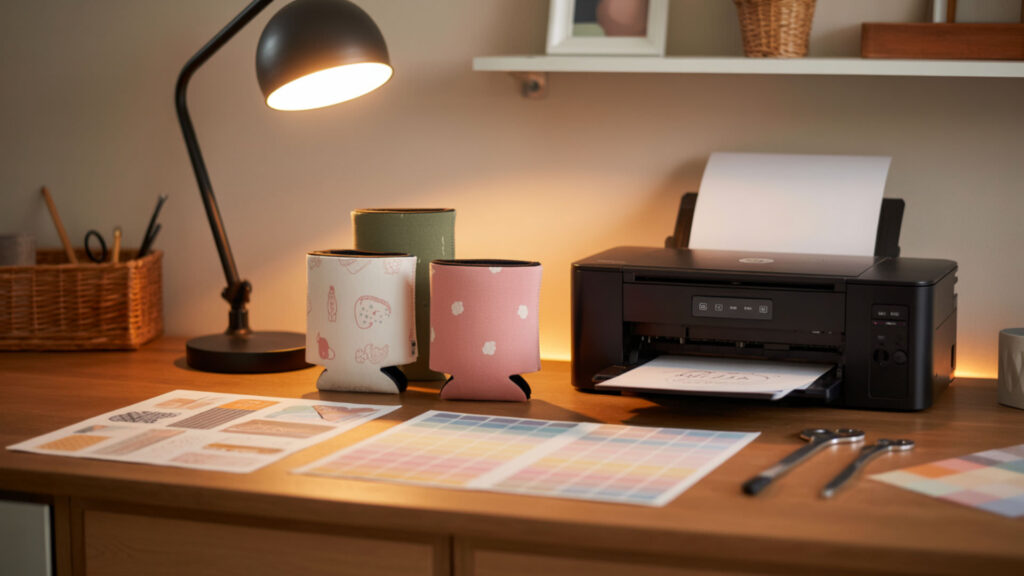
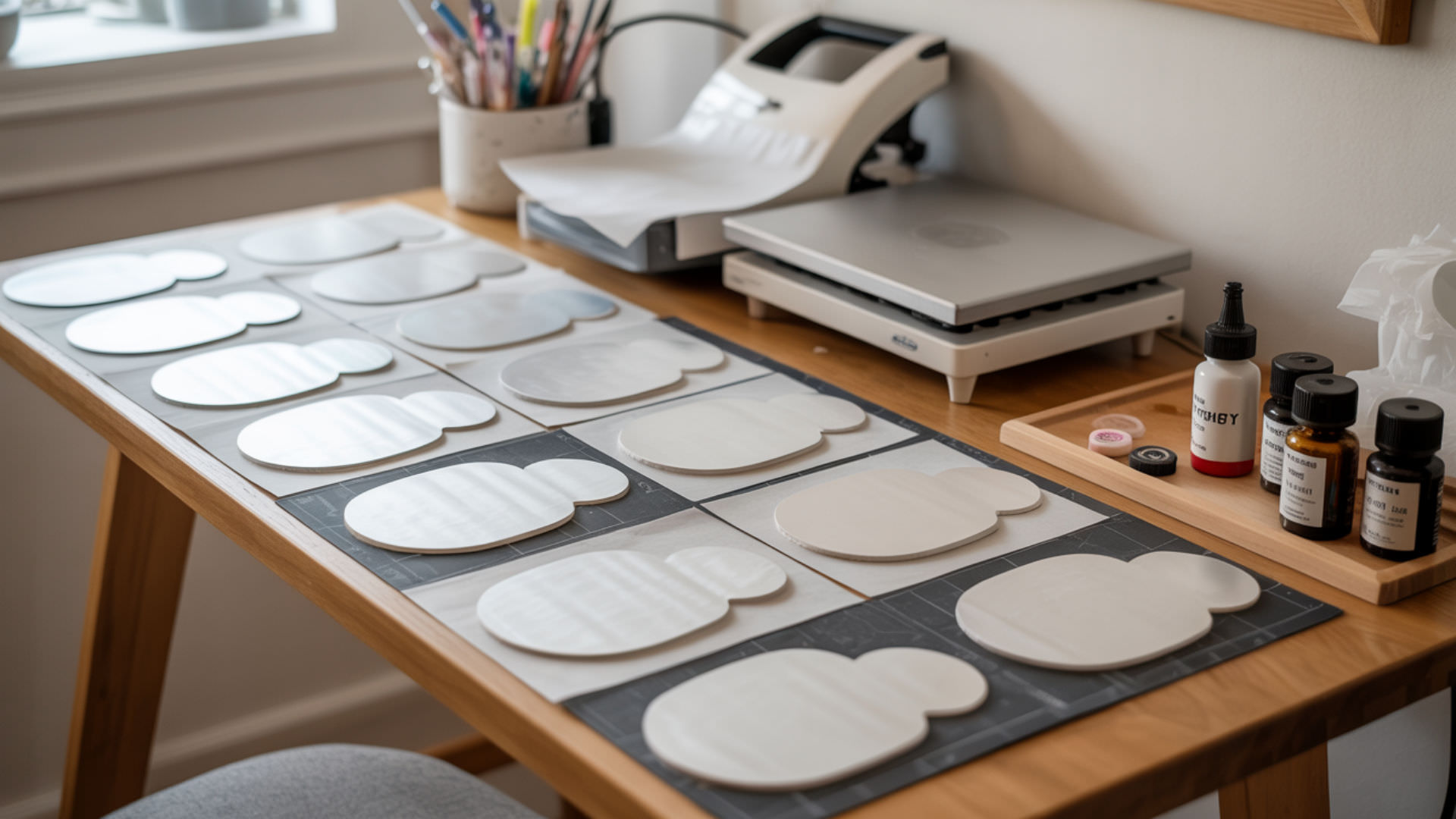
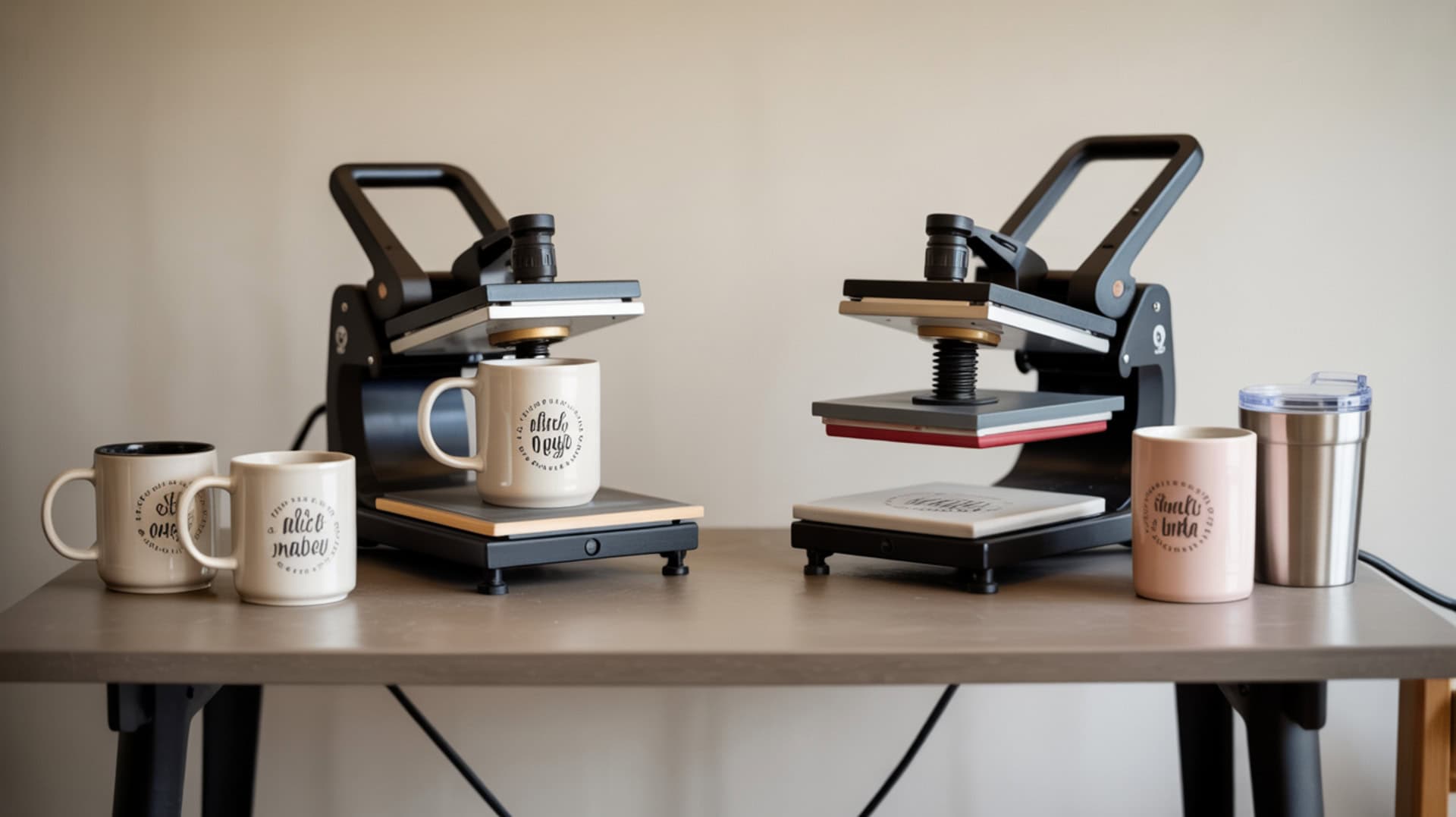
Print mirrored designs onto transfer paper sized slightly larger than the koozie surface area (typically 4″x4″ for standard blanks). Insert cardboard inside the koozie to prevent ink bleed-through and maintain flat pressing surfaces. Secure transfers with heat-resistant tape, position on a flat heat press with butcher paper protection, and press at material-specific settings. Equipment precision significantly impacts print quality—temperature consistency across press models is covered in our flat heat press equipment comparison guide.
Why is my sublimation faded or uneven on koozies?
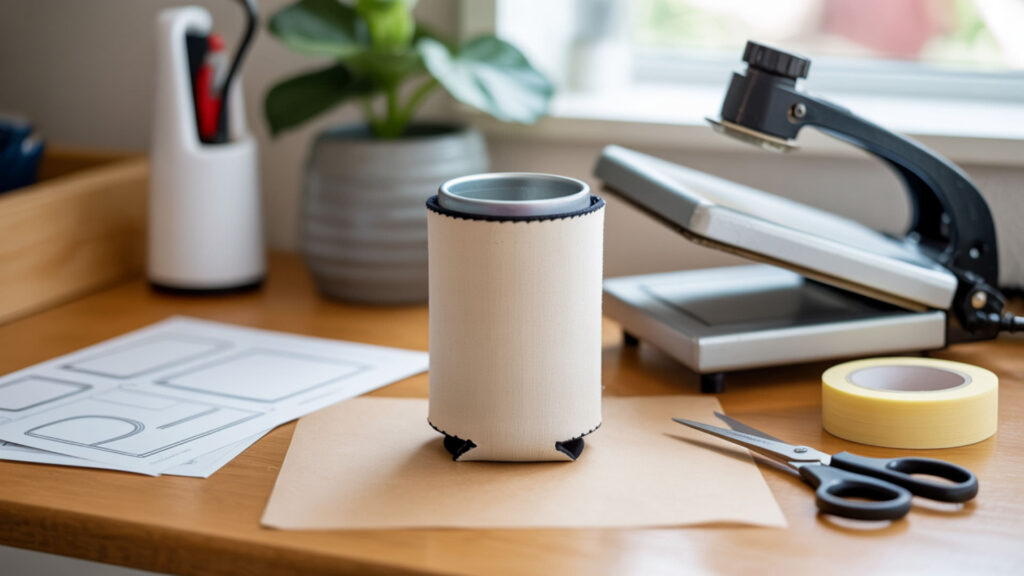
Faded sublimation results from insufficient temperature, inadequate pressure, or materials lacking proper polyester content for dye bonding. Uneven prints indicate inconsistent pressure distribution across the koozie surface during pressing cycles. Elastic recovery in neoprene can cause dye redistribution if substrates stretch during handling before complete cooling occurs. Pressure-related fading and surface contact issues affect multiple substrates—consistent pressure application techniques appear in our coaster sublimation troubleshooting guide.
Can you successfully sublimate on dark koozies?
Sublimation ink transparency prevents direct printing on dark-colored substrates—colors appear muted or invisible against dark backgrounds. White or light-colored koozies provide necessary contrast for vibrant sublimation results with full color fastness. For dark koozies, apply white sublimation vinyl base layers before pressing designs to create receptive light-colored surfaces. Alternative decoration methods like HTV or screen printing work better for dark substrates than sublimation.
How do you sublimate double-sided koozies without ghosting?
Press one side completely, allow cooling, then flip and press the second side using fresh transfer paper and protective barriers. Insert cardboard between koozie layers during second-side pressing to prevent previously sublimated designs from transferring onto press surfaces. Secure transfer paper tightly with heat-resistant tape to prevent any movement that causes ghosting artifacts. Hot-peel transfers immediately after pressing to avoid secondary image formation as substrates cool.
Ready to Create Custom Sublimation Koozies?
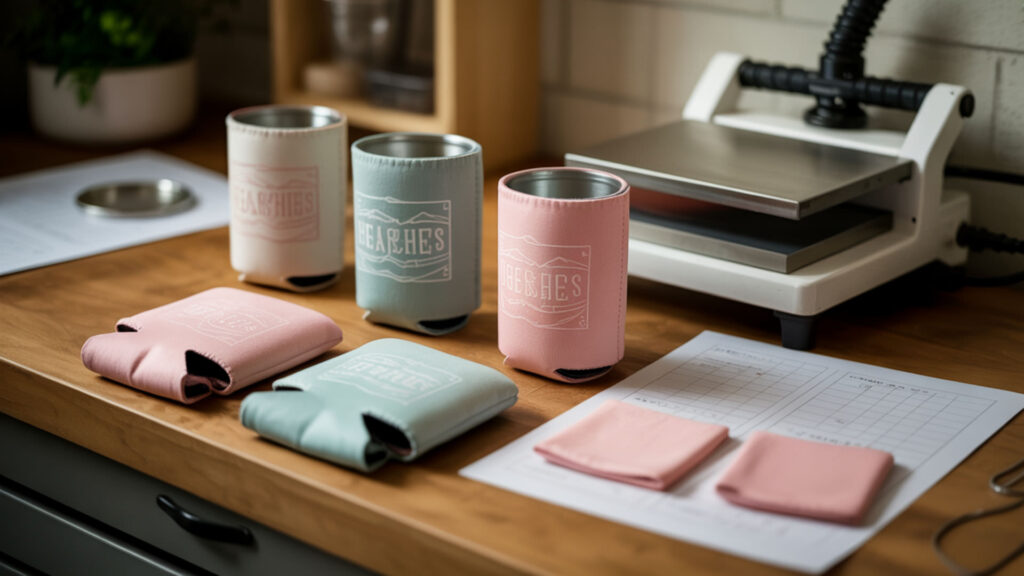
Neoprene and polyester koozies provide reliable polymer-based substrates for vibrant sublimation printing when paired with correct pressing parameters. Start with quality sublimation-ready blanks featuring proper polyester coatings—material selection determines maximum achievable print quality. Master temperature, time, and pressure settings for your specific blanks before scaling production volume. Track successful parameters for each blank type to ensure consistent results across orders.
Frequently Asked Questions
What size design should you print for a standard koozie?
Standard koozies accommodate designs approximately 4″x4″ for single-side printing with adequate margin allowance around edges. Full-wrap designs extend to roughly 8″x4″ to cover the entire circumference when koozies lay flat during pressing. Size designs slightly larger than the printable area to ensure complete edge-to-edge coverage after positioning. Measure your specific blanks before finalizing design dimensions since sizes vary between manufacturers and styles.
What fabrics are commonly used for koozies?
Neoprene (synthetic rubber) remains the most popular material for premium koozies due to excellent insulation and durability characteristics. Polyethylene foam provides budget-friendly alternatives suitable for promotional giveaways and single-event use applications. Polyester fabric koozies offer collapsible storage convenience with machine-washable maintenance advantages over foam options. Alternative materials include cotton blends, knitted yarn, and novelty options like leather or wood.
What material is best for sublimation koozies?
Neoprene with polyester laminate surfaces produces the most vibrant, durable sublimation results for professional-quality custom koozies. The combination provides superior insulation, excellent surface smoothness for sharp prints, and long-term color fastness under regular use. Scuba foam polyester offers cost-effective alternatives with adequate sublimation compatibility for budget-conscious projects. Pure polyester fabric koozies accept sublimation directly without special coatings but lack neoprene’s insulation benefits.
Can foam koozies be safely heat pressed for sublimation?
Foam koozies with polyester outer layers accept sublimation at reduced temperatures (around 385°F) with careful pressure management. Excessive heat or pressure causes permanent foam compression that reduces insulation effectiveness and changes the koozie’s fit. Use light pressure and shorter pressing times compared to neoprene to preserve foam structure. Monitor foam koozies closely during pressing and discontinue immediately if visible deformation begins occurring.
Can sublimated koozies fade or lose color over time?
Properly sublimated designs remain permanent because dye molecules bond chemically with polyester fibers during the heat transfer process. Fading indicates insufficient initial pressing rather than gradual deterioration—underdeveloped prints show color fastness problems earlier. Hand washing with mild detergent maintains print vibrancy better than machine washing for extended product lifespan. UV exposure gradually affects all dyed materials, though sublimation typically provides superior fade resistance compared to alternative printing methods.
References
- PubChem. (n.d.). Polychloroprene. https://pubchem.ncbi.nlm.nih.gov/compound/Polychloroprene
- Materials science. (n.d.). Energy.gov. https://www.energy.gov/materials-science