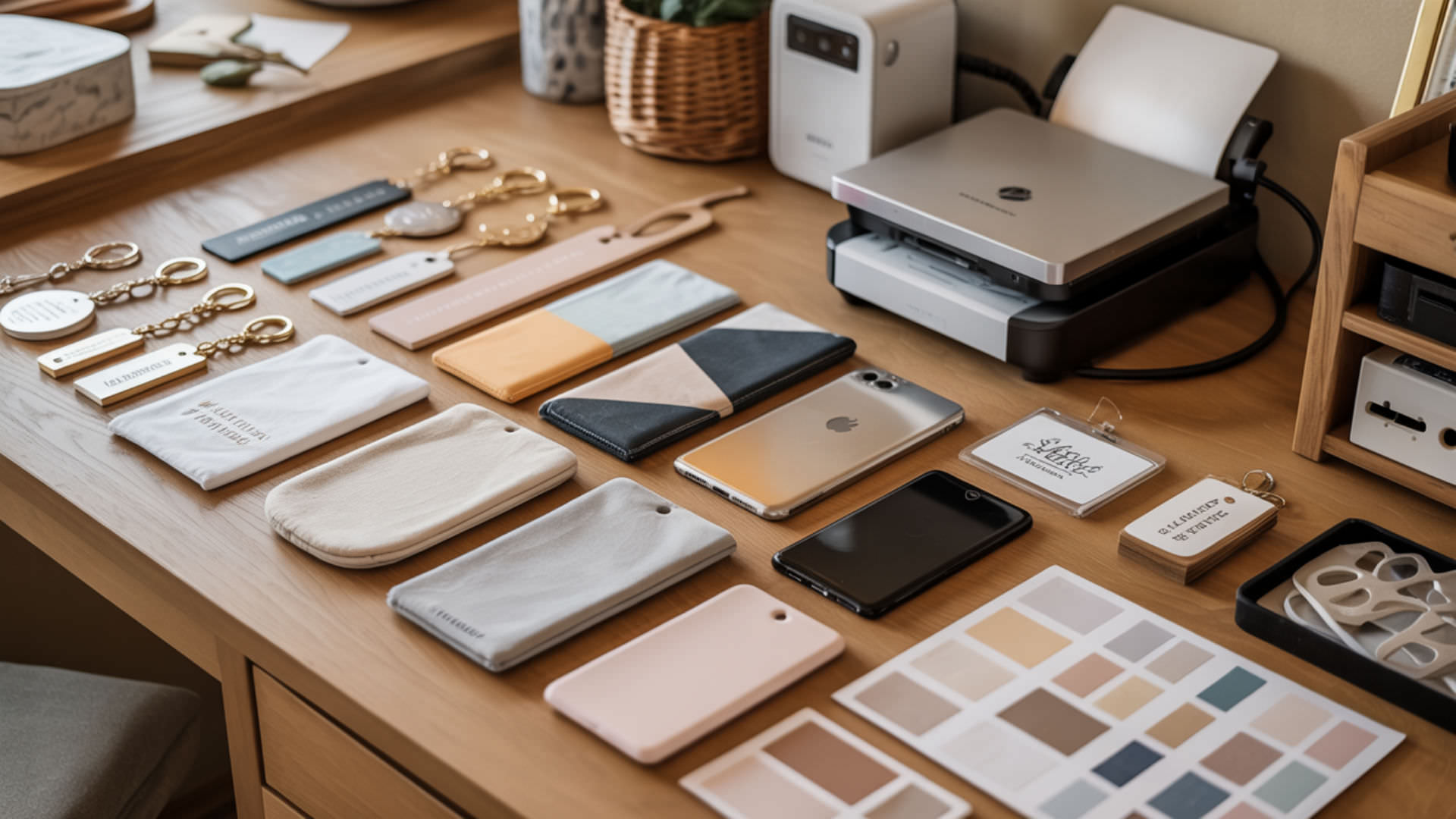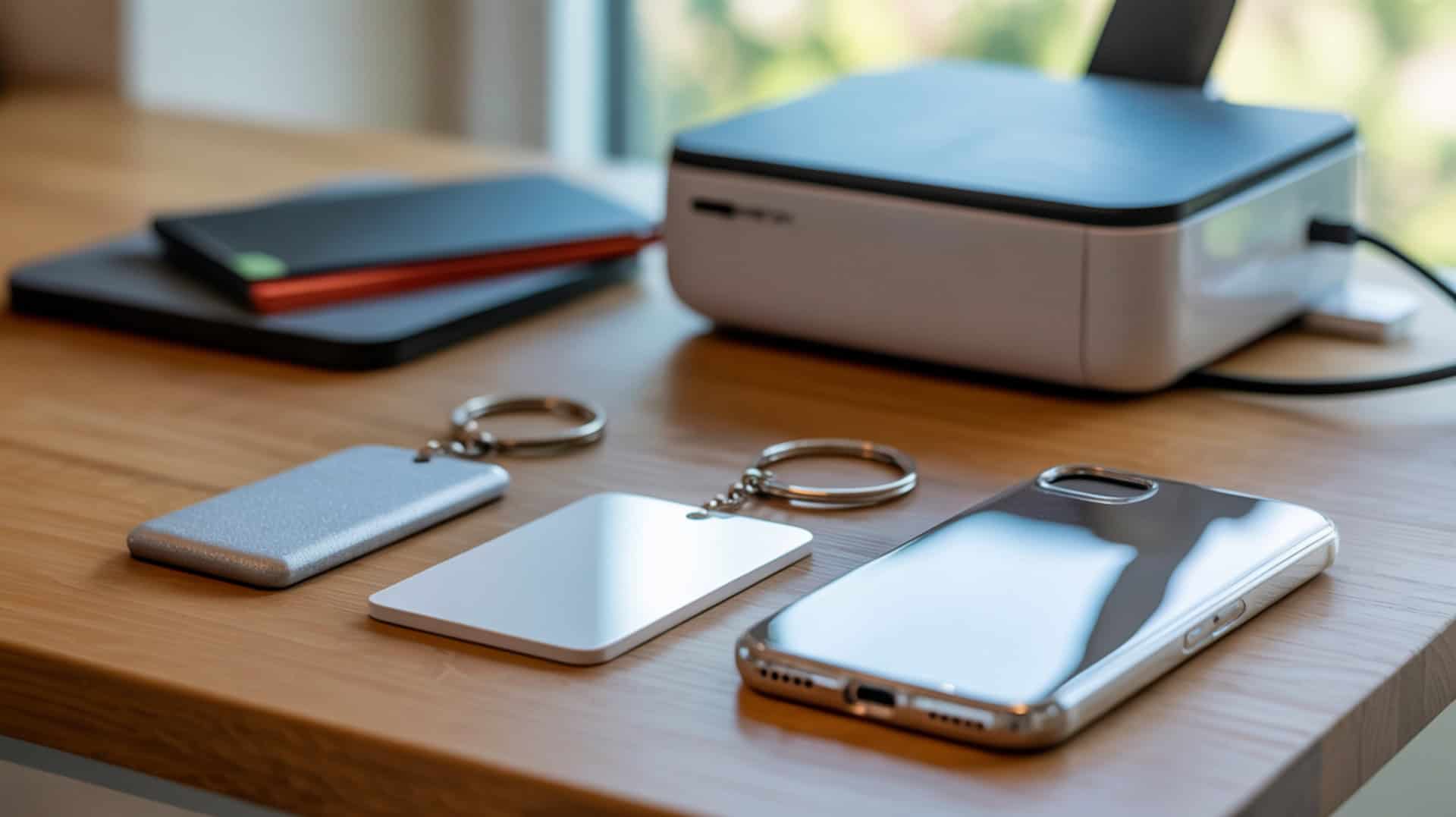
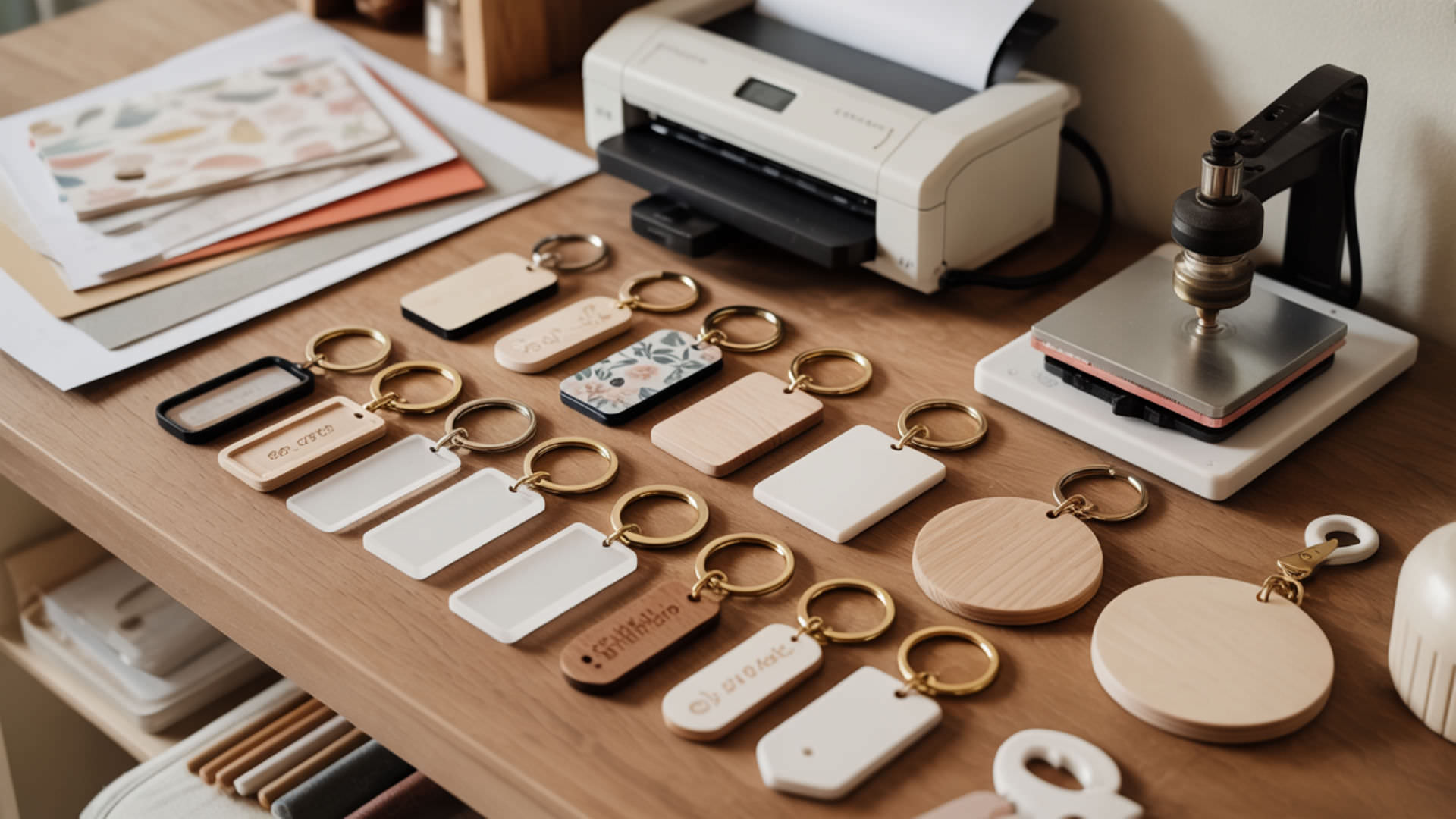
Keychains rank among the most popular sublimation products for personalization and gifting. A heat press supplies the temperature and pressure needed to activate dye diffusion into the keychain surface. Understanding how polymer coatings enable dye bonding helps crafters select compatible blanks across all sublimation-ready home products.
Key Takeaways
- Acrylic keychains require temperatures between 360–400°F for 40–60 seconds at medium pressure, while plastic and MDF blanks typically press at 400°F for 60 seconds with firm contact.
- Heat resistance determines safe pressing limits—acrylic softens near its glass transition temperature of 105°C (221°F), causing warping or cloudiness when overheated beyond this threshold.
- Polymer-coated surfaces accept sublimation dye permanently, making material selection and blank quality critical for vibrant, long-lasting keychain transfers. Thermoplastic polymers soften as they approach their glass transition temperature, which explains why acrylic keychains can warp or cloud when overheated during pressing. [1]
What time and temperature influence sublimation on keychains?
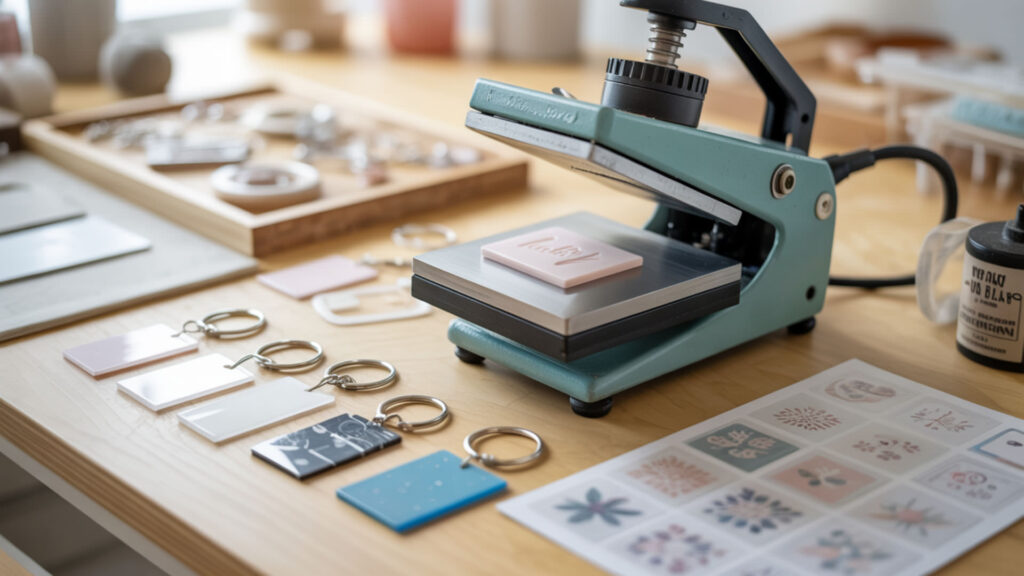
Press time and temperature vary by keychain material composition. Thermal conductivity controls how evenly each substrate absorbs heat from the press platen. Acrylic and polycarbonate keychains risk warping when temperatures exceed their glass transition temperature, typically around 105°C (221°F) for standard acrylic. Monitoring both variables prevents surface damage while ensuring complete dye transfer into the polymer layer.
What temperature range works safely for sublimating acrylic or wood keychains?
Acrylic keychains press safely between 360–400°F, with 385°F serving as the recommended starting point for most blanks. Acrylic glass (PMMA) softens near its glass transition temperature—overheating beyond this threshold causes deformation or cloudiness on the surface. MDF and wood keychains tolerate 375–400°F for 45–60 seconds. Always verify manufacturer specifications since blank thickness affects optimal settings.
How long does it take to press a sublimation transfer on a keychain?
Most keychains require 45–60 seconds of heat press dwell time for complete dye penetration and final clarity. Plastic and acrylic blanks typically need 60 seconds at 400°F, while metal keychains press for 45–60 seconds at 356–392°F (180–200°C). Double-sided aluminum keychains require 50 seconds per side. Thinner materials may need reduced time to prevent overheating and surface distortion.
Does sublimation occur at a fixed temperature range on keychains?
Sublimation occurs within a temperature range rather than at a single fixed point, with optimal settings varying by polymer type. Most keychain blanks sublimate successfully between 356–400°F (180–204°C), though each material requires specific adjustments. The polymer composition determines the exact temperature needed for full dye bonding—testing sample blanks before production runs ensures consistent color saturation across batches.
How does sublimation work on different keychain materials?
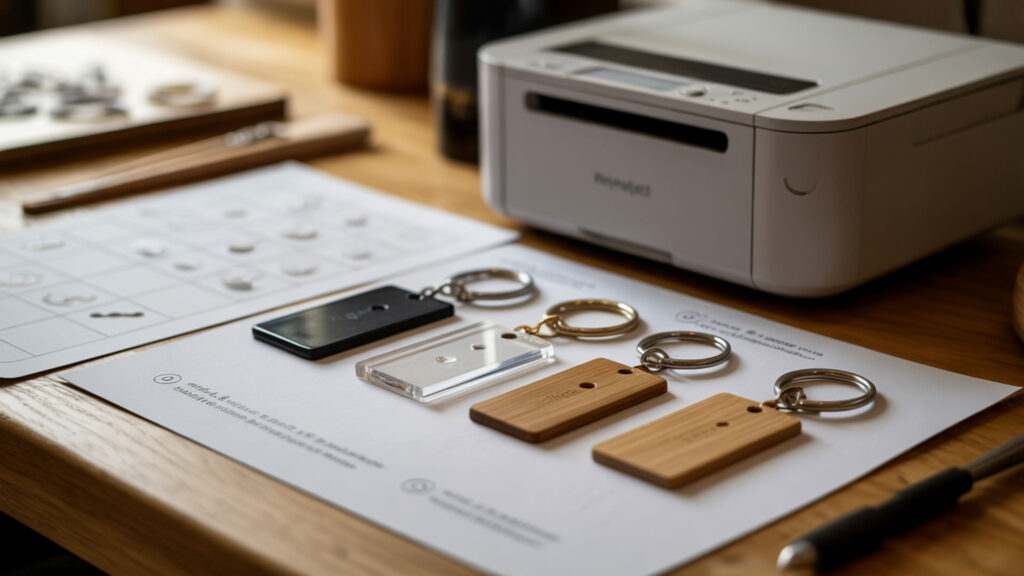
Sublimation works on keychain materials containing polymers that accept gaseous dye molecules under heat and pressure. Plastic substrates contain polymer chains enabling permanent dye bonding when properly heated. The extrusion process used during manufacturing dictates material density and heat response characteristics. Cast acrylic absorbs sublimation ink effectively, while extruded acrylic may produce inconsistent results due to structural differences. Understanding how polymer structures behave under heat is essential because increased molecular mobility allows dyes to diffuse into the surface during sublimation. [2]
Can acrylic keychains accept sublimation transfers without discoloring or fading?
Acrylic keychains accept sublimation transfers successfully when pressed within proper temperature limits. The transparency of acrylic glass (PMMA) remains at risk of haze if overheated beyond its glass transition threshold. Reverse printing through clear acrylic creates depth and clarity—the refractive index of 1.49 influences how light passes through the design. Maintaining temperatures below 400°F preserves optical quality.
Can wood or bamboo-style keychains be sublimated safely?
Wood and bamboo keychains sublimate safely when properly coated with a polymer layer. Natural wood lacks the polymer structure required for dye bonding, requiring surface treatment before pressing. Heat resistance varies between wood species—MDF blanks tolerate higher temperatures than natural bamboo. Applying a polymer coating compensates for natural porosity in wood-based substrates and phone case materials alike.
How durable are sublimation prints on keychains over time?
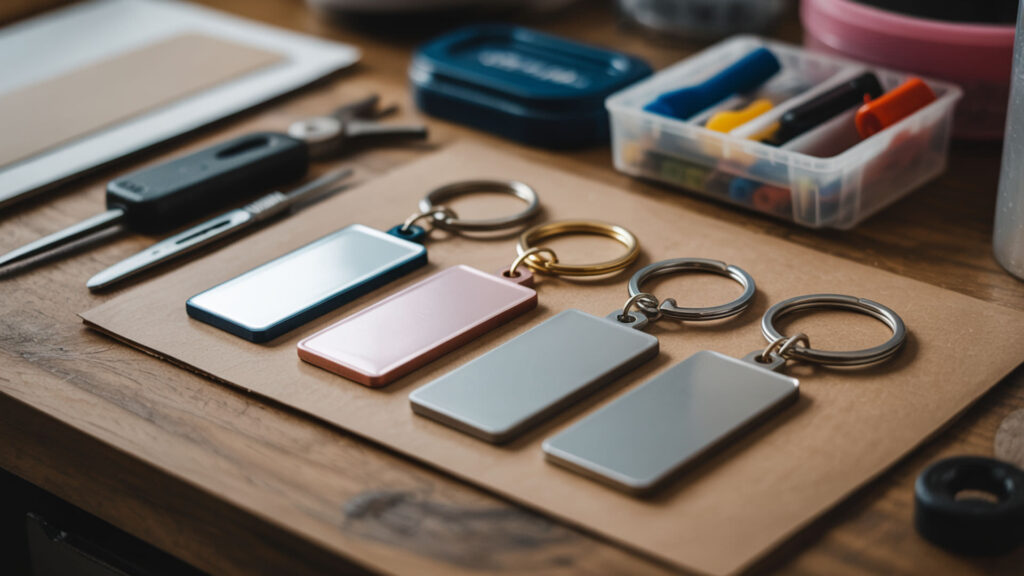
Sublimation prints on keychains demonstrate excellent durability because dye molecules bond permanently within the polymer surface rather than sitting on top. Impact resistance prevents surface cracking that would expose faded areas to wear. Quality sublimation keychains maintain vibrant colors for years under normal use—the embedded dye resists scratching, peeling, and washing that damages surface-printed alternatives.
Do keychains show faded results if overheated during sublimation pressing?
Keychains display faded or dull imagery when overheated past their glass transition temperature during pressing. Exceeding the material’s thermal limits causes polymer distortion that prevents proper dye absorption, resulting in washed-out colors. Acrylic blanks show visible surface damage including cloudiness and warping. Reducing temperature by 15–25°F while extending press time often corrects fading issues without risking structural damage.
How do you sublimate keychains step-by-step?
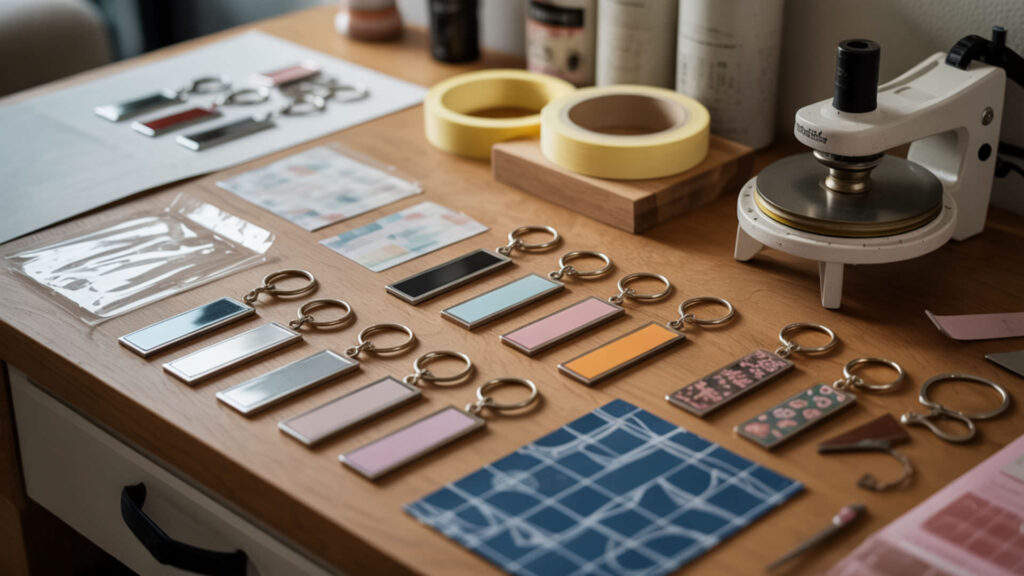
- Print your mirrored design onto sublimation paper using sublimation ink, sizing the image slightly larger than the keychain blank to prevent edge marks.
- Remove protective film from both sides of the keychain blank and clean the surface with a lint-free cloth to eliminate dust and debris.
- Position the sublimation print face-down onto the keychain and secure all edges with heat-resistant tape to prevent shifting during pressing.
- Preheat your heat press to 385–400°F and place protective paper on the bottom platen before positioning the taped keychain assembly.
- Cover with protective paper and press for 45–60 seconds at medium pressure, adjusting time based on material thickness and manufacturer guidelines.
- Remove carefully using heat-resistant gloves, place under a flat heavy object until cool to prevent warping, then attach the keyring hardware. Insert-style keychains use pressure-sensitive adhesive and release liners to bond sublimated panels into decorative frames and housings.
Ready to create custom sublimation keychains?
Sublimation keychains offer excellent profit margins and creative flexibility for personalized gifts and promotional items. Selecting polymer-compatible blanks with appropriate heat resistance ensures consistent results across production batches. Starting with pre-coated acrylic or MDF blanks eliminates surface preparation while delivering vibrant, durable transfers. Master temperature control first, then expand into specialty materials and double-sided designs.
Frequently Asked Questions
Can sublimation transfers fail on keychains if overheated or under-pressed?
Sublimation transfers fail when temperature or time settings miss the optimal range for the specific blank material. Overheating causes polymer distortion that prevents dye absorption, producing faded imagery and surface damage. Under-pressing leaves incomplete dye diffusion with washed-out colors that lack vibrancy. Testing sample blanks at 385°F for 60 seconds establishes baseline settings before adjusting for specific products.
What visual defects appear if a keychain is sublimated too long or too hot?
Excessive heat or time produces visible warping, surface cloudiness, and color degradation on sublimated keychains. Acrylic blanks develop a melted or crater-like texture when temperatures exceed 400°F for extended periods. Colors shift toward yellow or brown tones as the polymer coating breaks down. Edge curling and dimensional distortion indicate the glass transition temperature was exceeded during pressing.
Can a keychain be sublimated again later if the first press was too light?
Keychains can sometimes accept a second press if the original transfer paper remains attached and colors appear too light. Repositioning the same paper and pressing for an additional 15–30 seconds at the original temperature may improve saturation. However, the polymer coating becomes partially saturated during the first press, limiting how much additional dye the surface can absorb in subsequent attempts.
Does storage humidity affect sublimation paper or transfers for keychains?
Storage humidity significantly affects sublimation paper performance and transfer quality. Moisture absorption causes paper to release ink unevenly during pressing, producing blotchy or faded results. Store sublimation paper in sealed bags with silica gel packets at 40–60% relative humidity. High humidity environments require pre-pressing paper for 3–5 seconds to remove absorbed moisture before applying transfers.
Can sublimation ink fade on keychains over time even indoors?
Sublimation ink on keychains resists fading for years under normal indoor conditions because dye molecules bond permanently within the polymer structure. UV exposure accelerates color degradation—keychains displayed near windows may show gradual fading over 2–3 years. Vintage dye-sublimated products from the 1980s demonstrate the technology’s longevity when protected from direct sunlight and extreme temperatures.
References
- G-C3N4/CeO2 binary composite prepared and its application in automobile exhaust degradation – PMC. (n.d.). PMC Home. https://pmc.ncbi.nlm.nih.gov/articles/PMC7143564/
- Modeling polymers for next-generation manufacturing and sustainability. (n.d.). Energy.gov. https://www.energy.gov/science/bes/articles/modeling-polymers-next-generation-manufacturing-and-sustainability