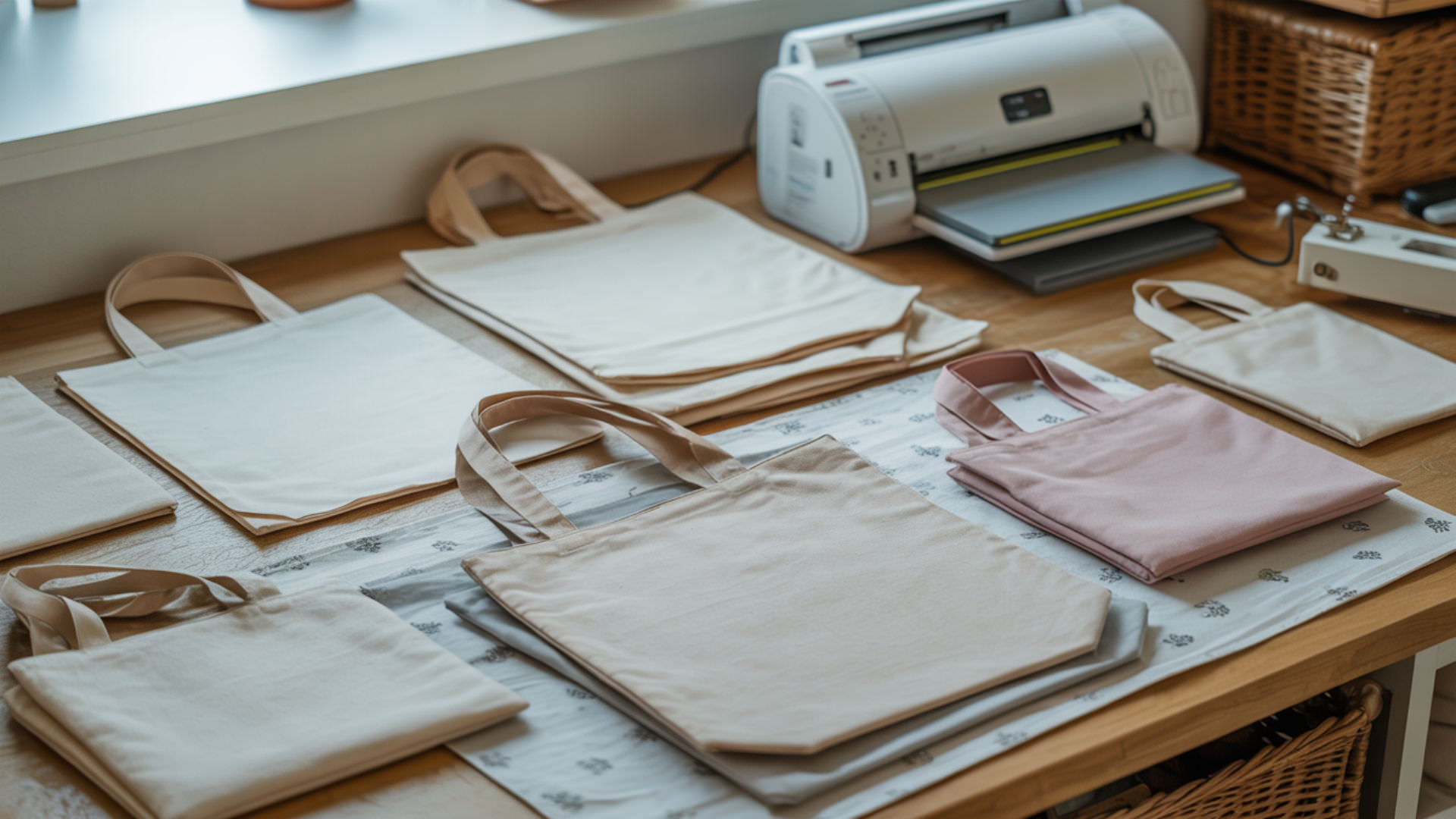
Sublimation transforms plain tote and gift bags into vibrant, personalized items for events, retail packaging, and promotional giveaways. Paper-based gift bags cannot bond sublimation dye without a polymer coating that creates the polyester layer required for dye gas to penetrate. During sublimation, dye turns to gas and embeds only into coated surfaces or synthetic fibers—uncoated paper simply absorbs ink without permanent bonding. The requirement for polymer coating on natural materials applies across all sublimation gift categories—our sublimation gift ideas hub explains coating fundamentals.
Key Takeaways
- Coating determines color vibrancy on paper-based bags—without polymer layers, dye appears dull, washed out, or wipes away entirely.
- Porosity of bag materials influences how evenly coating forms and how sharp prints appear—tight weaves produce cleaner results.
- Polyester tote bags (65%+ content) accept sublimation directly at 385–400°F for 35–55 seconds without additional coating.
Can Tote or Gift Bags Accept Sublimation Transfers?
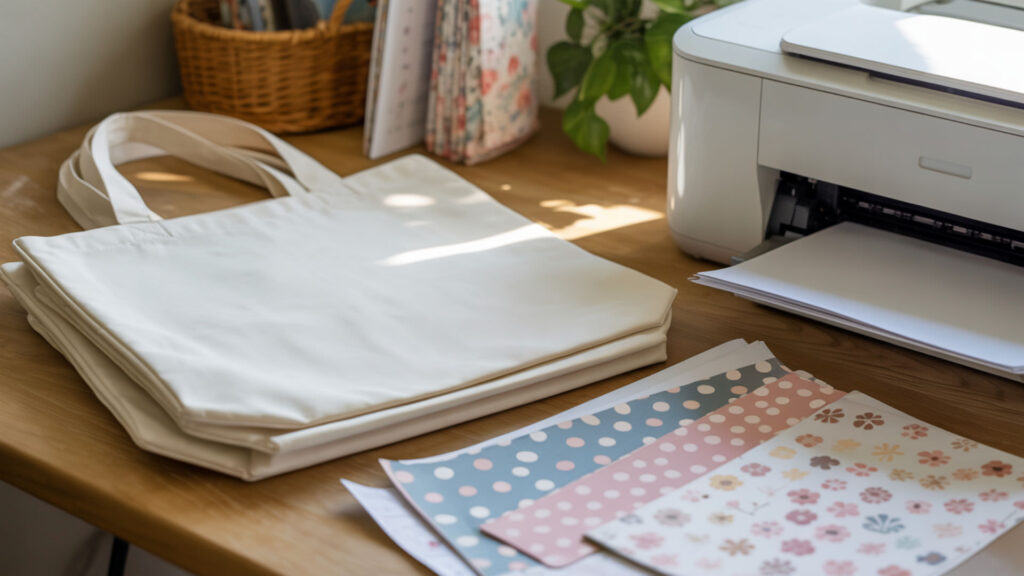
Tote and gift bags accept sublimation transfers when made from polyester fabric or when paper/natural fiber materials receive polymer coating. Paper and cellulose-based materials contain natural fibers that cannot bond with sublimation dye directly—the molecular structure lacks the polymer chains required for permanent ink adhesion. Coating adds the essential polymer layer needed for sublimation by creating a receptive surface where dye gas can deposit and solidify. Both paper gift bags and glass candle jars rely on uniform polymer coating for dye bonding on non-synthetic substrates—our sublimation candle jars guide covers similar coating requirements. Paper products are derived from cellulose fibers, which do not provide the polymer structure required for permanent dye bonding during sublimation. [1]
Can You Sublimate on a Polyester Tote Bag?
Polyester fibers accept sublimation dye directly without coating because the synthetic molecular structure naturally bonds with gas-phase ink. Sublimation produces permanent color on synthetic fibers that withstands washing, UV exposure, and daily handling without cracking, peeling, or fading. For best results, select tote bags with at least 65% polyester content—100% polyester canvas bags produce the most vibrant, consistent results with full color saturation. Polymer-based materials such as polyester have molecular structures that allow heat-activated dyes to bond permanently under pressure.[2]
Can Hessian-Style Bags Be Sublimated Successfully?
Hessian and burlap bags present challenges due to their loose weave and natural jute fiber composition. Porosity from the open weave structure causes patchy coating coverage where some areas receive adequate polymer while others remain uncoated. Moisture content in natural jute fibers causes fading, dullness, or wrinkles during pressing as trapped water converts to steam. Pre-press hessian bags for 10–15 seconds to drive out moisture before applying transfers.
What Heat Levels Are Normally Used When Sublimating on Tote Bags?
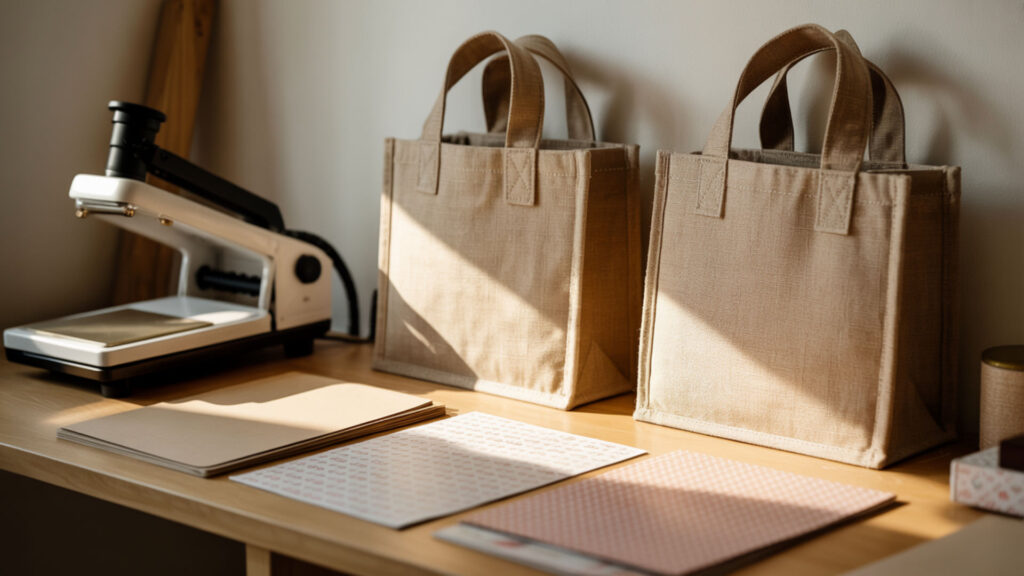
Sublimation on tote bags requires temperatures between 365–400°F depending on material composition, with polyester bags generally needing higher heat than coated paper alternatives. Vapor pressure determines when sublimation dye activates and converts from solid to gas—insufficient heat produces faded, incomplete transfers. Thermal expansion affects heat stability in thicker multi-layer bags where uneven heating creates stress and distortion. Paper-based bags risk warping when overheated, requiring careful temperature management below 380°F for coated kraft materials.
What Temperature Is Commonly Used for Sublimation on Tote Bags?
Polyester tote bags sublimate best at 385–400°F for 35–55 seconds with medium pressure around 30–40 psi. Sublimation requires high enough heat to generate gas-phase dye that can penetrate fiber or coating surfaces. Vapor pressure influences both the activation point and resulting color depth—higher temperatures within the safe range produce bolder, more saturated colors. Canvas-style polyester bags with heavier fabric weight (12 oz) may need slightly longer press times of 60–70 seconds.
Can Cotton-Blend or Cotton Bags Take Sublimation Transfers at All?
Cotton and high-cotton blends produce poor sublimation results because cellulose fibers do not accept or retain sublimation dye—prints appear dull, washed out, or fade quickly with handling. Coating provides the only path to usable print quality on cotton blends by adding a polymer layer over the natural fibers. For cotton canvas bags, apply white heat transfer vinyl or sublimation coating spray before pressing to create a receptive surface. Blends with under 65% polyester content produce increasingly faded, vintage-looking results.
How Do You Sublimate Tote or Gift Bags Step-by-Step?
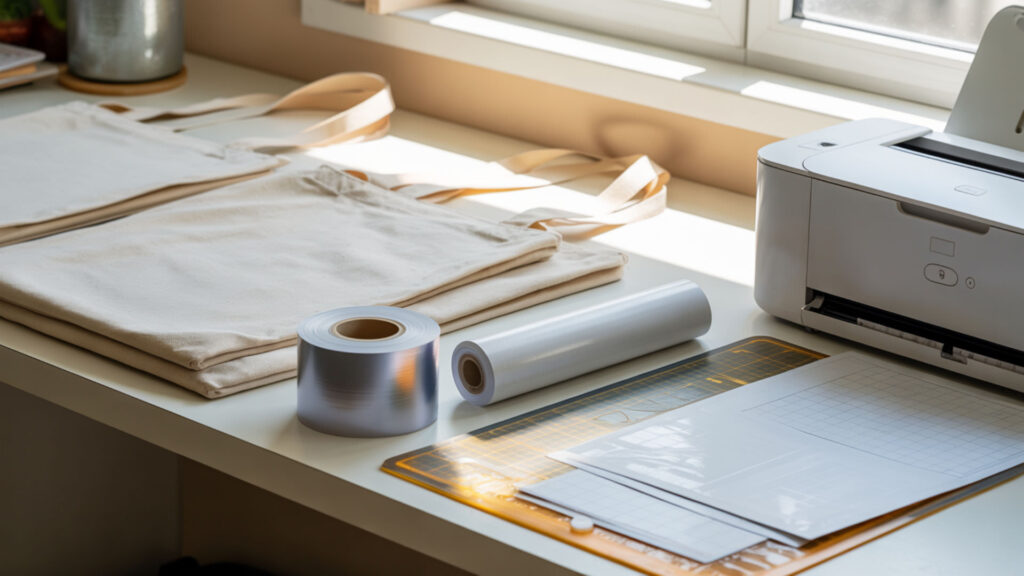
Successful bag sublimation requires coating that is fully cured before pressing for crisp, vibrant prints. Creating a thin film of polymer ensures even dye deposition across the entire print area. Spray coating applied to paper bags creates uniform polymer layers when applied in light, overlapping passes. Both bookmarks and bags rely on thin film polymer layers for sharp transfers—our sublimation on bookmarks guide covers similar coating techniques.
- Preheat your heat press to 385°F and pre-press the bag for 5–10 seconds to remove moisture. This eliminates wrinkles and prevents steam from interfering with dye transfer.
- Lint roll the entire bag surface to remove dust, hair, and debris that create visible defects. Any particles trapped under the transfer will appear as white spots in the finished design.
- Place a pressing pillow or silicone sheet inside the bag to create an even pressing surface. This also prevents ink from bleeding through to the back panel during pressing.
- Position your mirrored sublimation print face-down on the bag and secure with heat-resistant tape. Tape corners and edges to prevent any shifting during the pressing cycle.
- Cover the transfer with butcher paper or a Teflon sheet to protect your heat press from stray ink. This protective layer catches any dye that migrates beyond the transfer edges.
- Press at 385°F for 45–55 seconds with medium pressure until the timer completes. Avoid lifting the press mid-cycle as this causes ghosting from paper movement.
- Remove the bag immediately and peel the transfer paper while still hot for cleanest results. Use a lint roller over the design once cooled to minimize visible pressing lines.
Ready to Create Sublimated Tote and Gift Bag Designs?
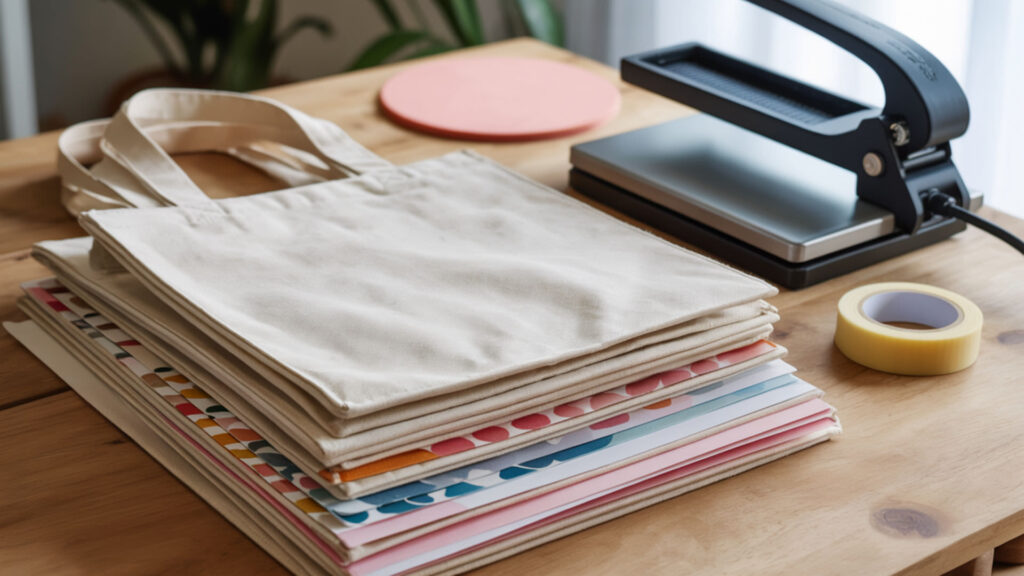
Paper-based gift bags must be properly dried and pre-pressed to avoid warping that ruins both the bag structure and print quality. Sublimation produces fade-resistant prints ideal for reusable bags that customers will carry repeatedly, providing ongoing brand visibility. Start with 100% polyester tote bags for easiest results, then progress to coated paper bags as your technique improves. Tote and gift bags rank among the most popular sublimation gifts for events and retail—our best sublimation gifts guide covers bag selection and pricing strategies.
Frequently Asked Questions
Do tote bags need special coatings for vibrant sublimation transfers?
Polyester tote bags (65%+ content) require no additional coating because synthetic fibers naturally bond with sublimation dye. Paper-based gift bags, cotton bags, and natural fiber totes require polymer coating to create the receptive surface needed for dye adhesion. The coating quality directly determines color vibrancy—premium coatings produce bolder, more saturated prints than economy alternatives.
Can sublimation transfers look light if heat distribution is uneven on bags?
Uneven heat distribution causes visible variations in color density across the transferred design—areas receiving less heat appear lighter or washed out. Seams, handles, and multi-layer sections create thickness variations that affect heat penetration. Using a pressing pillow inside the bag helps equalize pressure and heat distribution across uneven surfaces for more consistent results.
Can natural fiber tote bags give inconsistent sublimation sharpness?
Natural fiber bags frequently produce inconsistent sharpness due to porosity variations in the weave structure and fiber composition. Loose weaves allow coating to pool in gaps while leaving raised fibers undercoated, creating patchy print quality. Tighter weave constructions with uniform coating application produce significantly sharper, more consistent sublimation results on natural fiber substrates.
Is ghosting on tote bags more common than blur during transfer?
Ghosting occurs more frequently than blur on tote bags because fabric flexibility allows transfer paper to shift slightly during pressing. The soft, compressible nature of fabric makes maintaining perfect paper contact challenging throughout the pressing cycle. Secure transfers thoroughly with heat-resistant tape on all edges and avoid opening the press mid-cycle to minimize ghosting risk.
Do cooling speed and humidity influence sublimation clarity on bags?
Moisture content in fabric or paper significantly affects sublimation clarity—humidity trapped in materials converts to steam during pressing, causing blurring, ghosting, or incomplete transfers. Pre-pressing bags removes surface moisture while storing blanks in dry conditions prevents moisture absorption. Allowing bags to cool completely before handling prevents smudging, and hot-peeling transfers produces cleaner edges than cold removal.
References
- (2025, September 26). US Forest Service. https://www.fs.usda.gov/
- Sustainable management of plastics. (2026, January 12). US EPA. https://www.epa.gov/plastics