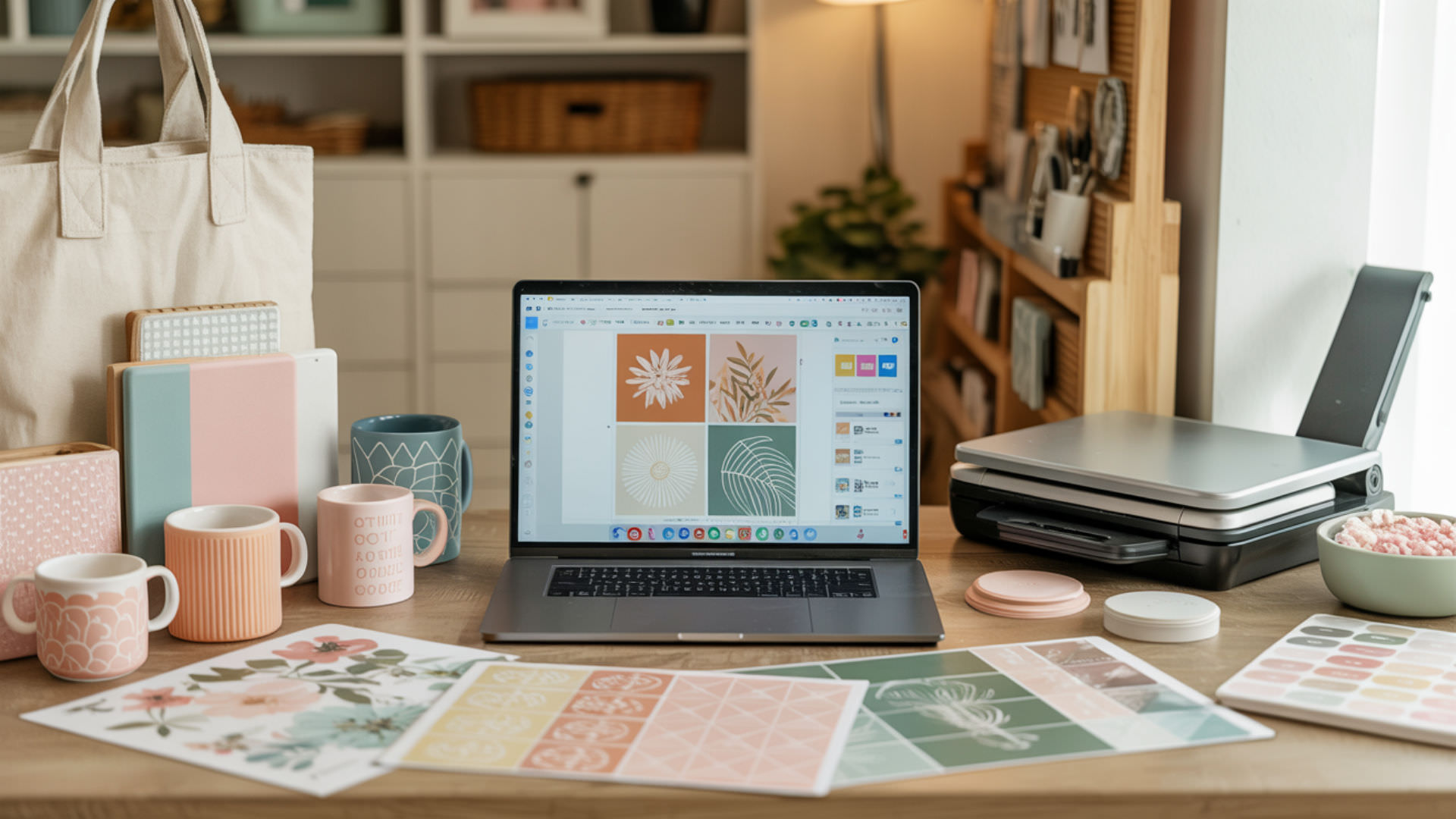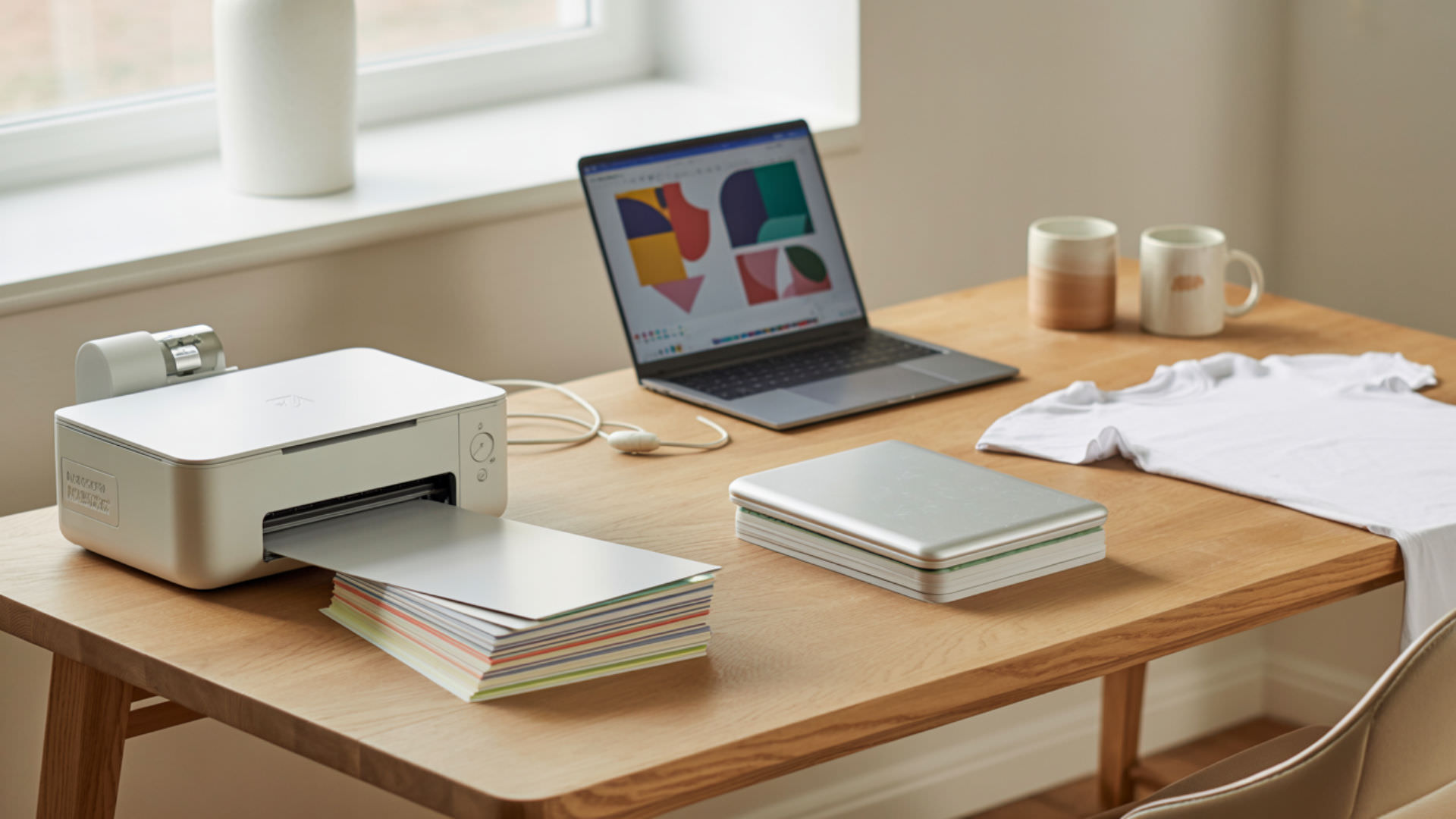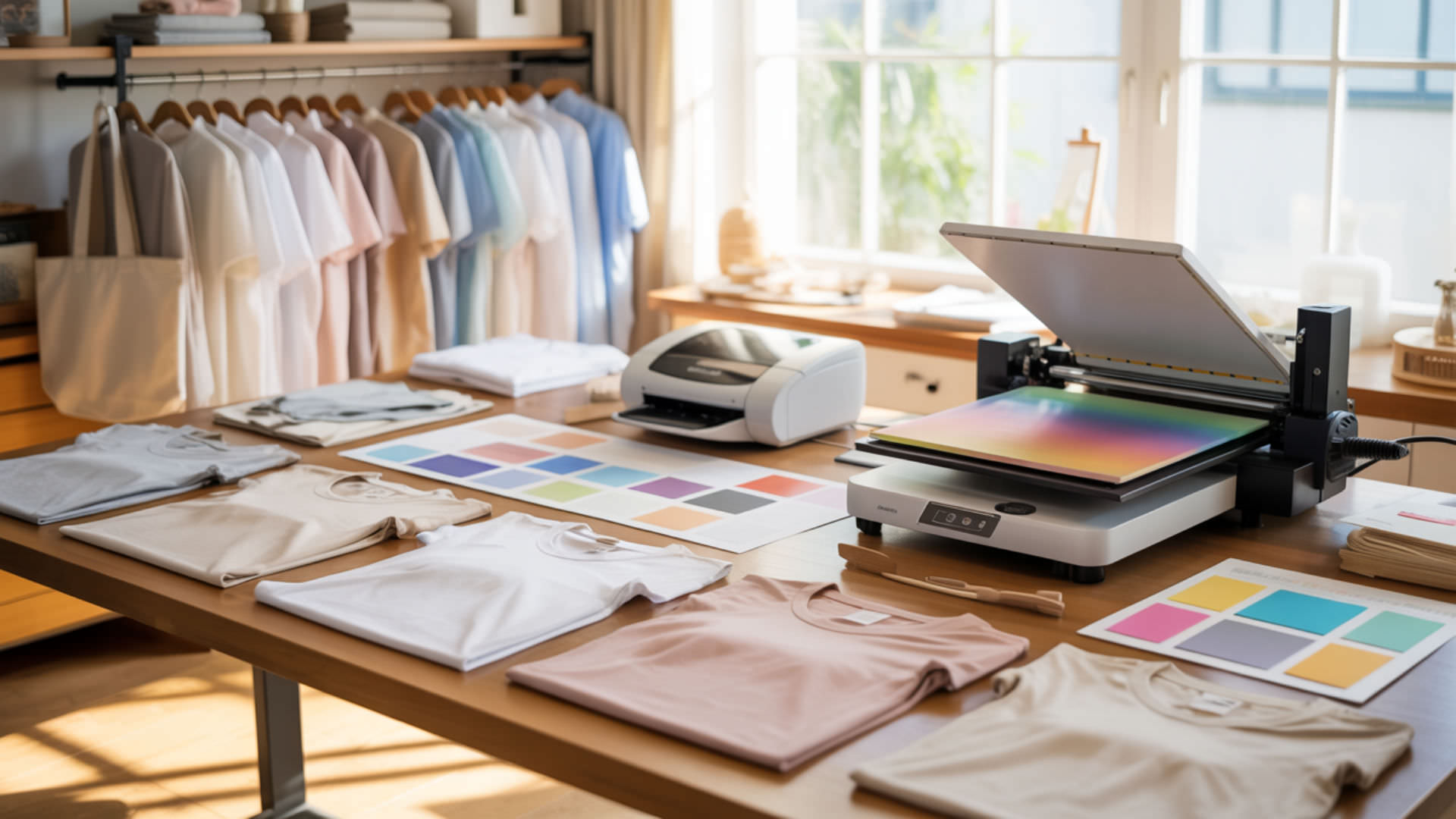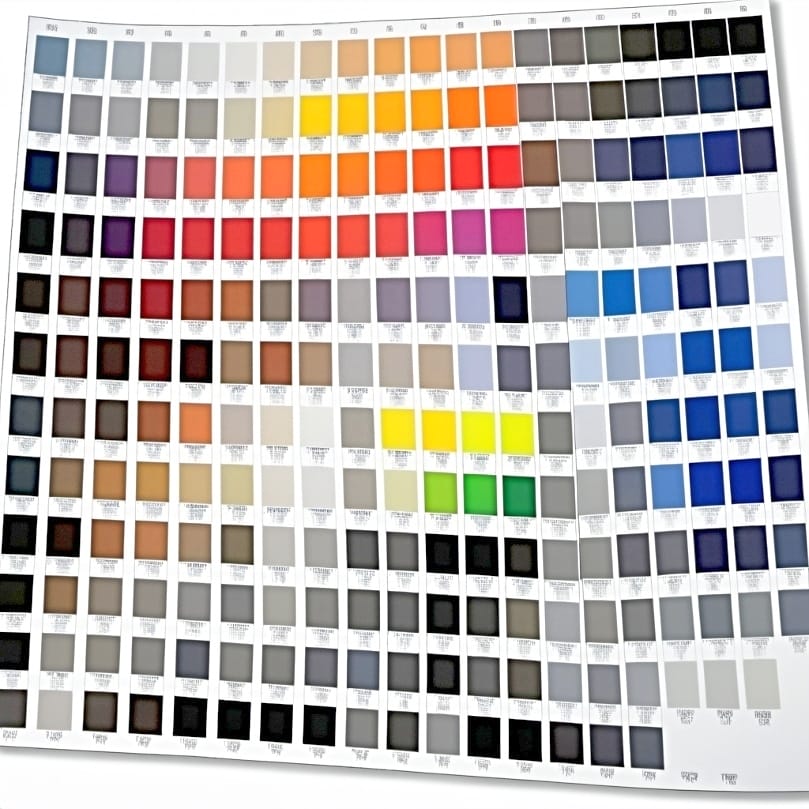
DPI determines print sharpness in Epson sublimation by controlling how densely ink droplets are placed on transfer paper. Color management defines how colors are interpreted before printing, ensuring what you see on screen matches the final pressed result. For universal digital prep concepts including resolution and color workflows that lead into Epson-specific settings, see our guide on DPI and sublimation software.
Key Takeaways
- Set DPI to 300 or higher and select Premium Presentation Paper Matte as your paper type.
- Install the correct ICC profile to ensure your Epson interprets color accurately during sublimation printing.
- Always mirror your image and disable color correction in the driver to prevent double-adjustment.
How Do You Change Your Epson Printer to Sublimation?
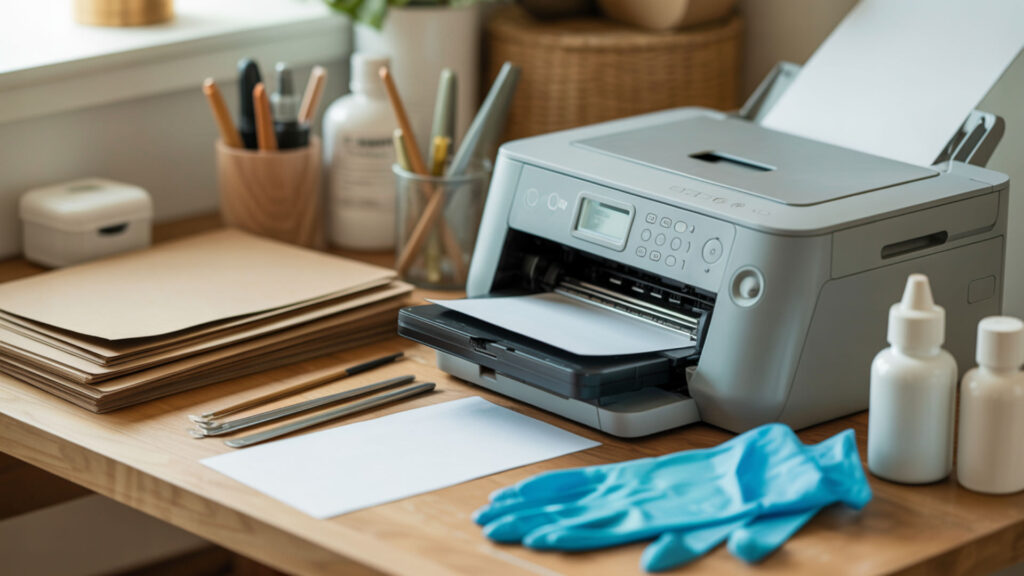
Converting an Epson EcoTank to sublimation requires filling the tanks with sublimation ink and installing the correct ICC profile for your specific ink brand. The device profile must match your printer, ink, and paper combination for correct sublimation output—mismatched profiles cause color shifts and washed-out prints. Epson printers output raster graphics only, regardless of whether you designed in vector format. Our guide on using SVG for sublimation explains how raster graphics work when vector files are converted for Epson printing.
How to Put Sublimation Ink Into an Epson Printer?
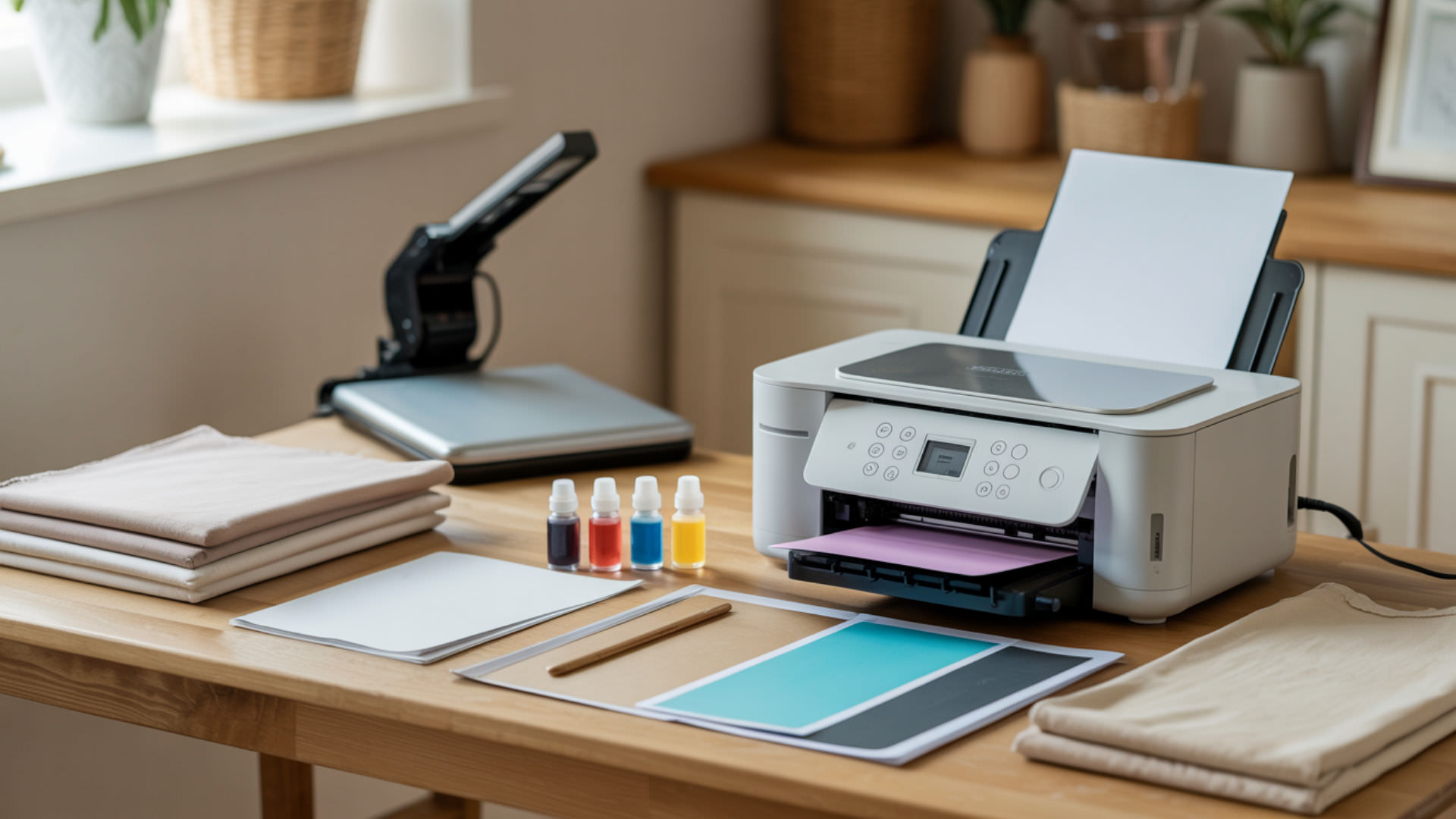
Start with a new EcoTank printer to avoid contamination from standard ink residue in the lines and printhead. Open the ink tank covers, match each sublimation ink color to its corresponding tank, and let the auto-fill bottles dispense without squeezing. The device profile changes when using sublimation ink versus OEM ink, so you must download and install the ICC profile from your ink manufacturer after the initial charging cycle completes.
How to Put Sublimation Ink in an Epson Printer?
Fill each tank with color-matched sublimation ink using the auto-fill nozzle or a clean syringe, being careful not to overfill. Power on the printer and complete the initialization process, which charges the ink lines and takes approximately 10 minutes. The device profile determines how your Epson interprets ink behavior—install the correct ICC profile from your ink supplier before printing, then run a nozzle check to confirm all colors flow properly.
What Printer Settings Should I Use for Sublimation Printing?
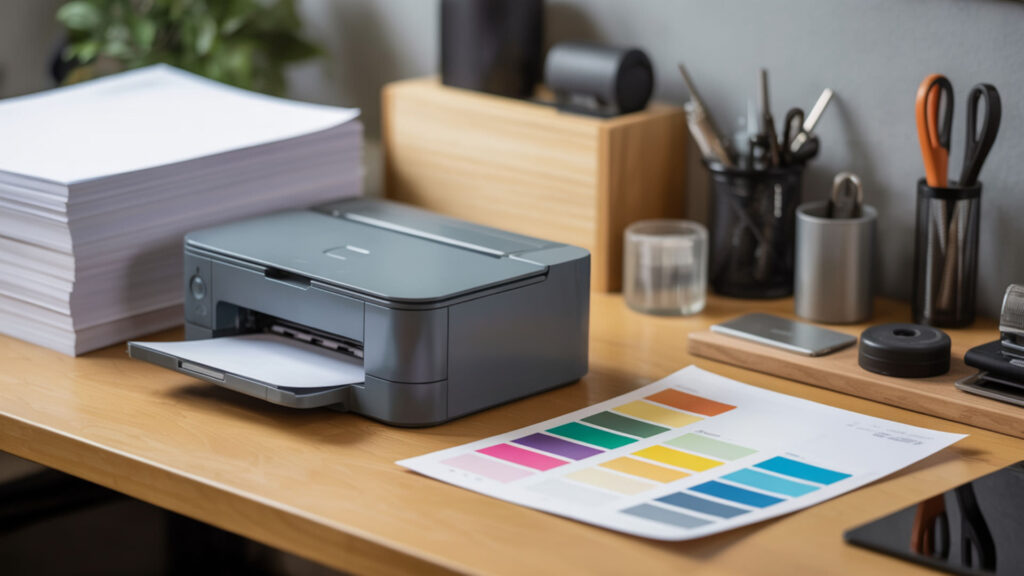
Set your Epson to High Quality mode with DPI at 300 or higher for sharp sublimation output. Select Premium Presentation Paper Matte as the paper type, which controls ink laydown for sublimation paper. Image resolution must match or exceed your selected DPI for sharp output—a 150 PPI source file printed at 300 DPI produces pixelation. Export designs as PNG files at 300 DPI to preserve transparency and color accuracy before sending to the Epson driver. Image resolution refers to how many dots or pixels an image contains per inch, and higher resolution generally results in crisper printed output when images are enlarged for sublimation.[1]
How to Set Paper Type on Epson Printer?
Access paper settings through the printer’s control panel by navigating to Settings > General Settings > Printer Settings > Paper Source Settings > Paper Setting. Select Premium Presentation Paper Matte or a similar matte option for sublimation printing. The device profile uses paper type to define color handling and ink spread control—selecting photo glossy paper causes excessive ink that bleeds on sublimation transfer sheets.
⫸ Click Here For Best Selling Sublimation Printers And Products ⫷How Do I Change the Paper Setting on My Epson Printer?
Change paper settings through File > Print > Preferences on your computer, then navigate to the Main or Paper tab. Select your loaded paper size and choose Premium Presentation Paper Matte as the media type. The device profile triggers color space conversion where the driver adjusts color behavior based on your selected paper preset—incorrect paper selection causes the Epson to apply wrong ink densities and color corrections.
How Do You Change Print Settings on Your Epson Printer for Quality?
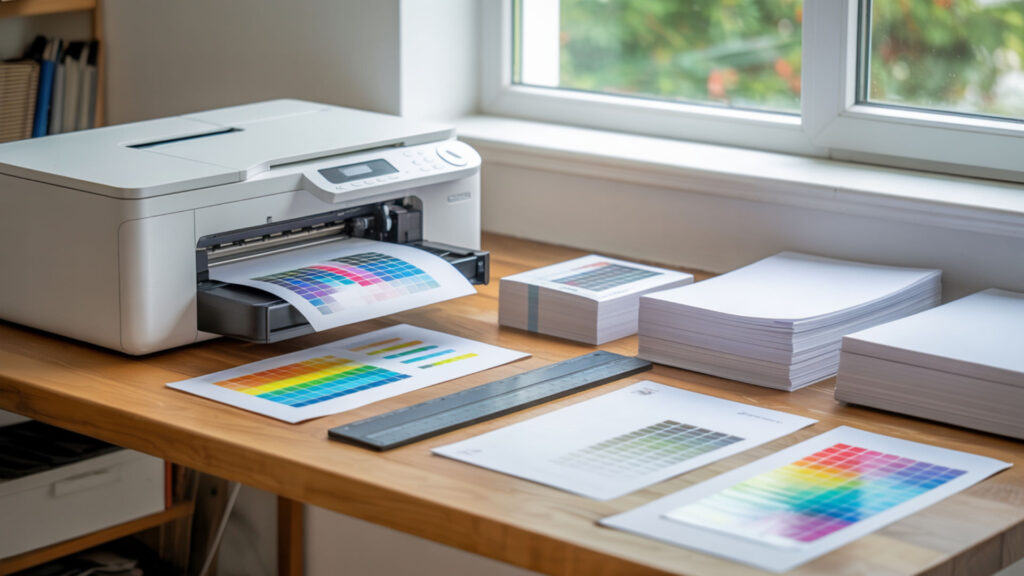
Access printer preferences through File > Print > Properties, then select the Advanced or More Options tab. Set DPI to the highest available setting (typically 300-600) and disable high-speed bidirectional printing for cleaner output. Anti-aliasing affects edge smoothness at different quality modes—higher quality settings apply better smoothing to curved lines and text edges. Our Canva sublimation guide explains how to prepare designs with proper image scaling before sending them to your Epson printer.
How Do I Change the Print Mode on My Epson Printer?
Open Printer Settings from the print dialog and select the Basic Settings tab, then click Advanced to access quality presets. Choose High Quality or Best Photo mode for sublimation printing. DPI controls how densely the printer lays down sublimation ink—Draft mode uses fewer dots per inch and produces faded transfers, while High Quality mode maximizes ink density for vibrant colors after pressing.
How to Set DPI on Epson Printer?
Click Basic Settings in your printer preferences, then Advanced, then More Settings to access the resolution slider. Choose 300 DPI for standard sublimation or 600 DPI for highly detailed work requiring maximum sharpness. Your source file’s PPI should be equal to or higher than your selected printer DPI for clarity—sending a 72 PPI web graphic to a 300 DPI print setting produces visible pixelation in the final transfer.
Why Is My Epson Printer Not Printing Sublimation Correctly?
Incorrect sublimation output typically stems from color management conflicts where multiple profiles compete to adjust your image. Install the correct ICC profile from your ink manufacturer and disable the Epson driver’s automatic color correction to prevent double-adjustment. Rendering intent defines how your Epson handles out-of-gamut colors that may appear off—Perceptual intent compresses the color range while Relative Colorimetric clips unprintable colors, each producing different results on vibrant designs.
Why Is My Epson Printer Not Printing High Quality?
Low-quality output often results from mismatched DPI settings or degraded source files. Verify your print mode is set to High Quality rather than Draft or Standard. Image resolution limits final quality—low-resolution artwork cannot produce high-quality output even when printed at high DPI because the printer simply enlarges existing pixels rather than creating new detail. Use 300 PPI source files minimum for sublimation.
Why Does My Epson Printer Print Blurry?
Blurry prints indicate clogged nozzles, incorrect settings, or oversized artwork. Run a nozzle check and head cleaning cycle from the printer’s maintenance menu. Anti-aliasing settings affect text and edge clarity—disable high-speed printing for sharper results. Image scaling beyond 100% of the original resolution creates blur even with correct printer settings because you are stretching pixels beyond their intended size.
How Do You Optimize Color Settings for Sublimation?
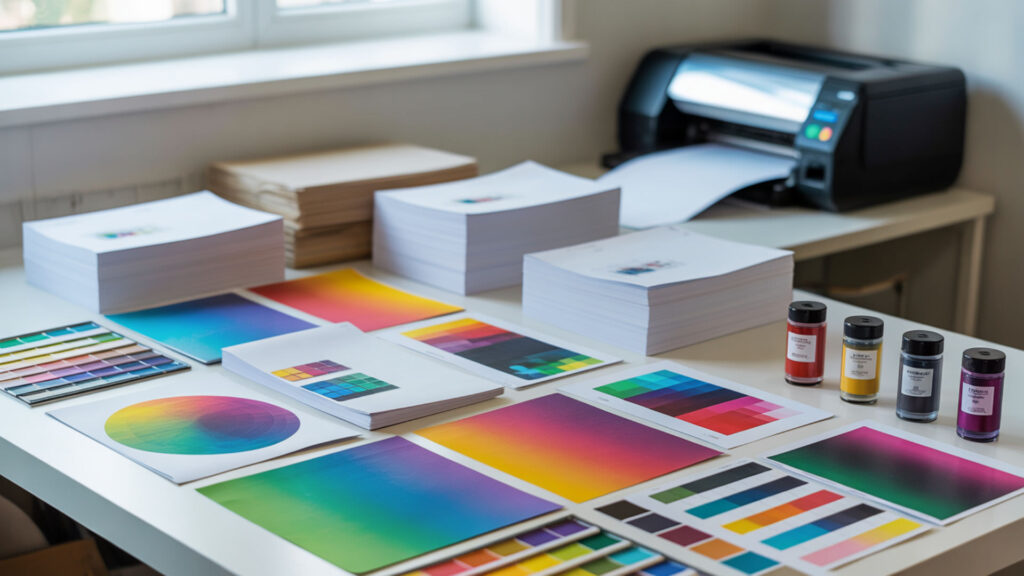
Install the ICC profile provided by your sublimation ink manufacturer and assign it in your design software’s color settings. Design in RGB mode rather than CMYK for the widest color gamut and most accurate screen-to-print matching. The working space must match ICC expectations—use sRGB or Adobe RGB as your working space since sublimation profiles expect these standards. Different design programs handle color space conversion differently, so choosing the right software directly affects your Epson output. Using ICC color profiles helps ensure that the colors you see on-screen are interpreted consistently by your printer, preventing unwanted shifts between design and printed output.[2]
Do You Add Bleed for Sublimation?
Standard sublimation does not require bleed because the entire printed image transfers directly without cutting or trimming. Disable the bleed option in design software like Cricut Design Space before printing sublimation transfers. Image scaling with bleed extends artwork beyond the trim area and is only necessary for print-then-cut projects where a cutting machine trims the transfer—for standard heat press applications, bleed causes unnecessary ink waste and edge distortion.
How to Adjust Print Size on Epson Printer?
Access size controls through File > Print > Preferences, then look for the Reduce/Enlarge or Fit to Page options. Set your output paper size to match the loaded sublimation paper dimensions exactly. DPI interacts with image scaling to maintain clarity—enlarging a small image forces the printer to interpolate pixels, reducing sharpness. Create artwork at final print size and 300 DPI to avoid scaling losses during output.
Which Epson Printers Can Be Used for Sublimation?
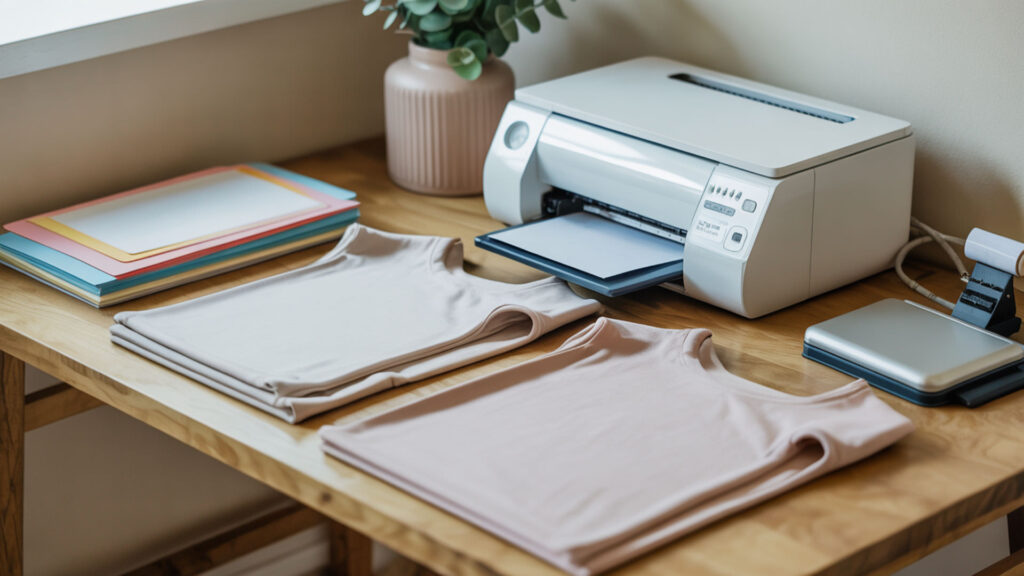
Three main Epson series work for sublimation: EcoTank, SureColor, and WorkForce printers with refillable ink systems. EcoTank models like the ET-2400, ET-2800, and ET-4800 are popular for home sublimation because their tank design accepts third-party sublimation inks easily. Device profile availability varies by model, and profiling determines whether a printer can be reliably ICC-profiled for sublimation—ink manufacturers typically provide profiles only for widely-used models with consistent color output.
Can You Use an Epson EcoTank ET 2400 for Sublimation?
The ET-2400 works for sublimation after converting with sublimation ink, making it a cost-effective entry point under $200 including ink. Use a new printer to avoid contamination, fill tanks with sublimation ink, and install the matching ICC profile from your ink provider. The device profile determines compatibility with sublimation inks—download the correct profile for your specific ink brand to ensure accurate color reproduction on this model.
Can You Use Epson ET 2800 for Sublimation?
The ET-2800 is a popular sublimation conversion candidate that requires replacing standard ink with sublimation ink before first use. The conversion voids your warranty and dedicates the printer permanently to sublimation—you cannot switch back to regular ink without extensive cleaning. Each model has a separate device profile with distinct ink, paper, and color handling constraints, so download the ICC profile specifically made for the ET-2800 and your chosen ink brand.
How Do You Do Sublimation Step-by-Step?
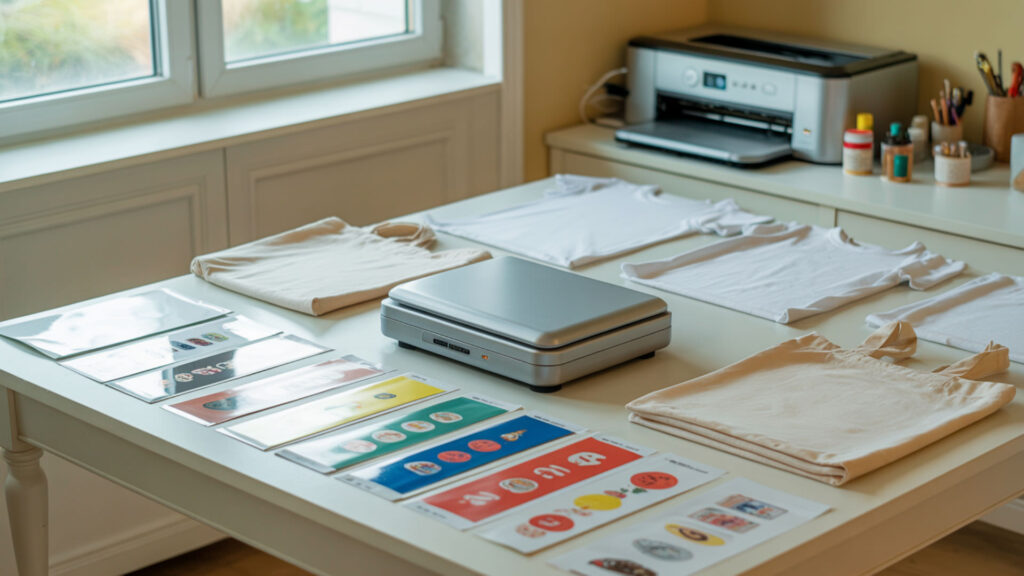
- Create your design at 300 DPI in RGB color mode, sizing it to match your substrate dimensions exactly.
- Export as PNG and mirror the image horizontally in your design software or printer settings.
- Load sublimation paper with the coated bright side facing the print path and select High Quality mode.
- Print using your installed ICC profile and allow the transfer to dry completely before handling.
- Pre-press your polyester blank for 3-5 seconds to remove moisture, then position the transfer face-down.
- Heat press at 375-400°F for 45-60 seconds, then peel immediately while hot to reveal the infused design.
All Epson sublimation prints use raster graphics regardless of your original file format—vectors are automatically converted to pixels during the print process. Color management through your ICC profile ensures the Epson interprets your design colors accurately before laying down sublimation ink onto the transfer paper.
Ready to Set Up Your Epson for Sublimation?
Proper Epson configuration transforms an affordable EcoTank into a reliable sublimation production tool. Set DPI to 300 or higher, select Premium Presentation Paper Matte, mirror every design, and disable automatic color correction. Install the correct ICC profile for your ink and paper combination—correct profiles produce accurate prints while mismatched profiles cause color shifts that waste blanks and transfer materials.
Frequently Asked Questions
Can Epson WF-7820 be used for sublimation?
The WF-7820 can be converted for sublimation using refillable cartridges filled with sublimation ink. After setup and Wi-Fi verification, replace the OEM cartridges with filled refillable and run one head cleaning cycle. The device profile changes with sublimation ink, so install the matching ICC profile to ensure accurate color output on this wide-format model.
Can Epson ET-4800 be used for sublimation?
The ET-4800 converts to sublimation by filling its tanks with sublimation ink instead of the included OEM ink. Start with a new unused printer, skip the factory ink, and use syringes to fill tanks with sublimation ink matched to each color position. The ICC profile for your specific ink brand determines color accuracy on this model and must be installed before printing.
Can you use Epson 502 ink for sublimation?
Genuine Epson 502 ink is dye-based ink for standard document printing, not sublimation ink, and will not transfer properly under heat. You must purchase dedicated sublimation ink formulated for heat transfer—the chemical composition differs entirely from standard 502 ink. Converting voids your warranty, and the device profile must be updated with an ICC profile matching your sublimation ink brand.
Is 522 sublimation ink?
Genuine Epson 522 ink is standard dye-based ink for paper printing, not sublimation ink. To use sublimation with an EcoTank that accepts 522 bottles, you must drain the original ink and refill with third-party sublimation ink. The ICC profile from your sublimation ink supplier determines color accuracy—do not mix any ink types in the same printer system.
Can you use an Epson ET-2760 for sublimation?
The ET-2760 works for sublimation after conversion and is among the most affordable EcoTank options available. Purchase the printer new, fill tanks with sublimation ink before first use, and install the device profile from your ink manufacturer. DPI settings of 300 or higher combined with the correct ICC profile produce vibrant sublimation output comparable to more expensive dedicated sublimation printers.
References
- Graduate center. (n.d.). Texas Tech University Departments | TTU. https://www.depts.ttu.edu/gradcenter/posters/vector-bitmap.php?utm_
- https://www.getty.edu/publications/resources/virtuallibrary/0892367334.pdf?utm_