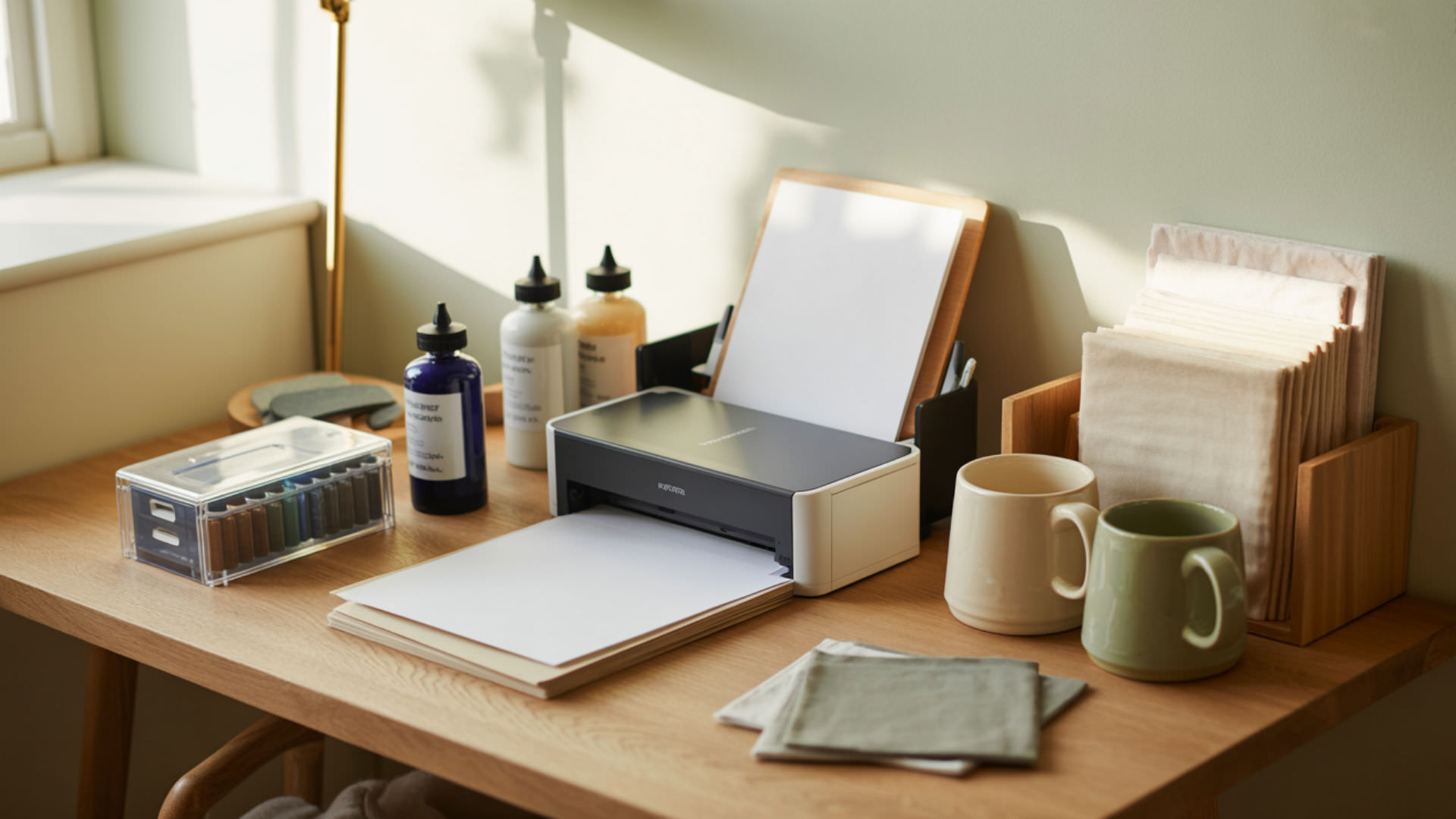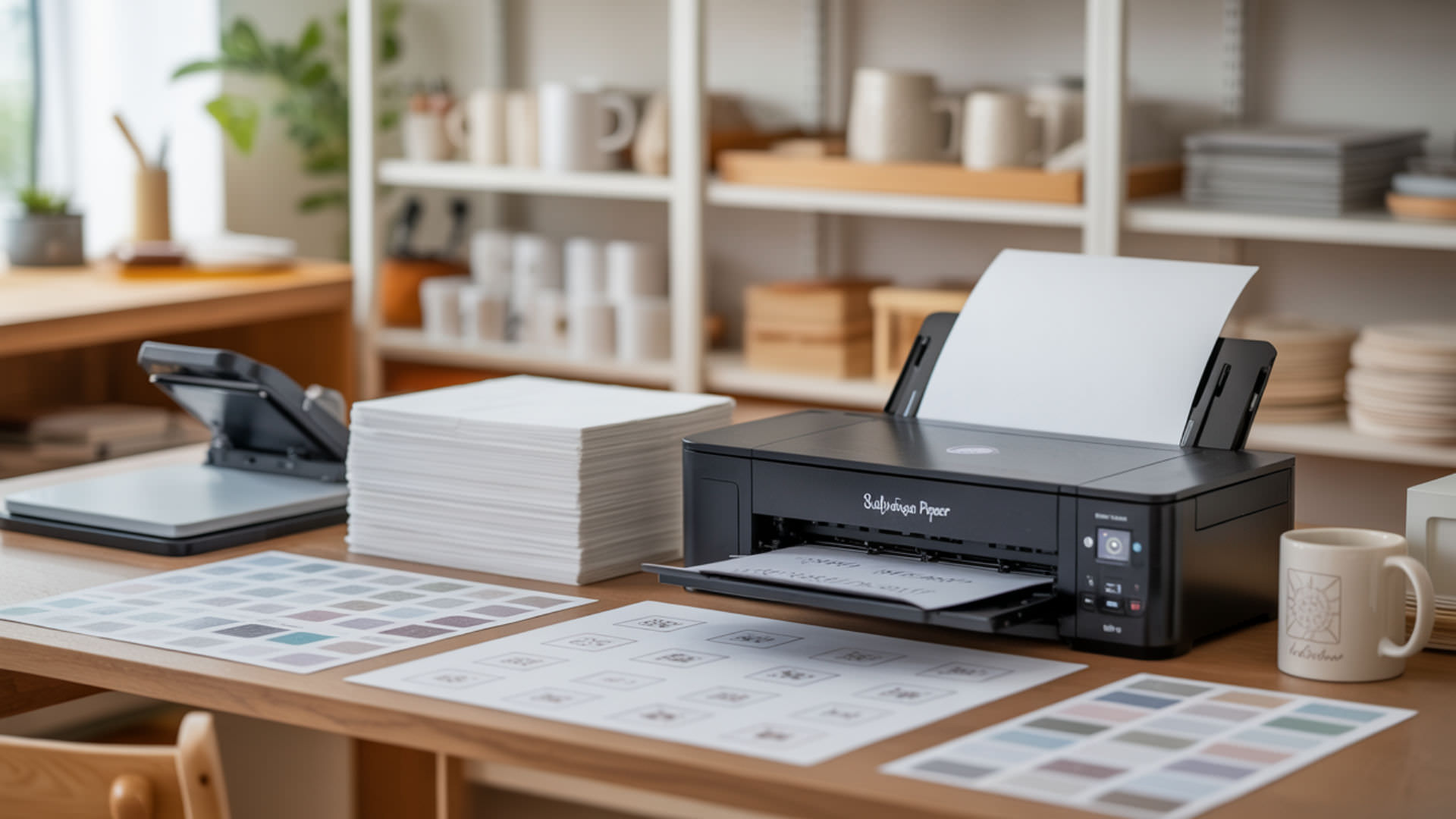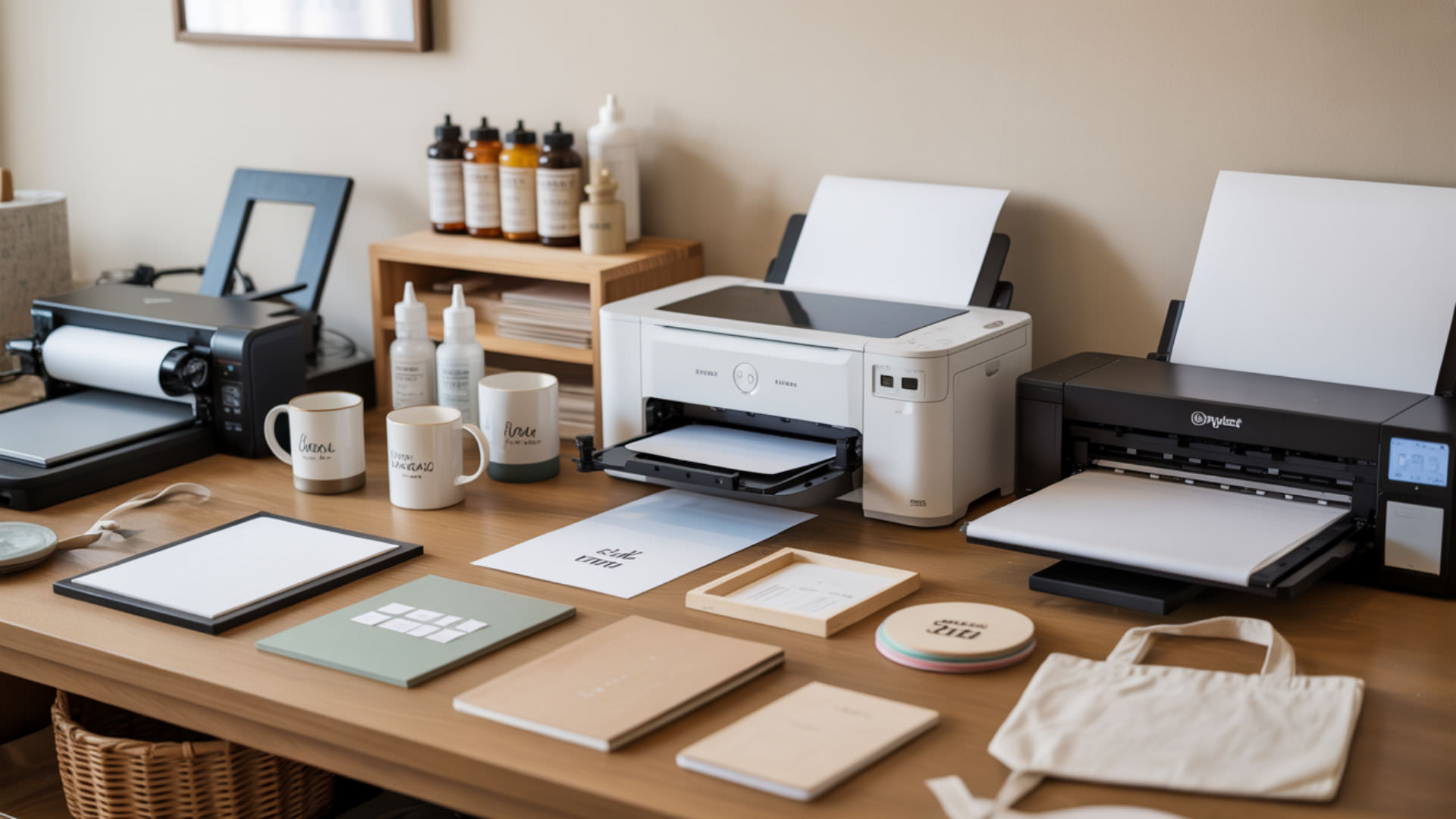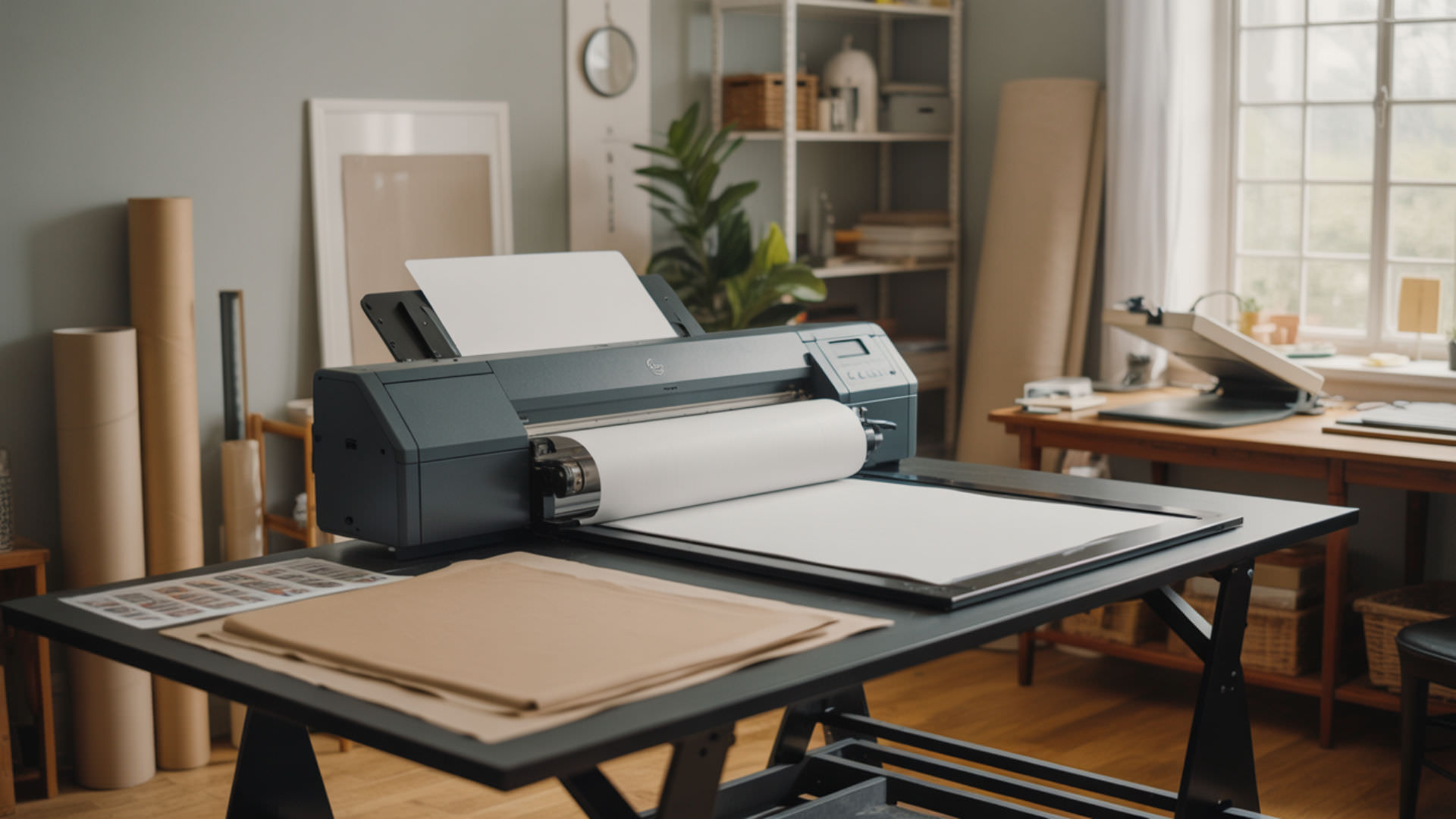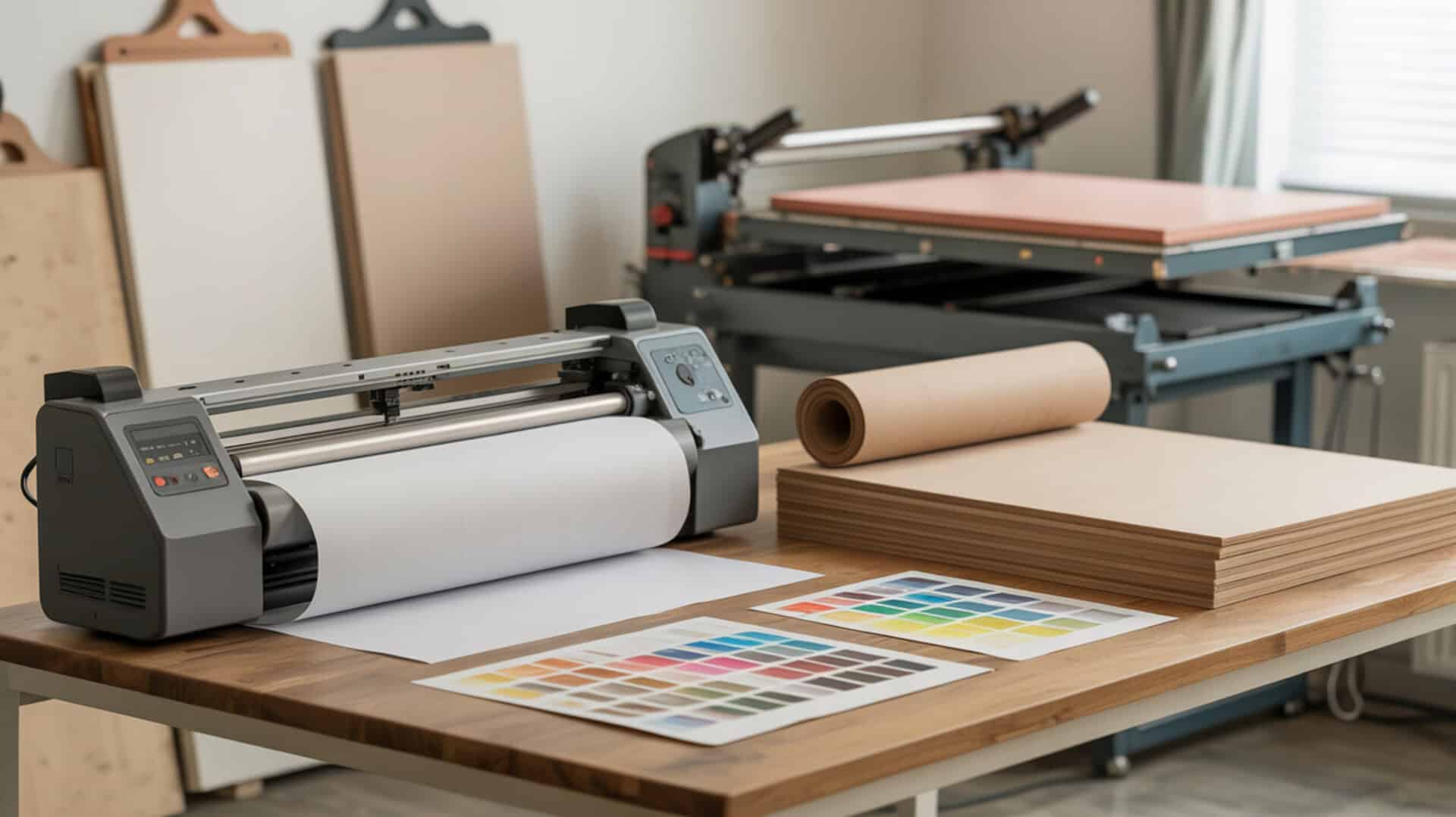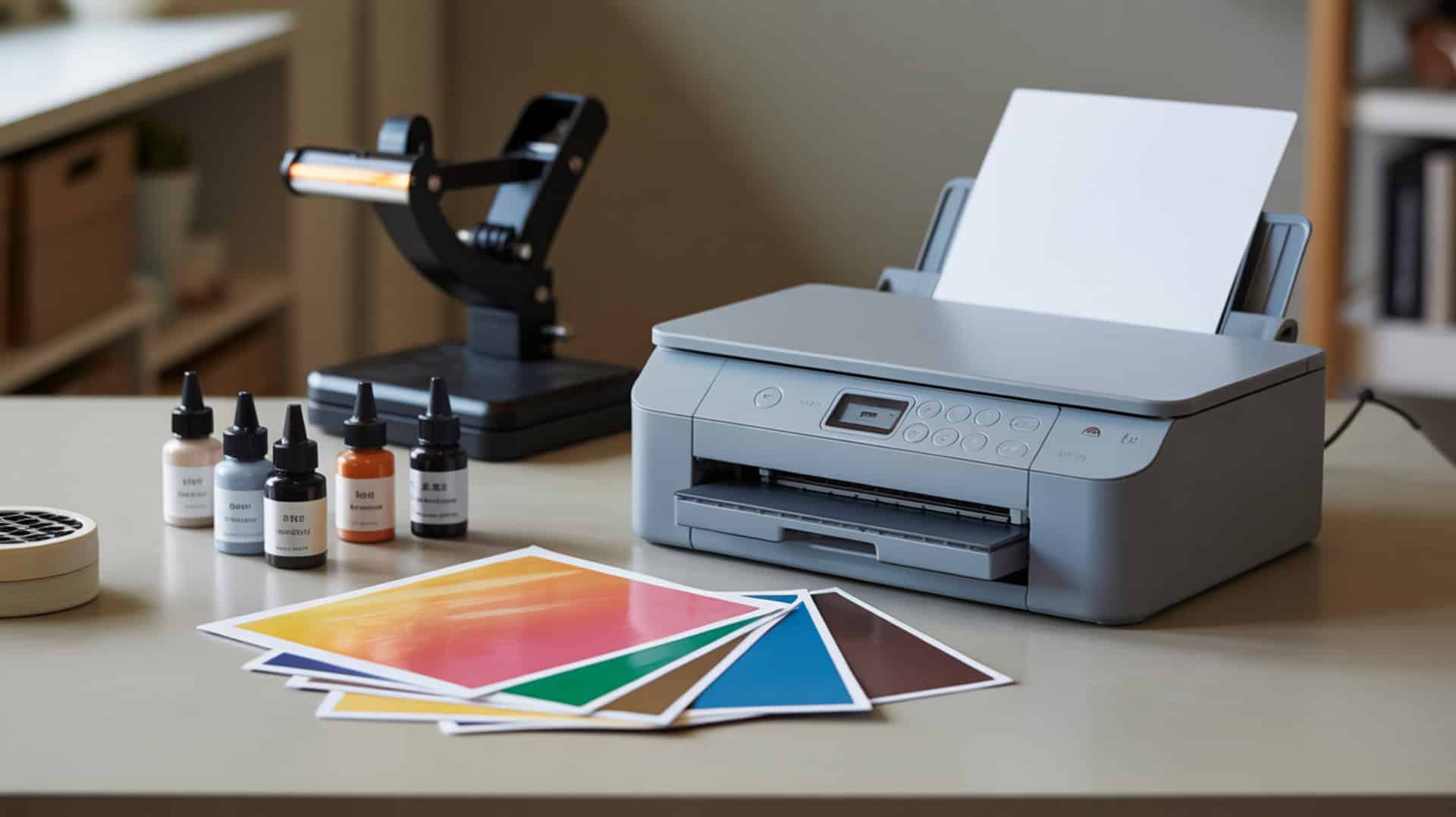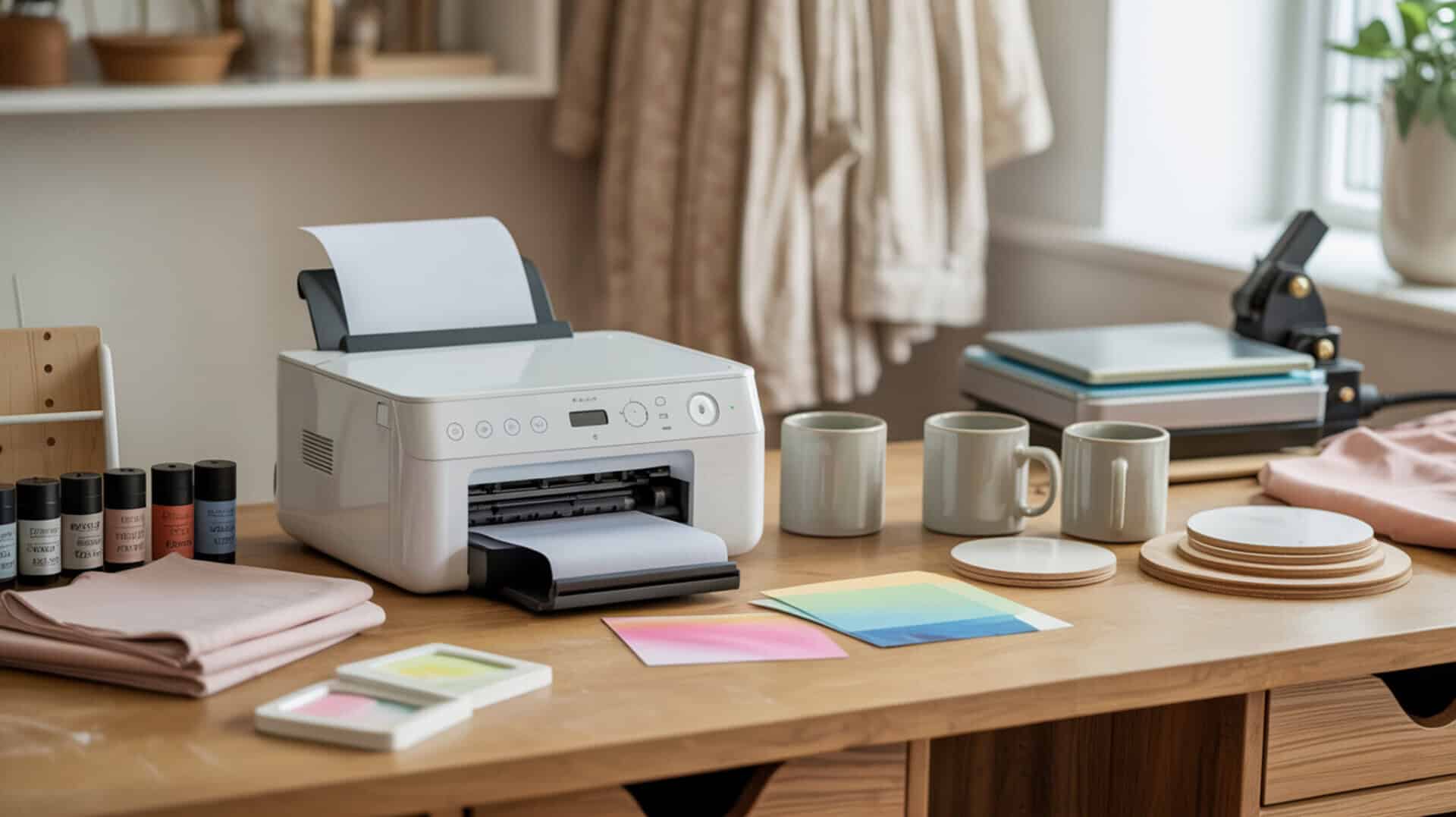
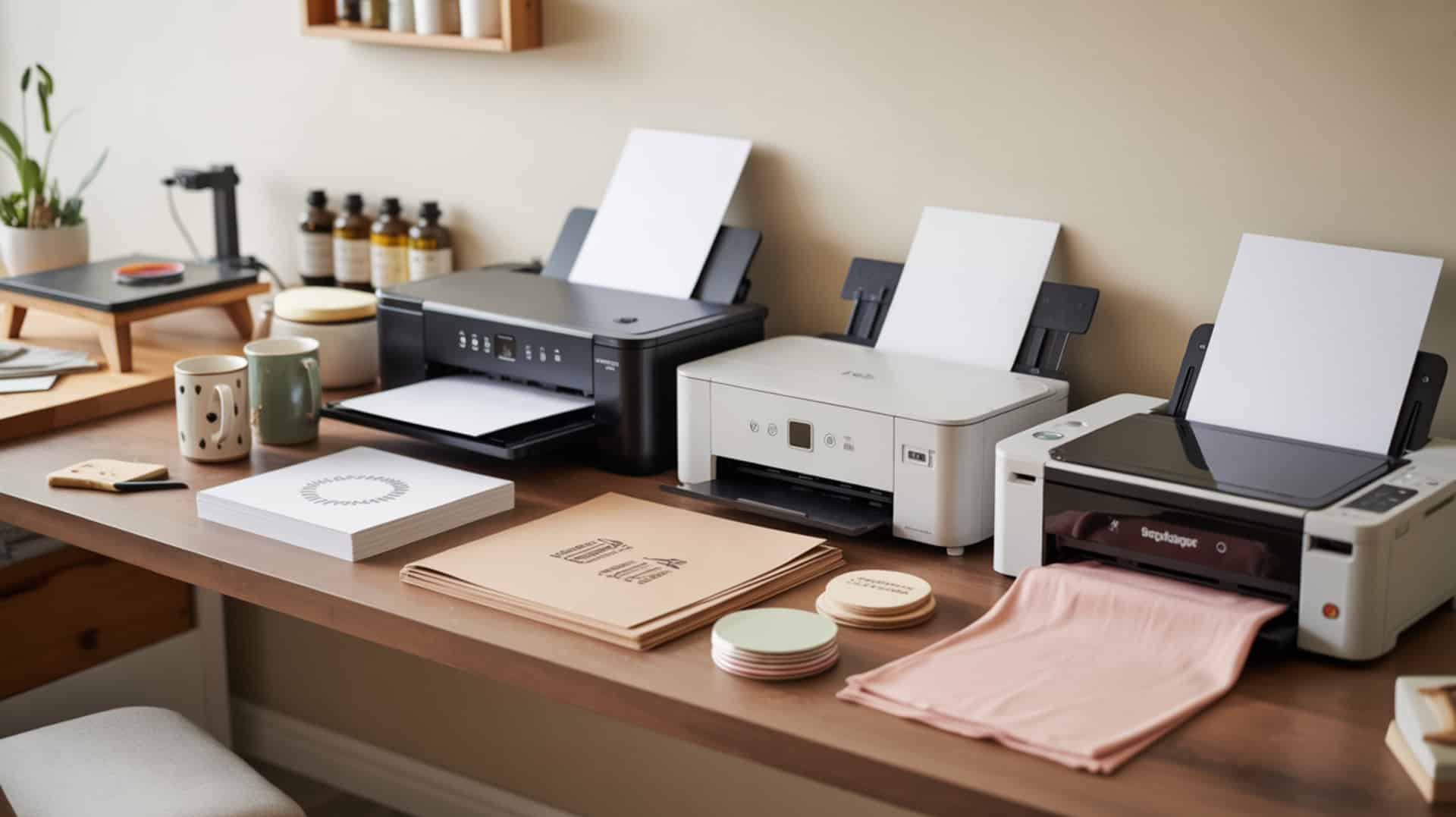
A sublimation printer uses inkjet printing technology to deposit specialized dye onto transfer paper, which then bonds permanently with polymer-coated surfaces during heat pressing. The sublimation (phase transition) process requires heat-driven conversion of solid dye directly to gas, bypassing the liquid state entirely. Sublimation is a physical phase change in which a solid transitions directly into a gas when sufficient heat energy is applied. Beginners can choose between converted EcoTank printers offering budget-friendly entry or dedicated sublimation printers providing warranty coverage and optimized ink systems. [1] Because sublimation requires this heat-driven phase change for dye transfer and polymer surfaces for permanent bonding, understanding the science behind dye sublimation helps you select the right printer for your projects.
Key Takeaways
- Heat transfer activates dye diffusion into polymer substrates, making temperature control critical for vibrant, permanent prints.
- Printer compatibility determines print reliability—Epson EcoTank models use piezoelectric printheads suitable for sublimation ink conversion.
- Budget beginners can convert an EcoTank for around $200, while the dedicated Epson SureColor F170 at $399 offers warranty coverage and included color profiles.
Is the Epson EcoTank 2803 a Good Sublimation Printer for Beginners?
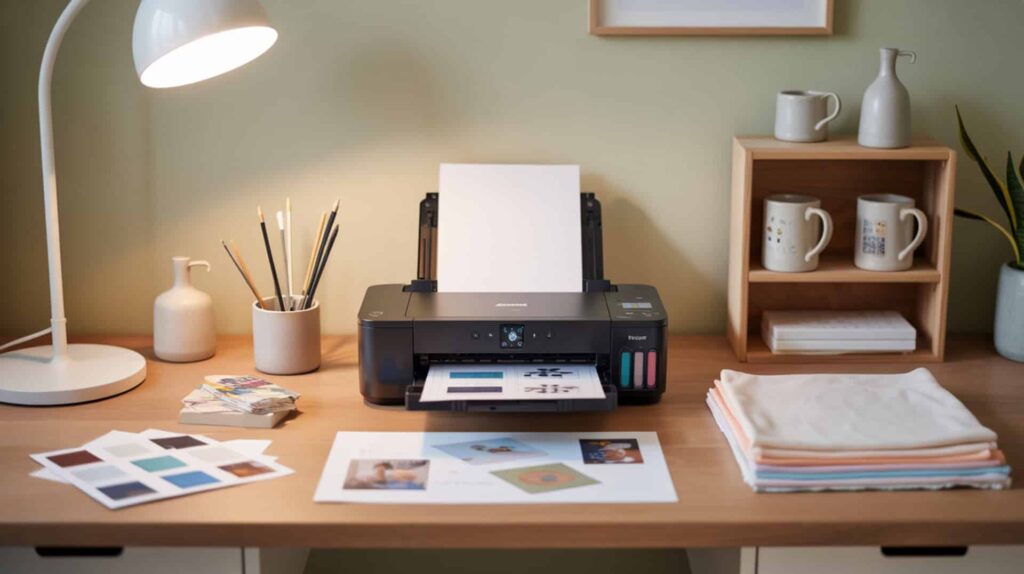
The Epson EcoTank 2803 is a budget inkjet printing system that uses piezoelectricity to fire ink droplets without heat, enabling sublimation ink use without premature vaporization. According to test evaluations by a first-time sublimation user, the printer purchased at $179 produced vibrant colors with no tracking or blurriness after conversion and heat pressing at 385°F for 55 seconds. The piezoelectric mechanism enables sublimation ink use because it prevents heat boiling that occurs in thermal printheads, while proper diffusion controls dye penetration into polymer substrates. Piezoelectric actuators generate mechanical motion in response to an applied electric field, enabling ink droplet ejection without thermal heating.[2] Because polymer compatibility determines final print quality, users should also review our guide on what percent polyester for sublimation to understand substrate requirements.
What kind of sublimation print results can you expect from the Epson EcoTank 2803?
The Epson EcoTank 2803 delivers vibrant color saturation with sharp detail clarity according to first-time user test data. Diffusion determines vibrancy and sharpness during the heat transfer process, and testing on a 100% polyester pencil pouch at 385°F for 55 seconds produced results described as matching on-screen design accuracy with no blurring or tracking. The color saturation depends on consistent ink delivery through the refillable EcoTank system, which maintains steady flow after the initial 11-minute charging cycle completes.
What are the pros and cons of using the Epson EcoTank 2803 for sublimation?
The EcoTank 2803 offers an affordable $179 entry price with a conversion process described as no harder than normal printer setup according to test documentation. The lack of thermal inkjet technology prevents ink boiling issues that plague Canon, HP, Lexmark, and Dell printers. Wireless setup proved easy, and first projects produced vibrant colors without blurring. However, printhead durability affects long-term reliability, and the included Epson ink cannot be used for sublimation, representing wasted product. Users must purchase sublimation ink separately, and forgetting to mirror images causes failed prints.
How does the Epson EcoTank 2803 compare to other beginner sublimation printers?
The EcoTank 2803 positions as the most budget-friendly entry point based on PDI data, with the $179 purchase price significantly below dedicated sublimation printers costing $399 or more. The ink delivery system uses refillable tanks that affect consistency compared to factory-filled systems. Print resolution determines image clarity, and while specific DPI was not documented for this model, test results showed no visible quality issues on polyester substrates. The printer was selected specifically because dedicated sublimation printers were considered too expensive for beginning crafters. You can find the Epson EcoTank 2803 here. [3]
How Well Does the Epson EcoTank ET 2850 Perform for Sublimation Printing?
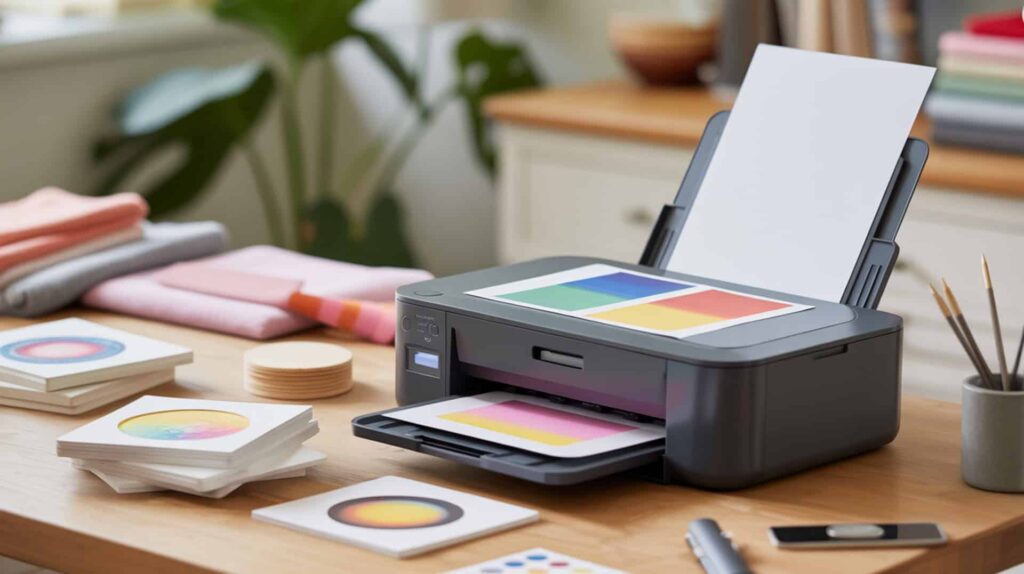
The Epson EcoTank ET 2850 is a refillable inkjet printing system that converts to sublimation use by filling tanks with specialized dye ink before first power-on. According to test evaluations, the printer produces professional-looking results described as “crisp and vibrant” with no blurriness or ghosting when pressing at 400°F for 60 seconds. The heat transfer process activates colors that appear dull on paper but become vivid after pressing onto polymer-based substrates. Because polymer compatibility determines final print quality, users should also review our guide on what percent polyester for sublimation to understand fabric requirements.
What sublimation quality can you achieve with the Epson EcoTank ET 2850?
The ET 2850 achieves strong color consistency with results described as looking “like something you would buy in a store” according to test documentation. Diffusion depth affects durability, and sublimation prints were noted as resistant to peeling and cracking, safe for washing and dishwasher use. Color consistency depends on ink flow through the EcoTank system, with Hiipoo sublimation ink producing bright, vibrant colors. The printer requires Premium Presentation Paper Matte settings at High quality with Mirror Image enabled for proper output.
What are the pros and cons of the Epson EcoTank ET 2850 for sublimation?
The ET 2850 offers budget-friendly conversion at approximately $200 when on sale, with print speed sufficient for hobbyist workflows. Autofill ink bottles provide mess-free filling, and phone-guided setup via Epson Smart Panel simplifies initial configuration. Ink efficiency determines running cost, with the refillable tank system reducing per-print expenses. However, the printer cannot switch back to regular ink once converted, clogs develop if not used weekly based on prior experience documented in testing, and USB cables are not included, requiring Wi-Fi setup or separate cable purchase.
How does the Epson EcoTank ET 2850 compare to other entry-level sublimation printers?
The ET 2850 compares favorably to the EcoTank 2803 with similar conversion requirements and output quality based on PDI analysis. Print resolution impacts detail clarity, and both converted EcoTanks produce results described as professional quality. Ink compatibility determines long-term usability—thermal printhead printers from Canon, HP, Lexmark, and Dell cannot use sublimation ink because heat vaporizes the dye prematurely. The ET 2850 costs approximately $120 less than the dedicated F170 but voids warranty when converted with third-party ink. You can find the Epson EcoTank ET 2850 here. [4]
Is the Epson SureColor F170 Worth It as a Dedicated Sublimation Printer?
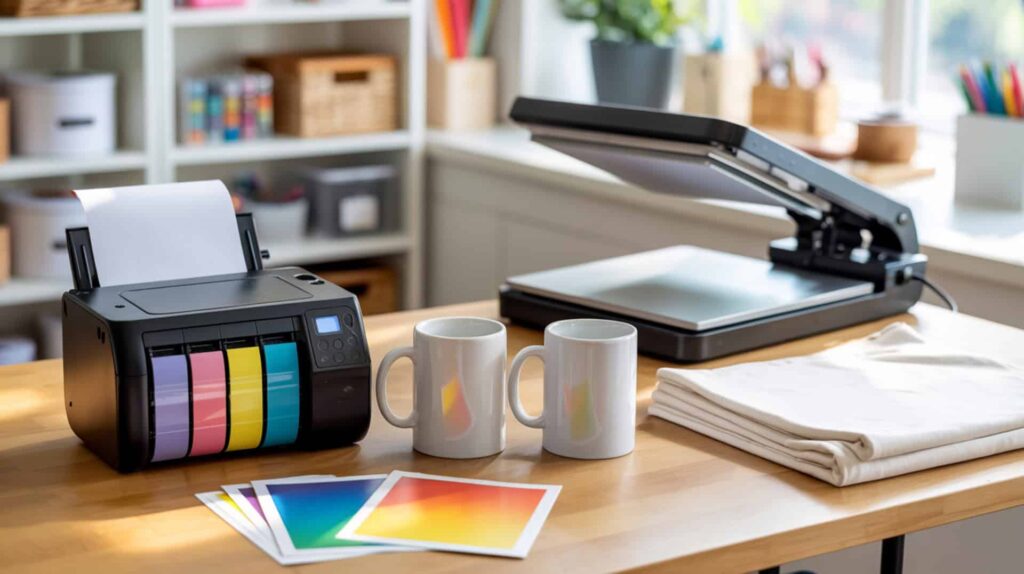
The Epson SureColor F170 is a purpose-built desktop sublimation printer that uses genuine sublimation ink designed for gas-phase heat transfer without requiring conversion. The piezoelectric printhead prevents ink degradation by firing droplets mechanically rather than thermally. According to test evaluations, the printer delivers results described as “really beautiful, super crisp” for photographs and “super bright and vibrant” for apparel, with setup to first completed project taking under 30 minutes. Because sublimation ink is designed for gas-phase transfer, understanding dye chemistry helps optimize print quality—review our guide on “Is sublimation dishwasher safe” for the complete science.
What print quality and performance can you expect from the Epson SureColor F170?
The F170 delivers exceptional color accuracy dependent on the genuine Epson ink formulation and automatically installed color profiles according to test documentation. At up to 1200 x 600 DPI resolution, test comparisons against the higher-DPI EcoTank 15000 showed no visible difference after transfer. Heat stability prevents fading, with transferred results described as vivid and consistent across t-shirts, tote bags, socks, mugs, and board books. Ink performance showed no splotchiness with even transfer across all tested substrates.
What are the pros and cons of the Epson SureColor F170 for beginners?
The F170 offers significant ease of use advantages suitable for beginners: no conversion required, color profiles install automatically with drivers, and color-coded keyed ink bottles prevent filling errors. Epson technical support plus 1-year limited warranty provides cost efficiency through lower waste and professional maintenance access. Ink meets OEKO-TEX safety standards for garment compliance. However, the $399 price exceeds converted EcoTanks by approximately $120, print head clogging requires weekly printing to prevent, and automated cleaning is not included—users wanting minimal maintenance should consider Sawgrass printers at $699.
How does the Epson SureColor F170 compare to converted EcoTank printers?
The F170’s factory-filled ink system provides significant advantages over converted EcoTanks according to PDI comparisons. Warranty coverage affects long-term risk—the F170 maintains Epson support while EcoTank conversion with third-party ink voids manufacturer coverage. Setup proves faster with included color profiles versus manual configuration on converted printers. The approximately $120 price premium over converted EcoTanks ($399 vs ~$279) buys warranty protection, technical support, and OEKO-TEX certified ink for commercial garment applications. You can find the Epson SureColor F170 here. [5]
Which Sublimation Printer Is the Best Fit for Your First Setup?
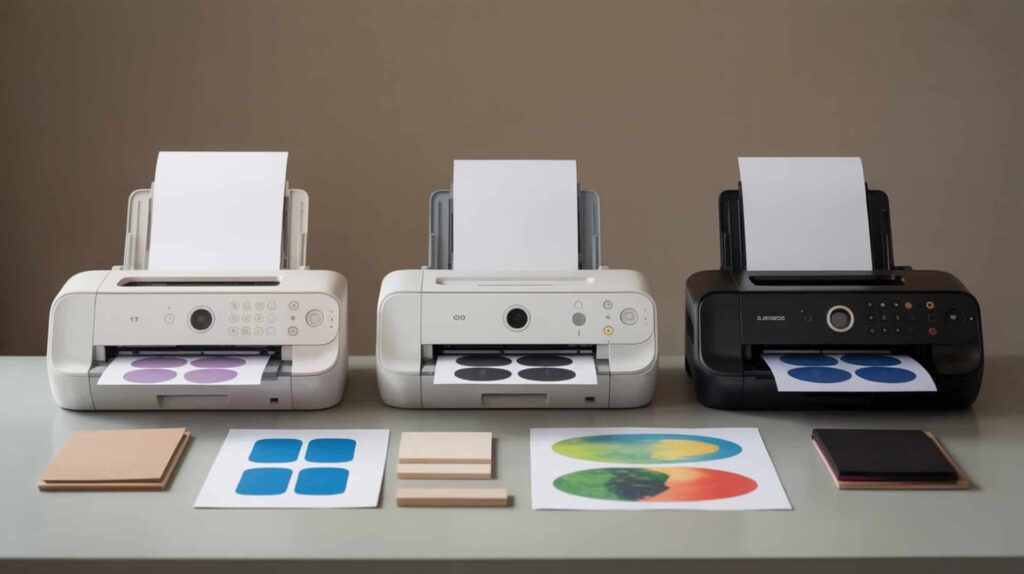
Selecting your first sublimation printer depends on matching budget constraints to print volume requirements while considering learning curve complexity. The Epson EcoTank 2803 at $179 and ET 2850 at approximately $200 offer the lowest entry cost but require conversion that voids warranty and risks clogging without weekly use. Both converted models produce professional-quality results suitable for hobbyists and small craft businesses. The Epson SureColor F170 at $399 eliminates conversion complexity with factory-optimized ink, automatic color profiles, warranty coverage, and OEKO-TEX certification for commercial garment production.
Ready to Start Your Sublimation Journey?
The Epson EcoTank 2803 and ET 2850 are not dedicated sublimation printers—they require conversion by filling with third-party sublimation ink before first use, which voids manufacturer warranty and creates clogging risks if not used weekly. Both models produce similar sublimation quality at budget-friendly prices around $179-$200, making them suitable for absolute beginners testing the craft. The Epson SureColor F170 is a purpose-built sublimation printer offering higher reliability, no conversion complications, warranty coverage, and OEKO-TEX certified ink at the $399 premium price point. I recommend the F170 as the best overall choice for beginners serious about sublimation, while budget-conscious crafters can successfully start with either EcoTank model understanding the conversion trade-offs involved.
Frequently Asked Questions
What is the best starter sublimation printer for complete beginners?
The Epson SureColor F170 is the best starter sublimation printer for complete beginners according to PDI analysis because it requires no conversion, includes color profiles automatically, and maintains warranty coverage. At $399, it costs approximately $120 more than converted EcoTanks but eliminates setup complexity. Budget beginners can alternatively start with the Epson EcoTank 2803 at $179 or ET 2850 at ~$200, accepting the conversion process and warranty void in exchange for lower initial investment.
What do you need to get started with sublimation printing at home?
Home sublimation requires a compatible sublimation printer (Epson EcoTank or dedicated F170), sublimation ink, sublimation paper (A-Sub or HTVRont brands work well), a heat transfer press, heat-resistant tape, Teflon sheets, butcher paper, and polymer-coated blanks. Settings typically require 385-400°F temperatures for 55-60 seconds depending on substrate. Printing weekly prevents ink clogs in converted printers.
Is buying a sublimation printer worth it for a small business?
A sublimation printer provides cost-effective custom product creation for small businesses according to test documentation. Sublimation prints are durable, do not peel or crack, and survive washing and dishwasher cycles. The Epson SureColor F170 at $399 offers OEKO-TEX certified ink suitable for commercial garment compliance. Heat transfer results described as “store quality” support professional product offerings with minimal per-item production costs using refillable ink systems.
Are sublimation printers good for printing custom t-shirts?
Sublimation printers produce excellent custom t-shirts on polymer-based fabrics according to test evaluations. Results were described as “crisp and vibrant,” “perfect,” and resembling “something you would buy in a store.” The heat transfer process creates permanent prints that do not peel, crack, or fade with washing. Shirts require 100% polyester or high polyester blends (93%+ tested successfully) since sublimation ink only bonds with polymer-coated substrates.
What is the best home printer for sublimation printing projects?
The best home sublimation printer depends on budget and commitment level. The Epson SureColor F170 at $399 provides the best overall experience with factory optimization, warranty coverage, and OEKO-TEX certified ink. Budget crafters achieve professional results with converted Epson EcoTank 2803 ($179) or ET 2850 (~$200) models. All three use piezoelectric printheads compatible with sublimation ink, unlike thermal inkjet printers from Canon, HP, Lexmark, and Dell which vaporize sublimation dye prematurely.
References:
- Sublimation and the water cycle. (2019, June 8). USGS. https://www.usgs.gov/water-science-school/science/sublimation-and-water-cycle
- Piezoelectricity. (2025, September 20). Wikipedia, the free encyclopedia. Retrieved February 2, 2026, from https://en.wikipedia.org/wiki/Piezoelectricity