Choosing the best sublimation designs depends on understanding how color harmony and contrast affect the final transferred product. Color harmony creates visual balance through coordinated color relationships that improve perceived print quality on substrates ranging from tumblers to mugs. Contrast ensures design legibility by maintaining clear separation between elements, which becomes critical after heat transfer when colors can shift or blend. Since color harmony and foundational design principles determine successful sublimation layouts, you may also want to read our hub article on how to make sublimation designs.
Key Takeaways
• Contrast in design prevents color blending during sublimation transfer, ensuring edges remain crisp and text stays readable on the finished product.
• Focal point placement creates clear visual priority that improves product appeal—strong visual anchors increase perceived value whether using abstract patterns or botanical themes. Human visual perception relies heavily on contrast differences, which directly affect how clearly shapes, patterns, and color boundaries are perceived. [2]
• PNG files with transparent backgrounds work best for sublimation, allowing flexible placement and layering regardless of design style chosen.
Are Abstract and Geometric Tumbler Wraps a Good Choice for Sublimation?
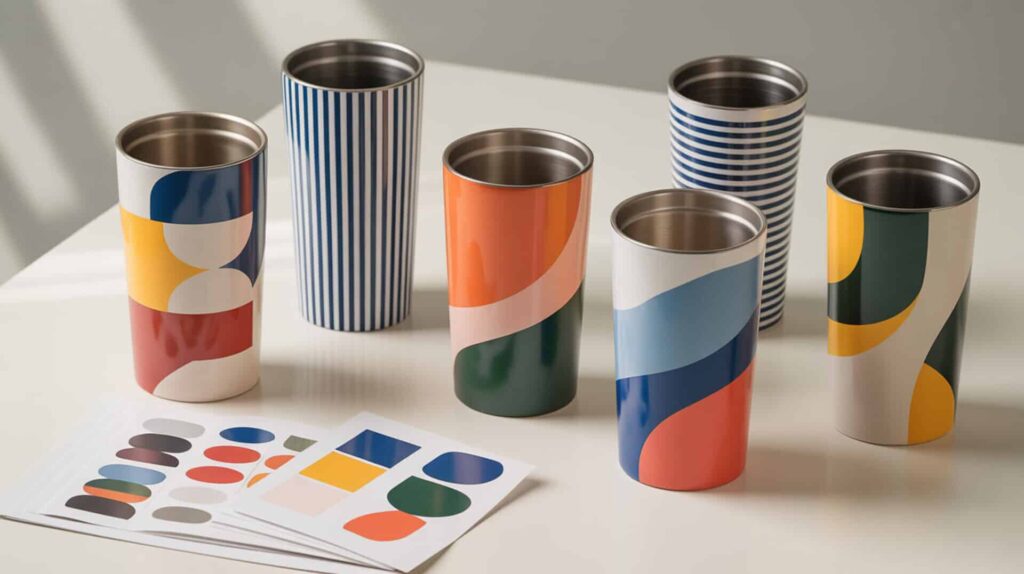
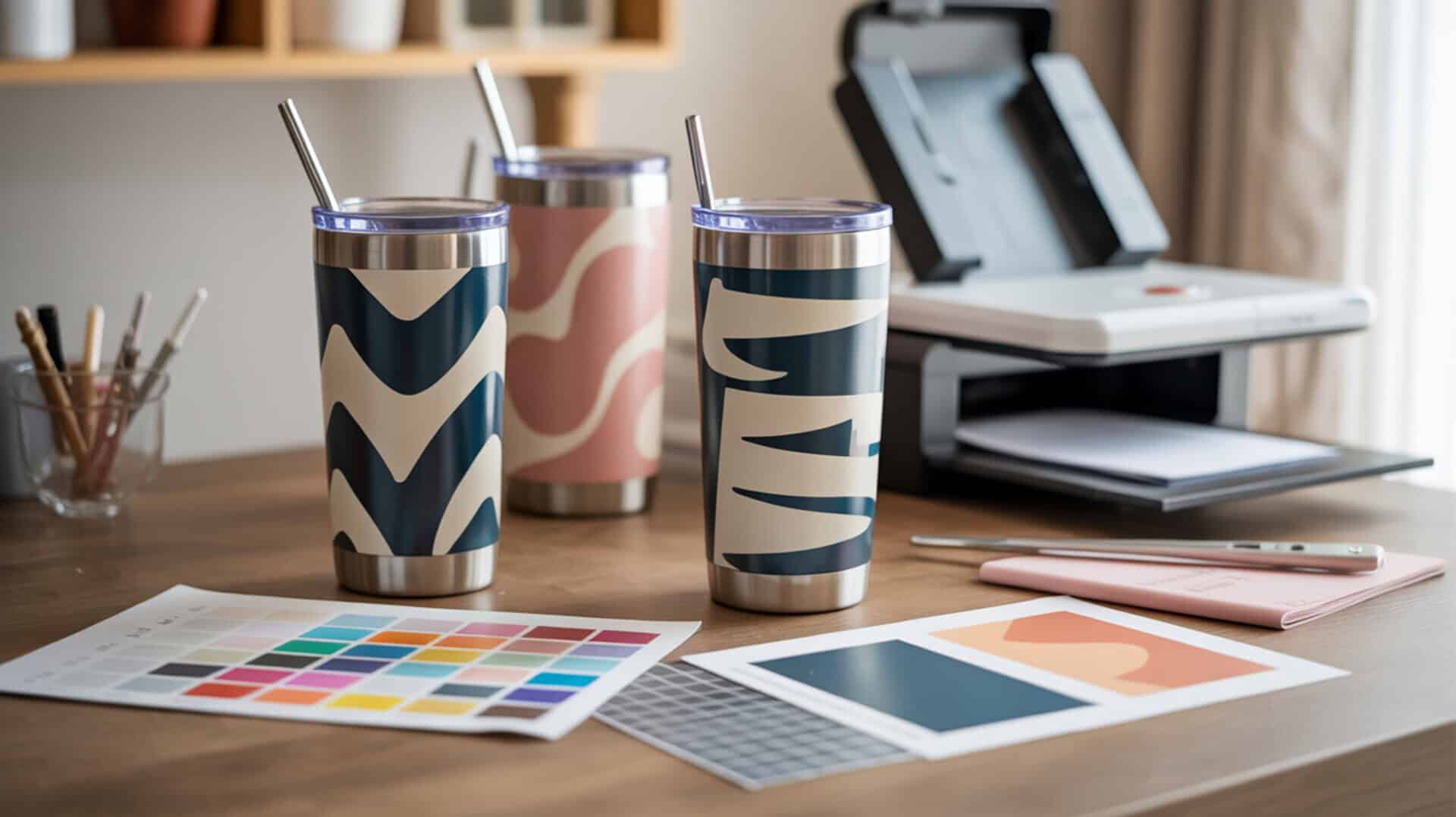
Abstract and geometric tumbler wraps offer structured visual patterns that leverage contrast and rule of thirds principles for balanced compositions on curved surfaces. According to demonstrated workflow testing, geometric wraps created in Creative Fabrica Studio at 883 × 768 pixels successfully transferred onto 20 oz skinny straight sublimation glossy tumblers at 350°F for approximately 2 minutes total (60 seconds, rotate, 60 seconds). Rule of thirds creates balanced layout through structured placement that improves wrap composition on curved tumbler surfaces. Contrast provides edge definition through sharp color separation that prevents visual distortion. Since both address layout control for wrapped or dimensional sublimation surfaces, you may also want to read our guide on rule of thirds application in 3D sublimation designs.
What kind of sublimation results can you expect from abstract and geometric tumbler wraps?
Based on demonstrated press testing, abstract and geometric tumbler wraps produce results the creator described as designs they “love how it turned out.” Contrast in the design maintains edge definition after transfer, preventing color bleeding between geometric shapes. Color harmony through coordinated palettes reduces banding after transfer—the tested design used a “foresty theme with stars” background combined with glitter-style graphic elements. The layered design approach (background, center graphic, additional elements grouped via layers panel) created visual depth. One issue observed: if the wrap width is slightly too wide, overlap creates a visible seam line after pressing.
⫸ Click Here For Best Selling Sublimation Printers And Products ⫷What are the pros and cons of using abstract and geometric designs for sublimation?
Abstract and geometric designs create strong focal points through bold visual anchors that improve perceived product value on tumblers and similar substrates. Main advantages include beginner-friendly design workflow in Creative Fabrica Studio (easy canvas sizing, search-based backgrounds and graphics, simple layer grouping), straightforward pressing method (350°F, 60 seconds + rotate + 60 seconds), and helpful preheating tip (preheat press with blank tumbler inside). Main drawbacks include overlap risk creating visible seam lines if wrap width is even slightly too wide, and a learning curve for tumbler application—the creator noted they’re “not the most savvy” tumbler maker but the process still worked successfully.
How do abstract and geometric tumbler wraps compare to other design styles?
Abstract and geometric designs use rule of thirds grid-based placement for consistent alignment across full-wrap designs, creating structured visual rhythm that differs from organic botanical layouts. The geometric approach suits users wanting bold, modern aesthetics with clear pattern repetition and sharp color transitions. Creative Fabrica Studio offers web-based editing with AI art generation, backgrounds, patterns, fonts, thousands of templates, a free vectorizer tool, and the ability to upload personal files for customization. Alternative pressing methods include plastic sleeves with heat gun for a “shrink wrap” effect providing tighter seal and easier application. You can find abstract and geometric tumbler wrap designs here. [3]
How Well Do Botanical and Nature-Inspired Designs Work for Sublimation Projects?
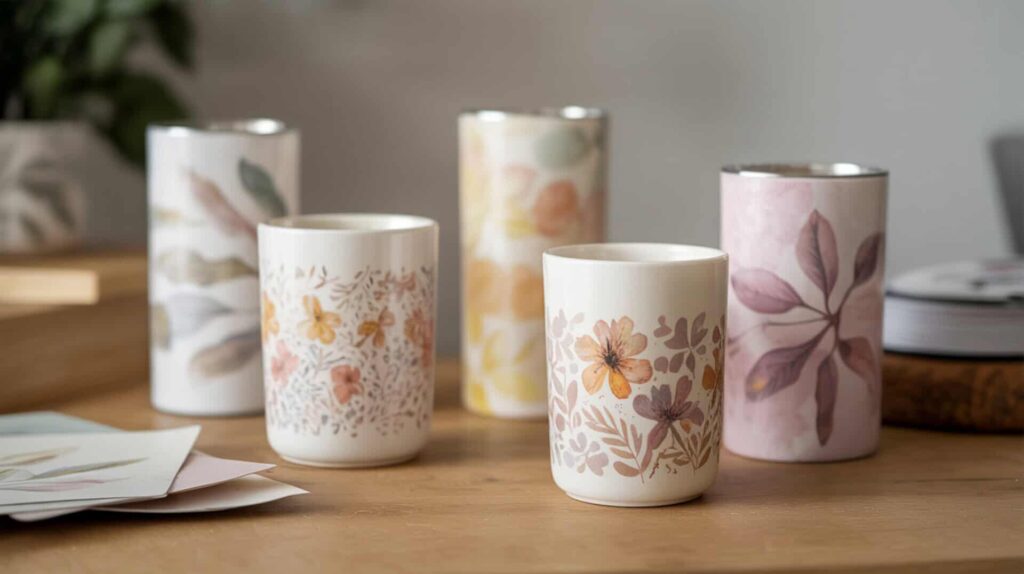
Botanical and nature-inspired designs create organic visual appeal through color harmony and texture that simulate depth and natural surfaces after sublimation transfer. According to demonstrated workflow testing, botanical designs using vine and swirl-style elements transferred successfully onto mugs using Cricut Mug Press with infusible ink sheets. Texture creates depth illusion through layered visuals that simulate fabric or natural surfaces after transfer. Color harmony through natural palettes reduces visual harshness on finished products. Since both focus on visual richness and surface realism in sublimation designs, you may also want to read our guide on texture application in sublimation printing design ideas.
What sublimation print quality can you achieve with botanical and nature-inspired designs?
Based on demonstrated mug press testing, botanical designs produce successful transfers with no reported adhesion or transfer quality issues. Simulated texture in botanical elements creates perceived detail without physical embossing—vine and swirl patterns add visual depth that appears dimensional after pressing. The workflow used Cricut Design Space mug templates matched to mug size, with botanical designs positioned, duplicated to both edges, and refined using Slice and Contour tools. The design was cut from infusible ink sheets, weeded by hand without tools (cracking and peeling void sections), wrapped tightly with tape, and pressed in the Cricut Mug Press for a complete, successful first-time result.
What are the pros and cons of botanical sublimation designs?
Botanical designs leverage color harmony through natural palettes that reduce color clash on finished products, creating softer visual appeal than bold geometric patterns. Main advantages include beginner-friendly design process in Cricut Design Space, flexible botanical layout control (easy duplication, slicing, and contour editing), tool-free weeding (infusible ink sheets peel by hand), clear mirroring emphasis reducing common sublimation mistakes, and stable application tip using EasyPress mat to prevent mug rolling during placement. Main drawbacks include repetitive design process (requires repeated searching, slicing, and adjusting), potential placement errors (creator notes having previously placed designs upside down), and no manual temperature/time control (handled automatically by Mug Press).
How do botanical and nature designs compare to other sublimation design themes?
Botanical designs create organic focal placement with softer visual hierarchy than geometric styles, appealing to users wanting natural, calming aesthetics rather than bold modern patterns. The focal point placement in botanical layouts draws attention through flowing curves and organic shapes rather than sharp geometric anchors. Cricut Design Space offers mug-specific templates, image library access (including Cricut Access), and tools including Slice, Duplicate, Contour, Attach, and Mirror for building layered botanical layouts. Materials include infusible ink sheets, Cricut Mug Press, EasyPress mat, and heat-resistant tape. Infusible ink designs must be mirrored, do not require weeding tools, and are wrapped tightly with tape before pressing. You can find botanical and nature-inspired sublimation designs here. [4]
Which Sublimation Design Style Will Work Best for Your Projects?
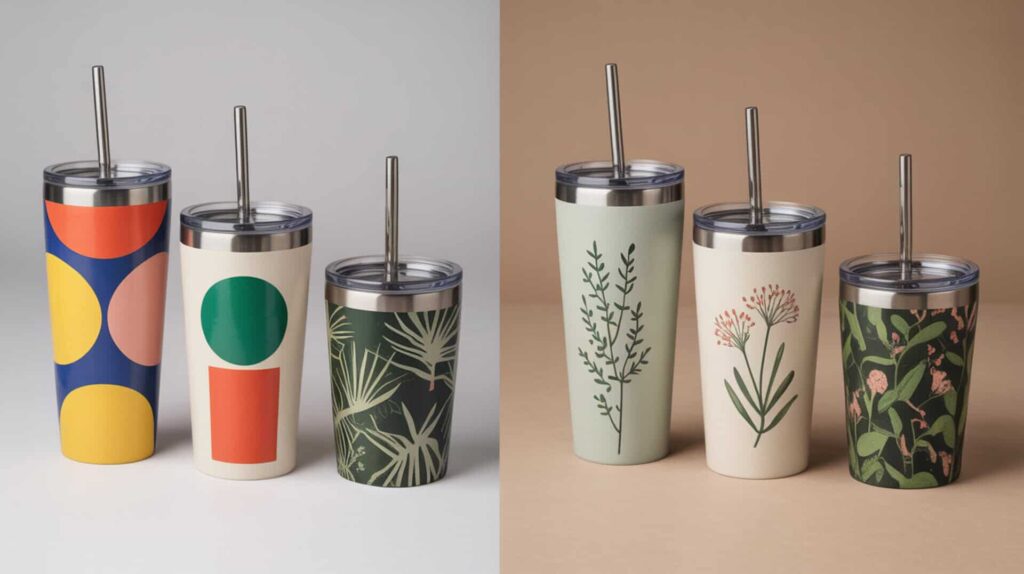
Focal point strength and contrast level determine optimal design style selection based on your product type and target aesthetic. Design intent drives style selection: products targeting modern, bold markets benefit from abstract geometric patterns with strong contrast and grid-based layouts, while products targeting natural, calming markets benefit from botanical themes with organic color harmony and flowing focal points. Abstract geometric tumbler wraps suit users wanting structured patterns with clear visual rhythm on curved surfaces—ideal for tumblers, water bottles, and cylindrical products. Botanical designs suit users creating mugs, home décor, and gifts with organic, nature-inspired appeal. Overall, I recommend abstract and geometric tumbler wraps for beginners due to the simpler Creative Fabrica Studio workflow, forgiving pattern alignment (small errors blend into abstract designs), and straightforward 350°F/2-minute press settings that produced successful results even for self-described “not most savvy” users.
Frequently Asked Questions
What is the best image format and resolution for sublimation printing?
PNG files work best for sublimation, especially those with transparent backgrounds when applicable. Transparent backgrounds allow flexible placement and layering on various substrate colors. Resolution combined with contrast prevents detail loss during transfer—higher resolution maintains edge sharpness when designs include fine texture simulation or small text. The tested tumbler wrap used 883 × 768 pixel canvas size for a 20 oz skinny tumbler, providing adequate detail for the curved surface application. Higher image resolution preserves detail and edge clarity, ensuring designs remain sharp when scaled and transferred from digital screens to physical prints.[1]
Where do you get high-quality designs for sublimation projects?
You can get sublimation designs from online marketplaces like Etsy, Design Bundles, and Creative Fabrica, which offer both free and paid options from various designers. Other resources include dedicated design sites like So Fancy and The Hungry JPEG, and digital creation tools with built-in libraries such as Canva. Creative Fabrica offers a subscription-based massive library including a large freebie area. Cricut Design Space and Silhouette Studio provide downloadable files usable for sublimation printing. Buy from original designers to avoid fake shops.
What sublimation designs and products are popular right now?
Ceramic mugs are a classic for sublimation because prints always turn out so well—the smooth polymer-coated surface accepts dye transfer with consistent results. Tumbler wraps (especially 20 oz skinny straight styles) remain popular for their visual impact and gift appeal. Both abstract geometric patterns and botanical nature-inspired themes perform well in current markets. Texture simulation adds perceived quality to designs without affecting press settings, making layered botanical and textured geometric designs particularly appealing to buyers.
What type of sublimation printing is most profitable for small businesses?
Art prints and posters offer significant profit margins for large prints, providing an excellent way for artists and small businesses to reach new audiences. Whether selling custom-designed artwork or themed prints, larger format sublimation products command higher prices. For smaller operations, ceramic mugs and tumblers provide consistent sales volume with lower per-unit production costs. Contrast in design ensures print clarity that maintains perceived quality across product lines, supporting premium pricing.
Where can you purchase ready-made custom sublimation prints online?
Ready-made sublimation prints and design files are available on Etsy (wide variety from independent artists), Design Bundles (large selection with freebie section), Creative Fabrica (subscription-based massive library), The Hungry JPEG (designs and bundles with freebies), So Fancy (SVG files and sublimation designs), and Krella Marketplace (membership access to entire shop). Bloggers and crafters like Hey Let’s Make Stuff also provide free sublimation files. Always verify PNG format and appropriate resolution for your intended substrate size.
References
- Photography for the web. (2025, October 15). College of Liberal Arts College of Liberal Arts – Purdue University. https://www.cla.purdue.edu/resources/digital-media/knowledge-base/best-practices/photography-for-the-web.html
- Just a moment... (n.d.). Just a moment… https://www.pnas.org/doi/10.1073/pnas.210369597