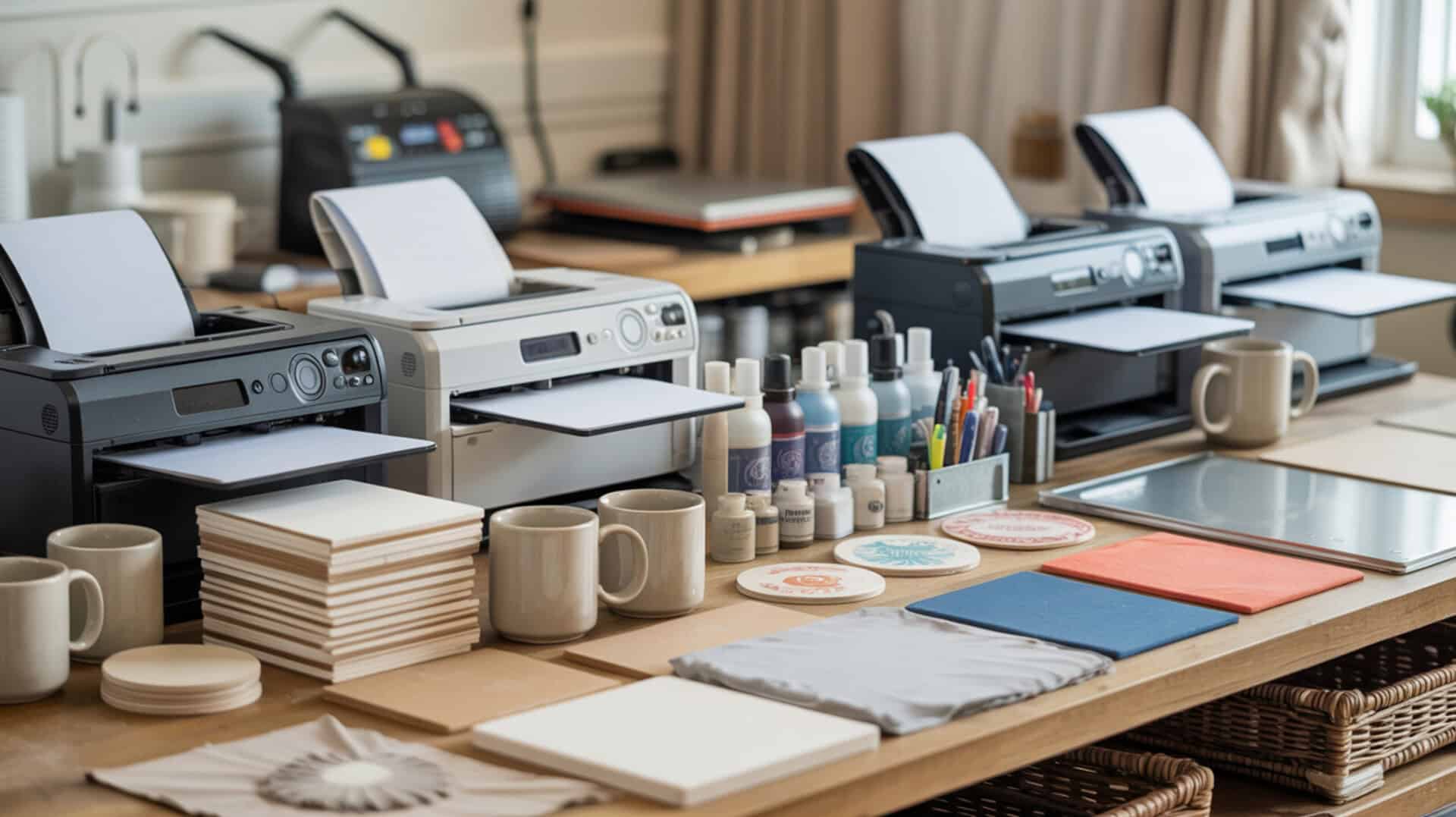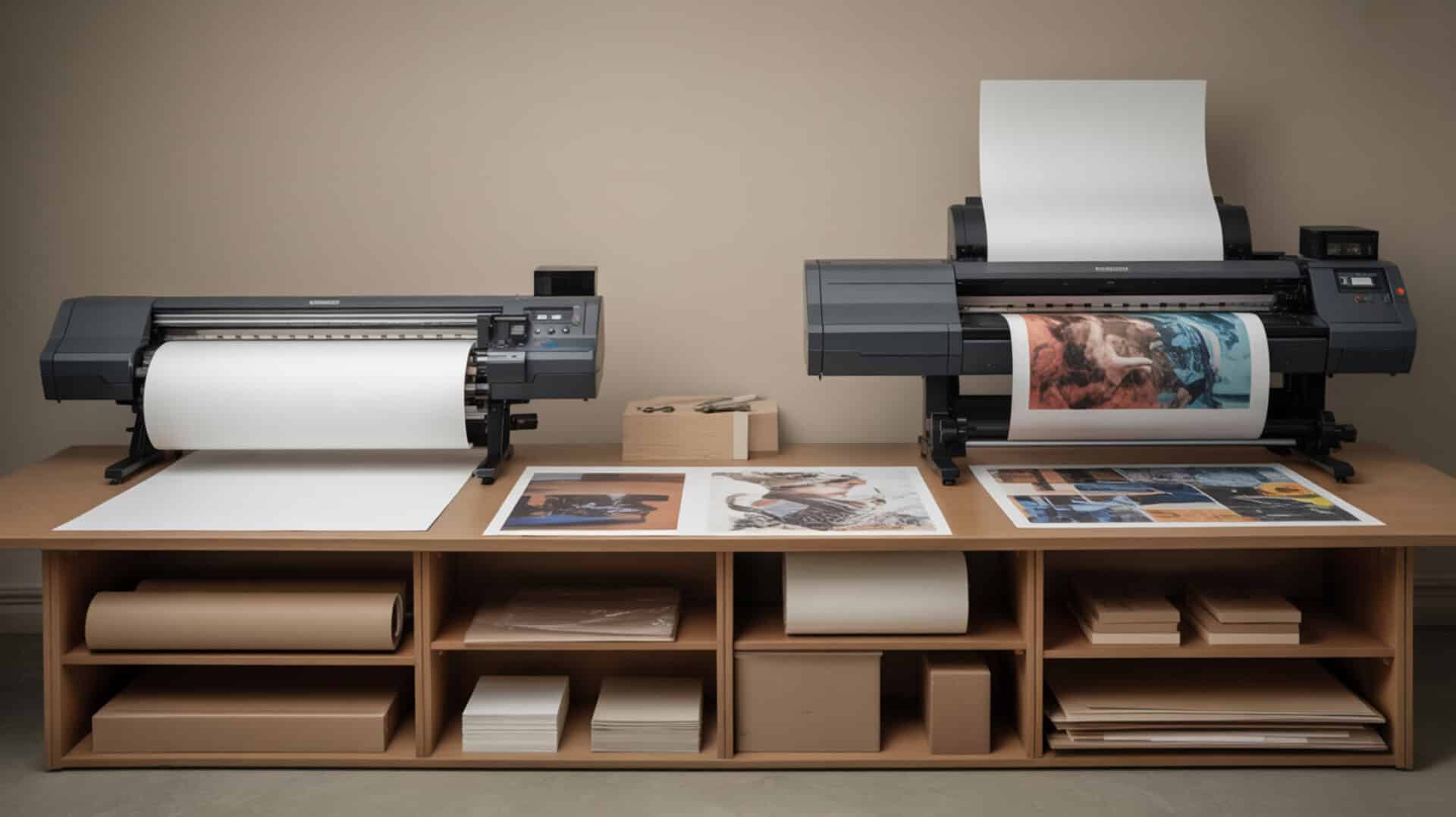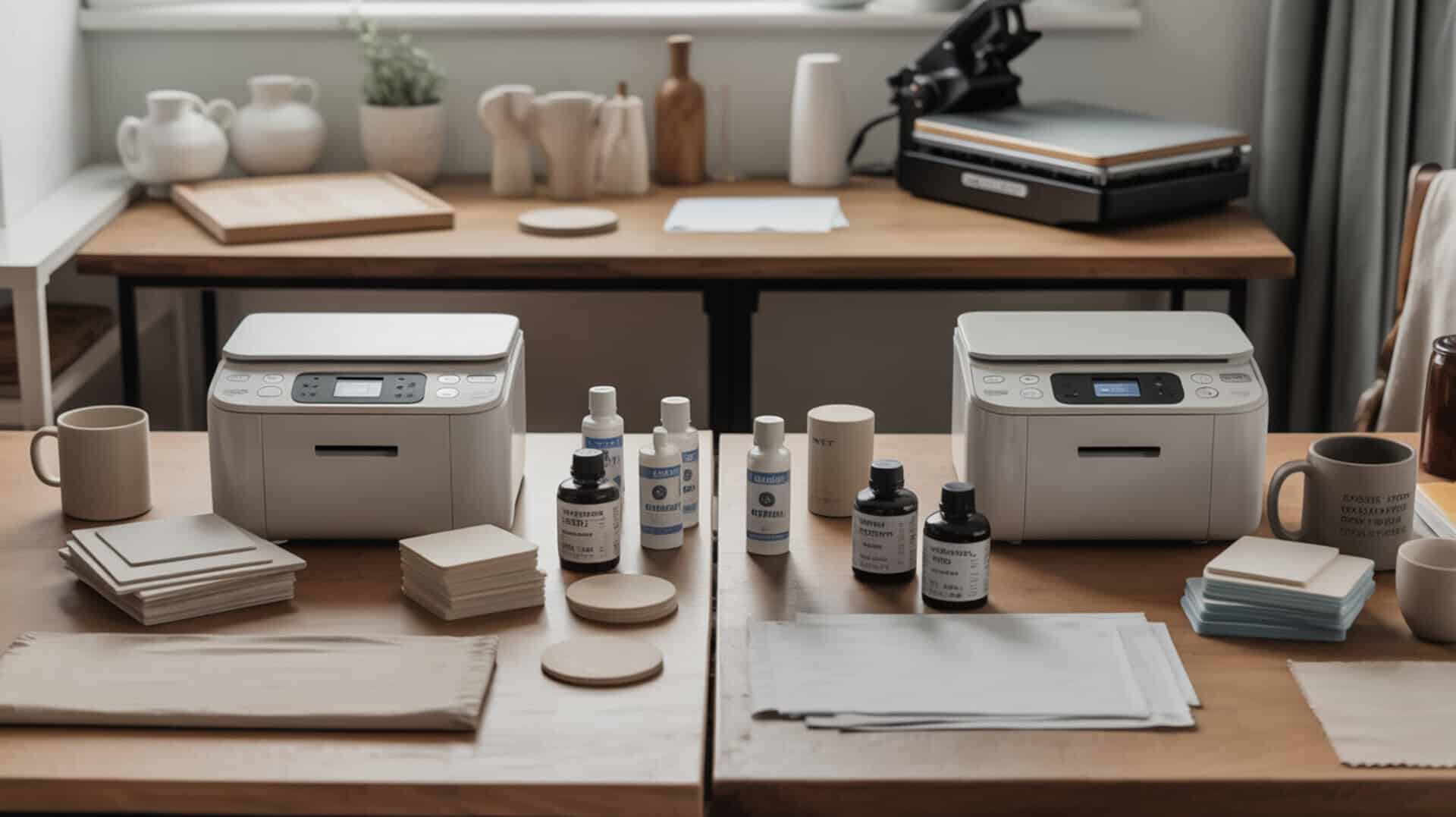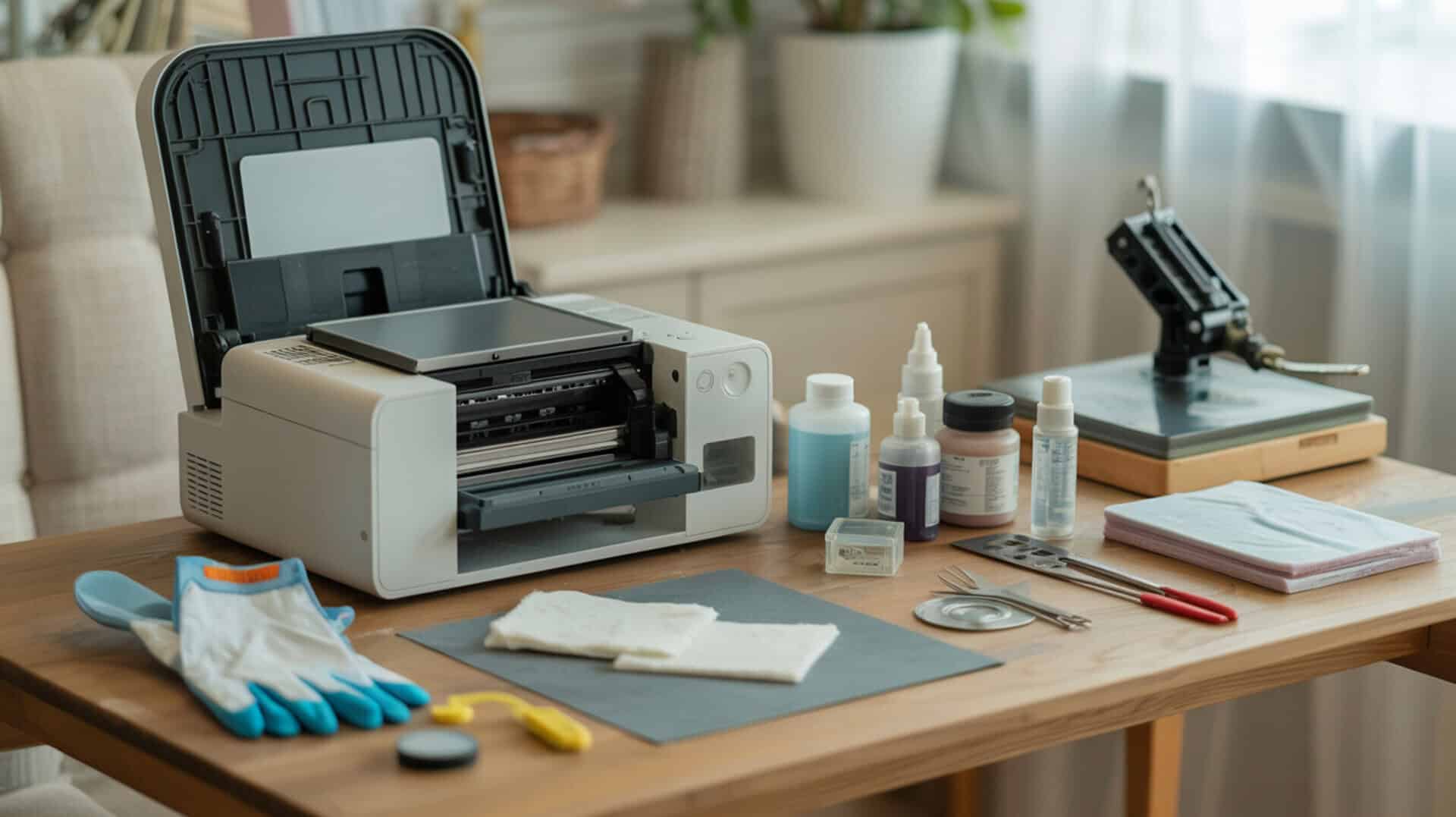
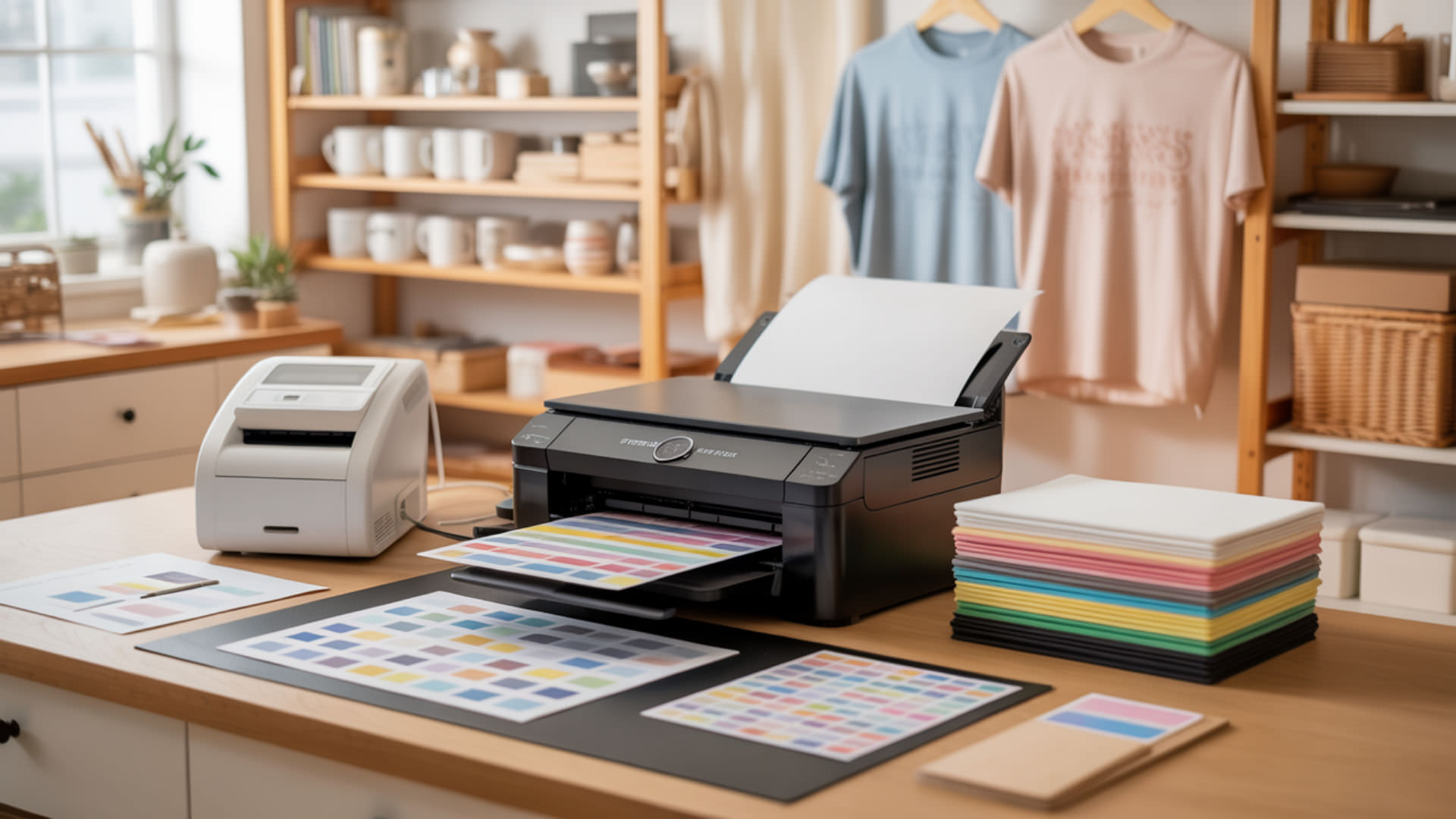
Choosing between heat transfer paper and sublimation paper determines how your design bonds with fabric—either as a surface film or embedded dye. Heat transfer paper uses an adhesive polymer film that melts onto material surfaces, while sublimation paper enables gas-phase dye transfer that infuses directly into polyester fibers. Understanding sublimation paper coating chemistry and substrate requirements—covered in our complete sublimation paper guide—helps you select the right transfer method for each project.
Key Takeaways
- Sublimation paper releases disperse dyes as gas that bonds within polyester fibers, creating wash-resistant prints with no tactile layer.
- Heat transfer paper deposits an adhesive film on fabric surfaces, enabling transfers on cotton and dark materials but risking cracking over time.
- Paper selection depends on substrate type, desired durability, and whether you need the soft hand feel of sublimation or the material versatility of heat transfer.
Is sublimation better than heat transfer?
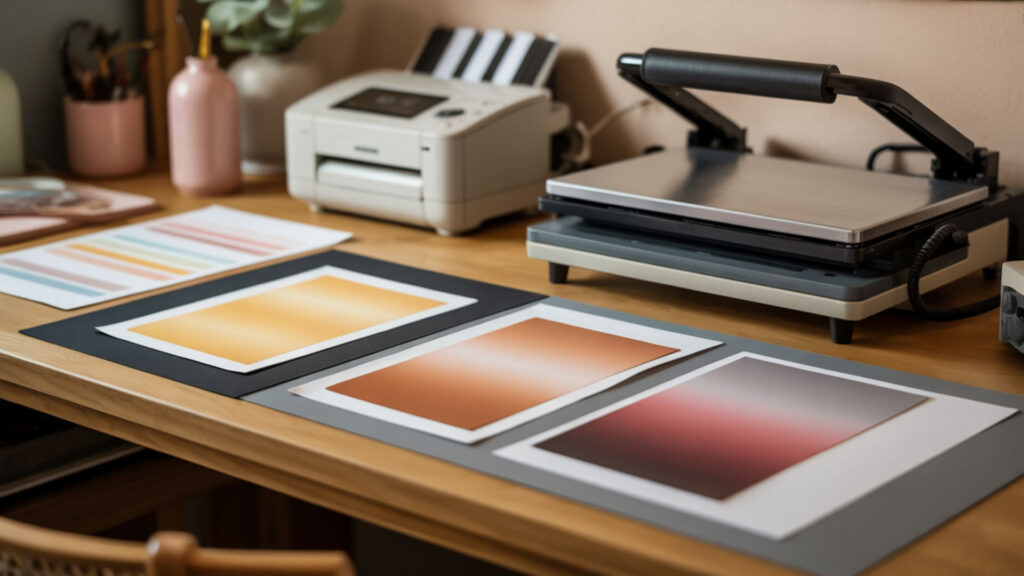
Sublimation produces superior print durability and wash resistance on polyester—dyes infuse into fibers rather than sitting on surfaces, eliminating the texture/hand feel that heat transfer creates. Sublimation prints resist cracking and fading through 100+ wash cycles, while heat transfer films may deteriorate after 30–50 washes. However, heat transfer works on cotton and dark fabrics where sublimation fails entirely. For paper recommendations that maximize print durability advantages, see our sublimation paper buying guide. Polyester fibers have a synthetic polymer structure that allows dyes to penetrate and bond within the fiber rather than remaining on the surface. [1]
Is sublimation printing the same as heat transfer printing?
Sublimation and heat transfer printing represent fundamentally different technologies despite both using heat presses. Sublimation converts disperse dyes into gas-phase transfer that penetrates polyester fibers at the molecular level—no physical layer exists on the finished product. Heat transfer applies a film transfer that adheres to fabric surfaces through adhesive melting. The distinction: sublimation embeds color within materials; heat transfer deposits color onto materials.
What is the main difference between sublimation and heat transfer printing?
Disperse dyes in sublimation ink vaporize at 380–400°F and bond chemically with polymer chains inside polyester fibers, becoming permanent parts of the material structure. Heat transfer uses an adhesive polymer layer that melts under heat and bonds on top of cotton, polyester, or blended fabrics. Sublimation creates invisible, integrated prints; heat transfer creates visible, tactile films that sit above the original fabric surface.
What is the difference between sublimation paper and heat transfer paper?

Sublimation paper features specialized paper coating designed to hold disperse dyes at the surface and release them as vapor during heat pressing. Heat transfer paper carries an adhesive film layer that physically transfers to fabric, bonding through melt adhesion rather than gas diffusion. The coating determines release behavior: sublimation coatings enable gas-phase transfer; heat transfer adhesives create physical layers. Both articles discussing coated paper performance appear in our sublimation vs copy paper comparison. Adhesive polymer films bond to surfaces through melt adhesion, forming a physical layer rather than integrating into the material structure. [2]
What is the difference between transfer paper and sublimation paper?
Sublimation paper’s barrier coating prevents dye absorption into cellulose fibers, maintaining hydrophobicity that keeps ink at the surface until heat triggers vaporization. Standard transfer paper lacks this barrier—its design focuses on adhesive delivery rather than dye release. The coating structure creates opposite behaviors: sublimation paper releases content as gas; transfer paper deposits content as solid film layers bonded through adhesive chemistry.
Do the papers work differently in the printing process?
Heat and pressure activate both paper types differently based on melt point thresholds and transfer mechanisms. Heat transfer paper requires temperatures that melt the adhesive polymer layer (typically 300–350°F), creating film-to-fabric bonds. Sublimation paper needs higher temperatures (380–400°F) that convert solid dye to gas, enabling vapor penetration into polyester. Pressure ensures contact; heat triggers the specific chemical process each paper type requires.
Can sublimation ink or regular ink be used on heat transfer paper?
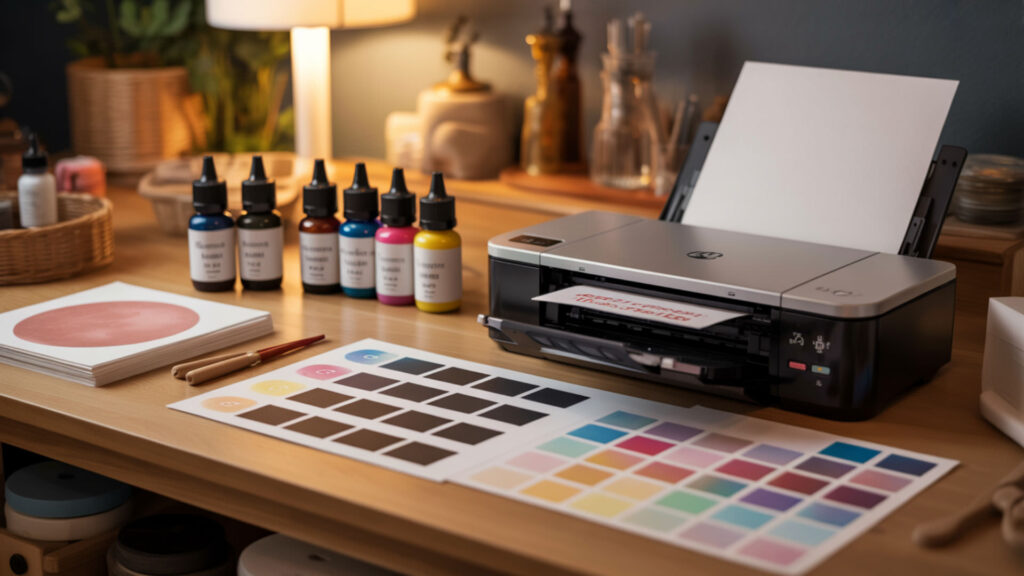
Disperse dyes in sublimation ink require gas-phase bonding with polymer substrates—a process incompatible with heat transfer paper’s adhesive curing mechanism. Pigment ink sits on surfaces and works with heat transfer’s adhesive polymer layer because bonding occurs through film adhesion rather than vapor diffusion. Using sublimation ink on heat transfer paper produces poor results: the dyes cannot vaporize properly through the adhesive layer, causing faded, incomplete transfers.
Can regular ink be used on heat transfer paper safely?
Standard pigment ink functions effectively with heat transfer paper because the transfer mechanism relies on adhesive bonding rather than ink chemistry transformation. The pigment ink deposits onto the adhesive polymer layer during printing; heat pressing then melts the adhesive, transferring both film and ink to fabric. Dye-based inks work for light fabrics; pigment-based inks provide better durability, especially for designs requiring frequent washing.
Do you need special inks for heat-based transfer printing?
Heat transfer paper accommodates regular inkjet or laser printer inks because the adhesive—not the ink—creates the fabric bond. Heat activates the adhesive polymer, which carries the printed image to the substrate surface. Special inks become necessary only for sublimation, where disperse dyes must vaporize and bond chemically with polyester. For standard heat transfer, ink quality affects image sharpness and fade resistance, but specialized formulations aren’t required for the process to work.
How do you compare sublimation vs heat transfer step-by-step?
Both methods require design printing, positioning, and heat pressing, but the transfer physics differ entirely. Film transfer in heat transfer paper occurs when pressure and heat melt the adhesive layer, bonding it to fabric surfaces as a physical coating. Gas-phase transfer in sublimation happens when heat converts solid dye to vapor that penetrates polyester fibers under pressure. Sublimation requires mirror-printing; heat transfer paper types vary in orientation requirements.
Which printing method lasts longer, heat transfer or sublimation?
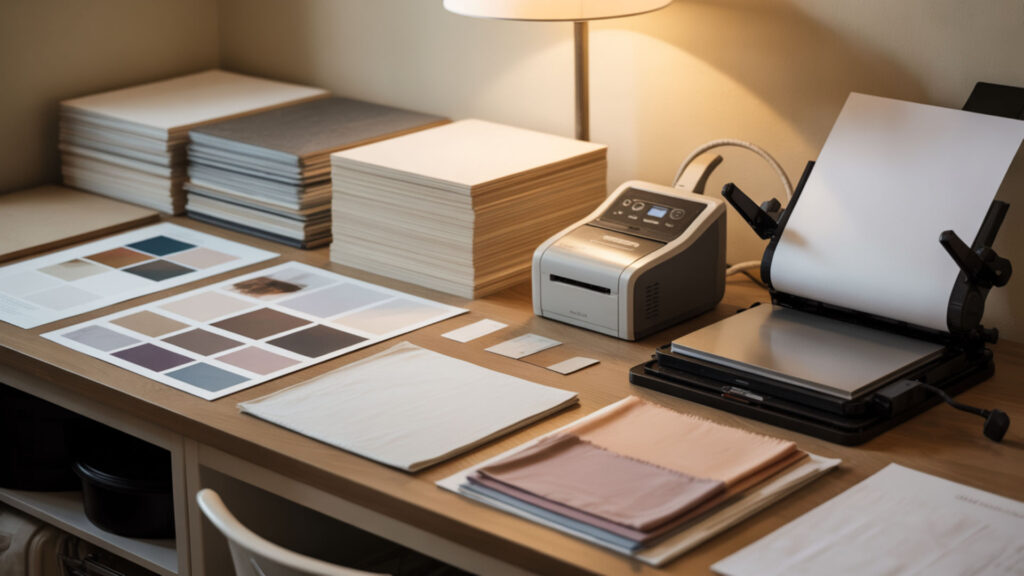
Sublimation demonstrates superior print durability and color vibrancy longevity—prints withstand 100+ wash cycles without cracking, peeling, or significant fading because dye exists within fiber structures. Heat transfer prints typically maintain quality through 30–50 washes before the adhesive film shows degradation. Surface-applied films experience mechanical stress during washing and wearing that embedded dyes avoid. For maximum longevity on polyester substrates, sublimation outperforms heat transfer significantly.
Is heat transfer paper permanent once pressed?
Heat transfer achieves semi-permanent results through adhesive curing that bonds the polymer film to fabric surfaces. The adhesive creates durable attachment, but wash resistance depends on film integrity rather than molecular integration. Over time and repeated washing, the cured adhesive may degrade, causing edges to lift or the entire transfer to crack. Proper application technique and fabric care extend longevity, but the fundamental surface-bond structure limits ultimate durability.
How durable is heat transfer printing over time?
Heat transfer prints experience progressive cracking and fading as the adhesive film ages through wash cycles, heat exposure, and mechanical wear. The surface-mounted film lacks the structural protection that embedded sublimation dyes enjoy within fiber matrices. Expect visible degradation after 30–50 washes: micro-cracks form, edges lift, and colors dull. Quality heat transfer papers and proper application extend lifespan, but the adhesive-film mechanism inherently limits longevity compared to fiber-infused sublimation.
Can regular printers handle both sublimation paper and heat transfer paper?
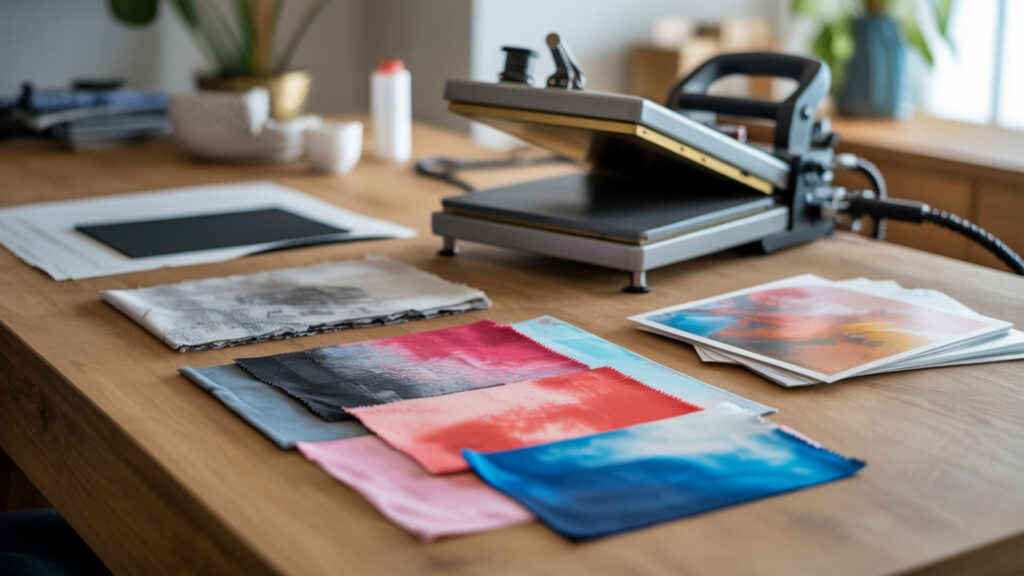
Heat transfer paper works with standard inkjet and laser printers because the transfer relies on adhesive properties rather than specialized ink chemistry. Sublimation paper requires sublimation-specific printers or converted inkjets loaded with disperse dye inks—regular printer ink cannot vaporize and bond with polyester. Moisture content, porosity, and cellulose structure affect feed reliability for both paper types, but ink compatibility creates the fundamental limitation. Proper paper coating identification—essential for both paper types—appears in our print-side guide.
Do you need a special printer for sublimation paper?
Sublimation absolutely requires printers loaded with disperse dyes formulated to vaporize during heat pressing and bond with polymer fibres. Standard inkjet and laser inks lack the chemical properties necessary for gas-phase transfer—they remain solid, producing smeared or faded results on sublimation paper. Dedicated sublimation printers (Sawgrass, Epson SureColor) or converted Epson EcoTank models with sublimation ink provide the specialized output sublimation paper requires.
Is sublimation or heat transfer better for dark shirts?

Heat transfer paper works significantly better for dark shirts because its opaque adhesive layer covers the underlying fabric color. Sublimation fails on dark fabrics: disperse dyes are transparent and require white polyester substrates to reflect color—dark fibers absorb the transferred dye, rendering designs invisible. Cotton compatibility adds another heat transfer advantage, as sublimation cannot bond with natural fibers regardless of color.
What causes failed color transfer when using sublimation or heat transfer paper?
Sublimation failures typically stem from inadequate gas flow during pressing—insufficient temperature prevents complete dye vaporization, while poor pressure limits vapor penetration into polyester fibers. Heat transfer failures result from incomplete adhesive curing when melt temperatures aren’t reached or maintained. Both processes require precise heat-press calibration: sublimation needs 380–400°F for 45–60 seconds; heat transfer typically requires 300–350°F for 15–30 seconds depending on paper specifications.
Why does heat transfer paper sometimes fail to stick to fabric?
Adhesive bonding fails when the melt point isn’t reached during pressing—the polymer layer remains solid rather than flowing into fabric texture. Insufficient pressure compounds the problem by limiting adhesive-to-fabric contact area. Other factors include moisture in fabric (prevents adhesion), water-repellent fabric treatments (reject adhesive), incorrect peel timing (hot vs. cold peel specifications), and inadequate press duration. Pre-pressing fabric for 5 seconds removes moisture and improves adhesive performance.
Ready to choose between sublimation and heat transfer?
Sublimation delivers unmatched durability and soft hand feel on white polyester substrates—ideal for all-over prints, photographs, and designs requiring wash resistance. Heat transfer paper offers material versatility for cotton, blends, and dark fabrics where sublimation cannot function. Match your paper choice to substrate requirements: polyester projects favor sublimation’s embedded color; mixed-material or dark-fabric work requires heat transfer’s adhesive-film approach.
Frequently Asked Questions
Can sublimation paper or heat transfer paper be used more than once?
Neither paper type supports reuse after heat pressing. Sublimation paper releases its dye-holding coating capacity during the single gas-phase transfer—subsequent pressings produce negligible color with potential ghosting. Heat transfer paper’s adhesive film physically transfers to fabric, leaving depleted carrier material. Both papers function as single-use transfer media; attempting reuse wastes time and risks contaminating substrates with incomplete, low-quality transfers.
Does sublimation ink stain the printer system if swapped incorrectly?
Mixing sublimation ink with regular inkjet ink causes contamination that degrades print quality and may clog printheads permanently. Sublimation ink residue in standard printer lines produces color shifts and inconsistent output; regular ink in sublimation systems prevents proper dye vaporization. Converting printers requires starting with brand-new, unused units—flushing used printers rarely eliminates contamination sufficiently for reliable sublimation results.
How long can printed transfers sit before ink drying becomes an issue?
Sublimation transfers remain viable for months when stored properly in sealed containers away from humidity, light, and temperature extremes. The coating holds dried ink stable until heat activates gas-phase release. Heat transfer prints also store well in cool, dry conditions. Moisture content changes during storage affect both paper types—humidity absorption causes curling, color shifts, and transfer quality degradation. Seal unused prints in plastic with desiccant packets.
What are early signs that sublimation or heat transfer paper was loaded incorrectly?
Wrong-side printing produces immediately visible symptoms: sublimation ink absorbs into uncoated backing, appearing dull and smeared rather than sitting crisply on the coated surface. Heat transfer paper loaded adhesive-side-down prints normally but fails during pressing—the image remains on the carrier rather than transferring to fabric. Check for coating smoothness (sublimation) or adhesive texture (heat transfer) before loading to prevent expensive material waste.
Can a flushed or converted printer still be used for sublimation afterward?
Previously used printers rarely convert successfully to sublimation because residual standard ink in printheads, lines, and internal pads contaminates sublimation output. Even thorough flushing leaves traces that cause color inconsistency and reduced vibrancy. Successful sublimation conversion requires brand-new, never-inked Epson EcoTank printers filled exclusively with sublimation ink from first use. Attempting to salvage used equipment typically produces frustrating results that waste sublimation supplies.
References
- NC state online and distance education. (n.d.). NC State Online and Distance Education. https://online-distance.ncsu.edu/?gad_source=1&gad_campaignid=23358671479&gbraid=0AAAAAomlLPrtjQlOVC8Vfvmsfyr5PP0QU&gclid=Cj0KCQiAgP_JBhD-ARIsANpEMxyFx4rSBuhjElC0LrtAM-BdhKTJ1mGB96URJIAcsew6J2pYPrb693AaAlBYEALw_wcB
- (2025, September 2). NIST. https://www.nist.gov/