Printing neon colors with sublimation presents unique challenges because most neon RGB values fall outside the printable gamut of standard CMYK inks. These out-of-gamut colors exceed what sublimation systems can physically reproduce. Your ICC profile determines how these unprintable neon tones compress into achievable alternatives through gamut mapping. Understanding gamut limitations connects to broader color control fundamentals covered in our sublimation color management guide.
Key Takeaways
- Gamut clipping forces printers to replace unprintable neon tones with duller alternatives within an achievable color range.
- High saturation neon colors exceed CMYO capabilities, triggering automatic compression that reduces intended vibrancy.
- Specialized fluorescent sublimation inks expand gamut boundaries, enabling closer approximation of true neon effects.
Can Printers Actually Produce True Neon Tones in Sublimation?
True neon colors exist at the spectral locus—the boundary of human-visible wavelengths—beyond what any printer gamut can reproduce. Neon requires extreme excitation purity that CMYK ink combinations cannot achieve. The relationship between saturation limits and print quality affects all vibrant colors, which our guide on best picture quality for sublimation explains. Standard sublimation inks produce approximations, not authentic neon fluorescence. Neon colors sit near the outer boundary of the visible spectrum, where wavelengths reach extreme saturation levels that reflective print systems cannot physically reproduce.[1]
Can Printers Print Neon Colors at All?
Standard sublimation printers cannot print true neon colors—they produce the closest achievable match instead. Gamut clipping replaces unprintable neon values with nearest printable hues automatically. Your ICC profile’s rendering intent determines how clipped colors translate: perceptual intent preserves relationships while colorimetric intent prioritizes accuracy for in-gamut areas.
How Do You Get Bright Greens, Teals, and Neon Tones in Sublimation?
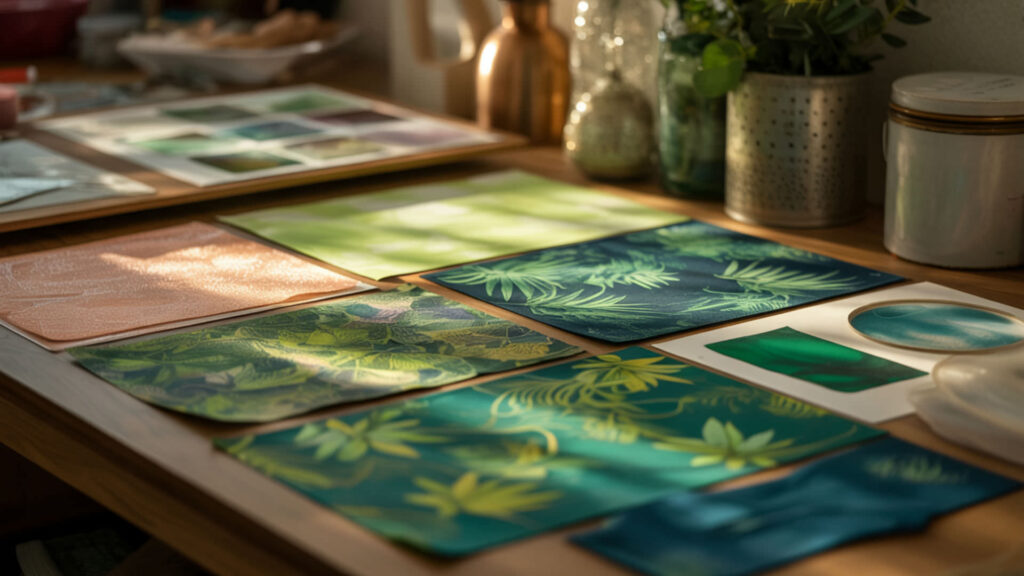
Bright greens and teals represent achievable alternatives when true neon falls out of gamut. Design in RGB color model, then let gamut mapping compress values into CMYO reproduction limits. The mapping algorithm blends unprintable neon toward closest printable teal and green hues. Maximize saturation in design software while accepting that final output cannot match screen brightness. Tips for achieving the best color accuracy and print quality, including proper use of RGB color model and gamut mapping, appear in our Best Picture Quality For Sublimation guide.
Can Neon Colors Be Printed Using CMYK Limitations?
CMYO sublimation inks cannot achieve neon chroma levels visible in RGB displays. The limited saturation of subtractive ink mixing restricts maximum vibrancy. Hue shifts occur when gamut compression remaps neon values—bright pink may shift toward magenta, electric green toward teal. Accept these shifts as inherent limitations.
What Neon Tones Are Most Achievable in Sublimation Prints?

Bright yellows, oranges, and certain greens sit closest to the gamut boundary, making them most achievable pseudo-neon tones. Increasing print density enhances vibrancy by depositing more dye, though results still cannot reach true neon intensity. Colors requiring extreme saturation beyond the gamut edge compress most dramatically during reproduction.Techniques for optimizing saturation and print density in sublimation prints appear in our Sublimation Test Print guide.
⫸ Click Here For Best Selling Sublimation Printers And Products ⫷What Does a Neon Sublimation Print Really Mean Visually?
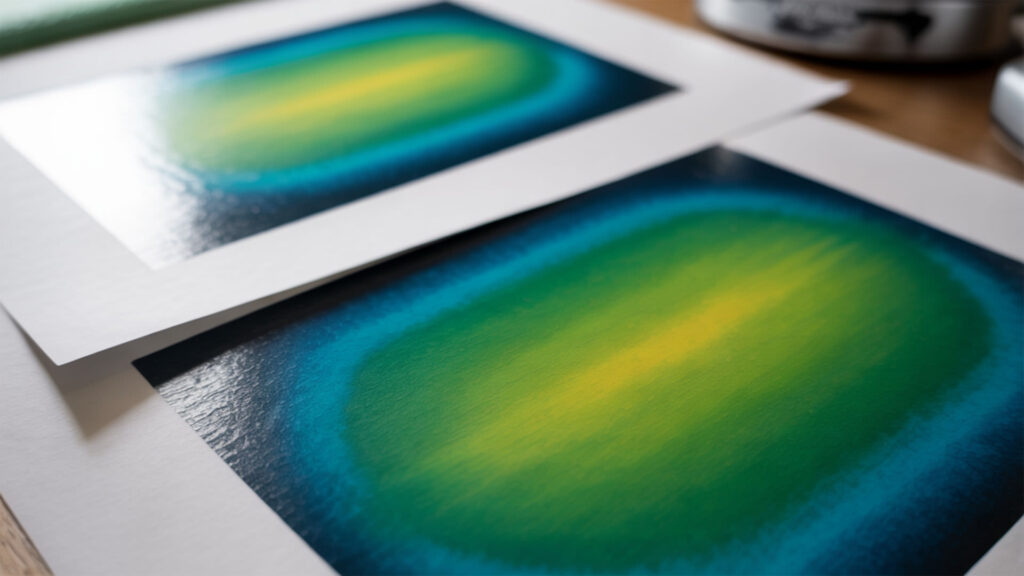
A chromaticity diagram illustrates the difference between intended neon RGB values and actual printed output—neon targets fall outside the reproducible triangle while prints land inside. The substrate’s white point limits achievable vibrancy further; polyester brightness affects how bright colors appear. Neon sublimation means optimized vibrancy within physical reproduction constraints.
What Is a Neon Print?
True neon prints require fluorescent inks containing pigments that absorb ultraviolet light and reflect it as visible light, creating luminescent effects. Delta E values quantify deviation between intended neon and actual output. CIELAB measurements evaluate how lightness and saturation change during the compression from screen to substrate.True neon effects rely on fluorescence, where materials absorb ultraviolet energy and re-emit it as visible light rather than simply reflecting ambient light.[2]
Why CMYK Struggles With Some Neon Colors?
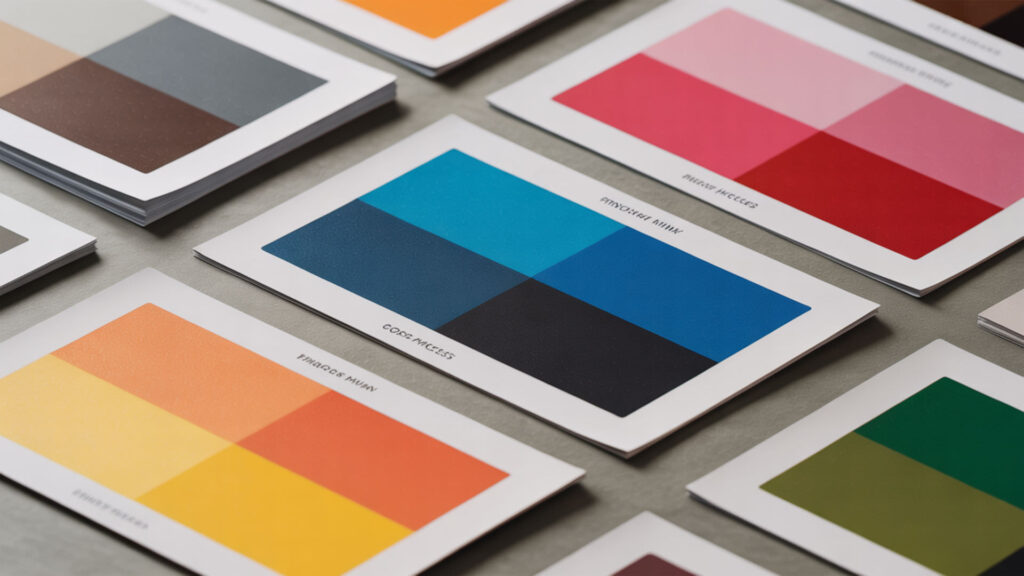
CMYO ink sets cannot produce wavelengths at the spectral locus where neon colors exist. These ultra-bright tones require light emission, not reflection—screens emit light while prints only reflect it. The printer gamut forms a smaller triangle within visible color space, excluding neon’s extreme positions entirely from reproducible range.
How Do You Create Neon Sublimation Colors Step-by-Step?

- Design in RGB color space using maximum saturation values for neon areas. RGB provides the widest starting gamut before conversion reduces available range.
- Apply soft proofing to preview where neon colors will compress. Soft proofing shows exactly which areas exceed printable gamut before wasting materials.
- Select perceptual rendering intent in your color management settings. Perceptual intent compresses the entire range proportionally, preserving color relationships.
- Adjust out-of-gamut areas manually using gamut mapping previews as guide. Manual adjustment gives control over which compromises occur in neon regions.
- Install correct ICC profile for your printer, ink, and paper combination. Proper profiles maximize available gamut for brightest achievable neon alternatives.
- Print at highest quality settings to maximize ink density and saturation. Higher density deposits more dye, pushing colors closer to gamut boundaries.
- Press at optimal temperature and time for complete dye transfer. Full transfer ensures maximum saturation reaches the substrate surface.
- Compare results and consider fluorescent inks if standard output falls short. Custom ICC profile creation and specialized tools optimize neon reproduction, which our sublimation tools guide covers.
Ready to Print Neon Sublimation Colors with Confidence?
Achieving neon-like sublimation output requires accepting gamut limitations while maximizing available saturation within printable range. Understanding that true neon exceeds physical reproduction capabilities helps set realistic expectations. Work within your system’s gamut boundaries, optimize settings for maximum vibrancy, and consider fluorescent ink upgrades for critical neon requirements.
Frequently Asked Questions
What makes a color look neon once transferred?
Neon appearance requires high saturation combined with luminescent properties that standard sublimation inks lack. True neon pigments absorb ultraviolet light and re-emit it as visible wavelengths, creating glowing intensity. Print density affects perceived brightness—higher density produces more saturated output that approaches neon appearance without achieving genuine fluorescence.
Can sublimation prints look teal or green if a neon mix is off?
Neon colors often shift toward teal or green when gamut compression alters hue during reproduction. Bright pink may shift toward magenta, electric blue toward cyan. These hue changes occur automatically when original values exceed printable range, and the degree of shift depends on ICC profile rendering intent.
Are neon tones harder to reproduce than solid dark colors?
Neon tones present greater reproduction challenges than dark colors because they require extreme saturation beyond gamut boundaries. Dark colors typically fall within printable range—the challenge is maintaining shadow detail, not achieving impossible values. Delta E measurements show larger deviations for neon targets than for darker, less saturated colors.
Can uneven heat affect neon brightness perception?
Uneven heat distribution affects neon brightness by causing inconsistent dye transfer across designs. Hot spots transfer more pigment, appearing more saturated, while cooler areas remain duller. Print density variations from heat inconsistency become especially visible in high-saturation neon areas where any reduction noticeably impacts vibrancy perception.
Is neon dullness different from long-term fading?
Initial neon dullness from gamut clipping differs from gradual fading over time. Clipping means colors never achieved intended brightness during reproduction—they started compromised. Fading occurs when properly transferred dyes degrade from UV exposure or washing. Delta E increases progressively with fading but remains constant for clipping-related dullness.
References
- Visible light. (2023, August 4). NASA Science. https://science.nasa.gov/ems/09_visiblelight/
- How cells obtain energy from food – Molecular biology of the cell – NCBI bookshelf. (n.d.). National Center for Biotechnology Information. https://www.ncbi.nlm.nih.gov/books/NBK26882/